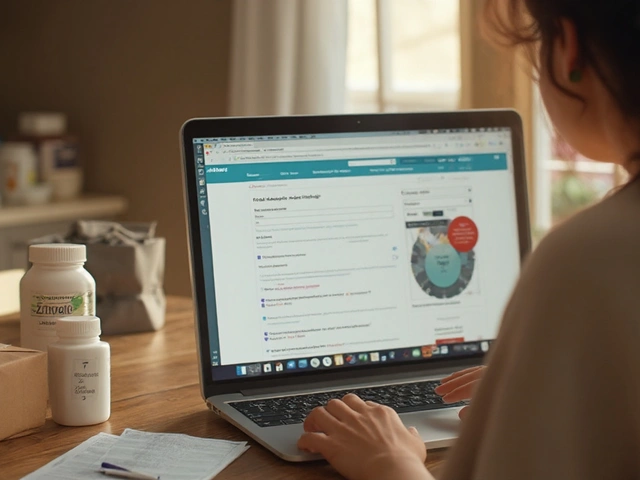
Traveling with medications isn’t just about packing a pill bottle-it’s about avoiding delays, confiscations, or worse.
If you’ve ever been pulled aside at airport security because your insulin pump looked like a suspicious device, or panicked when your prescription ran out overseas, you know how high the stakes are. In 2024, over 12% of international travelers faced medication-related issues-from lost pills to legal trouble. The good news? Most of these problems are preventable with simple, smart planning.
The rules change depending on where you’re going, what you’re carrying, and how you pack it. Whether you’re flying to Tokyo with anxiety meds, heading to Dubai with painkillers, or just taking a road trip with insulin, this guide covers exactly what you need to know-no fluff, no guesswork.
What the TSA Actually Allows (2026 Rules)
The Transportation Security Administration (TSA) doesn’t ban medications. But they do inspect them. And how you pack them makes all the difference.
Liquids like insulin, liquid antibiotics, or cough syrup are allowed in amounts larger than 3.4 ounces (100ml), as long as they’re medically necessary. You don’t need a prescription to bring them, but you must declare them at the security checkpoint. If you don’t, they’ll likely be confiscated. If you do, and they’re in original pharmacy containers, you’ll likely sail through-TSA data shows a 63% drop in inspections when labels are visible.
Solid pills? No limits. You can bring 100 tablets or 1,000. But here’s the catch: unlabeled pills look like contraband. Even if they’re yours, TSA agents aren’t trained to guess what’s inside a random bottle. Always keep them in their original containers with the pharmacy label. If you’ve repacked them into a pill organizer, keep the original bottle in your carry-on too.
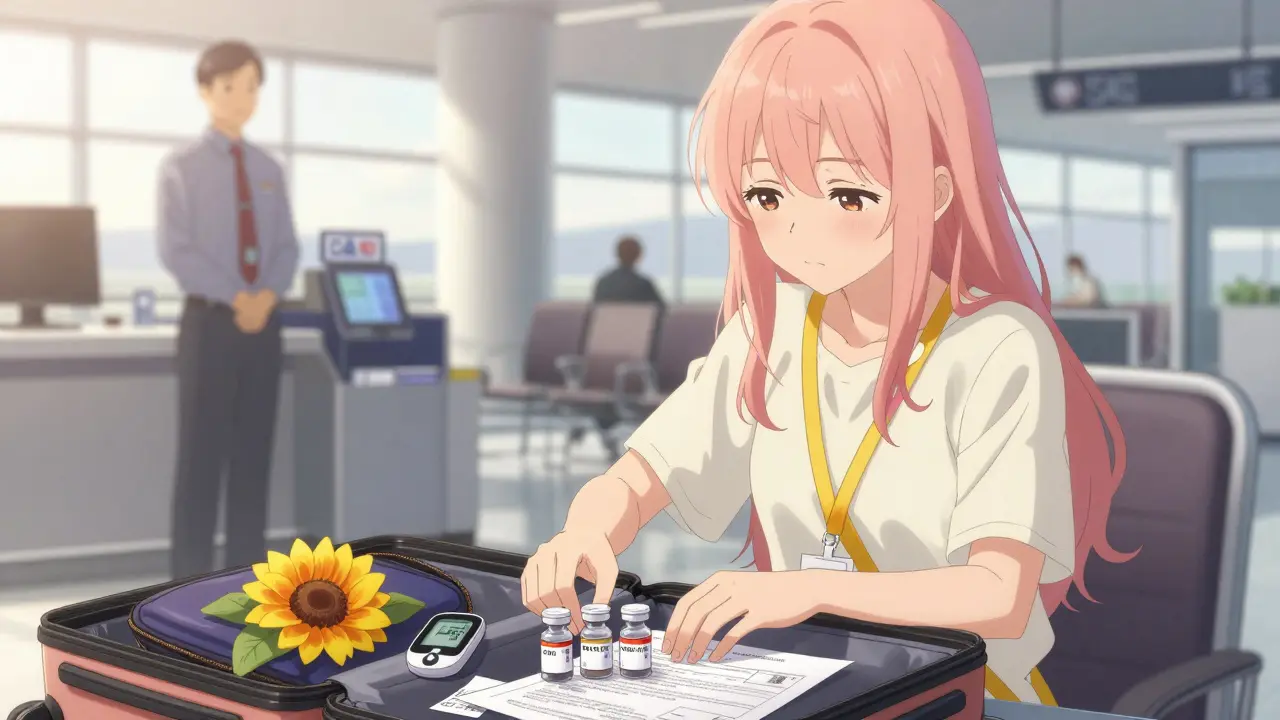
Insulin pumps, glucose monitors, and other electronic medical devices must stay in your carry-on. The FAA bans them in checked luggage because of lithium battery risks. And yes, those batteries have limits: power banks for medical gear can’t exceed 100 watt-hours unless you get airline approval ahead of time.
Pro tip: Use the TSA Cares program. Request assistance 72 hours before your flight. They’ll assign you a trained officer who knows how to handle medical gear. Travelers using this service report a 41% faster screening time. You can also wear a sunflower lanyard-it signals to agents that you need extra help without saying a word.
International Rules Are a Minefield
What’s legal in Portland might be illegal in Paris. And not just controlled substances-some over-the-counter meds are banned too.
Japan forbids any medication containing pseudoephedrine (common in cold and allergy pills). Thailand requires a special permit for alprazolam (Xanax), even if you have a U.S. prescription. The UAE bans all opioids, including codeine and hydrocodone. And in countries like Sweden and France, Adderall and Vyvanse are completely illegal-no exceptions.
According to the International Narcotics Control Board (INCB), 28% of countries restrict at least one of the five most common U.S. prescriptions: hydrocodone, oxycodone, alprazolam, diazepam, and zolpidem. That’s nearly one in three destinations.
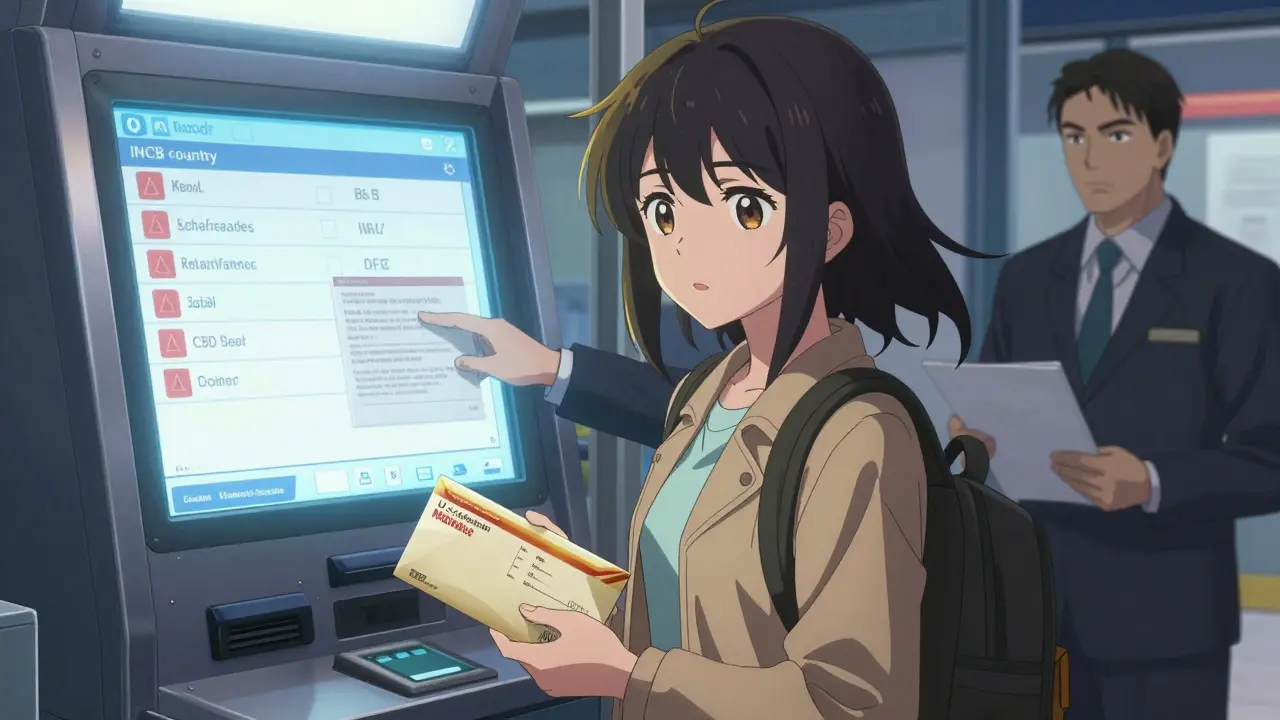
And don’t assume your doctor’s note will save you. In 83% of non-English-speaking countries, you need a translated copy of your prescription. Some require official notarization. Others demand a pre-travel authorization form you must submit weeks ahead.
Here’s how to check before you book:
- Visit the U.S. State Department website and search for your destination’s medication rules.
- Call the embassy or consulate. Don’t rely on websites-they’re often outdated.
- Use the INCB’s 2025 country database. It’s updated monthly and lists banned substances by name.
Also, watch out for CBD. TSA allows CBD under 0.3% THC on domestic flights. But 29 countries-including Singapore, Dubai, and South Korea-ban it entirely, even if it’s legal in the U.S. One traveler was detained in Singapore for a CBD gummy. Don’t risk it.
Storage: Keep Your Meds Safe (and Effective)
Medications don’t just disappear-they degrade. Heat, cold, and moisture can ruin pills, insulin, and biologics.
Insulin must stay between 36°F and 46°F (2°C-8°C). If it gets too hot, it loses potency. Too cold? It freezes and becomes useless. Most travelers don’t realize this until they’re in a 95°F airport terminal with no fridge.
Pharmaceutical-grade cooling wallets are the solution. These insulated pouches use phase-change materials to maintain 2°C-8°C for up to 72 hours-even in 104°F heat. In the 2025 Diabetes Travel Survey, 73% of users reported zero insulin spoilage using these wallets on tropical trips.
For other temperature-sensitive meds like growth hormones or injectables, use the same approach. Pack them with a small ice pack (frozen solid) inside a sealed bag, then wrap it in a cooling wallet. Never put them in checked luggage. Temperature swings in cargo holds can hit -40°F or rise above 120°F.
And never leave meds in a hot car. Even a 20-minute stop in the sun can destroy your medication. Keep them with you at all times.
Refills: What to Do When You Run Out
If you’re staying longer than 90 days abroad, you can’t just walk into a pharmacy and refill your U.S. prescription. Most countries won’t honor it.
The FDA allows you to bring a 90-day supply for personal use. But if you need more, you can mail additional medication to yourself. Here’s what you need:
- A copy of your prescription in English
- A letter from your doctor explaining why you need it
- A copy of your passport and visa
Send it via a reliable courier like DHL or FedEx-not regular mail. Customs will hold it if paperwork is missing. The CDC says 89% of mail-in refills are cleared within 5 business days if documentation is complete.
Some countries have local pharmacies that can refill your script if you have a local doctor’s note. But don’t assume your U.S. doctor can write one for you abroad. You’ll need to see a local provider and get a new prescription. That’s why it’s smart to carry an extra 14-day supply beyond your planned trip length.
What to Pack: The Essential Checklist
Here’s exactly what to bring in your carry-on:
- Original prescription bottles with pharmacy labels
- Doctor’s letter on letterhead (in English) listing your condition, meds, and dosage
- Translated copies of prescriptions (if going to a non-English country)
- Extra 14-day supply of all meds
- Pharmaceutical cooling wallet for temperature-sensitive drugs
- Small pill organizer for daily use (keep original bottles as backup)
- Printed copies of your medication list and emergency contacts
- Medical ID bracelet (if you have a chronic condition)
Distribute your meds across multiple bags. Don’t put all your insulin, heart meds, or antidepressants in one place. If your luggage gets lost, you won’t be stranded.
Travelers who follow this checklist report 92% fewer treatment disruptions during delays or lost baggage.
What Not to Do
These mistakes happen more often than you think:
- Putting meds in checked luggage
- Carrying unlabeled pills
- Assuming your U.S. prescription works overseas
- Forgetting to check CBD rules
- Waiting until the last minute to verify legality
- Leaving meds in a hot car or direct sunlight
One traveler in Thailand was arrested for carrying Xanax without a permit. Another in Dubai had their entire medication supply seized because they didn’t declare it. These aren’t rare cases-they’re preventable.
What’s Changing in 2026
Regulations are getting more digital. As of 2025, 31 countries accept electronic prescriptions. 19 have online portals where you can submit your meds for pre-approval before you fly. The World Health Organization is pushing for global standards to cut travel delays by 25% by 2027.
At U.S. airports, 37 major hubs now have dedicated “medication-friendly” screening lanes. They’re faster, quieter, and staffed by officers trained in medical needs. Look for signs or ask a TSA agent where to find them.
And if you’re traveling with medical devices, check with your airline. Some now offer pre-approval for lithium batteries over 100 watt-hours-just submit your device specs a week ahead.
Final Tip: Know Your Rights
You have the right to ask for a private screening if you’re uncomfortable with your meds being inspected in public. You can request a female officer if you’re female. You can ask for a supervisor if you feel you’re being treated unfairly. TSA agents are trained to accommodate medical needs-but they can’t help if you don’t speak up.
Traveling with meds isn’t about fear. It’s about preparation. Do the research. Pack smart. Declare everything. And you’ll arrive at your destination with your health intact-and your meds still working.
Can I bring my insulin in my carry-on without a prescription?
Yes, you can bring insulin in your carry-on without a prescription, but only if it’s in its original pharmacy-labeled container. TSA allows medically necessary liquids in any quantity, but unlabeled or repackaged insulin is more likely to be questioned or confiscated. Always declare it at the checkpoint.
Are there countries that ban common U.S. medications?
Yes. Japan bans pseudoephedrine (found in many cold medicines). France and Sweden ban Adderall and Vyvanse. The UAE bans all opioids, including codeine and hydrocodone. Thailand requires special permission for Xanax. Even some OTC meds like dextromethorphan are restricted in places like Australia and Singapore. Always check the INCB’s country-specific database before you travel.
Can I mail my medication to myself overseas?
Yes, the FDA allows you to mail additional medication for extended stays, as long as you include: a copy of your English prescription, a doctor’s letter explaining medical necessity, and a copy of your passport and visa. Use a tracked courier like DHL or FedEx. Regular mail is often held or destroyed by customs.
Do I need a doctor’s letter to travel with medications?
It’s not required for domestic U.S. travel, but it’s strongly recommended. For international trips, 100% of CDC guidelines advise carrying a doctor’s letter. Many countries require it for customs clearance, and it can prevent delays or confiscation. The letter should list your name, condition, medication names, dosages, and the reason you need them.
Is CBD oil allowed on international flights?
TSA allows CBD with less than 0.3% THC on U.S. flights. But 29 countries, including Singapore, Dubai, Japan, and South Korea, ban all CBD products regardless of THC content. What’s legal in the U.S. may get you arrested abroad. Never assume it’s safe. Always check your destination’s laws.
What’s the best way to store insulin while traveling?
Use a pharmaceutical-grade cooling wallet that maintains 2°C-8°C for up to 72 hours, even in hot weather. Keep it in your carry-on. Never rely on hotel fridges-they’re not reliable. In the 2025 Diabetes Travel Survey, 73% of users who used these wallets reported no insulin spoilage during tropical trips.
Can I put my medication in a pill organizer?
Yes, but only as a supplement-not as your primary storage. Always keep your original pharmacy bottles in your carry-on. Pill organizers look suspicious to security and don’t have labels. If asked, you must prove the pills are yours. Original bottles with pharmacy labels are your best protection.
What happens if my medication is confiscated?
If your meds are confiscated, you’ll likely face delays, possible fines, or even denial of entry. In rare cases (0.8% of severe violations), you could be arrested. Always declare your meds, keep them labeled, and carry a doctor’s letter. If confiscation happens, ask for a written receipt and contact the nearest U.S. embassy immediately.