Every year in U.S. hospitals, medication safety failures lead to over 400,000 preventable injuries. That’s not a statistic from decades ago-it’s happening right now, in the hospital down the street, in the clinic where your parent gets their prescriptions filled. The good news? Most of these errors are avoidable. The bad news? Too many facilities still rely on outdated practices, handwritten orders, and overworked staff to manage life-or-death drug decisions.
What Counts as a Medication Error?
A medication error isn’t just giving the wrong pill. It’s any preventable mistake that happens while a drug is under the care of a healthcare provider. That includes wrong dose, wrong patient, wrong route, wrong timing, or even the right drug given the wrong way-like injecting a chemotherapy drug meant for the spine into a vein. The Institute of Medicine first sounded the alarm in 1999: between 44,000 and 98,000 people die each year in U.S. hospitals from preventable medical errors, and nearly 7,000 of those are tied to drugs.One study found that on average, every hospital patient experiences at least one medication error per day. Most don’t cause harm-but enough do. The cost? Around $21 billion annually in extra care, extended stays, and legal claims. That’s not just money. It’s trust broken, lives altered, families devastated.
The High-Alert Medications That Demand Extra Care
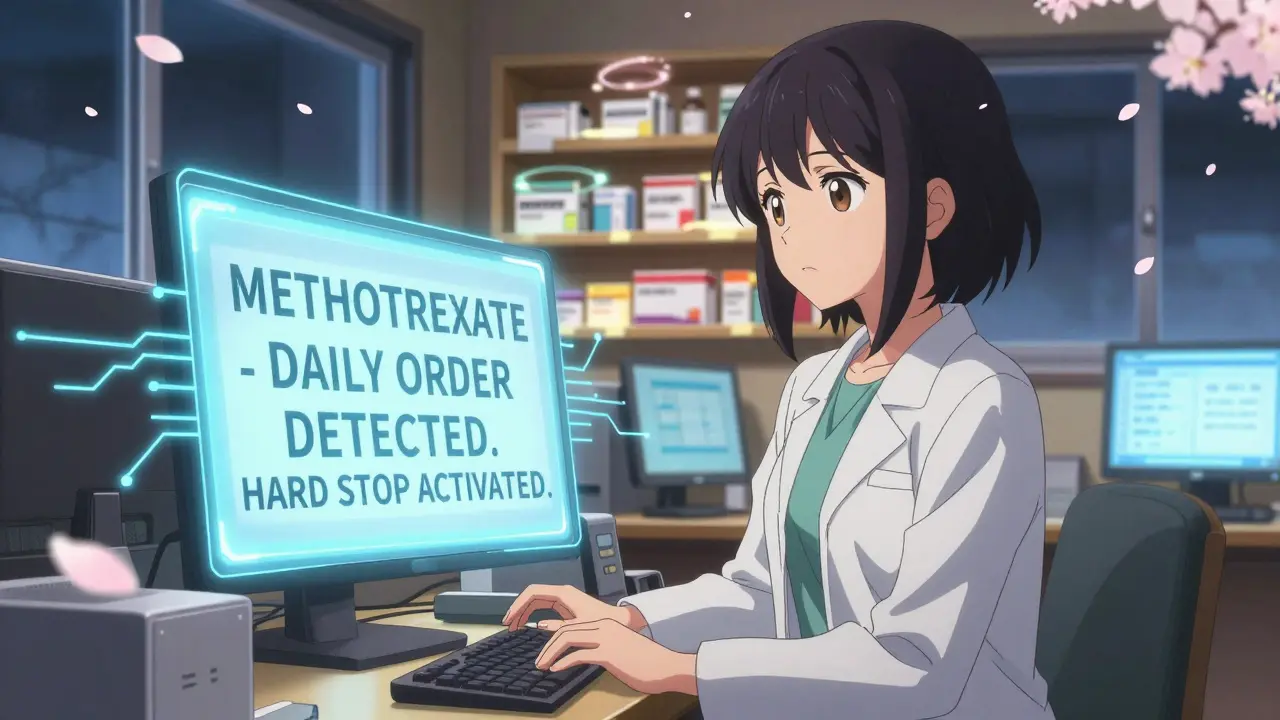
Not all drugs are created equal when it comes to risk. The Institute for Safe Medication Practices (ISMP) identifies certain medications as high-alert medications-drugs that carry a higher risk of causing serious harm if used incorrectly. These include insulin, opioids, anticoagulants, IV potassium chloride, and chemotherapy agents like vinca alkaloids and methotrexate.For example, methotrexate is used weekly for autoimmune conditions and cancer. But if it’s accidentally ordered daily-because someone clicked the wrong button or misread a handwritten note-it can kill a patient within days. That’s why the ISMP’s 2020-2021 Targeted Best Practices require hospitals to build hard stops into electronic systems: if a doctor tries to order methotrexate daily, the system won’t allow it unless they confirm it’s for cancer treatment and override the warning. Since this rule was widely adopted, an estimated 1,200 serious errors have been prevented each year.
Insulin is another major risk. A single misplaced decimal point can send a patient into a life-threatening low blood sugar episode. That’s why hospitals now require standardized concentrations, automated dose range checks, and independent double-checks before administration. In some units, nurses must verify insulin doses with a pharmacist before giving it-even if the order came from the attending physician.
How Technology Is Changing the Game
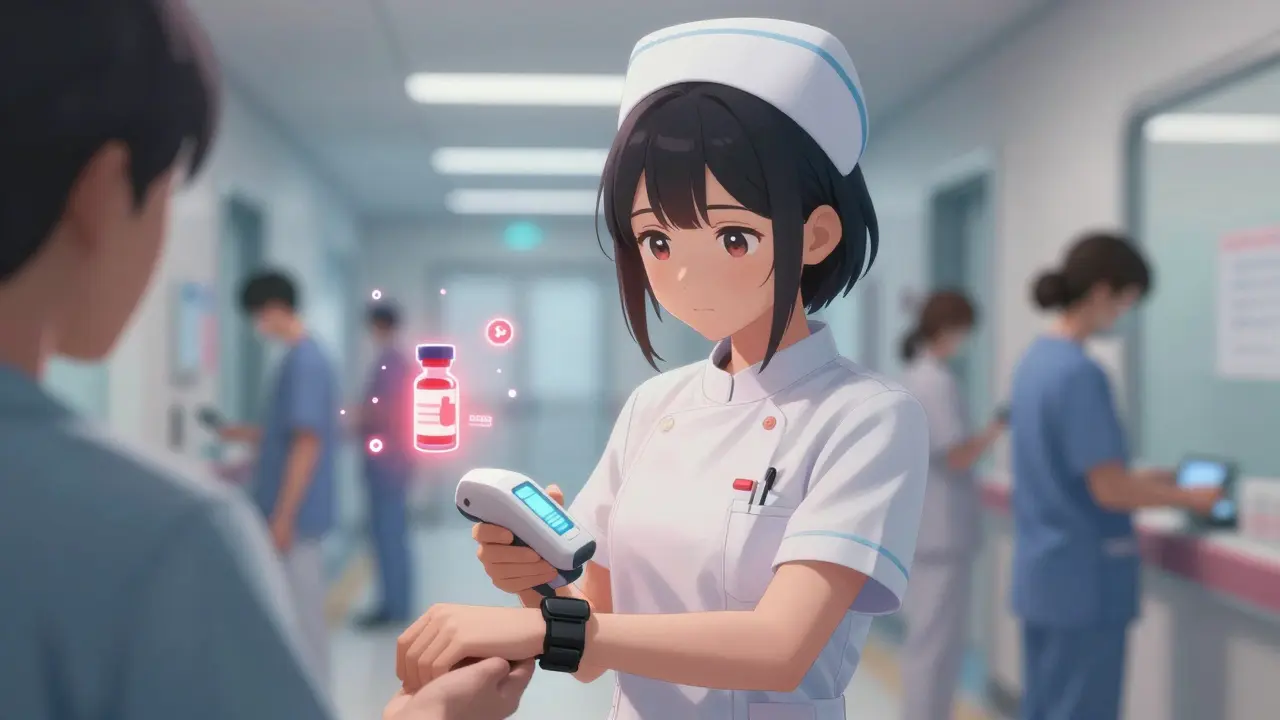
The biggest leap forward in medication safety has come from technology. Barcode medication administration (BCMA) systems are now standard in most large hospitals. Before giving a drug, a nurse scans the patient’s wristband and the medication’s barcode. If they don’t match, the system alerts them. In hospitals that use BCMA properly, serious medication errors drop by over 50%.Electronic health records (EHRs) with clinical decision support are equally vital. These systems flag drug interactions, kidney or liver issues that affect dosing, allergies, and duplicate therapies. But here’s the catch: not all EHRs are built the same. A 2021 survey found that 63% of hospitals struggled to set up hard stops for high-risk drugs because their vendor software didn’t allow it. Some hospitals had to hire pharmacists to manually review every high-alert order until the system could be upgraded.
Artificial intelligence is the next frontier. By 2025, 75% of U.S. hospitals are expected to use AI to detect real-time medication errors-like spotting a pattern where a nurse gives the same opioid dose repeatedly without documentation, or flagging a patient who’s been prescribed three different blood thinners without clear justification. Early pilots at Mayo Clinic and Johns Hopkins show AI can catch errors human staff miss, especially during overnight shifts or staffing shortages.
The Human Factor: Training, Culture, and Communication
No system works without people. And people make mistakes. That’s why training isn’t optional-it’s foundational. Hospitals that succeed in medication safety invest 8 to 12 hours of training per employee during implementation. Nurses, pharmacists, and doctors all learn the same protocols. They practice scenarios. They role-play how to speak up when something looks wrong.One nurse manager in a rural hospital reported that requiring both written and verbal discharge instructions for methotrexate created workflow bottlenecks during staffing shortages. But she also said patients who received both forms of instruction were far less likely to take the wrong dose at home. The lesson? Safety steps can feel burdensome-but they save lives.
Creating a culture where staff feel safe reporting near-misses without fear of punishment is just as important. The ISMP National Medication Errors Reporting Program collects over 200,000 reports a year from frontline workers. These aren’t blame logs-they’re early warnings. One pharmacy director in the Midwest said their methotrexate hard stop prevented three near-miss errors in the first month alone. Those errors never reached the patient. That’s the goal.
What’s Missing: Outpatient Clinics and Inconsistent Standards
Most medication safety efforts focus on hospitals. But over 40% of reported medication errors now happen in outpatient clinics and doctor’s offices. A patient gets a prescription for warfarin, doesn’t get proper lab monitoring, and ends up in the ER with internal bleeding. No barcode system. No pharmacist review. Just a faxed order and a pill bottle.That’s why ISMP plans to expand its Targeted Best Practices to include ambulatory care in the 2024-2025 update. Meanwhile, the FDA is requiring clearer labeling on high-concentration electrolytes by the end of 2024. And CMS now ties hospital payments to medication safety performance. Hospitals that fail to reduce errors face financial penalties.
But implementation is uneven. Only 42% of community hospitals fully follow all ISMP best practices. Academic centers? 78%. Why? Because they have more staff, better tech, and more funding. Rural clinics often can’t afford the upgrades. And without standardized rules across all care settings, patients get safer care in some places-and riskier care in others.
What Patients Can Do to Protect Themselves
You don’t have to be passive in your own safety. Here’s what you can do:- Always ask: “What is this drug for, and what side effects should I watch for?”
- Check your wristband before any medication is given. Does your name and birth date match your records?
- Keep a written list of all your medications-including over-the-counter drugs and supplements-and bring it to every appointment.
- Ask for a pharmacist to review your discharge meds before you leave the hospital.
- If you’re given a new prescription, call your pharmacy to confirm the dose and instructions.
A 2022 survey by the National Council on Aging found that 68% of adults over 65 felt more confident about their safety when hospitals used the “Right Patient Check”-verifying name, birth date, and wristband before giving any drug. That’s not just policy. It’s basic respect for human dignity.
The Future of Medication Safety
The tools are here. The data is clear. The cost of inaction is too high. The future of medication safety lies in integration: AI that learns from every error, systems that talk to each other across hospitals and clinics, and patients who are treated as partners-not passive recipients.By 2027, the AHRQ aims to cut opioid-related harm by 50%. That’s ambitious. But with the right systems, the right training, and the right culture, it’s possible. The question isn’t whether we can do better. It’s whether we’re willing to make the investment-to fund the tech, train the staff, and listen to the people who see the risks every day.
Medication safety isn’t about perfection. It’s about persistence. One hard stop. One barcode scan. One question asked. One patient who walks out alive because someone refused to let a mistake happen.
What are the most common medication errors in hospitals?
The most common errors involve wrong dose, wrong patient, wrong drug, or wrong route. High-alert medications like insulin, opioids, and chemotherapy drugs are especially prone to serious mistakes. For example, giving methotrexate daily instead of weekly, or confusing similar-sounding drugs like hydralazine and hydroxyzine. These errors often happen during transitions of care, like when a patient moves from the ER to a ward or is discharged.
How do barcode scanning systems improve medication safety?
Barcode medication administration (BCMA) systems require nurses to scan both the patient’s wristband and the medication barcode before giving any drug. If the system detects a mismatch-like the wrong drug, wrong dose, or wrong patient-it blocks administration and alerts the nurse. Hospitals using BCMA properly see up to a 55% reduction in serious medication errors. It’s one of the most effective, low-cost safety tools available today.
What is a hard stop in electronic prescribing?
A hard stop is a system feature that prevents a clinician from completing an order unless they override it with a valid reason. For example, if a doctor tries to order daily methotrexate, the system will lock the order and require them to confirm it’s for cancer treatment and provide a justification. Hard stops force attention to high-risk decisions and have prevented thousands of deadly errors since their adoption.
Why are high-alert medications more dangerous?
High-alert medications have a narrow margin between a therapeutic dose and a toxic one. A small mistake-like giving 10 units of insulin instead of 1-can cause immediate, life-threatening harm. Examples include IV potassium, heparin, insulin, opioids, and chemotherapy drugs. Because of this, they require extra safeguards: double-checks, standardized concentrations, automated alerts, and specialized training.
Can patients really help prevent medication errors?
Yes. Patients who ask questions, bring updated medication lists, and verify their identity before receiving drugs reduce their risk of error by up to 40%. Studies show that when patients actively participate-like asking, ‘Is this the right drug for me?’-staff are more likely to pause and double-check. Your involvement isn’t overstepping; it’s a critical safety layer.


Comments (8)
Dave Alponvyr
So we’re spending billions to stop a decimal point from moving? Cool. I’m just glad I don’t work here.
Joanna Ebizie
Ugh. Another ‘tech will save us’ fairy tale. Nurses are overworked, docs are burnt out, and now we’re supposed to trust a barcode? Lol. This is why people die in hospitals.
Kitty Price
My grandma had a near-miss with insulin last year. They scanned everything. She’s alive because of it. ❤️
James Rayner
It’s not just about the tech-it’s about the silence. The silence when a nurse sees the wrong dose but doesn’t speak up because they’re afraid of being called ‘difficult.’ The silence when a pharmacist knows the order is wrong but the doctor says ‘just give it.’ The silence when the system doesn’t ask why someone needs five blood thinners at once. We’ve built all these layers-but we still don’t listen to the people on the ground. Maybe the real hard stop isn’t in the software. Maybe it’s in our culture. And that’s the harder thing to fix.
Mike Smith
Excellent breakdown. The integration of AI with clinical workflows represents a paradigm shift-not merely automation, but augmentation of human judgment. When systems are designed with empathy, not just compliance, they become instruments of dignity. This is not merely a safety protocol; it is a moral imperative.
Elizabeth Bauman
Did you know that 73% of these ‘errors’ are caused by foreign-trained doctors who don’t understand American standards? The FDA’s new labeling rules? Too little, too late. We need a national mandate: only U.S.-trained staff handle high-alert meds. No exceptions. No loopholes. No more letting foreign nurses scan barcodes while our own citizens pay the price. This isn’t just healthcare-it’s national security.
Colleen Bigelow
They say ‘patients can help’-but who the hell has time to memorize every drug they’re on? And why is it OUR job to catch the hospital’s mistakes? I’m not a pharmacist, I’m not a nurse, I’m just trying to get my blood pressure pills without dying. This whole system is rigged. They’ll slap a barcode on your wristband but still give you the wrong drug because ‘the system said it was fine.’ And then they wonder why people don’t trust hospitals. Welcome to America, folks.
Dylan Smith
What about the rural clinics? They can't afford BCMA or AI or even decent EHRs. And the patients there? They're the ones getting the wrong doses because the only pharmacist is 60 miles away. This whole thing feels like a luxury for big cities. Why are we talking about AI when people are still faxing prescriptions? Someone needs to fund the places that can't afford to fix this. Not just the hospitals with endowments. The ones where people actually live.