Dealing with Atopic Dermatitis is more than just managing a few itchy patches. For many, it feels like a constant battle against your own skin. Whether you've had it since childhood or it appeared later in life, the cycle of dryness, itching, and inflammation can be exhausting. The real challenge isn't just treating a flare-up once it happens, but figuring out why it happened in the first place and how to stop the next one before it starts.
The core of the problem lies in a leaky skin barrier. Imagine your skin is like a brick wall; in people with Atopic Dermatitis, the "mortar" is missing. This is often due to a mutation in the filaggrin gene, which prevents the skin from holding onto water and keeping irritants out. When this barrier fails, moisture escapes-a process called transepidermal water loss-and the skin becomes a playground for allergens and bacteria. This is why Emollient Therapy is the non-negotiable foundation of any treatment plan; without repairing that wall, other medicines are just temporary fixes.
The Hidden Culprits: What Triggers a Flare?
A flare doesn't usually happen for no reason. Most triggers fall into two categories: environmental stressors and chemical irritants. Understanding these can help you move from reacting to your skin to predicting its behavior.
Weather is one of the most aggressive triggers. Cold, dry air with humidity below 40% can increase your risk of a flare by nearly 37%. This happens because low humidity sucks moisture directly out of your skin. Conversely, extreme heat (above 80°F) triggers flares for about 68% of patients. In this case, it's usually sweat-induced irritation-the salt and moisture from sweat can prickle and inflame an already sensitive barrier.
Then there are the chemical triggers hiding in your bathroom. Many cleansers contain sodium lauryl sulfate, a foaming agent that can disrupt the skin barrier even at concentrations as low as 0.5%. Fragrances are another major offender; roughly 15% of patients experience immediate flares from synthetic scents. If your lotion smells like a bouquet of flowers, it might be the very thing making your skin scream.
Decoding Emollient Therapy
Not all moisturizers are created equal. To manage eczema, you need an emollient, which is a treatment designed to soften the skin and seal in moisture. Depending on your skin's current state, you'll want different types of ingredients:
- Occlusives: These are the "heavy hitters" like petrolatum (Vaseline). They create a physical seal on the skin, reducing water loss by up to 98%. They are best for severe flares or overnight use.
- Humectants: Ingredients like glycerin draw water from the air or deeper layers of the skin into the outer layer. They work best when used under an occlusive.
- Barrier Repair Agents: Ceramides are lipid molecules that mimic the skin's natural oils. Using products with a 0.5-3% ceramide concentration helps "plug the holes" in your skin's mortar.
| Ingredient Type | Example | Primary Function | Best Used For... |
|---|---|---|---|
| Occlusive | Petrolatum | Blocks water loss | Severe dryness, night time |
| Humectant | Glycerin | Attracts moisture | Daily hydration, damp skin |
| Lipid-based | Ceramides | Restores barrier | Long-term maintenance |

The "Soak and Seal" Method: Timing is Everything
Applying lotion whenever you remember isn't enough. To get the most out of your therapy, you need a strategy. Experts recommend the "soak and seal" method. Start with a lukewarm bath or shower for about 15 to 20 minutes. Avoid hot water, as it strips away the few natural oils you have left.
The critical window is the 3 minutes immediately after you pat your skin dry. At this moment, your skin is saturated with water. If you apply your emollient within this window, you can lock in up to 50% more moisture than if you wait. This simple timing shift can be the difference between a calm skin surface and a midnight itch attack.
Quantity also matters. Many people under-apply their creams. Research shows that patients using more than 100g of emollient weekly have 43% fewer flares than those using less than 50g. For an adult, this typically means using 250-500g per week. If you're only using a pea-sized amount for your whole arm, you're likely not providing enough coverage to protect the barrier.
Beyond Emollients: When You Need More Help
While emollients are the first line of defense, they aren't always enough during a full-blown crisis. If your skin is weeping, crusting, or preventing you from sleeping, you may need medical intervention. Topical Corticosteroids (TCS) are often used to bring down intense inflammation. When combined with emollients, the clearance rate for mild cases jumps from about 40% to nearly 80%.
For sensitive areas like the eyelids or face, doctors often suggest calcineurin inhibitors like tacrolimus, which reduce inflammation without thinning the skin. In severe cases that don't respond to creams, systemic treatments like dupilumab can reduce flares by up to 80% by targeting the underlying immune response.
One thing to watch out for is "emollient resistance." In about 8-12% of severe cases, the skin remains inflamed despite heavy moisturizing. This is often due to a persistent colonization of Staphylococcus aureus bacteria, which can interfere with the skin's ability to heal. If you feel like your creams have stopped working entirely, it's time to see a dermatologist to check for a secondary infection.
Practical Tips for Daily Maintenance
Consistency is the hardest part of eczema care. Many people quit after a few weeks because the creams feel too greasy or take too long to apply. To make it sustainable, try these adjustments:
- Layer your products: Use a light ceramide lotion during the day and a thick occlusive ointment at night.
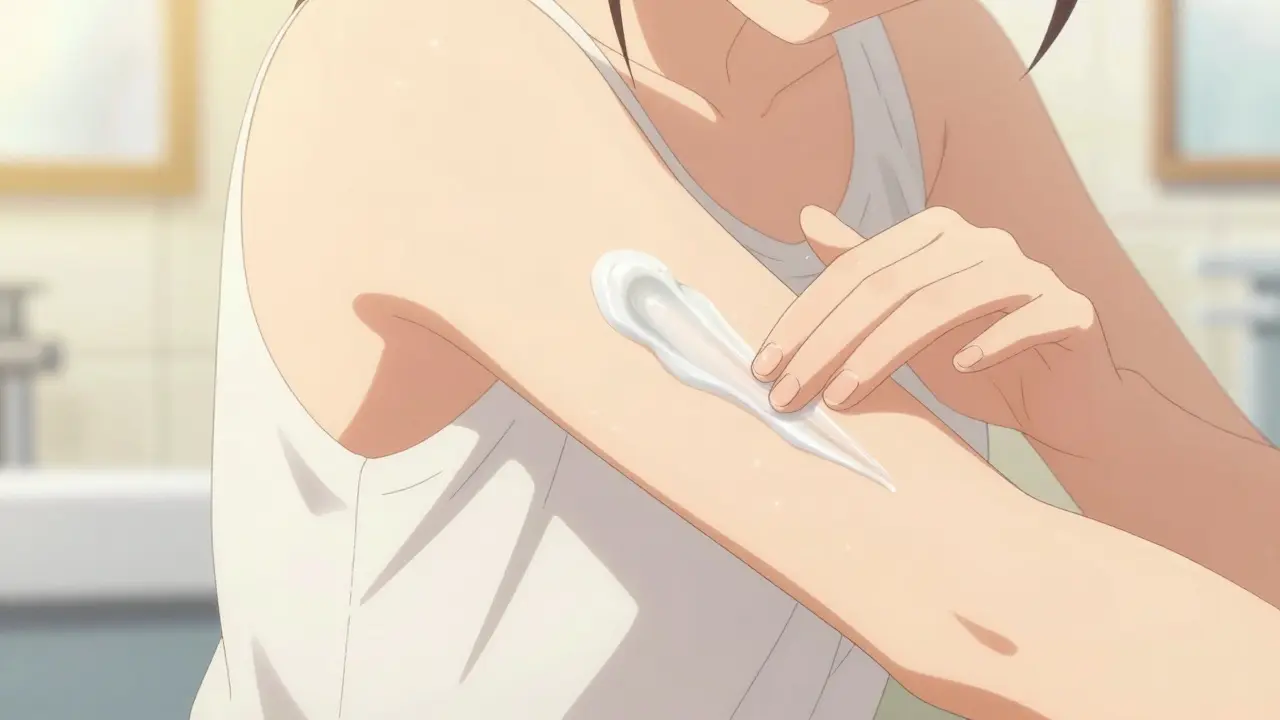
- Use the "finger unit" rule: Apply 2-3 finger-lengths of product per body section to ensure you're using the recommended amount.
- Check your labels: Avoid products containing methylisothiazolinone or parabens, as these are common preservatives that cause contact dermatitis in a small percentage of users.
- Downward strokes: Apply emollients in the direction of hair growth (downward strokes) to prevent folliculitis, which can happen if you rub creams in circles.
Can I use petroleum jelly as my only moisturizer?
For severe flares, petrolatum is one of the most effective occlusives because it creates a near-perfect seal. However, it doesn't add moisture; it only stops it from leaving. For long-term health, it is better to use a humectant or a ceramide-based cream first to hydrate the skin, and then apply petroleum jelly on top to lock that moisture in.
Why does my skin feel itchy even after I apply lotion?
This can happen for a few reasons. First, you might be reacting to a preservative or fragrance in the product. Second, if you apply an occlusive to very dry skin without any water present, you're just sealing in the dryness. Always apply your emollient to damp skin. Third, if there is an active infection or deep inflammation, the moisture alone won't stop the itch-you may need a medicated cream to calm the immune response.
How often should I actually be applying emollients?
The gold standard is twice daily, regardless of whether your skin feels dry. Applying it only when you itch is a reactive approach. Applying it twice daily is a preventative approach that maintains the barrier and can reduce the frequency of flares by about 36% over six months.
Are expensive ceramide creams better than cheap ointments?
It depends on the goal. For barrier repair, ceramides are superior because they replace the lipids your skin is missing. For raw, cracked skin or severe flares, a simple, cheap petroleum jelly is often more effective and less likely to cause an allergic reaction because it has fewer ingredients.
Does bathing every day make eczema worse?
Not necessarily, as long as you use the "soak and seal" method. Short, lukewarm baths with fragrance-free cleansers are fine, provided you apply your emollient within three minutes of exiting. Avoiding very hot water and harsh soaps is more important than the frequency of the bath itself.