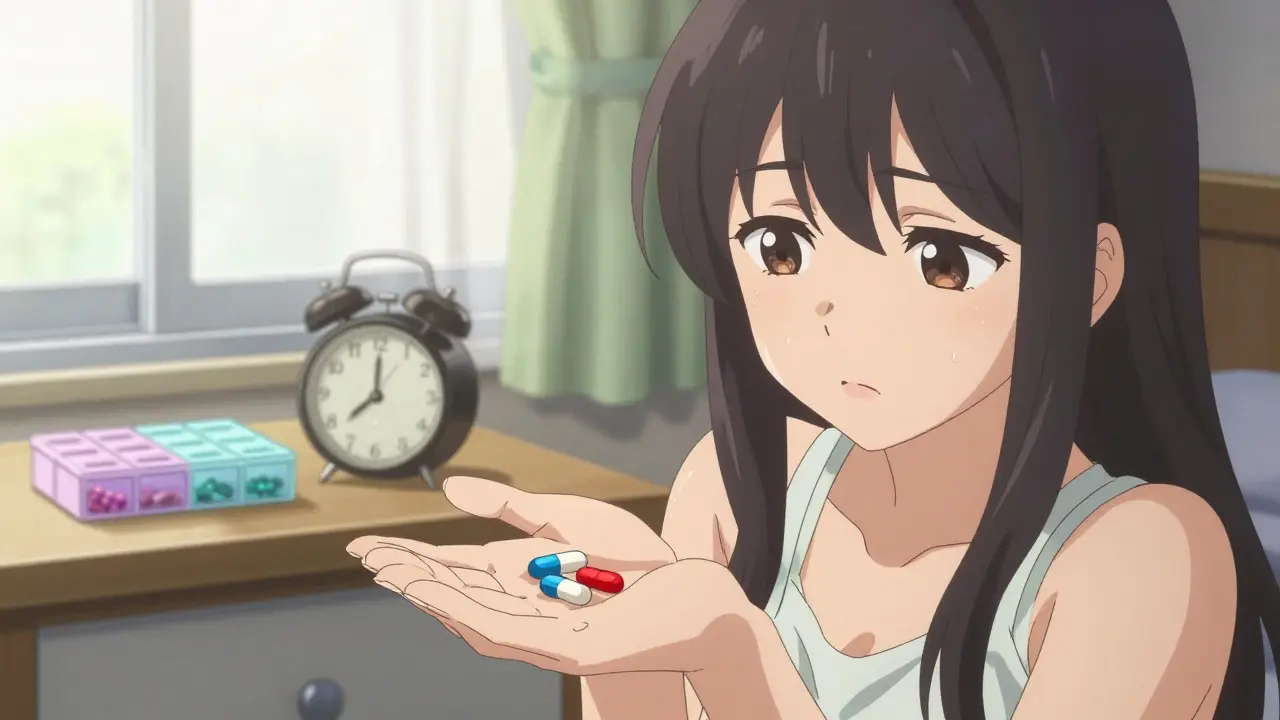
Imagine you’re on three different pills just to control your blood pressure. One blue, one white, one red. You have to remember which one to take when, and your pharmacist keeps changing the brand because the insurance switched suppliers. Now imagine a single pill that does the same job - same ingredients, same effect, but you only swallow one thing a day. That’s the promise of fixed-dose combinations (FDCs). But in reality, millions of people around the world are still taking separate generics instead. This isn’t a mistake. It’s a deliberate choice - and it’s becoming more common than you think.
What Exactly Is a De Facto Combination?
A de facto combination happens when a doctor prescribes two or more separate generic drugs that, together, make up the same treatment as a single fixed-dose combination pill. For example, instead of prescribing a single pill with amlodipine and valsartan (a common FDC for high blood pressure), the doctor writes two prescriptions: one for amlodipine 5mg and another for valsartan 80mg. The patient ends up taking two pills instead of one. This isn’t off-label use. It’s legal. It’s common. And it’s rarely reviewed for safety or effectiveness the way an FDC would be.
The term “de facto” means “in practice, though not officially recognized.” These combinations aren’t approved by the FDA or EMA as a unit. They’re stitched together by prescribers using what’s available and affordable. The result? A therapy that works - but without the quality controls built into real FDCs.
Why Do Doctors Choose Separate Generics?
There are three big reasons doctors pick separate generics over FDCs: flexibility, cost, and clinical fit.
First, flexibility. Not every patient needs the exact dose ratio in an FDC. Say you have high blood pressure and kidney problems. You might need 2.5mg of amlodipine and 160mg of valsartan. But the only FDC available is 5mg/160mg or 10mg/160mg. Taking the 5mg version means you’re getting double the amlodipine you need - which could cause swelling or dizziness. With separate generics, the doctor can fine-tune each drug independently. This is especially important for older adults, people with liver or kidney disease, or those on multiple other medications.
Second, cost. In some places, the FDC costs more than the sum of the two separate generics. In India, for example, a parliamentary report found that many FDCs offered no clinical advantage but were priced higher. In the U.S., if two generics are produced by competing manufacturers, their combined price can be lower than the branded FDC. Insurance formularies sometimes favor separate generics because they’re cheaper to reimburse. So even if the FDC is technically more convenient, the financial incentive pushes doctors toward the split.
Third, clinical fit. Some patients just don’t respond well to the fixed ratios in FDCs. In diabetes, for instance, the American Diabetes Association says nearly 70% of patients need individualized dosing. An FDC with metformin and sitagliptin might come in 500mg/50mg or 1000mg/100mg. But what if you need 750mg metformin and 50mg sitagliptin? No FDC offers that. So the doctor prescribes them separately - even if it’s messier.
The Hidden Risks of Splitting Pills
It sounds smart. But here’s the catch: when you combine drugs yourself, you lose the safety net.
FDCs go through rigorous testing. The FDA and EMA require manufacturers to prove that the two drugs work well together - that they don’t break down in the pill, that they’re absorbed properly, that they don’t cause unexpected side effects when taken as a unit. That’s called pharmaceutical compatibility. With de facto combinations, none of that is checked. One generic might be immediate-release, the other extended-release. One might be coated, the other not. The body absorbs them differently. You’re essentially creating a new drug combo with no clinical data behind it.
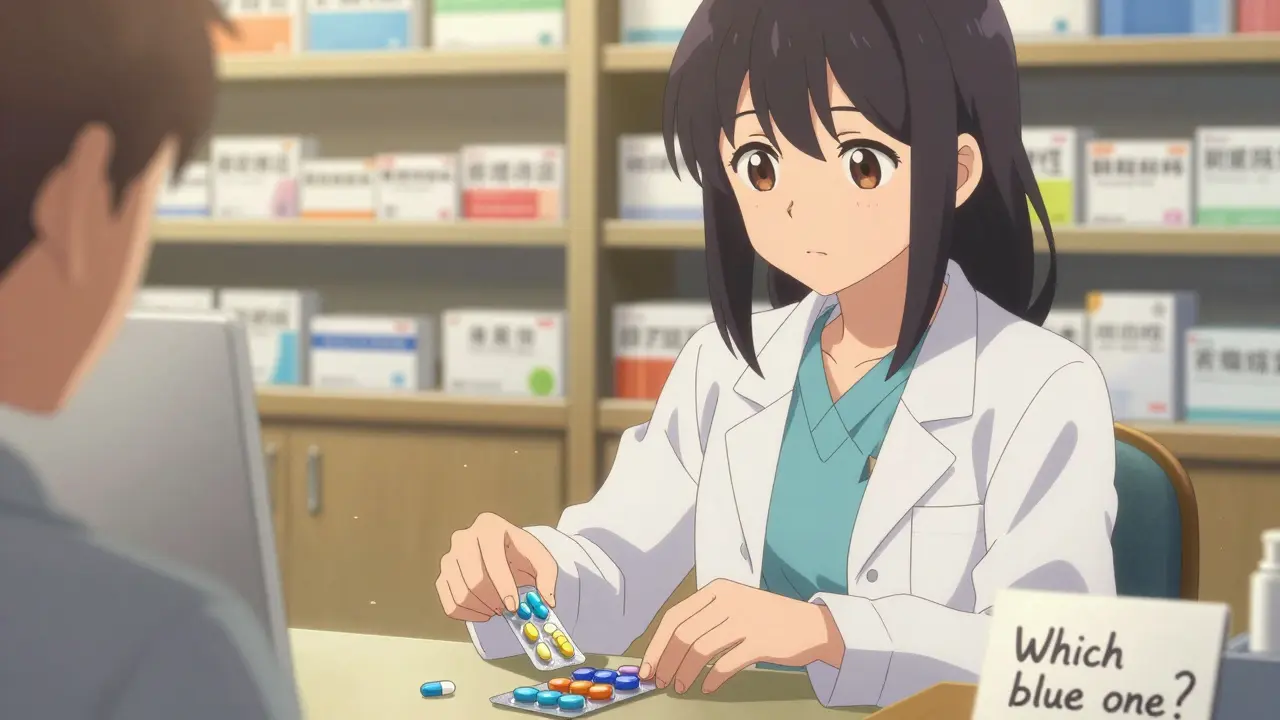
And then there’s adherence. Every extra pill you take lowers your chance of sticking to the regimen. A study published in PubMed found that each additional pill reduces adherence by about 16%. FDCs improve adherence by 22% compared to separate pills. Think about it: one pill a day is easy to remember. Two or three? You forget. You skip. You double up. A Reddit user with hypertension wrote: “I switched from a single Amlodipine/Benazepril pill to separate generics to save $15 a month. I missed doses twice because I couldn’t tell which blue pill was which.”
Pharmacists see this all the time. A 2022 survey of 1,532 U.S. pharmacists found that 72% were worried about medication errors with de facto combinations. Color-coding helps, but it’s not foolproof. A patient on HIV meds might be on six pills a day - three of them separate generics. That’s a recipe for confusion.
When Does It Actually Make Sense?
It’s not all bad. There are real situations where separate generics are the better choice.
Take kidney disease. If your glomerular filtration rate drops, you need to lower your metformin dose. But the FDC with sitagliptin doesn’t come in a lower metformin strength. So you switch to separate pills. A patient on Drugs.com reported: “I’ve had my A1c at 6.2% for 18 months since my doctor switched me to separate generics. The FDC didn’t match my kidney function.”
Or consider titration. If you’re starting a new blood pressure combo, your doctor might want to adjust each drug slowly. With separate generics, they can increase amlodipine without touching the valsartan. With an FDC, they’re stuck. You either take the whole combo or nothing.
And in places like India, where 344 FDCs were banned in 2016 for lacking medical justification, de facto combinations became the default - not because they were better, but because the alternatives were gone. In those cases, separate generics are the only safe option.
What’s Changing? Technology and Regulation
Regulators are starting to pay attention. In January 2023, the FDA issued a safety alert about 147 adverse events potentially linked to untested drug combinations. The EMA launched a three-year project in 2023 to study off-label combinations. Both are pushing for better data.
Meanwhile, tech is stepping in. Companies like PillPack by Amazon now offer personalized blister packs for patients on multiple generics. Each pill is labeled with the time of day, color-coded, and delivered in a single box. They report a 41% drop in missed doses. Electronic health records are also improving - some now flag when a patient is on a de facto combination that’s known to have interaction risks.
Pharma companies are responding too. AstraZeneca patented a modular FDC in 2022 that lets you swap out doses like Lego blocks - still one pill, but adjustable. That could be the future: the convenience of an FDC with the flexibility of generics.

What Should You Do?
If you’re on separate generics that make up a combination:
- Ask your doctor: “Is there an FDC that matches my doses?”
- Ask your pharmacist: “Are these generics compatible? Do they have the same release profile?”
- Use a pill organizer - and label it clearly.
- Set phone reminders for each pill.
- Don’t assume cheaper means better. Sometimes the FDC saves money long-term by preventing hospital visits from missed doses.
If you’re a prescriber:
- Don’t default to separate generics just because they’re cheaper.
- Check if an FDC exists that matches your patient’s needs.
- Document why you chose separate pills - especially if it’s for dose flexibility.
- Use tools like electronic alerts to catch risky combinations.
De facto combinations aren’t inherently wrong. But they’re not risk-free either. They’re a workaround - a practical solution to a system that doesn’t always offer the right tools. The goal shouldn’t be to eliminate them. It should be to make them safer, smarter, and better supported.
Is This Trend Growing?
Yes - and it’s uneven. In HIV treatment, 89% of patients use FDCs because adherence is life-or-death. In hypertension, nearly half get separate generics. Why? Because HIV regimens are tightly standardized. Blood pressure isn’t. There’s no one-size-fits-all. That’s why de facto combinations will stick around - but they’ll need better oversight.
Analysts predict that within 10 years, unmonitored de facto combinations will drop by 60% as prescribing systems automatically suggest FDCs when appropriate. But for now, millions of people are managing their health with multiple pills, hoping the colors match, the timing works, and they don’t mix up the doses.
It’s not ideal. But sometimes, it’s the best option we’ve got - if we’re careful about it.
Are de facto combinations safe?
De facto combinations aren’t officially tested for safety like fixed-dose combinations (FDCs). While the individual generic drugs are approved, their interaction, stability, and absorption when taken together haven’t been studied. This can lead to unexpected side effects, especially if the generics have different release profiles or fillers. Patients should be monitored closely, and pharmacists should review for compatibility.
Why are FDCs more expensive than separate generics?
FDCs often cost more because they’re produced by a single manufacturer who must invest in formulation, stability testing, and regulatory approval. Separate generics come from multiple companies competing on price. In markets with strong generic competition, the sum of two low-cost generics can be cheaper than the branded FDC - even though the FDC may reduce long-term healthcare costs by improving adherence.
Can I switch from separate generics to an FDC?
Yes - but only if the FDC contains the exact doses you’re currently taking. If your doctor prescribed 5mg amlodipine and 160mg valsartan separately, you can switch to an FDC with those same doses. If the only FDC available is 10mg/160mg, switching could lead to side effects. Always consult your doctor before switching.
Do de facto combinations affect drug absorption?
Potentially, yes. Generic drugs can vary slightly in bioavailability - up to 12.7% according to FDA data. When taken together in a de facto combination, these small differences can add up. One generic might be absorbed faster than the other, changing how the drugs work together. FDCs are designed to avoid this by using matched formulations.
How can I improve adherence with separate generics?
Use a pill organizer labeled with times of day, set phone alarms for each dose, and ask your pharmacist for color-coded packaging. Services like PillPack deliver pre-sorted doses in labeled pouches. Also, keep a written schedule and review it weekly with a family member or caregiver. Consistency reduces errors.




Comments (14)
jesse chen
I’ve been on three separate BP meds for years, and honestly? I don’t care if it’s ‘technically’ less safe-I care that I can tweak each one without waiting for a new prescription. My kidney function changes monthly. FDCs are a luxury for people with static health.
Also, my pharmacy gave me a free pill organizer last year. Now I just dump the pills in, label the slots, and boom-no more confusion. Simple, cheap, works.
Joanne Smith
Let’s be real: the system is broken, and de facto combos are the duct tape holding it together. Pharma companies won’t make FDCs for niche dosages because there’s no profit in it. Meanwhile, patients are stuck choosing between convenience and control.
And don’t get me started on the color-coding nonsense. One pharmacist swapped my blue amlodipine for a different shade of blue. I almost took two by accident. Thanks, capitalism.
Prasanthi Kontemukkala
In India, this isn’t a ‘trend’-it’s survival. Many FDCs were banned because they were dangerous or useless. So we turned to generics, and honestly? It’s better than being forced into a pill that doesn’t fit. My uncle’s on separate metformin and gliclazide-he’s had his sugar stable for 5 years.
Yes, he uses a pill box. Yes, he sets alarms. Yes, he’s older. But he’s alive. And that’s what matters.
Don’t romanticize FDCs. Sometimes, the ‘imperfect’ solution is the only one that works.
Lori Anne Franklin
my dr switched me to separate pills last year to save me 20 bucks a month and honestly? i forgot to take one for three days and got a headache that felt like my brain was trying to escape. i switched back to the fdc and now i’m fine. why make life harder??
also why do pills have to be so colorful?? i can’t tell blue from teal anymore
Bryan Woods
The regulatory gap here is alarming. We assume that because each component is FDA-approved, the combination is safe. But that’s like saying two safe ingredients in a kitchen automatically make a safe meal. The interactions, the pharmacokinetics, the stability-none of it’s vetted.
Until regulators create a framework for evaluating de facto combinations, we’re playing Russian roulette with chronic disease management.
Ryan Cheng
As a pharmacist, I see this every day. The biggest risk isn’t the drugs-it’s the patient forgetting which pill is which. I’ve had people bring in half-empty bottles with no labels, asking why they feel dizzy.
My advice? Always use a pill organizer. Always write the times down. And if you’re on more than three pills a day? Ask about PillPack. They’re not perfect, but they’re the closest thing to a safety net we’ve got right now.
wendy parrales fong
I think we’re all just trying to survive the healthcare system. FDCs sound nice, but if they cost $200 a month and the generics cost $15, people will pick the $15 option every time.
It’s not about being lazy. It’s about being broke. And if we want people to take their meds, we need to make it easy-not just convenient, but affordable and simple.
Maybe the answer isn’t more pills or fewer pills. Maybe it’s better support. Better systems. Better empathy.
Jeanette Jeffrey
Oh wow, another ‘let’s fix the system’ thinkpiece. Newsflash: people aren’t dumb. They’re just tired of being treated like data points. If you think a single pill is the holy grail, you’ve never had to pay for it out of pocket.
Also, ‘pharmaceutical compatibility’? That’s just corporate jargon for ‘we didn’t test it because it’s not profitable.’
Stop pretending this is about safety. It’s about profit. Always has been.
Shreyash Gupta
bro why are you even writing about this? in india we have 50+ versions of the same generic and no one knows what’s in it 😂
also i took 3 pills yesterday and now i think i’m pregnant? jk 😅 but seriously, my grandma takes 7 pills and she still dances at weddings 🤷♂️💊💃
Ellie Stretshberry
i used to take separate pills and kept mixing them up until my sister made me a color coded chart and now i’m fine
also i dont care if its not fdc as long as it works and i dont die
Zina Constantin
I’m from the Philippines, and here, FDCs are often unaffordable or unavailable. So we use generics-and we’ve developed our own culture around managing them. Family members help. Community pharmacists know your regimen by heart. We don’t have tech, but we have each other.
Maybe the real innovation isn’t in the pill-it’s in the people who make sure you take it.
Dan Alatepe
MY MOM TOOK SEPARATE PILLS FOR 8 YEARS AND GOT A STROKE BECAUSE SHE MIXED THEM UP 😭
now she uses a pill dispenser with alarms and a voice box that yells "TAKE YOUR MEDS" in spanish
if you’re reading this and you’re on multiple meds-PLEASE don’t wait for a tragedy. get help. your family will thank you. i’m still crying typing this
Alex Ragen
One might argue that the de facto combination represents a postmodern pharmacological condition-where agency, commodification, and bio-power intersect in the most banal of human acts: swallowing pills.
The FDC, as a technocratic ideal, embodies the Enlightenment’s fantasy of control: one pill, one dose, one truth. But the de facto combo? It is the rhizomatic resistance-the nomadic, decentralized, non-hierarchical refusal of the pharmaceutical monoculture.
It is not incompetence. It is epistemic disobedience.
And yet, the body does not care for theory. It cares only for absorption rates, bioavailability, and the silent, creeping toxicity of unregulated synergy.
So perhaps we must ask: is the patient the subject-or the site of experimentation?
And who, precisely, is being served here?
…I’m going to go take my separate generics now. With a glass of water. And a philosophical sigh.
Angela Spagnolo
my dr said fdc would be better but i’m scared to switch because last time i changed meds i got a rash that lasted 3 months
also my pill box has 6 slots and i still forget one sometimes
why is this so hard??