
Drug Black Box Warning Checker
Check if your prescription medication has the FDA's highest safety alert. Enter a drug name to see if it carries a black box warning and understand key risk information.
Why This Matters
Black box warnings are the FDA's strongest safety alerts, indicating risks of serious harm or death. Over 400 medications carry these warnings as of 2025. Understanding them helps you make informed decisions with your healthcare provider.
Important: A black box warning doesn't mean the drug is unsafe—just that risks require special monitoring and discussion with your doctor.
No Black Box Warning
This medication does not currently carry a black box warning. However, always discuss all medication risks with your healthcare provider.
Black Box Warning Detected
What to do: Your doctor will monitor you closely. Common requirements include regular blood tests, pregnancy testing, or specific usage restrictions.
Important note: Do not stop taking this medication without consulting your doctor. The benefits may outweigh the risks for your specific situation.
When you pick up a prescription, you might not notice the thick black border around a section of the drug label. But that box? It’s the FDA’s strongest possible warning - and it’s there for a reason. Black box warnings are the highest level of safety alert the U.S. Food and Drug Administration can issue for prescription drugs. They don’t appear on every pill bottle. In fact, only about 400 medications carry them as of 2025. But when they do, it means the risk of serious harm - or even death - is real enough that doctors and patients must stop and think before using the drug.
What Exactly Is a Black Box Warning?
A black box warning isn’t just a note. It’s a legally required section of a drug’s official labeling, printed in bold black text inside a thick black border. It’s placed near the very top of the prescribing information, right after the highlights. This isn’t an accident. The FDA wants it to be impossible to miss. These warnings are reserved for risks that could lead to death, serious injury, or irreversible harm - not just side effects like dizziness or nausea, but things like liver failure, heart attacks, suicidal behavior, or severe allergic reactions.
Think of it this way: if a drug has a black box warning, it doesn’t mean you can’t take it. It means you need to know exactly what you’re getting into. The FDA doesn’t slap these on lightly. They’re added after years of monitoring real-world use. Most come out after the drug is already on the market, based on reports from doctors, patients, and pharmacies through the FDA’s Adverse Event Reporting System (FAERS). In 2022 alone, the FDA reviewed over 1.3 million reports. That’s how they spot patterns - like a sudden spike in heart problems among users of a certain diabetes drug.
Why Do These Warnings Exist?
The goal isn’t to scare people away. It’s to make sure no one takes a drug without understanding the stakes. For example, some antidepressants carry black box warnings because they can increase suicidal thoughts in young adults under 25. That doesn’t mean you shouldn’t take them - it means your doctor needs to monitor you closely in the first few weeks. Other drugs warn against use in pregnant women, people with kidney disease, or those taking certain other medications. The warning might even say: "Do not use if you have X condition" or "Must be monitored with monthly blood tests."
One of the most famous cases is rosiglitazone (Avandia), a diabetes drug. After reports of increased heart attack risk, the FDA added a black box warning in 2007. Within a year, prescriptions dropped by 70%. But even then, millions of patients kept using it - because for some, the benefits outweighed the risks. That’s the point: the warning doesn’t ban the drug. It forces a conversation.
How the FDA Decides to Add a Black Box Warning
The process isn’t quick. It starts with clinical trials, but those are done in controlled settings with healthy volunteers. Real-world use is where things get messy. People take multiple drugs. They have other health problems. They don’t always follow instructions. That’s why the FDA watches post-market data like a hawk.
Three main triggers can lead to a black box warning:
- A risk is so severe it could outweigh the drug’s benefits for some patients.
- The risk can be reduced - but only if the drug is used in a very specific way (like regular blood tests or avoiding alcohol).
- There’s a need for strict controls - like requiring special training for prescribers or limiting who can get the drug.
Take isotretinoin (Accutane), used for severe acne. It carries a black box warning for birth defects. Because of that, the FDA created a whole program called iPLEDGE - a strict system that requires patients, doctors, and pharmacists to register and confirm birth control use before each prescription. The warning alone wouldn’t be enough. The system had to change too.
What You Should Do If Your Medication Has a Black Box Warning
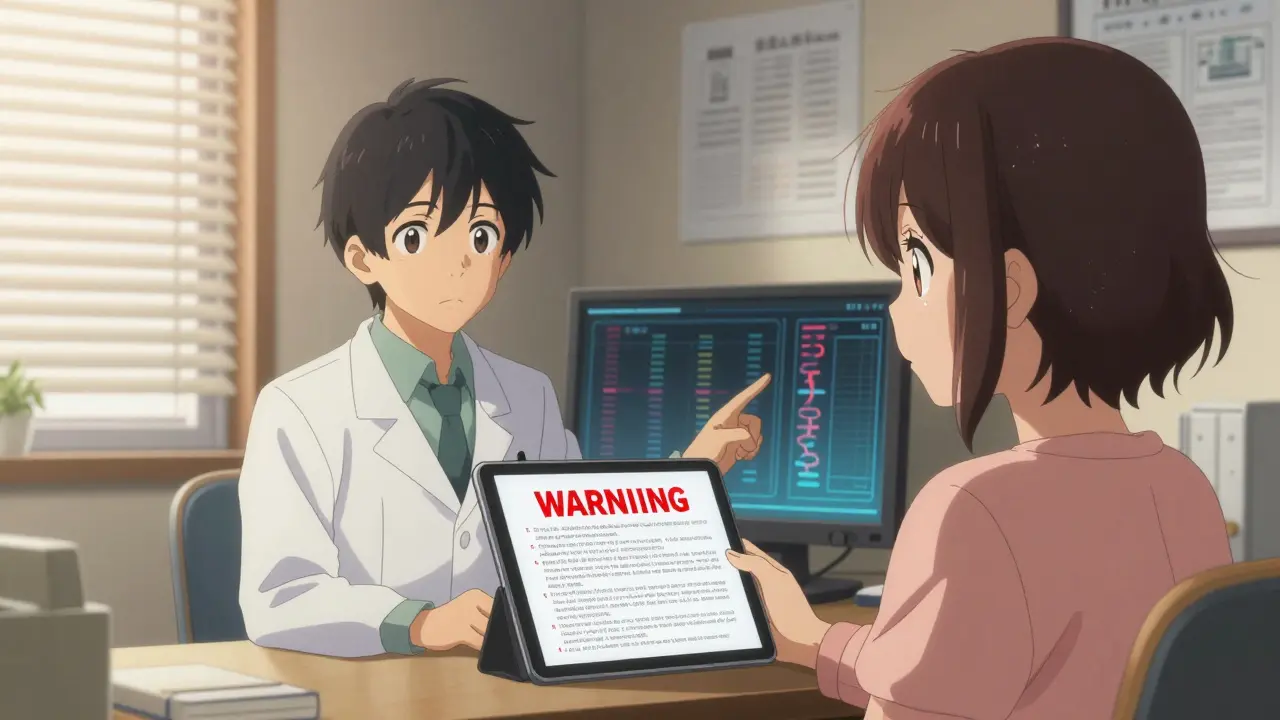
If you’re on a drug with this warning, don’t panic. But do ask questions. Your doctor should already be aware - but if they aren’t, speak up.
Here’s what to ask:
- What specific risks does this warning cover? (Don’t settle for "serious side effects" - ask for the exact ones.)
- How common are these risks? (Is it 1 in 100? 1 in 1,000? 1 in 10,000?)
- Are there alternatives without this warning? What are their risks?
- Do I need special monitoring? (Blood tests? Scans? More frequent visits?)
- Are there any drugs or conditions I must avoid while taking this?
Some patients stop their meds because of the warning - and that’s sometimes a mistake. For example, clozapine, used for treatment-resistant schizophrenia, has a black box warning for life-threatening drops in white blood cell count. But for many patients, it’s the only drug that works. With regular blood tests, the risk is manageable. The warning isn’t a stop sign - it’s a caution sign.
What About Over-the-Counter Drugs?
Black box warnings only apply to prescription drugs. You won’t find them on aspirin, ibuprofen, or allergy pills. But that doesn’t mean OTCs are risk-free. The FDA can still issue safety alerts for over-the-counter products - they just don’t use the black box format. Always read the Drug Facts label. If you’re taking multiple OTCs or combining them with prescriptions, talk to your pharmacist. Many serious interactions happen because people assume "natural" or "over-the-counter" means "safe."
How These Warnings Change Prescribing
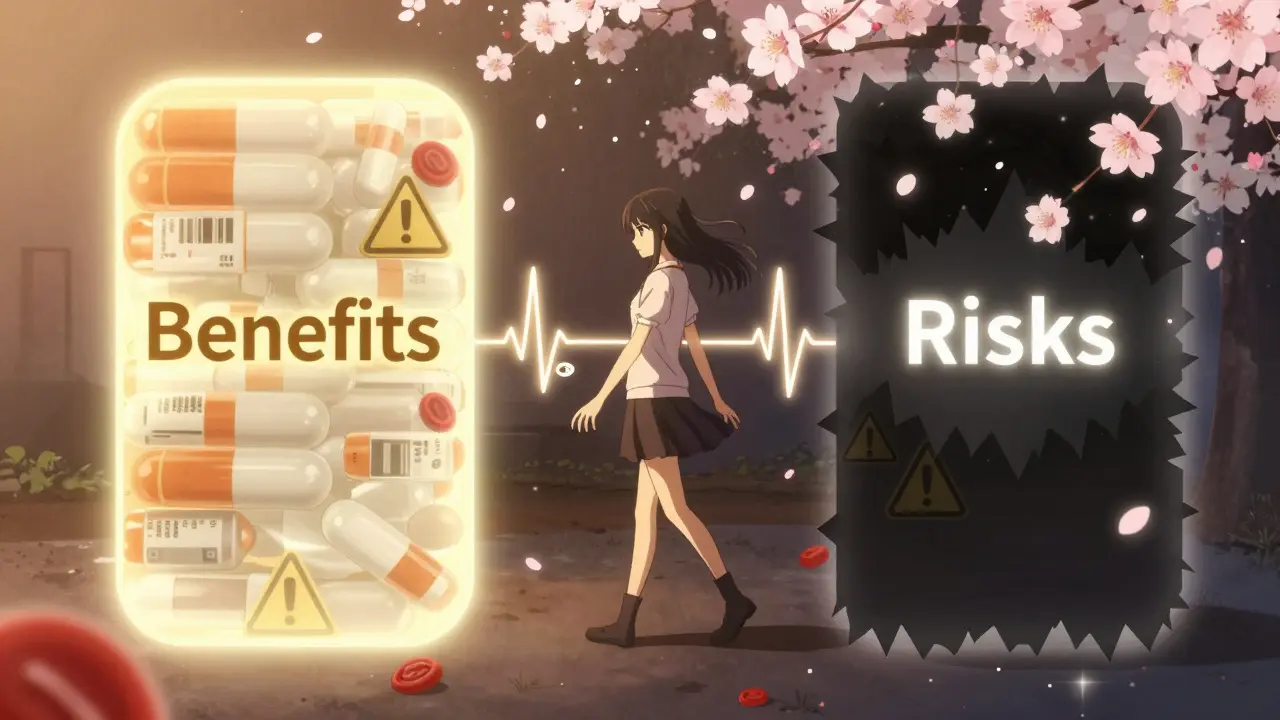
Studies show black box warnings work - but not always the way you’d expect. When Avandia got its warning, prescriptions dropped sharply. But when pioglitazone (Actos), a similar drug, got the same warning later, prescriptions didn’t drop as much. Why? Media coverage. The news cycle had moved on. The warning was there - but fewer people heard about it.
That’s why the FDA now pushes harder to get the word out. They update their website regularly. They send alerts to doctors. They even work with drug manufacturers to include the warning in digital prescribing systems. In 2021, the FDA required that black box warnings appear right after the "Highlights of Prescribing Information" - no more burying them in the middle of a 50-page document.
The Future of Black Box Warnings
The next big shift? Personalization. Right now, a black box warning applies to everyone taking the drug. But future warnings might say: "Risk increases in patients with gene variant CYP2D6 poor metabolizer." That’s not science fiction - the FDA’s 2023-2027 plan explicitly says they want to use genetic data to make warnings more precise.
Imagine a future where your doctor runs a quick genetic test before prescribing, and the system automatically flags: "This drug has a black box warning for patients like you. Here’s what to watch for." That’s the goal. It won’t eliminate risks - but it will make them easier to manage.
Final Thought: Don’t Ignore It - Don’t Fear It
A black box warning doesn’t mean a drug is dangerous. It means the drug is powerful. It means the benefit is real - and so is the risk. Millions of people safely use medications with these warnings every day. The key is awareness. Talk to your doctor. Ask for the details. Know what to watch for. And if something feels off - call your provider. Your life might depend on it.
Do all drugs with black box warnings have to be taken with special monitoring?
Not all, but many do. Some black box warnings require regular blood tests, heart monitoring, or pregnancy tests. Others simply state that the drug should not be used in certain populations - like pregnant women or people with liver disease. Always check the warning text for specific instructions. If monitoring is needed, your doctor will explain how often and what tests to expect.
Can a black box warning be removed?
Yes, but it’s rare. The FDA can remove or modify a black box warning if new evidence shows the risk is lower than originally thought - or if better safety measures are proven effective. For example, some warnings have been updated after years of post-market data showed that proper monitoring reduced complications. But removal requires strong, repeated evidence. Most warnings stay in place for years.
Are black box warnings only for prescription drugs?
Yes. Black box warnings are legally required only for prescription medications. Over-the-counter drugs don’t carry them, but they can still have serious risks. Always read the Drug Facts label on OTC products and talk to your pharmacist if you’re combining them with prescriptions.
If my drug has a black box warning, should I stop taking it?
Never stop a prescribed medication without talking to your doctor first. A black box warning doesn’t mean the drug is unsafe for you - it means the risks are serious and must be weighed carefully. For many patients, the benefits outweigh the risks. Stopping suddenly could be more dangerous than continuing under supervision.
How can I find out if my medication has a black box warning?
Check the package insert that comes with your prescription. You can also search the FDA’s Drugs@FDA database online. Many drug manufacturers list warnings on their websites too. If you’re unsure, ask your pharmacist - they’re trained to spot these alerts and can explain what they mean.



Comments (15)
Ariel Edmisten
Black box warnings are scary, but they’re not meant to scare you off. They’re meant to make you ask questions. I’ve got a friend on clozapine-no issues as long as he gets his blood drawn every week. Knowledge is power.
Niel Amstrong Stein
frankly i think the fda is way too slow to act sometimes. like why did it take 10 years for avandia to get that warning? people were having heart attacks left and right and we were all just... shrugging? 🤷♂️
Joey Gianvincenzi
It is imperative to underscore that the regulatory framework governing pharmaceutical safety in the United States remains among the most rigorous in the world. The black box warning system exemplifies a commitment to evidence-based risk communication, not alarmism. To dismiss it as bureaucratic overreach is both intellectually dishonest and dangerously naive.
Amit Jain
USA thinks it's the only country that knows how to handle drugs? LOL. In India, we have way more transparency. No black boxes, just clear labels. People don't die from warnings-they die from fearmongering. And don't even get me started on how Pharma owns the FDA.
Sarah B
Black box means dont ignore it period end of story
Savannah Edwards
I’ve been on a drug with a black box warning for over five years now, and honestly, it changed my life for the better. But I didn’t just take it blindly. I read every single page of the warning, talked to three different doctors, got a second opinion, set up monthly labs, and even joined a patient support group. It’s not about fear-it’s about responsibility. And yeah, it’s a lot of work, but when you’re living with a condition that could’ve killed you, you learn to do the work. The system isn’t perfect, but if you engage with it, it can save you. I’m living proof.
Gouris Patnaik
Who even trusts the FDA anymore? Big Pharma writes the guidelines. The black box is just a legal shield. You think they care about your liver? They care about liability. Real healing comes from herbs, fasting, and spiritual alignment-not chemical cocktails with warning labels that look like horror movie posters.
Heather Burrows
I don’t know why anyone still takes prescription drugs at all. We’ve been lied to for decades. The system is broken. Why risk it? Just eat kale and pray. It’s simpler. Safer. And honestly, more honest.
Ritu Singh
As someone who works in global health policy, I appreciate the rigor behind black box warnings. But we must also acknowledge that access to monitoring-blood tests, specialist visits, genetic screening-is deeply unequal. A warning is meaningless if you can’t afford to follow it. The FDA’s system is brilliant in theory, but in practice, it often becomes a privilege of the wealthy. We need to pair warnings with systemic support, not just legal disclaimers.
Mark Harris
Yo if you’re scared of a black box warning you’re doing it wrong. This ain’t a death sentence-it’s a heads-up. Get informed. Talk to your doc. Do the labs. You got this. One step at a time. You’re stronger than you think 💪
Ashley Hutchins
i mean like why even have drugs at all if theyre all gonna kill you i just dont get it like why not just take vitamins and chill idk
Lakisha Sarbah
My mom’s on a drug with a black box warning. She’s 72, has two other conditions, and somehow it’s the only thing that lets her walk without pain. Her doctor explained everything. She knows the risks. She doesn’t panic. She just takes it, gets her labs, and lives. That’s what this is about: informed choice. Not fear. Not hype. Just care.
Paula Sa
I think the most important thing about black box warnings is how they force us to talk. Not just with doctors, but with ourselves. We’re taught to trust pills, but this? This makes us pause. And that pause? That’s where real healing begins. I’m not saying avoid meds-I’m saying don’t just swallow them. Ask why. Ask how. Ask what else could work. That’s the power of the box.
Mary Carroll Allen
OMG I just found out my anxiety med has a black box warning and I totally panicked at first but then I looked it up and it turns out the risk is like 1 in 10,000 and I have to get blood tests every 3 months which I was already doing anyway because I have another condition so like... maybe the system kinda works?? I mean I’m still scared but also I feel way more in control now??
Eric Knobelspiesse
you know what’s funny? the black box warning for clozapine says it can cause agranulocytosis-like, your white blood cells just vanish. but here’s the thing: that same drug is the only thing that stops some people from trying to kill themselves. so yeah, it’s risky. but so is depression. the real warning? we don’t have enough options. and that’s the real tragedy.