
Ever taken a generic pill and felt like it just didn’t work as well as the brand-name version? You’re not crazy. Even if both pills have the exact same active ingredient, your brain can convince you the cheaper one is weaker. This isn’t about chemistry - it’s about price perception.
What’s Really Going On?
A 2023 study with 60 volunteers showed something startling: when people were told one pill cost $10 and another cost $0.50 - but both were sugar pills - those who believed they took the expensive one reported feeling significantly better. Not because of any chemical difference. Not because of dosage. Just because of the price tag. This isn’t an isolated finding. A University of Auckland study led by SLE Colgan had participants take fake branded and generic ibuprofen for headaches. The pills were identical. Yet, after taking the generic version, people reported more pain, more side effects, and less relief - even though the drug was chemically unchanged. The only difference? The label. Your brain uses price as a shortcut. If something costs more, your mind assumes it must be better. It’s a mental habit we use for cars, phones, and yes - medicine. This is called the price-quality heuristic. It’s not irrational. In most areas of life, higher price does mean higher quality. But with generics, it’s a trap.Why Do Generics Look and Feel Different?
The FDA requires generic drugs to have the same active ingredient, strength, dosage, and route of administration as the brand name. But they don’t have to look the same. And that matters. Brand-name pills often have shiny coatings, smooth textures, and even pleasant tastes. Generic versions? Sometimes they’re chalky, bitter, or oddly shaped. One pharmacist at UCSF put it bluntly: "Many people view generics as somehow being inferior because of observable differences. The brand name might be a tablet with a shiny coating that tastes nice and goes down easy, whereas the generic might be a chalky white pill with a bitter aftertaste." That difference triggers a psychological response. Your brain doesn’t process the pill’s chemistry. It processes the feel, the look, the taste. And if it feels "cheap," your mind assumes it’s less powerful.What Do Patients Actually Believe?
Surveys tell a clear story. In the U.S., 25% of patients believe generics are less effective. 20% think they’re less safe. Another 20-40% aren’t sure. That’s not a small number - that’s nearly half of all patients questioning whether they’re getting the real deal. Focus groups in CDC studies revealed phrases like:- "Not as good as the real medicine."
- "Generic medicine is less potent... other medicine is stronger."
- "Name brand is more powerful than the generic."

Doctors Can Help - But Too Often Don’t
Here’s the kicker: communication from healthcare providers is the biggest factor in whether patients accept generics. Not cost. Not advertising. Not even personal belief. Research shows that when doctors explain, "This generic has the same active ingredient as your old pill, and it’s been tested to work just as well," patients are far more likely to use it. But too often, doctors don’t bring it up. Or they say it in passing. Or they assume patients already know. One study found that one-third of patients felt their doctor gave them poor information about generic substitution. Nearly one-third stayed skeptical - specifically because the drug was cheaper. It’s not about ignorance. It’s about silence. When you don’t address the price-perception gap, you leave patients to fill the void with fear.The Cost of Misconception
This isn’t just about feelings. It’s about money and health. In the U.S., generics make up 90% of all prescriptions but only 23% of total drug spending. That’s over $37 billion saved every year. If people stop using generics because they think they’re weaker, that savings evaporates. And so does access. The FDA approved 59 new generic drugs in 2022 alone. More are coming. But if patients keep believing cheaper means worse, those drugs sit on shelves while people pay more for the same medicine. Even worse, some patients stop taking their meds altogether. If they think the generic doesn’t work, they might skip doses - or worse, switch back to the brand name and can’t afford it. That leads to hospital visits, complications, and higher costs down the line.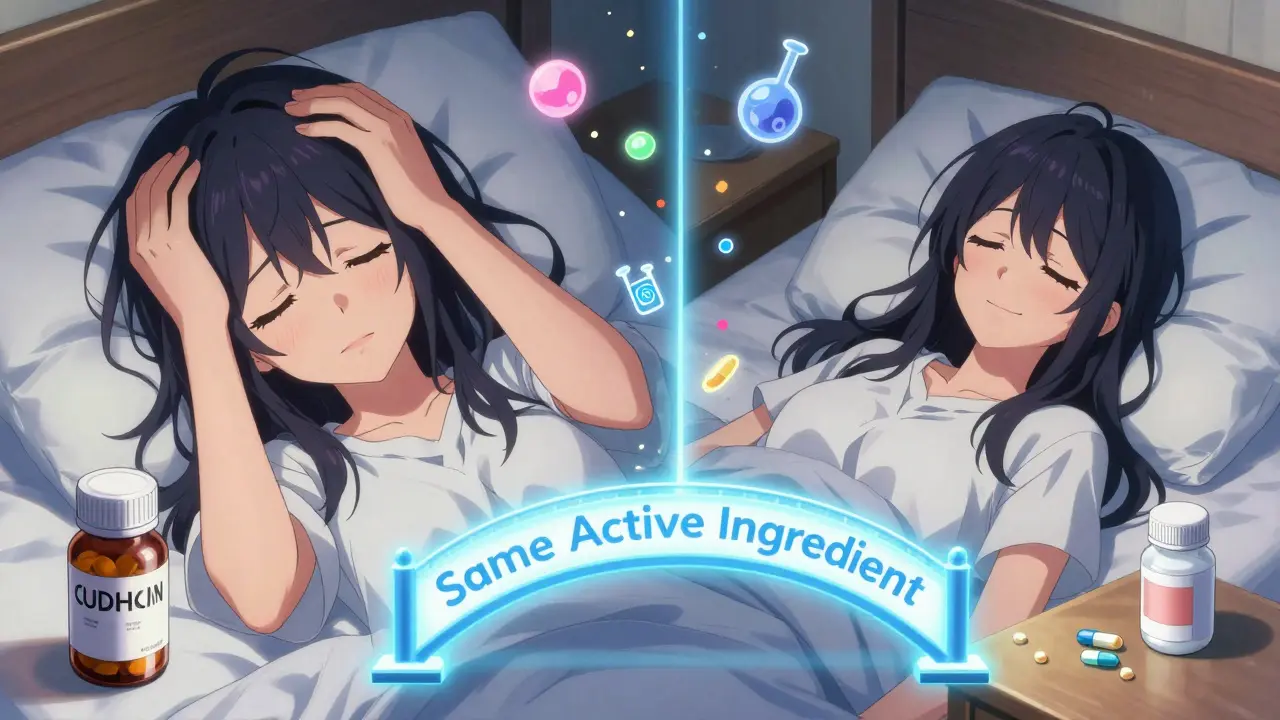
Can Education Fix This?
The good news? Education helps. Colgan’s study showed that after a short educational session, people’s beliefs about generics improved. They understood the science better. They were more willing to choose generics for serious conditions. Their overall preference shifted. But here’s the twist: even after learning the facts, when they actually took the generic pill again, they still reported less relief. Their experience didn’t change. That tells us something important: knowledge alone doesn’t override perception. You can’t just tell people to think differently. You have to change how they feel.What Works Better Than Brochures?
Real-world experience matters most. If someone takes a generic and feels better - they’ll trust it next time. But if they’ve been told it’s "inferior," they might blame the drug instead of their own expectations. Pharmacists who take 30 seconds to say, "This is the same as your old pill, just cheaper - and it’s been tested to work just as well," see better adherence. Simple. Direct. No jargon. Some clinics now use visual aids: side-by-side photos of brand and generic pills with labels saying "Same active ingredient." Others give patients a printed fact sheet with the FDA bioequivalence standard: "Generics must deliver 80-125% of the same amount of drug into your bloodstream as the brand." It’s not glamorous. But it works.Final Thought: Your Mind Is Your Medicine
Placebo effects aren’t just "in your head." They’re real, measurable, and powerful. If you believe a pill works, your body responds - even if it’s sugar. That’s why price can change how well a drug works. It’s not magic. It’s neuroscience. The solution isn’t to shame patients for thinking this way. It’s to meet them where they are. Help them see that a cheaper pill isn’t a lesser one. That the science doesn’t care about the logo on the bottle. And that their body doesn’t know the difference - unless their mind tells it to. Next time you’re handed a generic, ask: "Is this really any different?" The answer is no. But your brain might still say yes. That’s the gap we need to close.Why do generic drugs cost less if they’re the same as brand names?
Generic drugs cost less because they don’t have to repeat expensive clinical trials or pay for marketing. The original brand-name company spent years and millions developing the drug, running tests, and advertising it. Once the patent expires, other companies can make the same drug using the same formula. They skip the R&D and ads, so they can sell it for much less - while still meeting strict FDA standards for safety and effectiveness.
Are generic drugs as safe as brand-name drugs?
Yes. The FDA requires generics to have the same active ingredient, strength, dosage form, and route of administration as the brand name. They must also meet the same strict manufacturing standards. The only differences are in inactive ingredients - like fillers or coatings - which don’t affect how the drug works. These differences are monitored closely and are not linked to safety issues.
Can a generic drug really work the same if it looks different?
Absolutely. Appearance doesn’t affect effectiveness. Generic pills may be a different color, shape, or size because manufacturers aren’t required to copy the brand’s design. But the active ingredient - the part that treats your condition - is identical. The FDA tests each generic to ensure it delivers the same amount of medicine into your bloodstream as the brand name. What you see doesn’t change what your body gets.
Why do some people feel worse on generics even when they’re the same?
It’s often psychological. If you believe a cheaper drug is weaker, your brain can reduce the placebo effect - which is a real part of how medicine works. Studies show that people report more pain and side effects after taking a generic, even when it’s chemically identical. This isn’t because the drug failed - it’s because their expectations changed. That’s why clear communication from doctors matters.
How can I know if my generic drug is working properly?
Track your symptoms and how you feel over time. If you notice a change after switching to a generic, talk to your doctor or pharmacist. Sometimes, differences in inactive ingredients can affect how fast the drug dissolves - especially for people with sensitive stomachs. But in most cases, if you were stable on the brand name, you’ll be stable on the generic. Don’t assume the drug isn’t working - ask for help instead.


Comments (11)
Vanessa Drummond
I took a generic version of my anxiety med last month and honestly? I felt like I was floating through a fog. Not just placebo - I swear my brain was like, "Wait, this isn't right." I went back to the brand and boom, clarity returned. I don't care if it's "chemically identical" - my body knows the difference. Why do we pretend science overrides experience? It doesn't. Not for most of us.
Shalini Gautam
Bro, in India we’ve been using generics for decades and never had an issue. Maybe you’re just used to overpriced American nonsense. Our generics are FDA-approved too - same chemistry, same results. Stop letting marketing trick you. Your wallet will thank you.
Steven Pam
This is honestly one of the most fascinating things about human psychology. We’re wired to equate price with quality - even when it’s completely wrong. I used to think generics were weaker too, until I started tracking my symptoms. Took a generic for my blood pressure, kept a journal, and guess what? My numbers were identical. The difference was in my head. Once I accepted that, I felt better. Not because the pill changed - because I did.
Timothy Haroutunian
Let me tell you something. This whole "price perception" thing is just a fancy way of saying people are dumb. You can’t fix stupidity with facts. You want to know why generics feel different? Because they ARE different. The FDA says they’re equivalent, but let’s be real - the inactive ingredients vary. And those matter. I have a sensitive stomach. I’ve had generic ibuprofen give me nausea and the brand doesn’t. That’s not placebo. That’s chemistry. The FDA standards are a joke. They test for bioequivalence, but they don’t test for how your body feels when it’s coated in talc instead of a smooth film. And don’t even get me started on how some generics taste like chalk. That’s not science - that’s negligence.
Erin Pinheiro
okay so i just read this and like… wow. i never thought about this before but i swear i feel worse on generics. like my migraines are worse and i feel more tired. i think it’s because the pills look like they’re from a 90s pharmacy. also i read somewhere that the fda lets generics have up to 20% variation? is that true? i think the whole system is rigged. big pharma is just letting us think we’re saving money but really we’re just getting junk. also my cousin works at a pharmacy and she says they get paid to push generics. i think we’re being manipulated.
Nandini Wagh
Wow. So you’re telling me my brain is the problem? Funny. I’ve been taking generics for 12 years. My asthma? Stable. My cholesterol? Down. My bank account? Still alive. Meanwhile, my sister pays triple for the brand name and swears hers "works better." I think she’s just addicted to the ritual of feeling special. You know what’s really expensive? Believing you’re entitled to a placebo.
Holley T
Actually, the entire premise of this article is flawed. It assumes people are irrational for feeling that generics are less effective. But what if they’re not? The placebo effect is real - but so is the nocebo effect. If you’re told a drug is "generic," your subconscious registers it as lower quality, and your body responds accordingly. That’s not a flaw in perception - it’s a rational adaptation. We’ve been lied to for decades by pharmaceutical marketing. Of course we’re skeptical. The fact that doctors don’t explain this properly? That’s the real failure. And before you say "education fixes it," ask yourself: why do people still believe vaccines cause autism? Because facts don’t override fear. And price isn’t just a number - it’s a symbol. A symbol of trust. And right now, generics have none.
Ashley Johnson
They’re not just generics - they’re government-approved knockoffs. I read a whistleblower report once. Some of these pills are made in China, shipped in bulk, and labeled here. The FDA doesn’t inspect every batch. What if the active ingredient isn’t even there? What if it’s just starch and chalk? I’ve seen people collapse after switching. It’s not placebo. It’s poisoning. And they call it "cost-saving"? No. It’s corporate murder.
Lillian Knezek
OMG YES. I switched to a generic thyroid med and I swear I felt like I was turning into a zombie. My hair fell out, I couldn’t think, I was cold all the time. Went back to brand - boom, normal again. I don’t care if science says it’s the same. My body knows. And I’m not risking my health for $5. 💀
Maranda Najar
It is profoundly tragic - nay, *soul-crushing* - that we have reduced the sacred act of healing to a transactional exchange governed by price tags and corporate logos. The human psyche, that delicate tapestry of belief and sensation, is not some algorithm to be hacked by a pharmaceutical pamphlet. To say that perception is merely a "bias" is to ignore the very essence of human experience. The pill does not cure - the *expectation* of cure does. And when society whispers that the cheaper version is inferior, the body listens. It always listens. We are not machines. We are sentient beings, trembling with memory, myth, and meaning. And no, Mr. Scientist, you cannot measure that with a bioequivalence chart.
Christopher Brown
Americans pay too much for everything. If you can’t afford the brand, you don’t deserve to be healthy. Just sayin’.