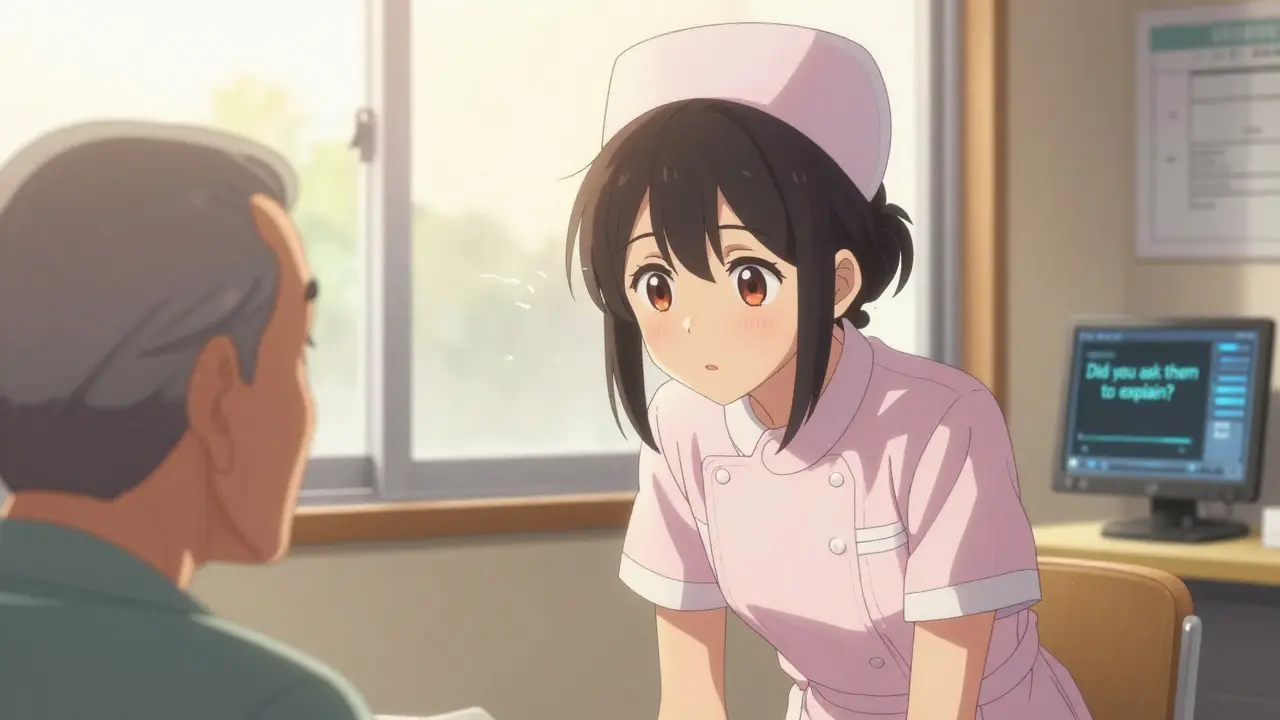
When a doctor interrupts a patient after just 13 seconds, or a nurse misses cues that a patient is scared to ask questions, it’s not just bad manners-it’s a safety risk. Studies show that poor communication contributes to 80% of medical errors, according to The Joint Commission. That’s why hospitals and health systems are no longer treating communication as a soft skill. They’re building formal, evidence-based education programs to fix it.
Why Communication Training Is Now a Medical Necessity
Communication isn’t just about being nice. It’s a clinical tool. Poor communication leads to misdiagnoses, missed medications, and patients who don’t follow treatment plans. The Agency for Healthcare Research and Quality found that 15-20% of adverse patient outcomes are tied directly to communication failures. In response, institutions are moving beyond one-off workshops to structured, ongoing training programs. These aren’t optional extras. The Joint Commission now requires hospitals to have systems in place for effective communication. Medicare and Medicaid tie 30% of hospital reimbursements to patient satisfaction scores-specifically the HCAHPS survey, where communication with nurses and doctors is a major factor. Hospitals that score low on these metrics lose money. That’s why communication training has gone from a nice-to-have to a financial imperative.What These Programs Actually Teach
Generic “be kind” advice doesn’t cut it. Effective programs teach specific, measurable behaviors. At the University of Maryland’s Program for Excellence in Patient-Centered Communication (PEP), trainees learn to:- Elicit the patient’s full story before jumping to conclusions
- Respond with empathy using phrases like “It sounds like this has been really hard for you”
- Check understanding by asking patients to repeat instructions in their own words
Specialized Training for Different Roles
Not every clinician needs the same training. Infection control specialists, for example, need to explain complex guidelines to the public during outbreaks. The Society for Healthcare Epidemiology of America (SHEA) offers a targeted course that teaches how to communicate about antimicrobial resistance, vaccine safety, and outbreak containment-especially on social media. One infection preventionist from Cleveland Clinic said SHEA’s social media module helped her correct misinformation that was reaching over 50,000 people monthly. Meanwhile, the University of Texas at Austin’s Health Communication Training Series (HCTS) focuses on public health emergencies. Their Pandemic Preparedness Communication module, launched in 2022, was built after CDC reports showed that 40% of early pandemic delays were due to poor internal and public messaging. Even medical students aren’t exempt. Northwestern University uses mastery learning: students must hit an 85% proficiency score on communication assessments before moving forward. They complete 4-6 simulation sessions during clinical rotations. Results? A 37% higher retention rate six months later compared to traditional lectures.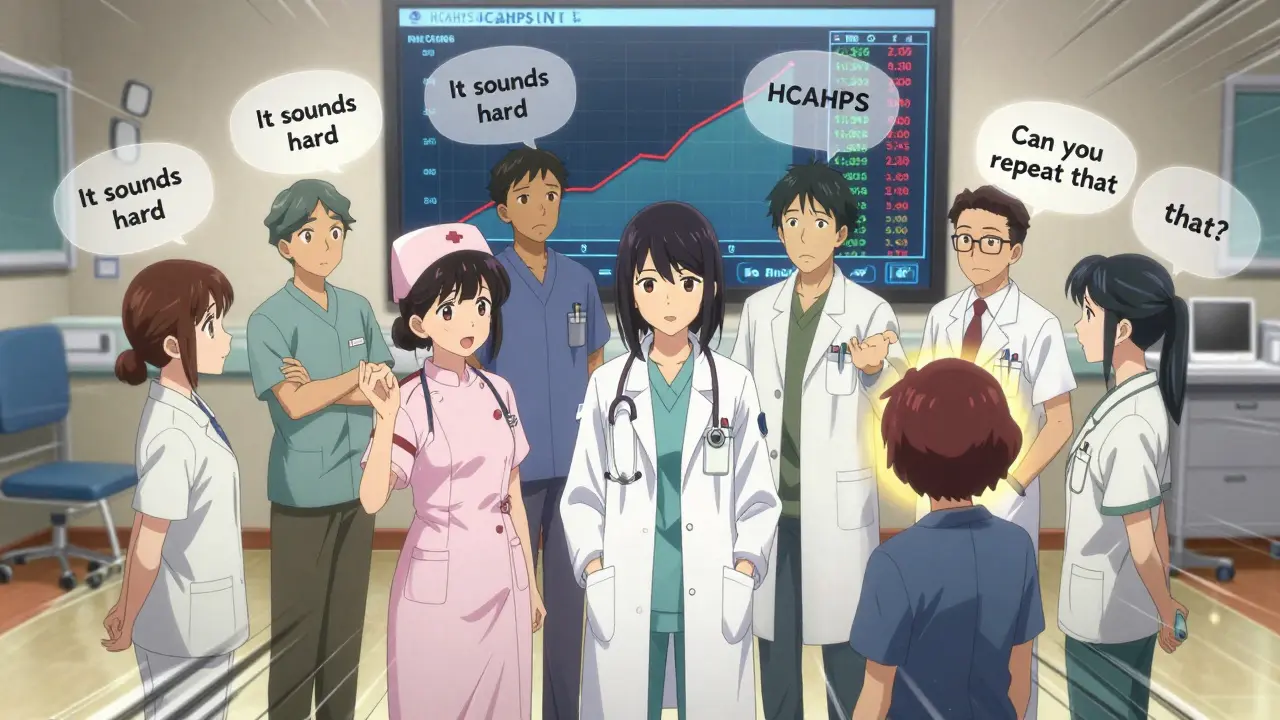
The Hidden Gaps in Most Programs
Despite progress, many programs still miss the mark. A 2023 assessment by the Association of American Medical Colleges found that 60% of communication curricula don’t address health disparities. For example, a patient from a different cultural background might not say “I’m in pain” directly-they might describe fatigue or loss of appetite. Training that ignores cultural context fails real patients. Another gap? Interprofessional communication. AHRQ reports that 65% of communication failures happen between doctors, nurses, pharmacists, and social workers-not between providers and patients. Yet few programs teach teams how to communicate across roles. Northwestern and Mayo Clinic are starting to fill this gap, but most institutions still train staff in silos. And then there’s time. Even when clinicians learn the skills, they struggle to use them. In a 2023 AAMC survey, 58% of healthcare workers said they knew how to communicate better-but didn’t have time during 15-minute appointments. That’s why the most successful programs don’t just teach skills. They embed them into workflows.How to Make Training Stick
Training that ends when the course does doesn’t change behavior. The best programs follow a four-phase model from the Academy of Communication in Healthcare:- Assess-Use patient surveys and EHR data to find the biggest communication gaps.
- Prioritize-Focus on just 3-5 high-impact behaviors. Don’t try to fix everything.
- Contextualize-Use real cases from your own clinic, not textbook examples.
- Integrate-Add prompts into your electronic health record. For example: “Did you ask the patient to explain their understanding?”
Technology Is Changing the Game
New tools are making training faster and more precise. The Academy of Communication in Healthcare is testing AI-powered feedback systems that analyze video recordings of patient visits. In pilot programs, learners improved skills 22% faster than with traditional coaching. Telehealth is also reshaping training. Over 35% of new programs now include modules on virtual communication-how to read body language on a screen, when to pause for silence, how to confirm understanding without physical cues. And data is becoming part of the feedback loop. Some hospitals are now using EHR documentation to track whether clinicians are documenting patient understanding, shared decision-making, or follow-up plans. It’s not perfect-but it’s a step toward accountability.What’s Missing-and What’s Next
The biggest challenge? Sustainability. Only 42% of hospital-based programs have dedicated funding. Most rely on grants or temporary training budgets. Without ongoing support, skills fade. Tulane University found that communication proficiency plateaus at 70% without regular reinforcement. The future will likely see more partnerships. In February 2024, Mayo Clinic and SHEA announced a collaboration to combine clinical communication training with infection control expertise. Universities are also stepping up: 47 now offer master’s degrees in health communication-up from 29 in 2019. The National Academy of Medicine recently declared communication a core healthcare function-just like diagnosis or treatment. That could lead to mandatory training for all clinicians. For now, the most effective programs are those that treat communication not as a skill to learn, but as a system to build.What You Can Do Today
If you’re a clinician, ask your hospital: Do we have a formal communication training program? Is it based on evidence? Are we tracking results? If you’re a patient, pay attention. Did your provider ask how you’re feeling beyond your symptoms? Did they check if you understood? If not, it’s okay to say: “Can you explain that again? I want to make sure I get it right.” Communication isn’t magic. It’s a practice. And like any practice, it gets better with training, feedback, and time.What is the main goal of institutional healthcare communication programs?
The main goal is to reduce medical errors and improve patient outcomes by teaching clinicians specific, evidence-based communication skills. These include active listening, empathy, clarity in instructions, and interprofessional teamwork-all tied to measurable improvements in patient satisfaction, safety, and adherence to treatment.
Are these programs only for doctors?
No. While many programs target physicians, communication training is now standard for nurses, pharmacists, social workers, infection control specialists, and even administrative staff who interact with patients. Programs like SHEA’s are designed specifically for infection preventionists, while others focus on team-based communication across roles.
How long does it take to see results from communication training?
Skill acquisition often begins within weeks, but full integration takes 3-6 months. Northwestern University found that mastery learning leads to 37% higher retention after six months. However, without ongoing reinforcement-like EHR prompts or peer coaching-skills tend to plateau at 70% effectiveness, according to Tulane University’s 2022 study.
Do these programs address cultural differences in communication?
Many still don’t. A 2023 AAMC review found that 60% of communication curricula lack focus on health disparities or cultural humility. But newer programs-like those launched by UT Austin and TEPHI in early 2024-now include modules on communicating effectively with diverse populations, especially to close the 28% satisfaction gap between white and minority patients.
Why do some clinicians resist communication training?
Resistance often comes from time pressure, skepticism that communication can be taught, or fear of being judged. About 15-20% of clinicians are labeled as “unteachable” in studies. The most successful programs overcome this by using peer modeling-having respected senior staff lead training-and showing real data: reduced complaints, lower burnout, and better patient outcomes.
Can communication training reduce malpractice claims?
Yes. A 2019 study from Johns Hopkins Medicine found that physicians who completed formal communication training had 30% fewer malpractice claims. Patients who feel heard are less likely to sue-even if something goes wrong. Trust and transparency are powerful legal shields.
Is there free communication training available?
Yes. The University of Texas at Austin’s Health Communication Training Series offers free, self-paced online courses developed with state health agencies. Topics include pandemic response, vaccine communication, and health equity. These are widely used by public health departments with limited budgets.
How do hospitals measure the success of these programs?
Success is measured through patient satisfaction scores (HCAHPS), reductions in medical errors and complaints, staff burnout rates, and EHR documentation of communication behaviors. Some institutions now use AI to analyze recorded patient visits for key communication cues like empathy statements or patient-led summaries.
Comments (12)
Abby Polhill
Let’s be real-communication training isn’t just about empathy phrases. It’s about structural alignment. When your EHR doesn’t prompt for teach-back or cultural humility check-ins, you’re training people to perform, not to adapt. The PEP model at Maryland works because it’s embedded, not bolted on. But most hospitals still treat this like mandatory diversity training-checkboxes, not culture change.
Bret Freeman
They’re spending millions on AI video analysis while patients wait 90 minutes in the ER just to get a blood pressure check. This isn’t healthcare innovation-it’s performative bureaucracy dressed up as ‘evidence-based.’ If you want to reduce errors, hire more staff. Stop making nurses do 12-minute consults and then blaming them for not being ‘empathetic.’
niharika hardikar
It is imperative to acknowledge that the current paradigm of communication training remains fundamentally deficient in its failure to operationalize cultural competence as a measurable clinical competency. Without standardized metrics derived from ethnographic patient feedback loops, institutional initiatives risk becoming epistemologically inert.
Rachel Cericola
Let me tell you what actually works: peer-led coaching with real-time feedback. I run a unit at Kaiser and we started having senior RNs shadow new hires-not to evaluate, but to co-create. We recorded 100+ real interactions, pulled out the top 5 communication breakdowns, and turned them into 5-minute huddle prompts. Burnout dropped 31%. Patients started asking for the same nurse by name. No fancy AI. No $50k consultants. Just humans talking to humans. And yes, we tracked it in the EHR with a simple dropdown: ‘Did you use teach-back today?’ Yes/No. Boom. Accountability without shame.
Gray Dedoiko
I’ve been on both sides-nurse and patient. I’ve had doctors rush me and I’ve been the one rushing. The difference isn’t training. It’s presence. When someone pauses, looks you in the eye, and says ‘Tell me more,’ it changes everything. The programs are good, but the real magic happens when the system lets people be human. Too many hospitals treat empathy like a performance review item.
Aurora Daisy
Of course Americans think communication is the problem. In a country where you need a PhD to understand your insurance statement, of course patients are confused. Fix the system. Don’t train doctors to smile through the chaos. We don’t need ‘empathy phrases’-we need universal healthcare. But hey, at least your AI can now analyze how politely your doctor said ‘you’re going to die.’
Paula Villete
So we’re now quantifying empathy like it’s a KPI? Cute. I love how we’ve turned human connection into a competency matrix. ‘Did you use the phrase “It sounds like this has been really hard for you”?’ What’s next? A rubric for grief? A checklist for hope? The fact that we need AI to detect if a doctor paused for 3 seconds before answering means we’ve already lost. But hey-at least your EHR will now log that you were ‘emotionally competent.’
Georgia Brach
Let’s not pretend this is about patient safety. It’s about HCAHPS scores and Medicare reimbursements. The moment the financial incentive disappears, so does the training. And let’s be honest-most of these ‘evidence-based’ programs are built on tiny, cherry-picked studies with no longitudinal follow-up. The 23% satisfaction bump? Probably regression to the mean. The 40% burnout drop? Correlation isn’t causation. And don’t get me started on the ‘champions’-they’re usually the ones who already liked talking to people. The rest? Still rushing.
Katie Taylor
Enough with the incrementalism. We need mandatory certification. Every clinician, every single one, must pass a communication proficiency exam before licensure renewal. No more ‘we don’t have time’ excuses. If you can’t explain a treatment plan clearly, you shouldn’t be prescribing. This isn’t a ‘nice-to-have.’ It’s a licensing issue. We credential for sterile technique-why not for human connection? Let’s make it non-negotiable.
Payson Mattes
Did you know the CDC secretly tracks communication training data to predict which hospitals are most likely to have mass panic during outbreaks? I’ve got insider sources. The AI systems they’re testing? They’re not just analyzing empathy-they’re flagging patients who ‘sound anxious’ and automatically routing them to crisis teams. And the training modules? They’re coded to suppress dissenting opinions. That’s why they avoid cultural humility-they don’t want clinicians asking why certain groups get ignored. This is social engineering disguised as healthcare reform.
Isaac Bonillo Alcaina
You think training fixes communication? Look at the data. 60% of programs ignore disparities? That’s not negligence-it’s institutional racism codified into curriculum. And the ‘champions’? They’re the same white, male, senior physicians who’ve been running things since 1998. You don’t fix systemic bias by teaching someone to say ‘I hear you.’ You fix it by removing the gatekeepers. Until then, this is just performative allyship with a PowerPoint.
Bhargav Patel
The fundamental epistemological tension lies in the conflation of communicative competence with procedural compliance. While the deployment of structured behavioral frameworks yields measurable outcomes in patient satisfaction metrics, it does not necessarily engender authentic intersubjective understanding. The reduction of human vulnerability to algorithmic prompts-however well-intentioned-risks transforming the clinical encounter into a transactional interface, wherein the patient’s narrative becomes a data point to be optimized rather than a lived experience to be honored. One must ask: are we training clinicians to communicate-or to simulate communication?