Generic drugs save the U.S. healthcare system hundreds of billions of dollars every year. In 2024 alone, they generated $467 billion in savings while accounting for 90% of all prescriptions filled. Yet, getting these affordable alternatives to market is not cheap or simple. The FDA Food and Drug Administration, the federal agency responsible for protecting public health by ensuring the safety, efficacy, and security of human and veterinary drugs approval process for generics involves significant costs, complex regulations, and frequent delays that can frustrate manufacturers and patients alike.
If you are a pharmaceutical executive, a policy maker, or just someone curious about why your medication costs what it does, understanding the economics behind generic drug approval is essential. This guide breaks down the real costs of FDA approval for generics, the fee structures that fund the process, and the hidden expenses caused by regulatory hurdles. We will look at where the money goes, who pays, and how recent changes might affect future drug availability.
The Core Fee Structure: How Much Does It Cost to Apply?
The most visible cost of bringing a generic drug to market is the user fee paid to the FDA. These fees are not arbitrary; they are set by Congress through legislation known as GDUFA Generic Drug User Fee Amendments, a program established in 2012 to provide the FDA with additional resources to review generic drug applications. The current iteration, GDUFA III, was authorized in September 2022 and runs until September 2027.
For fiscal year 2025, the fee structure is precise. There are two main types of fees:
- Facility Fees: $238,055 per manufacturing facility. This covers the inspection and oversight of the physical plant where the drug is made.
- Product Fees: $136,485 per generic drug application (ANDA). This covers the scientific review of the specific drug product.
When you combine these, the total direct fee for a single generic application is approximately $375,000. While this sounds like a lot, it is a fraction of what brand-name drug companies pay. Under the Prescription Drug User Fee Act (PDUFA), New Drug Application (NDA) fees for brand-name drugs reached $3.685 million per application in FY 2025. This disparity reflects the different levels of testing required: generics must prove bioequivalence to an existing drug, while brand-name drugs must prove safety and efficacy from scratch through costly clinical trials.
| Fee Type | Generic Drugs (GDUFA) | Brand-Name Drugs (PDUFA) |
|---|---|---|
| Application/Product Fee | $136,485 | ~$3.685 Million (Total NDA) |
| Facility Fee | $238,055 | Included in NDA structure |
| Total Estimated Direct Cost | ~$375,000 | >$3.6 Million |
| Review Timeline Goal | 10 months (Standard) | 10 months (Standard) |
Small businesses get some relief here. Companies with fewer than 1,000 employees can apply for waivers, reducing their financial burden. However, even with waivers, the indirect costs of preparing the application remain high.
Beyond the Fees: The Hidden Costs of Development
The user fees are just the tip of the iceberg. The real cost impact comes from the time and resources spent developing the generic formulation before the application is even submitted. The average generic manufacturer spends 18 to 24 months developing a product prior to filing.
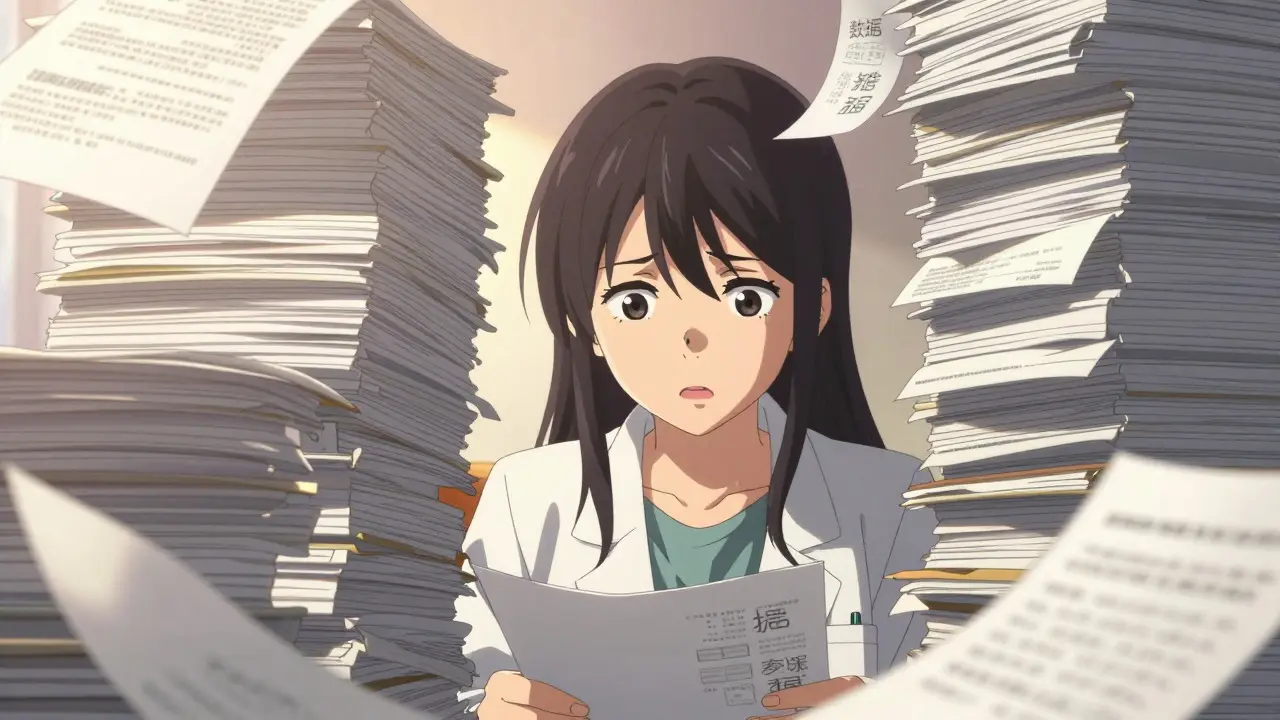
Under GDUFA III, documentation requirements have expanded dramatically. An Abbreviated New Drug Application (ANDA) now averages between 150,000 and 200,000 pages, compared to 50,000-75,000 pages during the first GDUFA cycle in 2013. According to Deloitte’s 2024 pharmaceutical development cost analysis, this increase in documentation has raised preparation costs by approximately 35%.
Why so much paperwork? Because the FDA requires proof that the generic drug is bioequivalent to the brand-name version. This means it must deliver the same amount of active ingredient into a patient’s bloodstream in the same amount of time. For simple pills, this is straightforward. For complex generics-such as inhalers, nasal sprays, or extended-release formulations-it is incredibly difficult.
Consider the case of a mid-sized generic company working on a complex nasal spray. One executive told RAPS in August 2024 that they spent $8.7 million on three separate reformulation attempts since 2018. Why three attempts? Because of a critical regulatory bottleneck that adds millions in costs and years in delays.
The Complex Generic Bottleneck: The 2015 Policy Change
The biggest driver of unexpected costs in generic drug approval is a policy change implemented by the FDA in 2015. Prior to this, the FDA provided specific feedback on formulation discrepancies for complex generics. If a manufacturer’s version didn’t match the brand-name drug perfectly, the FDA would tell them exactly what was wrong.
In 2015, the agency stopped providing this specific feedback for qualitative and quantitative identity (Q1/Q2) requirements. Instead, manufacturers were forced into a trial-and-error process. They had to guess what was wrong, reformulate, test again, and resubmit. This lack of clarity has increased development costs by 25-40% for complex generics.
The data supports this frustration. The Generic Pharmaceutical Association (GPhA) reported in 2023 that 30% of complex generic applications experience multiple review cycles due to this policy, compared to just 15% for standard generics. A Complete Response Letter (CRL)-the FDA’s way of saying “fix this”-now costs $2-5 million per application and adds 8-12 months to the timeline.
Terry Wilcox, Co-Founder of Patients Rising, summarized the impact in September 2025: “A decade ago, the FDA created new bureaucratic hurdles that slow down the approval process for generic medications... keeping generic medications out of patients' hands.”
Who Pays the Price? The Impact on Patients and the System
You might wonder if these costs matter to you. They do. When generic approvals are delayed, patients continue to pay for expensive brand-name drugs. The economic ripple effect is massive.
Let’s look at the numbers. Generics accounted for 90.3% of prescription volume in 2024 but only 12.2% of total drug expenditure ($98 billion versus $700 billion for brands). This efficiency is why generics are vital. However, when a generic is delayed, that savings disappears.
A stark example is testosterone replacement therapy. Between 2016 and 2020, there was a 4.7-year approval delay for generic versions of these products. During that time, patients paid 300% more for brand-name versions. On Reddit’s r/pharmacy community, a thread titled “Generic approval delays cost me $1,200/month” featured 147 comments from patients describing similar pain points with drugs like apixaban and glipizide.
Medicare Part D beneficiaries saved $1,152 per enrollee in 2024 due to generic utilization. If those generics had been delayed, that savings would have vanished, putting pressure on both individual budgets and the broader healthcare system.
Navigating the Process: Strategies for Success
For manufacturers, the goal is to avoid the costly second or third review cycle. The FDA’s own data shows that first-cycle approval rates are 65% for standard generics but drop to just 42% for complex products. How do successful companies bridge this gap?
The key strategy is early communication. The FDA recommends Type II meetings with review divisions before submitting the application. An AAM survey found that 78% of successful applicants utilized these meetings, which reduced review times by an average of 3.2 months. While these meetings cost money and time upfront, they prevent the far more expensive mistake of submitting a flawed application.
Another tactic is leveraging small business status if applicable. Waivers can free up capital for better quality control systems or more robust bioequivalence studies, increasing the likelihood of a first-cycle pass.
What’s Next? GDUFA IV and Legislative Changes
The regulatory landscape is shifting. The FDA hosted a public meeting on July 11, 2025, to discuss GDUFA IV, which would cover fiscal years 2028-2032. Industry stakeholders are proposing annual fee increases of 3-5% to fund additional review staff. The Congressional Budget Office estimates that GDUFA IV will require $725-750 million in annual funding to meet performance goals.
More importantly, there is legislative movement to fix the complex generic bottleneck. H.R. 1843, the “Increasing Transparency in Generic Drug Applications Act,” introduced in September 2025, aims to restore detailed FDA feedback on formulations. As of November 2025, it has 72 co-sponsors. If passed, the CBO estimates it could accelerate approvals for 12-15 complex drugs annually, generating $1.8-2.3 billion in additional savings per year.
FDA Commissioner Robert Califf acknowledged the tension in July 2024, noting that resource constraints impact timely feedback but defending the rigor needed for safety. The challenge for GDUFA IV will be balancing speed with quality without compromising the public trust.
Conclusion: The Value of Rigor vs. Access
The cost of FDA approval for generics is not just about the $375,000 check written to the agency. It is about the millions spent on development, the years lost to trial-and-error reformulations, and the billions in potential healthcare savings delayed. While the fees ensure rigorous safety standards, the current lack of transparency for complex generics creates inefficiencies that hurt patients and manufacturers alike. With GDUFA IV approaching and new legislation pending, the next few years will determine whether the system becomes faster and more transparent, or remains stuck in its current costly loop.
How much does it cost to get a generic drug approved by the FDA?
The direct user fees for a generic drug application in FY 2025 are approximately $375,000, consisting of a $136,485 product fee and a $238,055 facility fee. However, total development costs including research, bioequivalence studies, and documentation often exceed several million dollars, especially for complex generics.
What is GDUFA and why does it matter?
GDUFA (Generic Drug User Fee Amendments) is a program that allows the FDA to collect user fees from generic drug manufacturers to fund the review of their applications. It matters because it sets the timelines and performance goals for generic drug approvals, aiming to accelerate access to affordable medications.
Why are complex generic drugs harder to approve?
Complex generics, such as inhalers or extended-release tablets, have intricate delivery mechanisms. Since 2015, the FDA has limited specific feedback on formulation issues, forcing manufacturers into costly trial-and-error processes. This leads to higher failure rates and longer development times compared to simple pills.
Do generic drug fees make medications more expensive for patients?
Indirectly, yes. High development costs and regulatory delays can discourage manufacturers from pursuing certain generics, leaving patients with only expensive brand-name options. However, once approved, generics are significantly cheaper, saving the healthcare system billions. Delays in approval mean patients pay more for longer periods.
What is H.R. 1843 and how will it affect generic approvals?
H.R. 1843 is a proposed bill aimed at restoring detailed FDA feedback for complex generic drug applications. If passed, it could reduce approval timelines by 18-24 months for complex generics, potentially accelerating market entry and generating billions in additional healthcare savings.