The Hidden Gap in Drug Safety Reporting
Imagine a scenario where a medication saves millions of lives but hides a dangerous side effect because no one is tracking it properly. This isn't science fiction; it is the reality for many generic drugs in the United States. While these medications make up about 90% of all prescriptions dispensed, they account for a much smaller slice of safety reports sent to regulators. This discrepancy creates a blind spot in the drug safety monitoring system that could potentially put patients at risk.
Understanding how to report serious adverse events for generic formulations is critical for healthcare providers, pharmacists, and patients alike. The rules exist, but the execution varies wildly compared to brand-name counterparts. If you are dealing with a reaction to a generic medication, knowing the specific reporting procedures ensures that safety signals are captured accurately. This guide breaks down the regulatory requirements, the practical challenges you might face, and the steps to ensure your report gets where it needs to go.
Defining Serious Adverse Events
Before you can report anything, you need to know what qualifies. Not every side effect makes the cut for a Serious Adverse Event (SAE). The Food and Drug Administration (FDA) sets a strict definition that applies equally to brand and generic products. An event is considered serious if it results in death, is life-threatening, requires hospitalization, causes permanent or significant disability, results in a congenital anomaly, or requires intervention to prevent permanent impairment.
Think of it this way: a mild headache after taking a generic pain reliever is an adverse event, but it is not serious. However, if that same medication causes a severe allergic reaction that forces a patient into the emergency room, it crosses the line into a serious adverse event. The distinction matters because serious events trigger mandatory reporting timelines that sponsors and healthcare professionals must follow under 21 CFR 312.64(b). Investigators must report any adverse effect that may reasonably be regarded as caused by the drug promptly to sponsors, regardless of whether the product is a brand or generic formulation.
Regulatory Framework and Timelines
The rules governing these reports are rooted in the Federal Food, Drug, and Cosmetic Act and subsequent amendments like the Food and Drug Administration Amendments Act of 2007. For generic drug manufacturers, the clock starts ticking the moment they receive information about a serious and unexpected adverse drug reaction. They are required to notify the FDA within 15 calendar days. This is non-negotiable and applies to all pharmacovigilance activities.
Healthcare providers have a slightly different path. You can submit reports directly to the FDA using the MedWatch program. While there is no strict deadline for providers, prompt reporting is encouraged to ensure data integrity. The system was designed to catch safety signals early, but the effectiveness relies on accurate data entry. Generic manufacturers must also maintain records of all adverse drug experiences for 10 years after the date the report was received, per 21 CFR 310.305. This long-term record-keeping ensures that trends can be analyzed over time, even if a specific manufacturer goes out of business.
| Entity | Timeline | Requirement | Regulation |
|---|---|---|---|
| Generic Manufacturer | 15 Calendar Days | Report serious and unexpected ADRs | 21 CFR 310.305 |
| Healthcare Provider | Voluntary/Prompt | Submit via MedWatch Form 3500 | MedWatch Program |
| EMA (Europe) | 7 Days + 8 Days | Initial notification then full report | ICH E2D Guideline |
| Record Keeping | 10 Years | Maintain all adverse drug experiences | 21 CFR 310.305 |
The Brand vs. Generic Reporting Disparity
Here is where the system gets complicated. Despite identical regulatory requirements, the data tells a different story. Research published in the NIH PMC database analyzing FDA Adverse Event Reporting System (FAERS) data from 2004 to 2015 revealed a massive imbalance. Brand drugs accounted for approximately 1% of dispensed prescriptions for widely used medications, yet brand manufacturers submitted approximately 68% of all serious adverse event reports. This happens even after generic entry into the market.
Why does this gap exist? Smaller generic manufacturers often lack dedicated pharmacovigilance departments. A 2022 survey by the Generic Pharmaceutical Association showed that 98% of brand manufacturers have dedicated teams, compared to only 42% of generic manufacturers. Enterprise-level generic manufacturers might employ 5-10 specialists, while smaller companies rely on third-party contractors. This inconsistency leads to underreporting. Dr. Daniel Korn, Director of the Division of Pharmacovigilance I at the FDA, noted in a 2019 workshop that this underreporting creates a significant gap in the post-marketing surveillance system.
For the average patient or provider, this means safety profiles for generic drugs might be incomplete. If a specific generic manufacturer has a slight variation in excipients or manufacturing processes, the adverse events might not be flagged because the reports are missing. The FDA's own 2018 Drug Safety Newsletter admitted that the agency recognizes potential limitations in the current system as it relates to generic drugs and is exploring ways to improve signal detection.
Step-by-Step Reporting Procedure
If you need to report an adverse event for a generic drug, the process is straightforward but requires attention to detail. The primary tool for this is the MedWatch program. Here is how to navigate it effectively:
- Identify the Product: Check the medication bottle for the manufacturer name. This is often printed in small type on the label or container. If you cannot find it, use the National Drug Code (NDC) number to look up the manufacturer in the DailyMed database.
- Gather Patient Information: Collect the patient's age, gender, and medical history. Anonymize the data if required by privacy regulations, but ensure enough detail exists for follow-up.
- Describe the Event: Write a clear, concise description of the reaction. Include the body site, severity, start date, and time of onset. Specify if the event was fatal, life-threatening, or required hospitalization.
- Select the Form: Use MedWatch Form 3500 for healthcare professionals. You can file this online or via mail. Electronic submission is faster and reduces errors.
- Specify Generic Status: In the product identification field, indicate that a generic formulation was taken. Record the name in the field if a generic formulation was taken, allowing for identification of specific generic manufacturers.
- Submit and Track: Once submitted, you will receive a confirmation number. Keep this for your records in case the FDA needs more information.
Completing a MedWatch report typically takes 15 to 30 minutes. However, for generic drugs, this time can increase to 45 minutes or more due to the difficulty in identifying the specific manufacturer. A 2022 study in the Journal of the American Medical Informatics Association highlighted this time commitment as a barrier to reporting.
Practical Challenges in Identification
The biggest hurdle in generic drug reporting is simply knowing who made the pill. Pharmacies frequently switch suppliers to manage costs, meaning a patient might get a different manufacturer's generic drug at each refill. On the American Pharmacists Association discussion forum, a pharmacist named Maria Chen noted that when seeing a patient with a reaction, she often doesn't know which manufacturer's product they took since pharmacies frequently switch suppliers.
This uncertainty leads to abandoned reports. The FDA's 2019 MedWatch usability study documented that 42% of healthcare providers abandoned adverse event reports for generics due to uncertainty about the specific manufacturer, compared to only 9% for brand-name drugs. A survey by the Institute for Safe Medication Practices found that 68% of healthcare providers reported difficulty identifying the specific generic manufacturer when submitting adverse event reports.
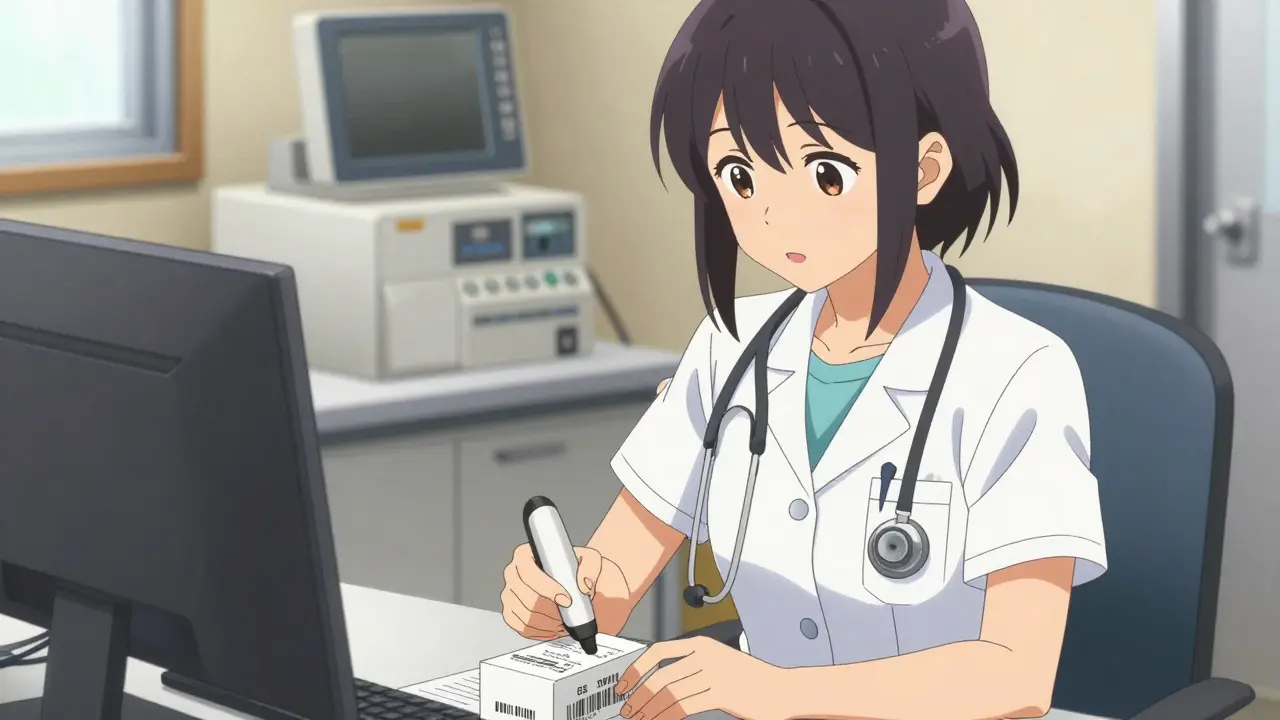
To mitigate this, the American Society of Health-System Pharmacists published guidelines in 2022 recommending that institutions implement barcode scanning of medication containers. This captures manufacturer information at the point of administration and has been shown to increase generic AE reporting accuracy by 63% in pilot studies. If you are a provider, advocating for barcode scanning in your practice can significantly improve the quality of your safety reports.
Future Developments and Improvements
The system is evolving. The FDA implemented the FAERS 2.0 system in 2023, which enhances the ability to link adverse events to specific generic manufacturers through NDC code tracking. On June 15, 2023, the FDA issued draft guidance titled 'Enhancing the Utility of Adverse Event Reports for Generic Drugs,' which proposes requiring pharmacies to include manufacturer information on all prescription labels. This would make identification much easier for reporters.
Additionally, the Generic Drug User Fee Amendments (GDUFA) program has begun incorporating pharmacovigilance requirements. GDUFA III (2023-2027) allocated $15 million specifically for enhancing post-market safety monitoring of generic drugs. The FDA's Office of Generic Drugs announced a 2024 pilot program with major pharmacy chains to automatically capture manufacturer information at dispensing. Preliminary modeling suggests this could increase generic AE reporting completeness by 55% within three years.
Industry analysts project that pharmacovigilance technology spending by generic manufacturers will grow from $185 million in 2023 to $320 million by 2027. This investment indicates increasing recognition of the reporting challenges specific to generic drugs. As these systems mature, the gap between brand and generic reporting should narrow, leading to more robust safety data for the medications we rely on daily.
Do generic drugs have the same reporting requirements as brand drugs?
Yes, under FDA guidelines, generic drugs follow the same regulatory framework as brand-name drugs. Manufacturers must report serious and unexpected adverse events within 15 calendar days, and records must be kept for 10 years.
What qualifies as a serious adverse event?
A serious adverse event is one that is fatal, life-threatening, requires hospitalization, causes permanent or significant disability, results in congenital anomalies, or requires intervention to prevent permanent impairment.
How can I find the manufacturer of a generic drug?
Check the medication bottle label for the manufacturer name, which is often in small print. Alternatively, use the National Drug Code (NDC) number on the label to search the DailyMed database for manufacturer details.
Why are there fewer reports for generic drugs?
Despite identical regulations, generic manufacturers often lack dedicated pharmacovigilance departments. Additionally, identifying the specific generic manufacturer is difficult for providers, leading to higher abandonment rates for reports.
Can patients report adverse events for generic drugs?
Yes, patients can report directly to the FDA using the MedWatch program. While not mandatory for patients, their reports contribute valuable real-world data to the safety monitoring system.
Next Steps for Healthcare Providers
If you work in a clinical setting, you can take immediate action to improve reporting accuracy. Start by training your staff on how to locate manufacturer information on generic labels. Encourage the use of barcode scanning tools if your pharmacy system supports it. When a reaction occurs, do not default to reporting the brand name if a generic was taken; instead, document the uncertainty in the report notes.
Stay updated on the FDA's draft guidance regarding prescription labels. As pharmacies begin including manufacturer information more prominently, your reporting process will become smoother. Finally, participate in pharmacovigilance webinars offered by the FDA to stay informed about changes in the FAERS system. By staying engaged, you help close the safety gap and ensure that generic drugs remain a safe and effective option for patients.



Comments (9)
Rama Rish
its crazy how much stuff gets missed just because its generic
Kevin Siewe
The regulatory framework is sound but the execution is where the gaps appear. Manufacturers need better incentives to maintain dedicated teams for pharmacovigilance.
Blessing Ogboso
It is truly concerning to see how the system is set up. We rely on these medications every single day without thinking. The disparity between brand and generic reporting is huge. Many people do not realize the risk involved. Safety signals are often missed completely. This affects patients in vulnerable positions significantly. The lack of dedicated teams is a major issue. Small companies cannot afford the specialists needed. It creates a blind spot in the data. We need better technology to track the manufacturers. Barcode scanning could solve a lot of problems. The FDA is trying to make changes slowly. It takes time for these systems to evolve properly. Patients should know their rights regarding reporting. Providers need to be more diligent with the forms. We all share responsibility in this process. The future looks slightly brighter with new guidelines. Everyone deserves safe medication access regardless of cost. We must stay informed about these changes. It is a collective effort to improve safety.
Rachele Tycksen
thats alot of red tape for something so simple. it is frustrating they dont fix it faster
Alex Arcilla
lol imagine thinking generic means safe without checking. the system is broken but sure lets pretend its fine
Zola Parker
Actually the brand drugs are just as bad sometimes. :shrug: people forget that
florence matthews
Lets hope the new guidance helps everyone feel safer. :heart:
Korn Deno
the philosophy of safety is compromised by economics we accept risk for cost it is a tradeoff we make daily
Darlene Gomez
We need to push for those barcode scanners in pharmacies. It makes identification so much easier for everyone involved.