Imagine you have been taking a specific brand-name medication for years. You trust it. You know exactly what the pill looks like-the color, the shape, the imprint. Then, your doctor switches you to a generic version. It’s cheaper, and legally required to be bioequivalent. But when you look at the new pill, it’s a different color. Maybe it’s smaller. Or maybe, upon closer inspection of the label, you realize it contains gelatin derived from pork.
For many patients, this isn’t just a minor inconvenience. It is a dealbreaker. For Muslim or Jewish patients, pork-derived gelatin violates religious dietary laws. For others, the change in appearance signals a loss of efficacy, rooted in deep-seated cultural beliefs about medicine. This is where multicultural perspectives on generics become critical. It is not just about cost savings; it is about trust, adherence, and respecting the diverse backgrounds of the people we serve.
The Hidden Ingredients: Excipients and Religious Beliefs
When we talk about generic drugs, we usually focus on the active pharmaceutical ingredient (API). The law says the API must be the same as the brand name. But what about the rest? The inactive ingredients, known as excipients, substances used as carriers or vehicles for the active drug, such as fillers, binders, and coatings, are where cultural conflicts often arise.
A 2023 study published in PMC highlighted a stark reality: pharmacists often spend hours sourcing alternatives because standard generics contain non-halal or non-kosher ingredients. One pharmacist noted that a Muslim patient would not take a capsule containing pork gelatin. Another mentioned spending "a couple of hours" calling manufacturers to find a liquid alternative or a vegetarian-encapsulated version.
This creates a significant barrier. If a patient cannot take the prescribed generic due to religious restrictions, they might skip doses entirely. This leads to poor health outcomes, especially for chronic conditions like hypertension or diabetes, which disproportionately affect minority communities. The issue is compounded by the fact that only 37% of generic package inserts in the US provide detailed excipient information, compared to 68% in the EU. Without transparency, patients are left guessing.
- Gelatin Sources: Many capsules use bovine or porcine gelatin. Vegetarian, halal, and kosher alternatives exist but are not always labeled clearly.
- Lactose: Commonly used as a filler, lactose can be an issue for those with severe dairy allergies or specific cultural dietary restrictions.
- Alcohol: Some liquid formulations or suspensions contain alcohol, which may be unacceptable for some Muslim patients.
Color, Shape, and Perception of Efficacy
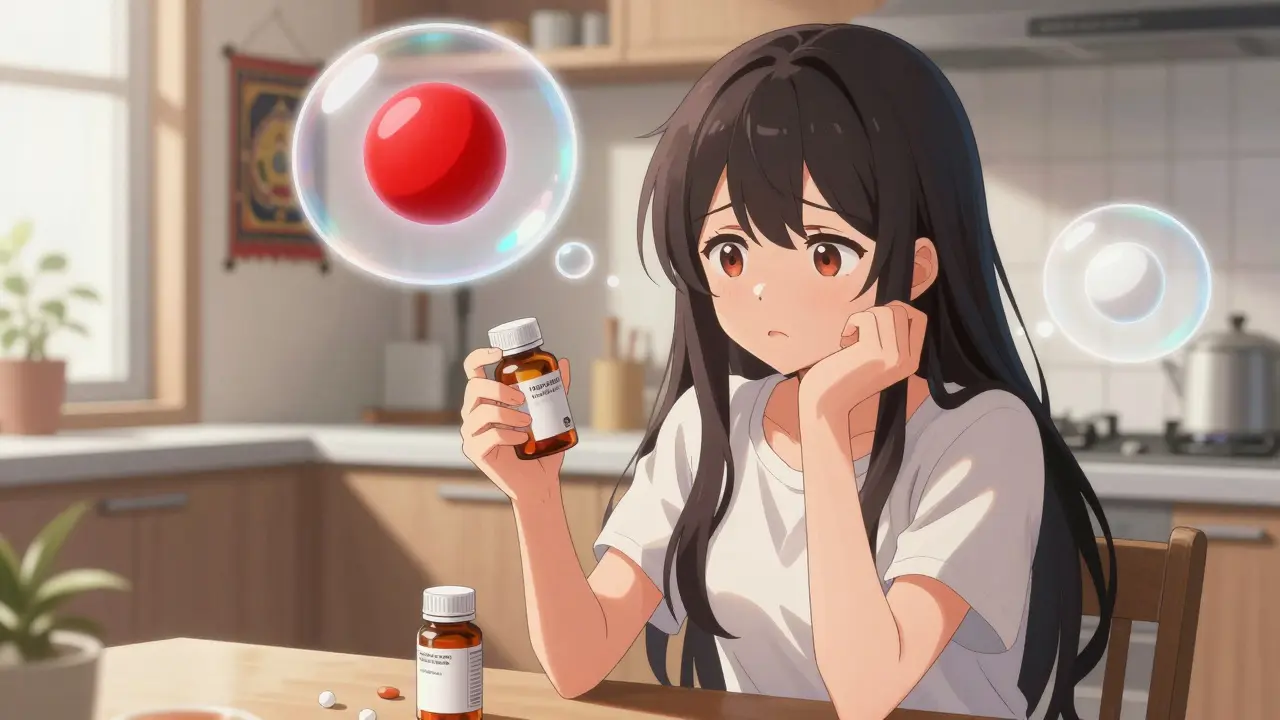
Culture shapes how we perceive value and quality. In many cultures, there is a strong association between the physical appearance of a medication and its strength. A larger pill is often perceived as more potent than a smaller one. A bright red pill might be seen as stronger than a white one.
When a patient switches from a branded drug to a generic, these visual cues change. Research shows that 28% of African American patients express concerns about generics being less effective than branded medications, compared to only 15% of non-Hispanic White patients. This disparity is not just about skepticism; it is often rooted in historical experiences of medical discrimination and mistrust in the healthcare system.
If a patient believes the new generic is "weaker" because it looks different, they may stop taking it. This is known as the "nocebo effect," where negative expectations lead to negative outcomes. Healthcare providers need to address these perceptions directly. Simply saying "it’s the same drug" is not enough. Patients need to understand why the appearance changed and reassurance that the therapeutic effect remains identical.
| Barrier Type | Cultural/Religious Context | Impact on Adherence |
|---|---|---|
| Excipient Conflicts | Muslim (Halal), Jewish (Kosher), Hindu/Vegetarian | Patient refuses medication if source is unknown or prohibited (e.g., pork gelatin). |
| Visual Mismatch | Various ethnic groups with high nocebo susceptibility | Different color/shape leads to perception of lower efficacy. |
| Language Barriers | Non-native English speakers | Misunderstanding dosage instructions or side effects due to complex labeling. |
| Trust Deficits | Communities with history of medical exploitation | Skepticism toward generic substitutions viewed as cost-cutting measures. |
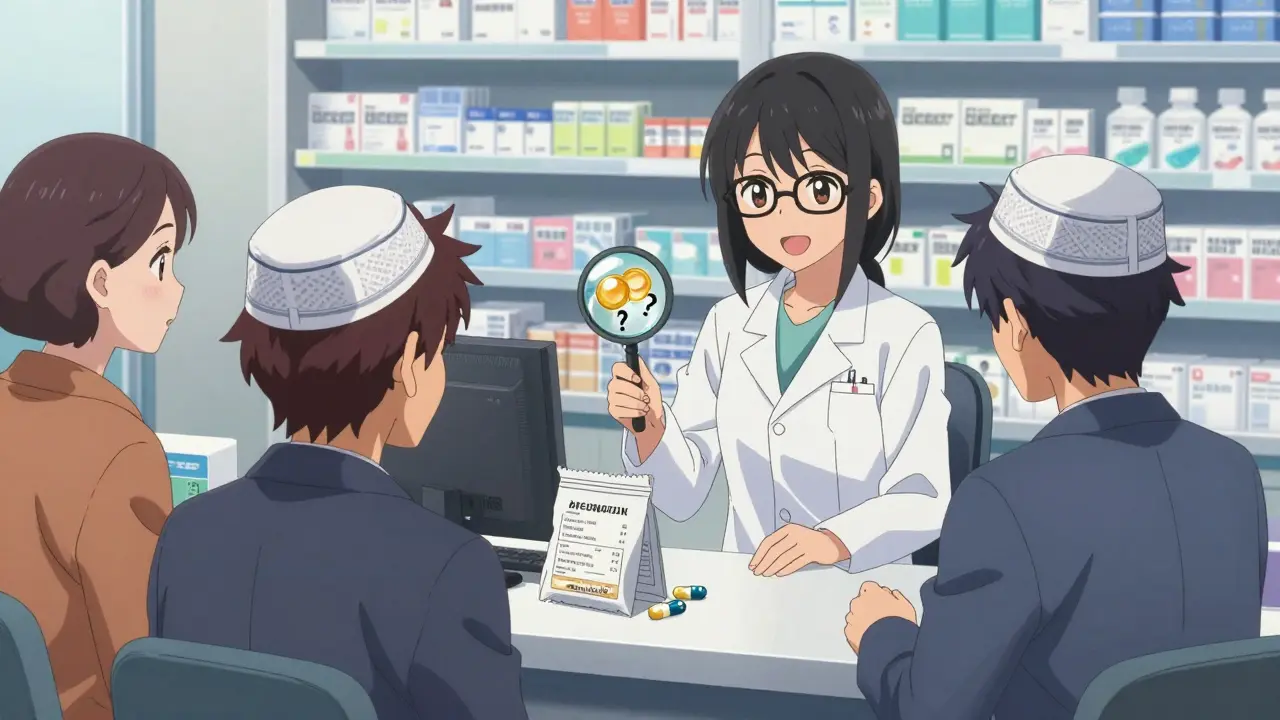
The Role of Pharmacists in Cultural Competence
Pharmacists are often the first point of contact for healthcare services in diverse communities. They are in a unique position to bridge the gap between clinical guidelines and cultural needs. However, the current system places a heavy burden on them. As one pharmacist stated, "I knew it was super important to [the patient]... I wouldn't have taken that medication either."
To support this role, pharmacies need better tools. Access to comprehensive databases that list excipients for both branded and generic versions is essential. Some pharmacy chains have started developing dedicated resources for identifying halal and kosher-certified medications, reducing search time from hours to minutes. This is a model that should be adopted industry-wide.
Training is also crucial. A 2023 survey found that only 22% of community pharmacies have formal training programs addressing cultural considerations for generics. Staff need 8-12 hours of specialized training to understand:
- Religious dietary restrictions and their impact on medication formulation.
- Cultural perceptions of illness and healing.
- Communication strategies for discussing generic substitutions with empathy and clarity.
This training helps pharmacists move beyond transactional interactions to relational care. When a pharmacist takes the time to explain why a generic is safe and respects the patient’s cultural constraints, trust is built. And trust drives adherence.
Industry Shifts and Regulatory Changes
The pharmaceutical industry is slowly waking up to this issue. Around 2010-2015, major companies began recognizing multicultural consumers as the fastest-growing segment in the US market. By 2024, generics comprised 70% of all medicines sold in Europe by volume. Yet, specific multicultural adaptations remain limited.
Recent regulatory changes are pushing for greater inclusion. The Food and Drug Omnibus Reform Act (FDORA), passed in December 2022, emphasizes improving diversity in clinical trials and addressing social determinants of health. This has spurred action among major generic manufacturers. Teva Pharmaceutical launched a "Cultural Formulation Initiative" in Q2 2023 to document excipient information across 15 therapeutic areas. Sandoz announced a "Global Cultural Competence Framework" in January 2024, focusing on excipient transparency.
These initiatives are promising, but adoption is still uneven. Industry analysts predict that by 2027, 65% of top generic manufacturers will include cultural considerations in their product development pipelines. Until then, the responsibility falls largely on healthcare providers and patients to navigate these complexities together.

Practical Steps for Patients and Providers
If you are a patient, do not hesitate to ask questions. Your health is too important to compromise based on assumptions. Here is what you can do:
- Ask about ingredients: Specifically ask if the medication contains gelatin, lactose, or alcohol. Ask for the source of the gelatin (bovine, porcine, or fish).
- Request alternatives: If a generic conflicts with your beliefs, ask if a branded version or a different generic manufacturer offers a suitable alternative.
- Use translation services: If English is not your first language, request professional interpretation services during consultations. Do not rely on family members for medical translations.
For providers, the approach should be proactive. Screen patients for cultural and religious preferences regarding medication. Document these preferences in their medical records. Partner with pharmacies that offer culturally competent counseling. Remember, cultural competence is not a one-time checklist; it is an ongoing practice of humility and learning.
Why This Matters for Public Health
The stakes are high. Culturally adapted generic medications could address $12.4 billion in unmet pharmaceutical needs among minority populations in the United States alone. Conditions like hypertension and diabetes have disproportionate burdens in these communities. Improving adherence through cultural competence can reduce hospitalizations, lower healthcare costs, and save lives.
As G Jones noted in 2021, cultural diversity drives innovation. Companies that address multicultural considerations in generics will gain competitive advantages through improved patient loyalty and market share. But more importantly, they will contribute to health equity. We must move beyond seeing cultural competence as a "nice-to-have" and recognize it as a fundamental requirement for effective healthcare delivery.
Are generic medications less effective than brand names?
No. Generic medications must be bioequivalent to their brand-name counterparts, meaning they deliver the same amount of active ingredient into your bloodstream over the same period. Differences in appearance (color, shape) are due to inactive ingredients (excipients) and do not affect efficacy.
How can I find out if a generic pill contains pork gelatin?
Check the package insert or ask your pharmacist. Look for terms like "gelatin" or "capsule shell." If the source is not specified, ask the pharmacist to check with the manufacturer. Some manufacturers explicitly state if their products are halal or kosher certified.
What should I do if I don't trust my generic medication?
Discuss your concerns openly with your doctor or pharmacist. Explain why you feel uncomfortable-whether it's due to appearance, past experiences, or cultural beliefs. They can help educate you on the safety of generics or explore alternative brands that meet your comfort level.
Do all generic manufacturers use the same inactive ingredients?
No. Different manufacturers may use different excipients, colors, and sizes for their generic versions of the same drug. This means one generic brand might contain lactose while another does not. Always check the specific manufacturer's details if you have sensitivities.
Is cultural competence training mandatory for pharmacists?
Currently, it is not universally mandatory, though regulations are evolving. As of 2023, only 22% of community pharmacies had formal training programs for cultural considerations. However, industry leaders and regulatory bodies are increasingly emphasizing its importance for patient safety and equity.