
Bisphosphonate Dosing Schedule Planner
Your Optimized Morning Timeline
Take with a full glass of plain water only. Stay upright.
No food, coffee, juice, or other medications. Remain upright.
Safe to eat and take non-interfering medications.
Take with your evening meal to ensure maximum absorption.
The core problem is a chemical clash. In your gut, calcium ions bind to the medication, forming a complex that your body simply cannot absorb. Essentially, the calcium acts like a shield, preventing the drug from entering your bloodstream. To get the full benefit of these drugs-which can reduce fracture risk by 40-70%-you have to master the art of timing.
The High Cost of Poor Timing
When we talk about absorption, the margins are incredibly slim. Orally administered bisphosphonates are already difficult for the body to process; only about 1% of the dose actually becomes bioavailable. When you add a calcium supplement into the mix too close to your dose, that 1% plummets. Research in the Journal of Clinical Pharmacology showed that taking calcium carbonate at the same time as alendronate reduced absorption by a staggering 94%.
This isn't just about a few percentage points; it's the difference between a strengthened skeleton and a continued risk of fractures. The FLEX study demonstrated that patients who followed strict administration protocols saw a 44% reduction in vertebral fractures compared to those who were inconsistent. If you're treating a condition as serious as osteoporosis, "close enough" isn't good enough when it comes to your dosing window.
How to Structure Your Daily Routine
To avoid the absorption trap, you need a routine that creates a physical and temporal gap between your medication and anything else you consume. Here is the standard protocol for oral medications like Alendronate (Fosamax) or Risedronate (Actonel).
- The Wake-Up Call: Take your medication immediately upon waking, after an overnight fast. Your stomach should be completely empty.
- The Water-Only Rule: Swallow the pill with a full glass of plain water. Do not use coffee, tea, juice, or milk. These beverages can slash absorption by 50-60%.
- The Waiting Window: Stay upright-sitting or standing-for at least 30 to 60 minutes. Lying down too soon increases the risk of esophageal irritation. In fact, Mayo Clinic reports that 62% of gastrointestinal side effects happen when patients lie down within an hour of dosing.
- The Delayed Breakfast: Wait the full required time (30 minutes for alendronate, 60 for risedronate) before eating or taking other meds.
- The Calcium Shift: Schedule your calcium supplements for later in the day. Ideally, take them with your evening meal. This ensures a gap of several hours, completely removing the risk of interference.
Comparing Common Bisphosphonates and Calcium Interactions
Not all bisphosphonates or calcium types are the same. While all oral versions are sensitive to calcium, some are more affected than others. Calcium carbonate, the most common cheap supplement, tends to be the most disruptive.
| Medication/Supplement | Absorption Impact | Key Requirement | Common Form |
|---|---|---|---|
| Alendronate + Calcium Carbonate | 94% Decrease | 30-min fast | Weekly Oral |
| Alendronate + Calcium Citrate | 88% Decrease | 30-min fast | Weekly Oral |
| Risedronate | High Sensitivity | 60-min fast | Monthly/Weekly Oral |
| Zoledronic Acid | No Absorption Issue | Baseline Calcium Check | Annual IV Infusion |

Dealing with the "Regimen Fatigue"
Let's be honest: waking up early, drinking plain water, and standing around for an hour is a chore. Many people struggle with this, and it leads to "regimen fatigue." Data from Osteoporosis Canada suggests that only 42% of patients are still following these guidelines correctly after six months. The most common culprit? The morning coffee routine. Over half of patients report that their desire for coffee interferes with the strict fasting window.
If you find the oral routine impossible, you aren't alone. Many patients move to Zoledronic Acid (Reclast), which is an intravenous infusion given once a year. Because it bypasses the gut entirely, you don't have to worry about whether you took a calcium pill that morning. However, it's not without trade-offs; about 15-30% of people experience flu-like "acute phase reactions" after the infusion.
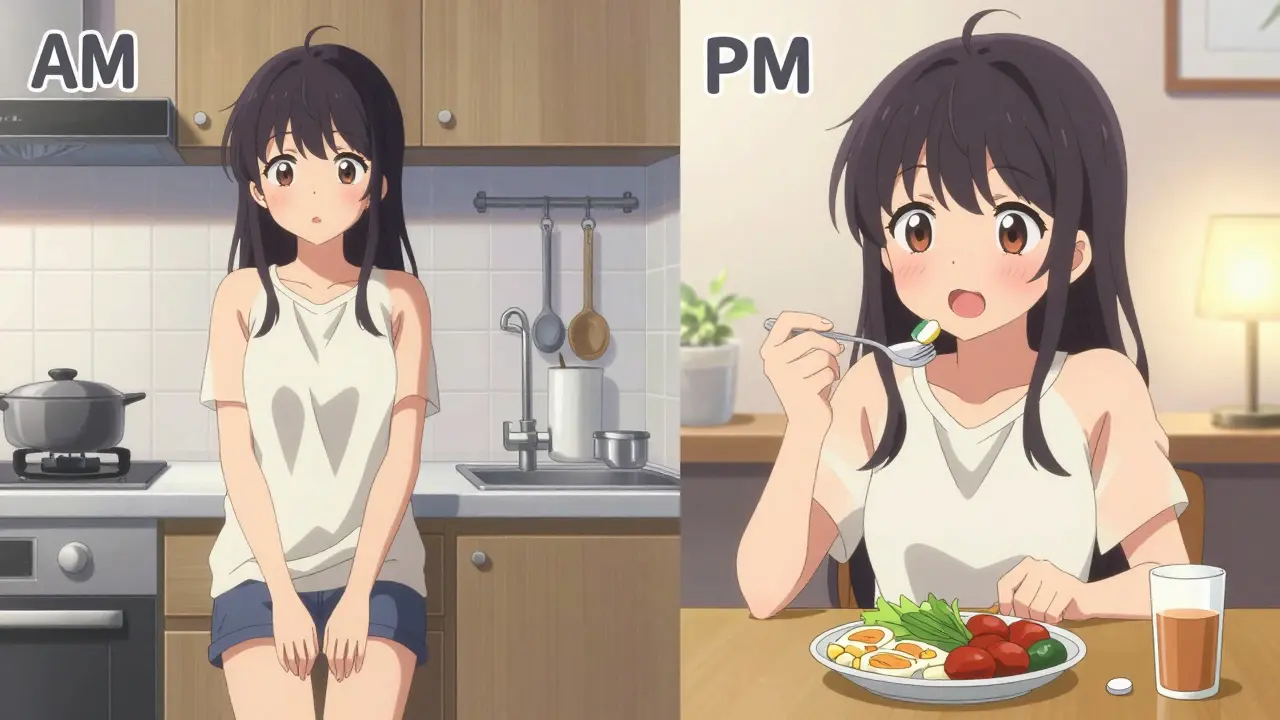
For those sticking with oral meds, a simple trick is to use a split-organizer. Label one side "AM - Meds Only" and the other "PM - Calcium." This visual cue prevents the accidental "morning cocktail" of calcium and bisphosphonates that often leads to treatment failure.
Preparing Your Body for Therapy
Before you even start the medication, your baseline levels need to be right. If you are deficient in vitamin D or calcium, the medication might not work as intended, or you could experience complications. The International Osteoporosis Foundation recommends a full nutritional assessment before starting.
Specifically, you want your serum 25-hydroxyvitamin D to be above 30 ng/mL and your calcium levels above 8.5 mg/dL. If these are low, your doctor will likely put you on a vitamin D and calcium regimen first to stabilize your levels. Once you're stable, you can introduce the bisphosphonate and maintain your supplements in the evening.
Common Pitfalls to Avoid
- The "Just a Little" Mistake: Thinking a small amount of juice or a splash of milk in your coffee won't matter. Even small amounts of minerals or acids can significantly hinder the drug's ability to enter your system.
- The Med Mix-Up: Taking your blood pressure or thyroid medication at the same time as your bisphosphonate. Most other morning medications should wait until after the 30-60 minute window has closed.
- The Recline Trap: Taking the pill and immediately heading back to bed to wait out the timer. This is a recipe for severe heartburn and esophageal erosions. Stay upright.
Can I take my calcium supplement in the morning if I wait two hours?
Yes, waiting at least two hours after your bisphosphonate dose is generally recommended by guidelines from Osteoporosis Canada. However, taking calcium with your evening meal is even safer and often easier to remember.
What happens if I accidentally take calcium and my medication together?
If it happens once, don't panic, but be aware that the dose's effectiveness was likely significantly reduced. Do not take an extra dose to "make up" for it without consulting your doctor. Just return to the correct timing for your next scheduled dose.
Is calcium citrate better than calcium carbonate for this?
Neither is "safe" to take at the same time. While some studies show calcium citrate has a slightly lower impact (88% reduction vs 94% for carbonate), both will still severely block the absorption of your medication.
Why do I have to stay upright after taking the pill?
Bisphosphonates are highly potent and can be irritating to the lining of the esophagus. Staying upright uses gravity to ensure the pill moves quickly into the stomach and doesn't linger in the throat, reducing the risk of ulcers or inflammation.
Do I need to worry about calcium interference with IV bisphosphonates?
No. Because IV medications like zoledronic acid enter the bloodstream directly, they bypass the gastrointestinal tract where calcium interference happens. However, you still need adequate baseline calcium levels to prevent hypocalcemia (low blood calcium) after the infusion.
Next Steps for Success
If you're struggling with the strict rules, start by auditing your morning. If you can't give up the coffee, try moving your entire wake-up routine 60 minutes earlier just for the day you take your medication. Use a mobile app or a dedicated alarm to track your "waiting window." If you have a history of GERD or severe acid reflux, talk to your doctor about IV options or newer medications like denosumab, which may be easier to manage than the strict timing of oral bisphosphonates.