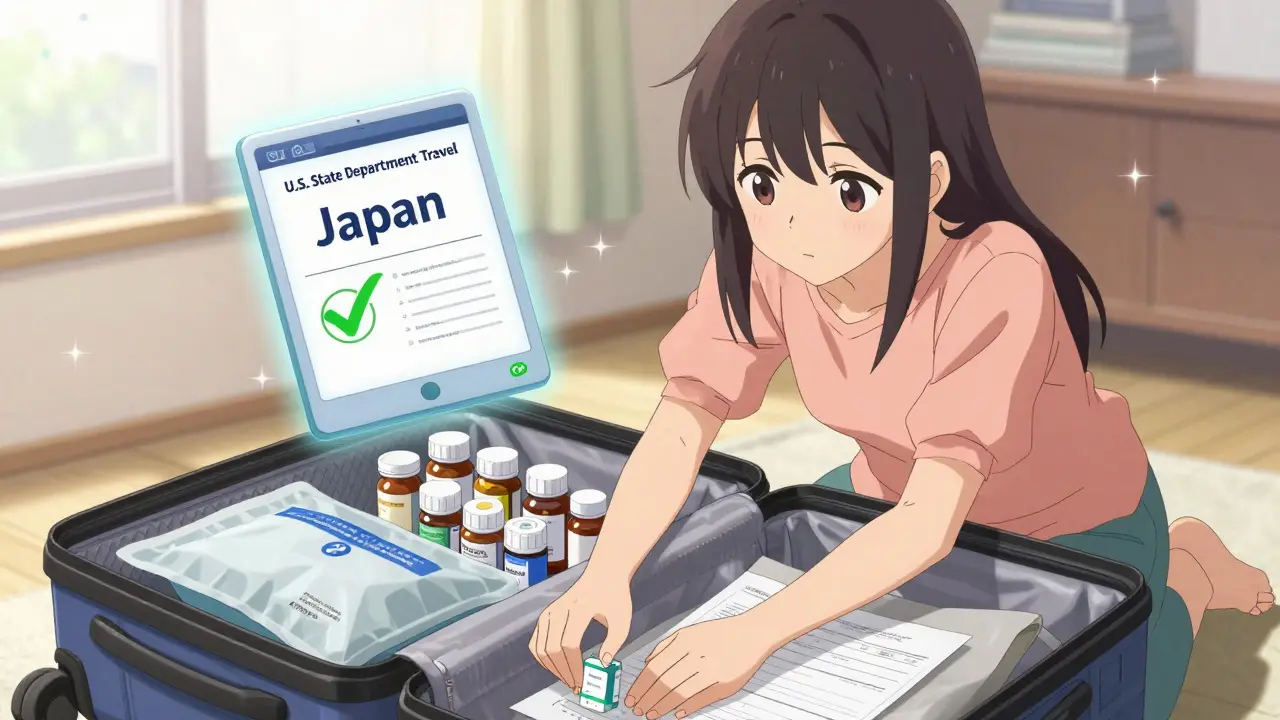
More than half of American adults take prescription medications regularly. That means when you pack your bags for a trip, you’re not just bringing clothes and chargers-you’re bringing your health. And if you don’t plan ahead, a simple delay, a time zone change, or a customs officer asking questions can turn a vacation into a medical emergency. This isn’t hypothetical. In 2019, a Toyota executive spent 23 days in a Japanese jail after customs seized a painkiller she’d mailed to herself. She didn’t know it was illegal there. You don’t have to be that unlucky.
Keep Medications in Original Containers
Never transfer pills into pill organizers or ziplock bags before you travel. The TSA, U.S. Customs, and foreign governments all require medications to be in their original pharmacy containers with clear labels. That means the bottle should show your name, the drug name, the prescribing doctor, and the pharmacy’s contact info. This isn’t just a suggestion-it’s a rule. If you’re flying domestically, TSA agents will ask you to pull out liquids or unusual containers. If you’re going overseas, border agents might confiscate anything that looks suspicious. A 2023 U.S. State Department report found that 1,247 travelers faced legal trouble last year because their meds weren’t properly labeled. Don’t be one of them.Bring More Than You Think You’ll Need
Plan for the worst-case scenario. What if your flight gets canceled? What if you get sick and need to stay an extra week? What if your luggage gets lost? The experts agree: bring at least 7 to 14 extra days’ worth of medication on top of what you need for your trip. Northwestern University’s travel safety team specifically recommends a two-week buffer. Pharmacies can refill prescriptions up to five days early, thanks to CMS guidelines updated in 2023. So call your pharmacy at least two weeks before you leave. Ask them to fill your entire supply. If they say no, talk to your doctor. A note explaining your travel plans often helps. For chronic conditions like diabetes, high blood pressure, or thyroid issues, having an extra supply isn’t just smart-it’s life-saving.Know the Rules for Liquids and Injectables
Liquid medications like insulin, eye drops, or liquid antibiotics don’t have to fit in your 3.4-ounce toiletries bag. The TSA allows reasonable amounts of liquid meds, as long as you declare them at the security checkpoint. Put them in a separate clear plastic bag, and be ready to show the original label. Same goes for syringes and auto-injectors like EpiPens or insulin pens. You don’t need a doctor’s note for these, but having one helps. If you’re carrying more than a few vials or pens, a note from your doctor explaining why you need them can prevent delays. A 2023 TSA video update confirmed that agents are trained to handle these cases-so long as you’re upfront. Don’t wait until you’re at the gate to explain.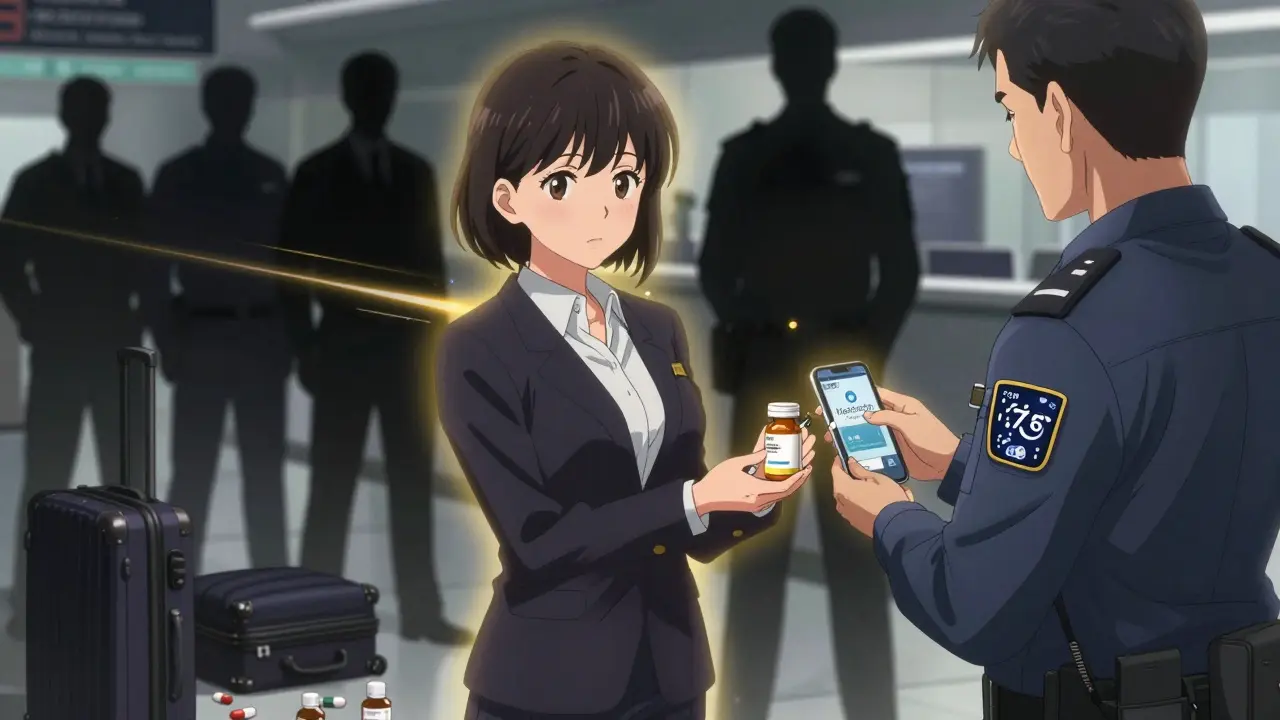
Check What’s Legal in Your Destination Country
What’s legal in Portland isn’t legal everywhere. The U.S. State Department launched a free online tool in March 2023 that lets you type in your medication name and see if it’s allowed in over 195 countries. Some surprises: Adderall is banned in Japan, South Korea, and the UAE. Sudafed (pseudoephedrine) is restricted in 28 countries, including Australia and Canada. Codeine is controlled in 42 countries. Even common OTC painkillers like ibuprofen have restrictions in places like Saudi Arabia and the Philippines. If you’re taking hormones, ADHD meds, or sleep aids, double-check. Harvard Global Support Services found that 67% of countries restrict at least one common U.S. medication. Don’t assume your prescription works everywhere. A quick 30-minute check on the U.S. embassy website for your destination can save you from detention, fines, or worse.Store Medications the Right Way
Heat, cold, and humidity can ruin your meds. Most pills are fine below 86°F (30°C), but insulin? It needs to stay between 36°F and 46°F. If you’re heading to a tropical climate or going on a multi-day hike, regular coolers won’t cut it. Use a pharmaceutical-grade cooling pack-they keep insulin cold for over 48 hours without ice. Some pharmacies sell travel-friendly insulated pouches with gel packs. If you’re flying, never check your meds. Always carry them in your personal item or carry-on. Checked luggage can sit in uncontrolled cargo holds for hours. One traveler in Florida lost her insulin when her bag got rerouted. She ended up in the ER. Don’t let that be you.Adjust for Time Zones Without Risk
Jet lag isn’t just about sleep. It’s about when you take your meds. If you take a pill every morning at 8 a.m. at home, but your flight lands in Tokyo at 10 p.m. local time, do you take it then? Probably not. The rule of thumb: you can shift your dose by 1 to 2 hours earlier or later without harm. But never double up. If you’re on a once-daily pill, wait until the next morning in the new time zone. For twice-daily meds, split the difference. WebMD’s 2023 update says most people can adjust gradually over a day or two. Set alarms on your phone for both home and destination times. Use apps like Medisafe Travel-they let you toggle between time zones and remind you when to take your next dose. One user on Reddit said setting three alarms (home time, local time, and a backup) cut her missed doses by 90%.
Prepare Documentation
A copy of your prescription isn’t enough. For international travel, bring a letter from your doctor. It should list your condition, the medication names, dosages, and why they’re medically necessary. If you’re carrying injectables or controlled substances, this letter is critical. Some countries require it. Others will ask for it on the spot. If you’re flying with Emirates or Qatar Airways, they require this for any medication containing codeine or stimulants. Even if you’re not required to show it, having it printed and laminated makes things smoother. One traveler in Dubai said the customs officer smiled when he handed over his laminated doctor’s note. No questions. No delays. Just a nod and a wave.What to Do If Something Goes Wrong
If your meds get lost, stolen, or confiscated, here’s what to do immediately: First, stay calm. Second, contact the nearest U.S. embassy or consulate. They have emergency medical contacts and can help you find local pharmacies or doctors. Third, call your pharmacy back home. They may be able to fax a prescription to a local pharmacy if you’re in a country with reciprocal drug agreements. Fourth, if you’re having a side effect or reaction, find a local clinic. Don’t wait. Travel insurance often covers urgent care abroad. Most travel clinics in the U.S. offer pre-trip consultations for $50-$150. They’ll review your meds, give you printed guides, and even help you translate prescriptions into the local language. Over 70% of travelers who used these services reported zero issues abroad.Real Stories, Real Lessons
A man from Texas lost his ADHD medication during a layover in Dubai. He had no doctor’s note. He was denied entry, forced to spend the night in a holding room, and missed his connecting flight. He didn’t know Adderall was illegal there. Another woman from Chicago brought her insulin in a regular cooler. It froze on the tarmac. Her blood sugar crashed mid-flight. She had to be hospitalized in Paris. On the flip side, a couple from Oregon used a Medisafe Travel app, carried laminated prescriptions in English and Spanish, and brought extra pills. They traveled through 11 countries in six weeks. No problems. No stress. Just good planning.Can I bring my medication in a pill organizer instead of the original bottle?
No. The TSA, U.S. Customs, and most foreign governments require medications to be in their original, labeled containers. Pill organizers are fine for short-term use at home, but not for travel. If you’re caught with unlabeled pills, you risk confiscation, delays, or even legal trouble overseas. If you need help organizing doses, ask your pharmacy-they can provide pre-filled, labeled travel packs.
What if my medication is banned in the country I’m visiting?
If your medication is banned, you cannot legally bring it. Some countries allow you to apply for a special permit ahead of time, but this process can take weeks. The best option is to talk to your doctor before you go. They may be able to prescribe an alternative that’s legal in your destination. For example, if you’re going to Japan and take Adderall, your doctor might switch you to a non-stimulant ADHD medication that’s permitted there. Never rely on shipping meds overseas-U.S. pharmacies can’t send prescriptions abroad.
Do I need a doctor’s note for my insulin or EpiPen?
Not always, but it’s strongly recommended. While TSA allows insulin and EpiPens without a note, border agents overseas may ask for proof of medical necessity. A simple letter from your doctor stating your condition and the need for these devices can prevent hours of questioning. For international flights, airlines like Emirates and Qatar Airways require documentation for any controlled substance-including insulin in some cases. Better safe than stranded.
Can I refill my prescription while abroad?
No. Overseas pharmacies cannot refill U.S. prescriptions. Even if you find a local pharmacy that carries the same drug, they won’t honor your American prescription. Some countries have their own prescription systems, but you’d need to see a local doctor first-and they may not understand your condition. Always bring enough for your entire trip plus a two-week buffer. If you’re traveling long-term, plan ahead with your doctor to get a longer supply before you leave.
How do I keep my medication cool during hot weather?
Use a pharmaceutical-grade cooling pack. These are designed to maintain 36°F-46°F (2°C-8°C) for over 48 hours without ice. Regular coolers or frozen water bottles won’t work-they get too cold or thaw too fast. Brands like MedKits and ColdPac offer travel versions that fit in a purse or backpack. Always carry refrigerated meds in your carry-on. Never check them. If you’re flying to a tropical destination, ask your pharmacy if they have a travel kit-they often do.