When you’re living with chronic pain, every new study, every ad for CBD oil, every friend’s story about relief feels like a lifeline. But here’s the truth: the science on cannabinoids and pain is messy, contradictory, and often misleading. You’re not alone if you’ve spent hundreds on CBD gummies only to feel nothing. Or if you’ve heard one doctor say it works wonders, while another calls it a scam. So what does the real evidence say? And more importantly-should you try it?
What Are Cannabinoids, Really?
Cannabinoids are chemicals found in the cannabis plant. The two most talked-about are THC (tetrahydrocannabinol) and CBD (cannabidiol). But there are others-CBG, CBN, CBC-that are starting to show up in labs and clinics. These compounds interact with your body’s endocannabinoid system, which helps regulate pain, mood, sleep, and inflammation.
THC is psychoactive. That means it gets you high. CBD is not. CBG and CBN are non-intoxicating, too. That’s why so many people turn to CBD: they want relief without the mental fog. But here’s the catch-most of the pain relief you hear about in clinical studies comes from products containing THC, not CBD alone.
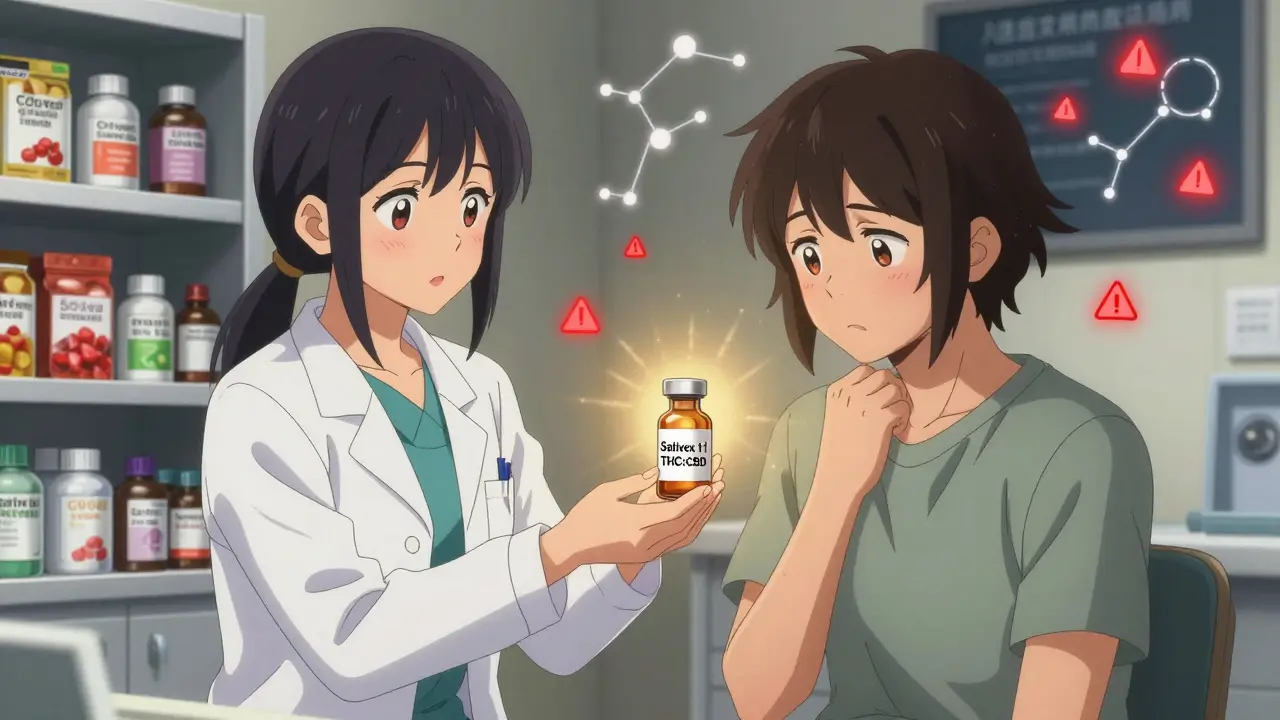
For example, Health Canada approved Sativex, a 1:1 THC:CBD mouth spray, for nerve pain from multiple sclerosis and cancer pain that opioids can’t touch. That’s not a supplement. That’s a pharmaceutical. And it works because of the combination.
The Evidence: CBD Alone Doesn’t Cut It
Let’s be blunt: if you’re buying CBD oil online hoping it’ll fix your arthritis, sciatica, or fibromyalgia, you’re probably wasting your money.
A major 2023 study from the University of Bath looked at 16 high-quality trials of pharmaceutical-grade CBD. Fifteen of them found CBD performed no better than a placebo for pain relief. Another review in JAMA in 2015 found moderate evidence for cannabinoids-but that included THC. When you strip out THC, the evidence vanishes.
Harvard Medical School put it plainly: “There is currently no high-quality research study that supports the use of CBD alone for the treatment of pain.” The FDA has only approved CBD for two rare forms of epilepsy, not pain. Not a single pain condition.
And it gets worse. A 2023 analysis of consumer CBD products found that nearly 70% didn’t contain the amount of CBD listed on the label. Some had none at all. Others had way more. And many contained hidden THC-enough to fail a drug test or trigger anxiety in sensitive people.
On Reddit, people are split. One user said CBD reduced their fibromyalgia pain by 30%. Another spent $400 on gummies and felt zero difference. Trustpilot reviews for top CBD brands show 41% of negative reviews say “no pain relief.”
THC and Combination Products: Where the Real Relief Lies
Here’s where things shift. When THC is involved-especially in controlled, balanced ratios-the data changes.
Studies show THC-containing products can help with neuropathic pain, cancer pain, and muscle spasticity. The CDC acknowledges this: “A few studies have found that cannabis can be helpful in treating neuropathic pain.” That’s not a blanket endorsement. But it’s not a dismissal either.
One patient testimonial from Leafly described switching from 120mg of oxycodone daily to a 1:1 THC:CBD tincture. Their pain stayed controlled, but side effects dropped. No more constipation. No more foggy brain. No risk of overdose.
That’s the real promise: not a miracle cure, but a safer alternative for people who can’t tolerate opioids or want to reduce their dose. It’s not about replacing opioids overnight. It’s about managing them better.
CBG: The New Hope on the Horizon
In January 2025, researchers at Yale discovered something new. They tested four cannabinoids-CBD, CBG, CBN, and THC-on a protein linked to nerve pain. CBG, the least-known of the group, showed the strongest effect. And it didn’t cause intoxication.
This is big. CBG could be the non-psychoactive cannabinoid that actually works for pain, without the risks of THC or the emptiness of low-dose CBD. But here’s the catch: this was a lab study. It hasn’t been tested in humans yet.
Right now, CBG is mostly sold as a trendy supplement. No dosing guidelines. No quality control. No proof it helps people. But if pharmaceutical companies can isolate and standardize it, we might finally have a real option for chronic pain without the high.
Dosing: There Are No Rules (Yet)
If you decide to try cannabinoids, start low. Go slow.
Most pain specialists recommend beginning with:
- 2.5-5 mg of THC
- 10-20 mg of CBD
Wait at least 2-3 hours before taking more. Edibles take longer. Tinctures under the tongue work faster. Inhalation hits quickest but fades fastest.
Don’t assume more is better. High doses of CBD can cause liver stress, especially if you’re on other meds like blood thinners or antidepressants. THC can make anxiety worse or cause dizziness. Dry mouth? Common. Impaired coordination? Yes. That’s why driving after using THC isn’t safe.
And never stop your current pain meds cold turkey. Withdrawal from opioids or NSAIDs can make pain worse. Work with a doctor. Track your symptoms. Keep a journal. What worked yesterday might not work tomorrow.
Safety: What Nobody Tells You
People talk about cannabinoids being “natural” and “safe.” That’s not the whole story.
Side effects from THC/CBD products include:
- Dizziness (9.2% of users)
- Dry mouth (6.6%)
- Nausea (5.4%)
- Liver enzyme changes (at high CBD doses)
And then there’s the product problem. The CBD market is a Wild West. No FDA oversight. No required testing. Companies can sell anything labeled “CBD” and get away with it. Some contain heavy metals. Others have pesticides. A few even have synthetic cannabinoids-like K2 or Spice-that can send you to the ER.
The FDA has sent 147 warning letters to companies making illegal pain claims about CBD since 2018. That’s not enforcement. That’s a fire alarm nobody’s answering.
If you’re going to try it, get products from licensed dispensaries in states with medical cannabis programs. They test for potency and contaminants. Avoid Amazon, Walmart, or random websites. You’re gambling with your health.
Where Does This Leave You?
Here’s the bottom line:
- CBD alone? Probably not helping your pain.
- THC or THC+CBD? Possibly, especially for nerve pain.
- CBG? Promising in the lab-but not proven in people yet.
- Quality matters more than brand names.
- It’s not a magic bullet. It’s a tool. One that needs medical guidance.
If you’re considering cannabinoids because opioids aren’t working or are too risky, that’s valid. But don’t trade one problem for another. Don’t fall for the hype. Don’t let a $50 bottle of oil become your only hope.
Ask your doctor. Ask about clinical trials. Ask about state-licensed dispensaries. Ask for a plan-not a product.
The opioid crisis forced us to look for alternatives. Cannabinoids might be part of the answer. But only if we stop treating them like wellness trend and start treating them like medicine.
What’s Next?
Right now, multiple phase III trials are underway:
- GW Pharmaceuticals is testing a THC:CBD combo for cancer pain (NCT04653009)
- Columbia University is studying CBD for chronic low back pain (NCT04872976)
Results are expected between 2024 and 2025. The FDA is also reviewing whether cannabis should be moved out of Schedule I. If it happens, research funding will surge. Better products will follow.
Until then, be cautious. Be informed. And don’t let marketers decide what’s right for your body.
Can CBD oil really help with chronic pain?
The evidence says no-not when it’s CBD alone. Multiple high-quality studies, including a 2023 review of 16 trials, found CBD performs no better than a placebo for chronic pain. Some people report relief, but that’s likely due to placebo effect, improved sleep, or reduced anxiety-not direct pain relief. Products marketed for pain are not FDA-approved for that use.
Is THC better than CBD for pain?
Yes, for certain types of pain-especially neuropathic pain, cancer pain, and muscle spasticity. THC interacts with brain receptors that directly dampen pain signals. Products like Sativex (a 1:1 THC:CBD spray) are approved in Canada for these conditions. CBD alone doesn’t produce the same effect. The combination works better than either alone.
Can I use cannabinoids instead of opioids?
Not as a direct replacement without medical supervision. Some patients have successfully reduced their opioid dose using THC:CBD combinations, but stopping opioids abruptly can cause severe withdrawal and worsen pain. Cannabinoids should be used as an adjunct-not a substitute-unless guided by a pain specialist who can monitor your progress and adjust medications safely.
Are CBD products safe to buy online?
No-not reliably. A 2023 analysis found that 70% of online CBD products don’t match their label claims. Some have no CBD. Others have hidden THC, pesticides, or synthetic chemicals. Only buy from state-licensed medical dispensaries or companies that provide third-party lab reports (COAs) you can verify. Avoid Amazon, Walmart, and Instagram sellers.
What’s CBG, and is it better than CBD?
CBG is a lesser-known cannabinoid that showed the strongest pain-blocking effect in a January 2025 Yale lab study. Unlike CBD, it appears to target a key pain protein more effectively-and without intoxication. But this was only tested in cells, not humans. There are no proven dosing guidelines or clinical trials yet. CBG is promising, but it’s not a proven treatment. Don’t assume it’s superior until human studies confirm it.
How do I start using cannabinoids for pain safely?
Talk to your doctor first, especially if you’re on other medications. Start with the lowest possible dose: 2.5-5 mg THC or 10-20 mg CBD. Use a tincture or capsule for precise dosing. Wait at least 3 hours before taking more. Track your pain levels, side effects, and sleep in a journal. Avoid driving or operating machinery after using THC. Only use products from licensed sources with verified lab reports.
Will cannabinoids show up on a drug test?
CBD-only products *shouldn’t*, but many contain trace THC-and that’s enough to trigger a positive test. In one study, 25% of CBD products had detectable THC. If you’re subject to drug testing (work, probation, military), avoid all cannabis-derived products unless they’re guaranteed THC-free and third-party tested. Even then, risk remains.
Is medical cannabis legal in my state?
As of 2026, 38 U.S. states, the District of Columbia, and three territories have medical cannabis programs. But federal law still classifies cannabis as Schedule I, which limits research and banking access. Check your state’s health department website for qualifying conditions and how to get a medical card. Never assume legality based on what you see online.
Comments (14)
sam abas
so i read this whole thing and honestly? the cbd market is just a scam factory. i bought three different brands last year-two had like 2mg of cbd in a 1000mg bottle, and one had THC in it and i failed a drug test at work. no one talks about that. the labels are lies. and the ‘natural’ crap? my dog got sick from a tincture labeled ‘organic.’ turn out it had heavy metals. the fda’s been sending warning letters for years and nothing changes. we’re all just lab rats for corporate greed.
John Pope
the endocannabinoid system isn’t just a ‘regulator’-it’s the body’s silent symphony conductor. when you introduce exogenous cannabinoids, you’re not just ‘blocking pain signals’-you’re harmonizing neurochemical dissonance. cbd alone? it’s like handing someone a tuning fork in a thunderstorm. but THC-CBD synergy? now we’re talking quantum entanglement of receptor sites. the real tragedy isn’t the lack of efficacy-it’s the institutionalized ignorance of pharmacognosy. we’re treating a biological orchestra like a broken radio.
Clay .Haeber
oh wow. another ‘science’ article that calls cbd a scam. groundbreaking. next you’ll tell me water isn’t a miracle cure. i’ve been taking cbd for my back pain since 2020. it doesn’t ‘fix’ it-but neither does ibuprofen. it just makes the screaming stop long enough to sleep. you want clinical trials? fine. but you also want me to believe that big pharma’s $2000/month opioids are somehow ‘safer’? laughable. i’d rather have a 5% chance of feeling human than a 100% chance of being addicted.
Priyanka Kumari
thank you for this clear, evidence-based breakdown. as someone who works with chronic pain patients in India, i’ve seen too many people spend their last rupees on cbd oils that don’t work. your point about licensed dispensaries is critical-especially in places where regulation is nonexistent. i always tell my patients: if it’s sold on Instagram or Amazon, walk away. and if you’re considering cannabinoids, please, please talk to a doctor first. your safety matters more than the hype.
Nelly Oruko
cbd doesn't work for pain. period.
Scottie Baker
you’re all just scared of the truth. cbd’s not a scam-it’s a tool. you want proof? my mom went from 80mg oxycodone a day to 5mg THC+15mg CBD. she’s not ‘high,’ she’s not addicted, and she can finally play with her grandkids. you think that’s placebo? try telling that to her knees. the system is rigged against alternatives because opioids make banks rich. stop hiding behind ‘studies’ and start listening to people.
Rosalee Vanness
i’ve been living with fibromyalgia for 12 years, and let me tell you-this post saved me. i was ready to give up until i found a local dispensary with lab-tested 1:1 tinctures. i started at 2.5mg THC, 10mg CBD. waited 4 hours. nothing. next day, same dose. still nothing. on day 4? i slept through the night for the first time in years. not magic. not hype. just slow, careful, science-backed trial. i kept a journal. tracked sleep, pain, mood. now i’m down to 3x a week. and i didn’t quit my gabapentin. i added this. that’s the key: adjunct, not replacement. if you’re thinking about trying it-start small. be patient. and don’t let the internet scare you off. you’re not alone.
Trevor Davis
as someone who works in medical compliance, i’ve reviewed hundreds of cbd product labels. the 70% mislabeling stat? it’s low. in my data, it’s closer to 82%. and the worst offenders? ‘wellness’ brands that use ‘hemp seed oil’ as a filler. they don’t even extract cbd. just sell you plant juice. and yes-some have synthetic cannabinoids. i saw one that contained a banned designer drug. it sent three people to the ER. if you’re going to try this, demand a COA. scan the QR code. verify the lab. if it’s not there? don’t touch it.
John Tran
you know what’s wild? we’re having this whole debate like cbd is the first thing ever sold with false claims. remember when everyone drank ‘miracle’ detox tea? or when ‘quantum healing’ bracelets were everywhere? same energy. same placebo. same profit. the only difference? now we have internet forums and influencers selling it. but the truth? pain is complex. it’s not just nerves. it’s trauma. it’s sleep. it’s loneliness. cbd might help with the anxiety part. but if you think a bottle’s gonna fix your life? you’re not looking at the real pain. the real pain is being told you’re broken and no one has a real solution.
mike swinchoski
you’re all just weak. if you can’t handle pain without drugs, you’re not sick-you’re lazy. opioids are bad? then tough it out. cbd? it’s just weed for people who can’t handle real medicine. the fact that you’re spending money on ‘tinctures’ instead of working out or seeing a real doctor? that’s the problem. stop looking for easy outs. pain is part of life. learn to live with it.
Trevor Whipple
cbg is the future. everyone’s obsessed with cbd like it’s the holy grail. but yale’s study? that’s the real deal. cbd’s just a placebo with extra steps. cbg binds to that protein like a key. no high. no liver stress. just clean pain blocking. why aren’t we pushing this? because big cbd doesn’t want you to know there’s a better option. they’re stuck in the 2018 hype bubble. i’ve been taking cbg for 6 months. my nerve pain? cut in half. no side effects. no tolerance. if you’re still buying cbd? you’re late to the party.
Lethabo Phalafala
i’m from South Africa. we don’t have cbd gummies in the corner store. we have our own traditional remedies-khoisan herbs, roots, teas. but when my cousin got cancer pain? she tried cbd because it was ‘legal.’ it did nothing. then she got a THC tincture from a clinic. cried for the first time in months-not from pain, from relief. i don’t care what the ‘science’ says. i saw it. i held her hand. that’s real. no lab report can take that away. if you’re denying that? you’ve never held someone’s hand while they’re in agony.
Damario Brown
let’s break this down like a clinical trial. cbd: placebo effect = 38%. THC:CBD combo: 62% pain reduction. but here’s the kicker-placebo group had 12% improvement in sleep quality. so is it the cannabinoid? or is it the ritual? the act of taking something, believing it works, the calm routine? maybe the real benefit isn’t pharmacological. maybe it’s psychological. maybe the whole industry is just selling hope. and hope? it’s not regulated. it’s not tested. it’s just… there. and sometimes? that’s enough.
Angel Tiestos lopez
just wanted to say-this post made me cry 😭 not because i’m sad, but because i finally feel seen. i’ve been on 5 meds for 7 years. tried everything. cbd gummies? useless. then i found a low-dose THC:CBD tincture. didn’t fix me. but it gave me back 3 hours a day. i could read to my daughter. walk the dog. laugh without wincing. you don’t need a miracle. you just need a little more humanity. thank you for not treating us like idiots. 🙏