
GLP-1 Meal Size Calculator
Calculate Your Ideal Meal Sizes
Based on the article's recommendations for managing GLP-1 medication nausea, we suggest eating 5-6 small meals daily (300-400 calories per meal) to reduce stomach discomfort.
The calculator will show your ideal meal sizes based on the article's recommendations.
If you’re taking a GLP-1 medication like Ozempic, Wegovy, or Mounjaro and you’re feeling nauseous, you’re not alone. More than 40% of people on these drugs experience nausea - especially in the first few weeks. It’s not just uncomfortable; it’s the #1 reason people quit. But here’s the good news: most of the time, it gets better. And there are real, proven ways to make it easier - without stopping your medication.
Why GLP-1 Medications Cause Nausea
GLP-1 drugs work by slowing down how fast your stomach empties. That’s actually a good thing for weight loss and blood sugar control - it keeps you fuller longer. But that same effect can make you feel sick. When food sits in your stomach longer than usual, it triggers nausea, bloating, and sometimes vomiting. This isn’t a sign the drug isn’t working. It’s just your body adjusting. The nausea usually starts within the first week of starting or increasing your dose. For most people, it peaks around day 10 and fades by week 6. But if you jump too fast from one dose to the next, the nausea can stick around for months. That’s why how you start - and how slowly you increase - matters more than you think.Small Meals Are Your Best Friend
Eating three big meals a day when your stomach is moving slower? That’s like trying to fit a truck into a compact garage. Your stomach can’t handle it. Instead, aim for five to six small meals or snacks every 2.5 to 3 hours. A 2023 study from Rentia Clinic found that 78% of patients who switched to smaller portions saw nausea drop within 7 to 10 days. What does “small” mean? Think 300-400 calories per meal - about the size of your palm plus a side of vegetables. Avoid fatty, greasy, or heavy foods like pizza, fried chicken, or creamy pasta. These take even longer to digest and make nausea worse. Stick to bland, easy-to-digest carbs like plain toast, crackers, rice, or oatmeal - especially in the morning if you get nausea right after waking up. Protein helps too. A boiled egg, a spoonful of Greek yogurt, or a few slices of turkey can keep you steady without triggering nausea.Don’t Drink With Your Meals
This one catches people off guard. Drinking water, coffee, or tea during meals fills up your stomach faster, making nausea worse. Instead, drink fluids 30 to 60 minutes before or after eating. Sip slowly. Avoid gulping. If you’re thirsty during a meal, wait until you’re done. Some people find that sipping ginger tea or sucking on ginger chews helps. A 2022 meta-analysis showed ginger reduced nausea in 62% of users. Peppermint tea or gum can also help - it’s been shown to calm the stomach in 55% of cases. Keep ginger candies or tea bags handy. Use them before meals or when you feel the first wave of nausea.Slow Titration Is Non-Negotiable
Most prescribing guidelines say to increase your dose every 2 to 4 weeks. That’s too fast for most people. Experts like Dr. Jennifer Shine Dyer and Dr. Robert Kushner say you should stay on each dose for 4 to 6 weeks - sometimes even longer. One patient on Drugs.com reported 11 weeks of nausea after rushing from 1.7 mg to 2.4 mg of Wegovy in just four weeks. She didn’t have to suffer that long. If you wait 6 to 8 weeks between increases, nausea drops by up to 37%, according to Hopkins MD’s internal data. Your body needs time to adapt. Rushing the dose doesn’t speed up weight loss - it just makes you feel awful. If you’re on a standard titration schedule and still feeling sick, talk to your doctor about extending the time between increases. There’s no penalty for going slow. In fact, clinics that do this see nausea-related discontinuation rates drop from 12% to under 4%.
Acupressure Wristbands Work - And They’re Free of Side Effects
You’ve probably seen these bands in drugstores or online. They’re designed to press on the P6 point on your inner wrist, which is known to reduce nausea. A 2023 pilot study with 31 people on GLP-1 drugs found that 80% of nausea episodes improved within 20 minutes of wearing the band. In one-third of cases, relief came within 5 minutes. They’re safe, reusable, and cost less than $10. No drugs. No interactions. No side effects. Try one if you’re not ready for medication. Wear it during meals or when you feel nausea coming on. Some patients report it helps them sleep better at night, too.When to Use Anti-Nausea Medications
If diet and timing don’t help enough, it’s okay to use medicine. But don’t guess. Ask your doctor. Domperidone is the most recommended anti-nausea drug for GLP-1 users. It helps move food through your stomach without the brain-related side effects that metoclopramide can cause. Most doctors start with 10 mg three times a day, taken 30 minutes before meals. It’s not for long-term use - only until your body adjusts, usually under 4 to 6 weeks. If you can’t get domperidone, ondansetron (Zofran) 4 mg orally disintegrating tablets work fast - relief in 15 to 20 minutes for 76% of patients, according to Rentia Clinic’s 2023 data. Take one at the first sign of nausea. Don’t take it daily unless directed. Never self-prescribe. These drugs have risks, especially if you have heart conditions. Always check with your doctor first.Track Your Triggers
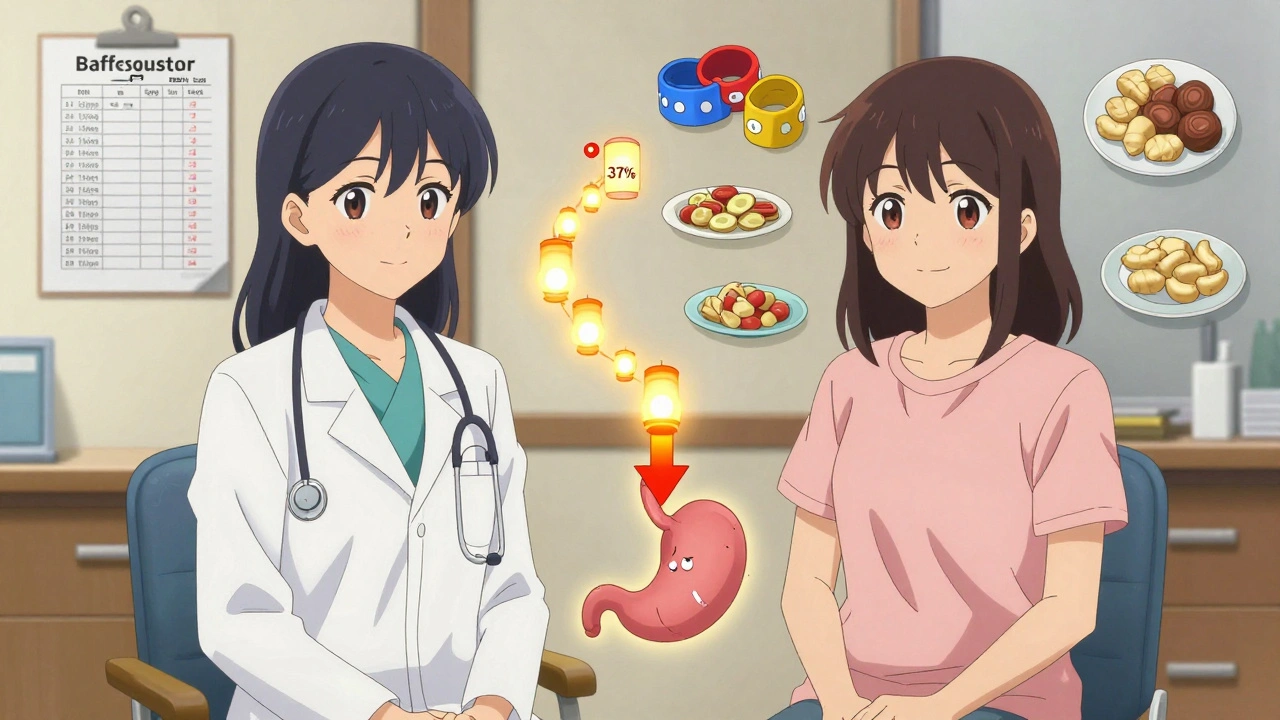
Keep a simple journal for two weeks. Write down:- What you ate and how much
- When you drank fluids
- What time of day you felt nauseous
- How bad it was (1 to 10)
Take Your Shot at Night
If you get nausea in the morning, try injecting your GLP-1 medication at bedtime. A Harvard Health report found that 63% of patients who switched from morning to night injections saw a noticeable drop in nausea. Why? You’re asleep when the drug hits its peak effect. You wake up, eat breakfast, and the nausea is already fading. This doesn’t work for everyone - but it’s worth a try. Just make sure you’re consistent. Don’t switch back and forth.When to Call Your Doctor
Most nausea fades. But some signs mean it’s time to get help:- Vomiting more than 3 times in 24 hours
- Can’t keep fluids down for 12+ hours
- Lost more than 5% of your body weight in one week
- Nausea lasts longer than 8 weeks
What’s Next? Better Options Are Coming
Pharmaceutical companies are already working on less nauseating versions. Novo Nordisk’s oral semaglutide - still in trials - has shown 18% less nausea than injectables. Combination therapies with prokinetic agents like domperidone are being tested too. Early results show nausea drops by over half without losing weight loss benefits. In the meantime, you don’t have to suffer. Small meals. Slow doses. Ginger. Wristbands. Timing your fluids. These aren’t just tips - they’re science-backed strategies that help thousands stay on track. You didn’t start this journey to quit because of nausea. You started to feel better, live longer, and take control. Don’t let a temporary side effect steal that. With the right approach, you can keep going - and feel better doing it.How long does GLP-1 nausea usually last?
For most people, nausea starts within the first week and peaks around day 10. It typically fades within 4 to 8 weeks, especially if you’re taking the medication slowly. If it lasts longer than 8 weeks, talk to your doctor - it could be a sign of something else, like gastroparesis.
Can I still lose weight if I have nausea from GLP-1 drugs?
Yes - and many people lose more weight once their nausea is under control. Nausea doesn’t mean the drug isn’t working. In fact, staying on the medication long-term is what leads to sustained weight loss. Most weight loss happens after the nausea improves, not during it.
Is ginger really effective for GLP-1 nausea?
Yes. A 2022 meta-analysis found ginger reduced nausea in 62% of people using GLP-1 medications. Try ginger tea, ginger chews, or even ginger capsules. Take them 20-30 minutes before meals. It’s one of the most reliable, natural options with no side effects.
Should I stop my GLP-1 medication if I’m nauseous?
Not unless you’re vomiting, dehydrated, or losing weight too fast. Most nausea improves with time and small adjustments - like eating smaller meals, drinking fluids away from meals, or slowing your dose increase. Stopping too soon means you lose the benefits. Talk to your doctor before quitting.
Do acupressure wristbands really work for GLP-1 nausea?
Yes - in a small 2023 study, 80% of participants saw nausea improve within 20 minutes of wearing the bands. They’re safe, cheap, and drug-free. Many people use them alongside diet changes and find they help reduce how often they need anti-nausea meds.
Why does my doctor want me to stay on a low dose longer?
Because your stomach needs time to adjust. Rushing the dose increases nausea and raises your chance of quitting the drug. Clinics that extend titration to 6 weeks see discontinuation rates drop from 12% to under 4%. Slow and steady wins the race - especially with GLP-1s.
Can I take anti-nausea meds long-term with GLP-1 drugs?
Not usually. Anti-nausea drugs like domperidone are meant for short-term use - usually 4 to 6 weeks - while your body adjusts. If you still need them after that, your doctor may lower your GLP-1 dose or switch you to a different medication. Long-term use carries risks, especially for heart health.
What foods should I avoid with GLP-1 nausea?
Avoid high-fat foods (fried chicken, cheese, butter), greasy meals, large portions, and sugary drinks. These slow your stomach even more and worsen nausea. Stick to lean proteins, plain carbs, vegetables, and small portions. Eat slowly and stop when you’re 80% full.




Comments (8)
Michelle Edwards
I know how hard this can be-I was on Ozempic for 6 months and nearly quit at week 3. But switching to 5 tiny meals a day and drinking water only between meals? Game changer. I didn’t even need ginger or wristbands. Just ate like a bird and survived. You got this.
Neelam Kumari
Oh wow, another ‘natural remedy’ post. Ginger? Acupressure bands? Did you also try rubbing a crystal on your wrist while chanting ‘I am not nauseous’? People, this is a pharmaceutical drug with documented side effects-not a yoga retreat. If you can’t handle the nausea, maybe you shouldn’t be on it. Stop pretending magic tricks fix biology.
Stephanie Maillet
It’s fascinating, isn’t it?-how the body’s adaptive mechanisms, when gently coaxed-through small, frequent, low-fat meals; through hydration timed with intention; through patience that defies our modern obsession with speed-can recalibrate… and heal… without needing to override the system entirely. I wonder, sometimes, if our impatience is the real illness here.
Raj Rsvpraj
Who the hell wrote this? American medical advice? In India, we don’t need ginger tea or wristbands-we just take the medicine and suffer like adults. You people treat nausea like it’s a Netflix show you can pause. In my country, we don’t slow titrate-we titrate and move on. This is why your healthcare is so expensive.
Aileen Ferris
so like… ginger chews? really? and wristbands? i mean… i get it, but like… is this even science? or just people trying to make themselves feel better while they wait for the drug to not make them want to die? also, who even is rentia clinic? never heard of it…
Rebecca Dong
THIS IS ALL A LIE. GLP-1s are just Big Pharma’s way of making you dependent on nausea meds so they can sell you domperidone and Zofran forever. They don’t care if you feel sick-they care about your subscription. They’ve been hiding the truth: nausea is a warning sign, not an adjustment. You’re being manipulated into thinking it’s normal. Wake up.
Sarah Clifford
my doctor told me to go slow but i went fast cause i wanted results. now i’ve been puking for 10 weeks. i tried the wristbands. they kinda helped? but honestly? i just started eating plain rice and crackers and stopped drinking coffee with food. still nauseous but not crying in the bathroom anymore. also i take my shot at night now. it’s not perfect but it’s better.
Regan Mears
Michelle, your comment was beautiful. And Neelam-I hear your frustration, but dismissing people’s real suffering as ‘not tough enough’ doesn’t help. This isn’t about weakness; it’s about physiology. The fact that 78% of people improved with small meals? That’s not placebo. That’s science. And Stephanie? You nailed it: patience isn’t passive-it’s active healing. To everyone: if you’re struggling, you’re not failing. You’re adapting. And you’re not alone.