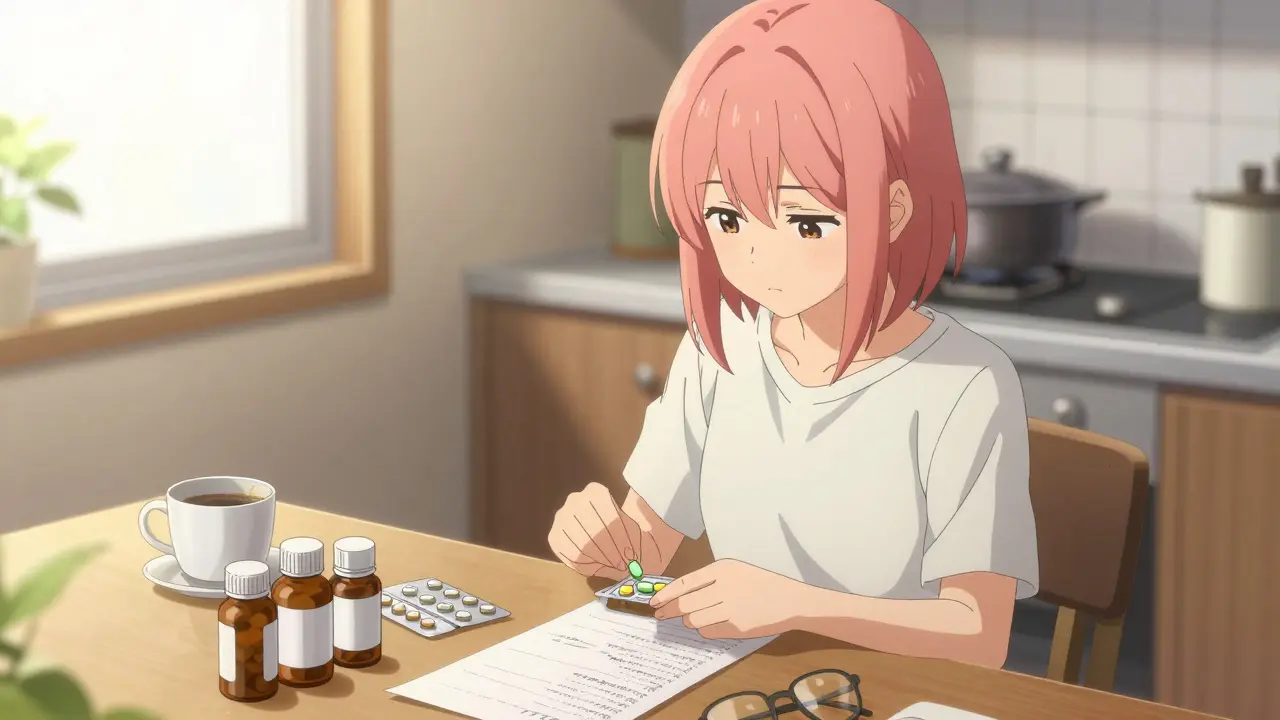
When you walk into a medication review appointment unprepared, you’re not just wasting time-you’re risking your health. Many people think, "I take my pills, that’s enough," but that’s exactly where things go wrong. Medication reviews aren’t just check-ins. They’re safety checks. And if you don’t show up with the right information, your doctor or pharmacist might miss something dangerous-like a harmful drug interaction, an unnecessary pill, or a side effect you didn’t even realize was connected to your meds.
By 2026, more than 40% of adults over 65 are taking five or more medications daily. That’s not just common-it’s risky. The average person on multiple drugs has a 1 in 3 chance of experiencing an adverse reaction. A medication review is your chance to fix that before it fixes you.
What Exactly Is a Medication Review?
A medication review is a structured conversation with your healthcare provider-usually your doctor or a clinical pharmacist-where they look at every single thing you’re taking. Not just your prescriptions. Not just the ones you think matter. Everything. That includes:
- Prescription drugs
- Over-the-counter painkillers like ibuprofen or acetaminophen
- Vitamins and supplements
- Herbal remedies like St. John’s Wort or ginkgo biloba
- Topical creams, inhalers, eye drops, and patches
This isn’t a guesswork session. It’s a full audit. The goal? To make sure every pill you swallow is still helping you-and not hurting you. You might find out one of your meds is outdated. Or that two drugs you’re taking cancel each other out. Or that you’ve been taking a double dose because two doctors prescribed the same thing.
Step-by-Step: How to Prepare
Here’s how to walk in ready, not rattled.
- Collect every medication you take. Go through your medicine cabinet, purse, nightstand, and car. Pull out every bottle, box, and packet. Don’t leave anything out. Even the little packets of vitamins you grab at the airport. If you take it, bring it.
- Make a written list. On paper or on your phone, write down:
- The name of each medicine
- The dosage (e.g., 10 mg, 5 mL, 1 inhalation)
- The frequency (e.g., once daily, twice a week, as needed)
- The reason you take it (e.g., "for high blood pressure," "for occasional headaches")
- The prescribing provider (e.g., Dr. Lee, Dr. Patel, urgent care clinic)
- Any side effects you’ve noticed (even if you think they’re "normal")
For example:
- Metformin 500 mg - once daily with breakfast - for type 2 diabetes - prescribed by Dr. Chen
- Advil 200 mg - 1 tablet as needed for knee pain - bought at Walmart
- Omega-3 capsules - 2 daily - for heart health - bought online
Don’t rely on memory. Write it down. Even if you think you know your meds inside out.
- Bring the actual pills. Yes, really. Even if you’re doing a video call. Your provider can’t see if your pills are expired, if the bottle says "take with food" but you’re taking them on an empty stomach, or if you’ve been cutting pills in half without knowing the dose changed. Bring them all. Put them in a bag. Bring the bottles, not just the pills.
- Write down your questions. What’s bothering you? Are you feeling dizzy after lunch? Is your sleep worse since you started that new pill? Are you skipping doses because they’re too expensive? Don’t wait until the appointment to remember. Write them down now. You’ll forget half of them otherwise.
- Know your goals. Are you trying to reduce pills? Lower side effects? Save money? Get more energy? Tell your provider. They’re not mind readers. If you say, "I just want to feel better," they’ll have to guess. If you say, "I can’t climb stairs without getting winded since I started this new blood pressure med," they’ll know exactly where to look.
Special Cases: What If You Have Parkinson’s, Diabetes, or Other Complex Conditions?
Some conditions demand extra care.
If you have Parkinson’s disease, timing matters more than almost anything else. Medications like levodopa work in narrow windows. Taking them 15 minutes too late can mean hours of stiffness. Your list must include exact times you take each dose. "Morning" isn’t enough. "7:15 AM" is. If your review is virtual, this detail is even more critical-your provider can’t watch you swallow the pill.
If you have diabetes, bring your glucose log. Mention any recent highs or lows. Tell them if you’ve been skipping insulin because you’re scared of low blood sugar. They can adjust-not judge.
If you’re on blood thinners, like warfarin, note any recent bruising, nosebleeds, or falls. These aren’t "normal aging." They’re warning signs.
And if you’re elderly or have memory issues? Ask a family member to help you prepare. Or bring them with you. You’re not failing-you’re being smart.

What If Your Review Is Online?
Telehealth medication reviews are common now-and they’re just as effective, as long as you’re ready.
Before your video call:
- Test your camera and mic ahead of time.
- Have your meds in front of you-on the table, in clear view.
- Keep your list open on your phone or tablet so you can refer to it.
- Use good lighting so your provider can see pill labels.
Without physical access to your meds, your provider depends entirely on your description. If you say, "I take one blue pill," they’ll assume it’s the right one. If you’re wrong? That’s a problem.
What Happens If You Don’t Prepare?
Ignoring this step isn’t just risky-it can be dangerous.
In the UK, some practices have strict rules: if you don’t respond to three reminders for a medication review, they’ll cut your prescriptions to a one-month supply. After that? No more refills until you attend. Why? Because they’ve seen too many cases where patients took a new antibiotic that clashed with their heart med-and ended up in the ER.
One study found that 68% of medication-related hospital visits were preventable. Most of them? Patients didn’t know they were taking two drugs that interacted. Or they were taking a higher dose than needed. Or they stopped a critical med because they thought it "wasn’t working."
You don’t want to be one of them.

What Happens During the Appointment?
It’s not a lecture. It’s a conversation.
Your provider will:
- Compare your list to your medical records
- Check for duplicates or outdated prescriptions
- Look for drug interactions (like mixing blood thinners with certain herbal supplements)
- Assess whether any meds are no longer needed
- Discuss side effects you’ve mentioned
- Ask if you’re having trouble affording, remembering, or taking your meds
- Help you decide what to keep, change, or stop
They might say: "This statin you’re on? We can lower the dose. You’re not at high risk for heart disease anymore." Or: "That antacid you take daily? It’s causing a magnesium deficiency. Let’s try something else."
And if you’re taking five or more meds? That’s called polypharmacy. It’s not a diagnosis-it’s a flag. Your provider will look harder. They’ll ask more. And they’ll give you more options.
What If You Don’t Agree With Their Plan?
You have a right to ask. To say no. To ask for alternatives.
If they say, "You don’t need this anymore," and you feel better on it? Say so. "I’ve been on this for years and I feel more stable." That’s valuable info.
If they suggest stopping a med, ask: "What happens if I stop? What happens if I keep it?" Get the risks and benefits in plain language. Don’t be afraid to ask twice.
This is your body. Your health. You’re not just a patient-you’re a partner.
After the Appointment
Don’t walk out and forget it.
- Get a written summary of what was decided.
- Ask for a new, updated list of meds to take home.
- Set a reminder to refill any new prescriptions.
- Update your list if anything changes-even if it’s just a new OTC painkiller.
- Schedule your next review. Most people need one every 12 months. If you’re on 5+ meds? Every 6.
Keep your list on your phone. Share it with a family member. Update it every time you see a new doctor or buy something at the pharmacy.
Do I need to bring all my medications-even the ones I don’t take anymore?
Yes. Even if you stopped taking something weeks ago, bring the bottle. Your provider needs to see what you were on, when you stopped, and why. Sometimes old meds explain current symptoms. For example, if you stopped a blood pressure pill and now feel lightheaded, that’s a clue. Don’t assume it’s irrelevant.
Can a pharmacist do a medication review instead of a doctor?
Absolutely. In fact, many practices now use clinical pharmacists for medication reviews because they specialize in drug interactions, dosing, and side effects. Pharmacists often spend more time on each review-up to 45 minutes-and are trained to spot subtle problems doctors might miss. If you’re offered a pharmacist-led review, accept it.
What if I can’t get to the clinic? Can I get a home visit?
Yes. Many healthcare systems offer home visits for patients with mobility issues, chronic illness, or transportation barriers. You need to ask for it when booking. Don’t assume it’s automatic. If you’re elderly, disabled, or recovering from surgery, this is a right-not a favor.
Why do I need to include over-the-counter meds and supplements?
Because they’re not harmless. Common OTC painkillers like ibuprofen can raise blood pressure, damage kidneys, or interfere with heart meds. Herbal supplements like St. John’s Wort can make antidepressants, birth control, or blood thinners stop working. Even vitamin D in high doses can cause toxicity. If you take it, it matters.
What if I’m not sure why I’m taking a certain pill?
Say that. Right out loud. "I don’t remember why I’m taking this." That’s one of the most helpful things you can say. Many people take pills for years without knowing why. Sometimes, the original reason is gone-like a short-term infection or a temporary pain. Your provider can safely stop it. You might feel better without it.
Preparing for a medication review isn’t about being perfect. It’s about being honest. It’s about showing up with your truth-not your guesswork. You’ve done the hard part by taking your meds. Now, let your provider help you take control of them.