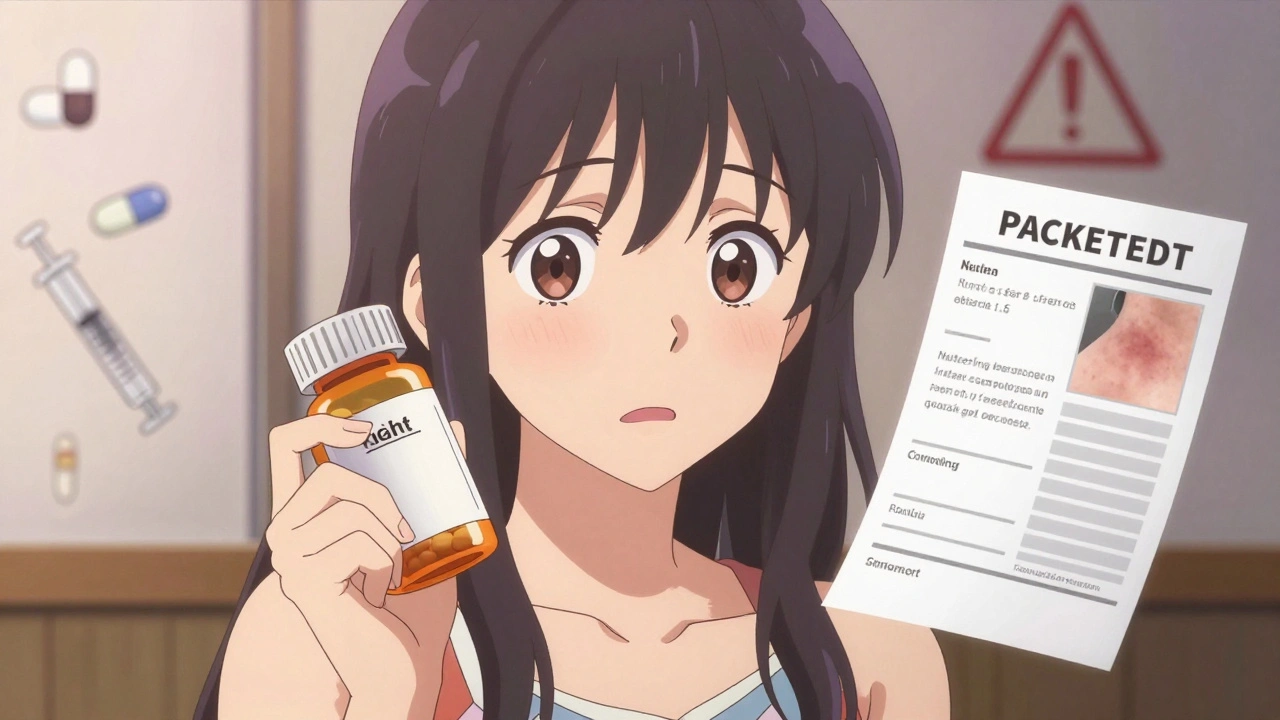
It happens more often than you think. You take your pill, and something feels off. Maybe the pill looks different. Maybe you were given the wrong dose. Or maybe you started feeling dizzy, nauseous, or broke out in a rash after starting a new medication. You’re not imagining it. And you’re not overreacting. Medication errors are one of the most common types of medical mistakes in the U.S., injuring over 1.3 million people every year. The good news? You have the power to stop it-from happening to you again, and to others.
Recognize the Error Before It’s Too Late
The first step in reporting a medication error is knowing when one happened. It’s not always obvious. A mistake isn’t just a pharmacist giving you the wrong bottle. It can be:- A doctor prescribing a drug that interacts badly with another you’re already taking
- A nurse giving you 10 mg instead of 1 mg
- A pharmacy labeling your bottle with the wrong name or dosage
- Being told to take a pill with food when you shouldn’t have
- Receiving someone else’s medication by accident
Start with Your Provider-But Don’t Stop There
Your first move should be talking to the person who prescribed or dispensed the medication. Call your doctor’s office, pharmacy, or clinic. Say clearly: “I believe I experienced a medication error, and I’m concerned about my safety.” Don’t soften it with “I might be wrong” or “I’m not sure.” You don’t need to prove it. You just need to report it. Many providers will dismiss you at first. That’s common. A 2022 study found that 64% of patient-reported medication errors were initially ignored unless backed by documentation. So come prepared. Bring:- The original prescription or e-prescription receipt
- The pill bottle with the label still on
- Your symptom log
- Photos of any visible reactions (rash, swelling, bruising)
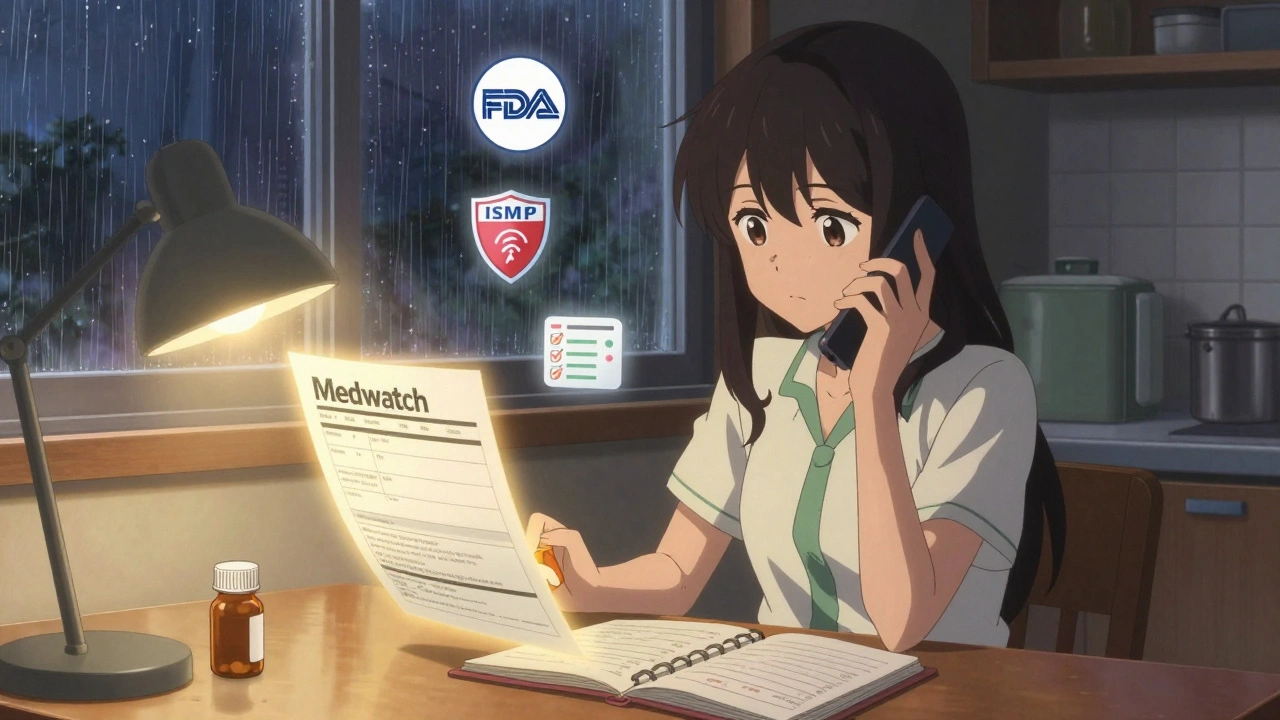
Report to the FDA’s MedWatch Program
Your provider might fix the mistake for you-but it won’t fix the system. That’s where the FDA’s MedWatch program comes in. It’s the federal system for tracking dangerous drugs, devices, and errors. In 2022, they received over 140,000 reports. But here’s the catch: only 14% of those came from patients like you. The rest came from doctors and pharmacists. You don’t need to be a professional to report. Anyone can file. The new online form takes under 10 minutes. Go to fda.gov/medwatch and click “Volunteer to Report.” You’ll be asked for:- Your name and contact info (optional, but helpful)
- The name of the medication (brand and generic)
- When and how you took it
- What happened to you
- Any other medications or conditions you have
Use the Institute for Safe Medication Practices (ISMP)
If you’re a patient who doesn’t want to go through the hospital system-or if your provider retaliated or ignored you-ISMP is your best ally. Founded in 1975, ISMP is a nonprofit that collects confidential medication error reports from patients and staff. They don’t report names. They don’t blame individuals. They analyze patterns and publish safety alerts that hospitals and pharmacies are required to read. In 2022 alone, ISMP received over 12,500 reports. Two-thirds of those led to public safety notices. You can report online at ismp.org under “Report an Error.” They even have a form for school-related errors, which is useful if your child was given the wrong medicine at school.What Happens After You Report?
Don’t expect instant results. But do expect change. Here’s what typically happens:- Within 1-3 days: Your provider may call to apologize or adjust your treatment.
- Within 1-2 weeks: If you reported to ISMP, you might get a follow-up email explaining how your report helped improve a safety protocol.
- Within 1-3 months: The FDA may issue a warning or recall if your report matches others.
Common Roadblocks-and How to Beat Them
You’ll face pushback. Here’s how to handle it:“It’s not a big deal.” Say: “It may seem small, but it could happen to someone else. I’m reporting so it doesn’t.”
“You didn’t follow the instructions.” Ask: “Can you show me the written instructions I was given? I’d like to compare them to what happened.”
“We can’t give you your records.” Under HIPAA, you’re legally entitled to your medical records within 30 days. If they delay, file a complaint with HHS at hhs.gov/ocr.
“If you report this, we might lose our license.” This is a scare tactic. Reporting is not only legal-it’s required by law. Hospitals that don’t report errors risk losing Medicare funding.

Why Reporting Matters More Than You Think
This isn’t just about you. Medication errors are a silent epidemic. A 2023 study found that for every one error reported, 10 go unreported. That means hospitals and pharmacies don’t see the full picture. They fix the mistake they know about-but miss the pattern. When you report, you’re not just protecting yourself. You’re helping:- Other patients avoid the same dangerous drug label
- Pharmacists catch mislabeled bottles before they reach someone else
- Doctors avoid prescribing drugs that interact dangerously
- Regulators force companies to fix flawed packaging
What to Do If You’re a Parent or Caregiver
If your child was given the wrong medication at school, act fast. In 48 states, schools are required to report medication errors within 24 hours. But only 32% of districts actually improve their procedures afterward. Here’s your checklist:- Get a written incident report from the school nurse or administrator.
- Request a copy of the medication log for your child.
- Ask: “What steps are being taken to prevent this from happening again?”
- If they don’t respond, file a complaint with your state’s Department of Education.
- Report to ISMP and MedWatch-school errors are tracked separately and often lead to statewide policy changes.
Final Step: Keep a Record
Save everything. Your symptom log. The pharmacy receipt. The email from your doctor. The confirmation number from MedWatch. You never know when you’ll need it. If you develop long-term effects, you’ll need proof. If someone else is hurt by the same error, your report could be the key that starts a chain reaction of change.Medication errors aren’t your fault. But speaking up? That’s your power. And it’s the only thing that will make the system safer-for you, and for everyone who comes after you.
What should I do if my doctor dismisses my medication error report?
If your provider dismisses your report, document the conversation in writing. Send a follow-up email summarizing what you said and their response. Then, report the error directly to the FDA’s MedWatch program or the Institute for Safe Medication Practices (ISMP). Both accept anonymous reports and are designed to catch errors that institutions ignore. You can also file a formal complaint with your state’s medical board or the Office for Civil Rights at HHS if your medical records were withheld.
Can I report a medication error even if I didn’t get hurt?
Yes. In fact, you should. These are called “near misses” and are just as important as actual injuries. Reporting a wrong pill you caught before taking it helps prevent someone else from making the same mistake. The Institute for Safe Medication Practices (ISMP) specifically encourages near-miss reports because they reveal system flaws before harm occurs.
How long do I have to report a medication error?
There’s no legal deadline for patients to report to the FDA or ISMP-you can report months or even years later. However, for the best chance of action, report within 30 days while evidence is fresh. Hospitals and pharmacies typically require internal reports within 24-72 hours. The sooner you report, the faster corrections can be made.
Will reporting a medication error get me in trouble?
No. Reporting an error you experienced as a patient will not get you in trouble. In fact, federal law protects you from retaliation. The only people at risk are providers who fail to report errors or who repeatedly make preventable mistakes. The goal of reporting is to fix systems, not punish individuals. Most hospitals now use “just culture” models that focus on learning, not blame.
Do I need a lawyer to report a medication error?
No. You don’t need a lawyer to file a report with the FDA, ISMP, or your provider. Legal help is only necessary if you’re seeking compensation for harm caused. For safety reporting, the process is designed for patients to handle on their own. Save legal action for later-your first priority is preventing others from being hurt.




Comments (8)
Marvin Gordon
Been there. Took a pill that looked like a different color - didn’t think much of it till I started sweating like I’d run a marathon in a sauna. Called my pharmacy. They apologized, said it was a mix-up with another patient’s script. Didn’t even make me fill out a form. So I filed with MedWatch. Two weeks later, they sent me a note saying they’d flagged the batch. That’s how you change things - not by yelling, but by showing up.
Mark Curry
weird how we’re told to trust the system but then have to fight to be heard. i just keep thinking - if no one speaks up, who will? the pills don’t change themselves. the labels don’t fix the typos. someone’s gotta be the one who says ‘wait, this ain’t right.’
Ali Bradshaw
My mom got the wrong blood pressure med last year. She didn’t say anything because she didn’t want to ‘cause trouble.’ Two weeks later, she ended up in the ER. I wish she’d known how simple it is to report. You don’t need to be loud. You just need to be persistent. ISMP’s form took me 7 minutes. I cried while filling it out. Not because I was mad - because I realized how many people never even try.
an mo
Ugh. Another ‘patient empowerment’ PSA. Real talk - 90% of these errors happen because doctors are overworked and pharmacists are understaffed. You think your little report fixes systemic underfunding? Please. The FDA gets 140k reports a year and still lets dangerous drugs stay on shelves for YEARS. You’re not a hero. You’re just another data point in a broken machine.
aditya dixit
It is important to note that medication errors are not merely individual incidents but manifestations of systemic failures in healthcare workflows. The human factor, while critical, is often the last line of defense in a chain already weakened by automation errors, communication gaps, and time constraints. Reporting is not merely an act of self-preservation - it is a form of civic duty within the medical ecosystem. The data collected by ISMP and MedWatch are not just statistics; they are the foundation for evidence-based safety protocols that reduce harm at scale. Every report contributes to a feedback loop that, over time, transforms institutional behavior.
Annie Grajewski
so like... i took a pill that looked like a tiny green boulder and i thought ‘wait is this my anxiety med or my ex’s weed?’ turns out it was both. my pharmacist laughed. i reported it. now my town’s pharmacy has a ‘pill check’ sticker. i’m basically a superhero. also my dog now barks at pill bottles. 🐶💊
Mark Ziegenbein
Let me be clear - this isn’t about ‘speaking up.’ This is about reclaiming agency in a medical-industrial complex that treats patients like disposable data points. You think the FDA cares about your rash? No. They care about liability. You think your doctor wants to hear about the wrong dosage? They’re already on their 12th patient of the hour. But here’s the thing - when enough people report, the system doesn’t just adjust. It fractures. And in that fracture? That’s where change bleeds through. This isn’t activism. This is survival. And if you’re not reporting? You’re complicit in the silence that kills.
Norene Fulwiler
I’m from Nigeria and I moved here 5 years ago. In my country, you’d never report a med error - you’d just stop taking it and find another doctor. Here, I was terrified to speak up. But I did. And the pharmacy called me back within an hour. I cried. Not because I was scared - because someone actually listened. This system isn’t perfect. But when you report? You’re not just fixing your own life. You’re showing someone else - maybe someone from a place like mine - that their voice matters too.