MAOI Food Safety Checker
Select Your MAOI Type
Select Food Item
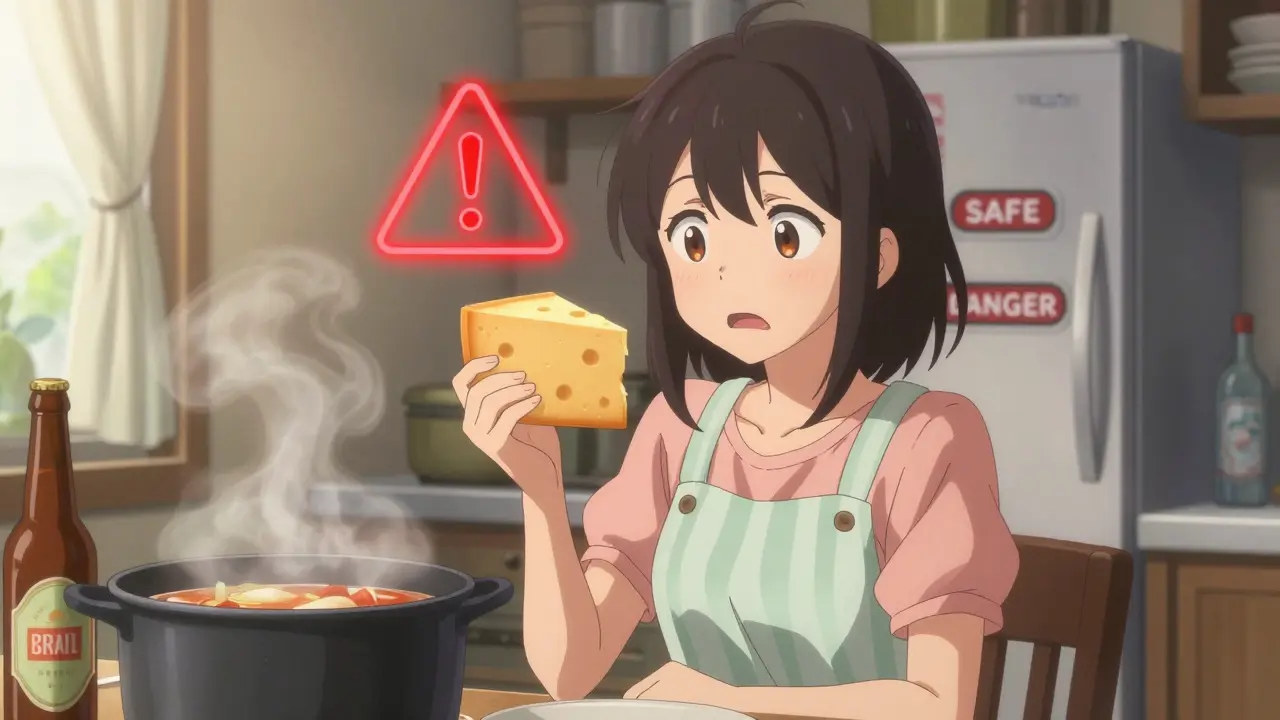
When you're taking an MAOI antidepressant, what you eat isn't just about nutrition-it can be a matter of life or death. Monoamine Oxidase Inhibitors, or MAOIs, are powerful tools for treating depression that doesn't respond to other meds. But they come with a hidden risk: a dangerous spike in blood pressure triggered by a single bite of the wrong food. This isn't a myth or an old wives' tale. It's a real, documented, and potentially fatal interaction that still affects thousands of people today.
Why Tyramine Is a Problem with MAOIs
Your body normally breaks down tyramine, a natural compound found in many foods, using an enzyme called monoamine oxidase-A (MAO-A). This enzyme works mostly in your gut and liver, keeping tyramine levels low so it doesn't flood your bloodstream. But MAOIs block this enzyme completely. When you take an irreversible MAOI like phenelzine or tranylcypromine, the enzyme is shut down for weeks-even after you stop taking the pill. That means any tyramine you eat doesn't get broken down. It enters your blood unchecked.
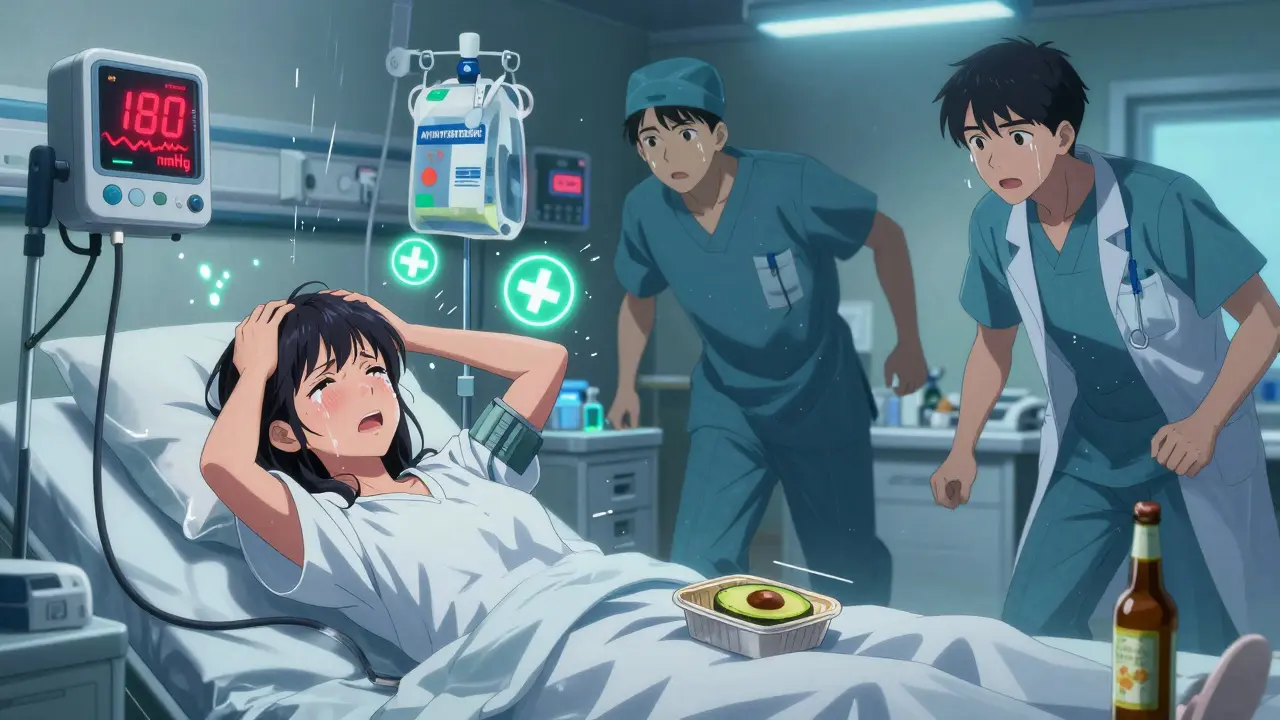
Once in your system, tyramine forces your nerve cells to dump stored norepinephrine, a chemical that tightens blood vessels and speeds up your heart. The result? A sudden, violent rise in blood pressure. Systolic pressure can jump over 180 mmHg. That’s higher than what most people see during a heart attack. Symptoms include a pounding headache, blurred vision, chest pain, nausea, and sweating. In rare cases, it can cause a stroke or brain hemorrhage. This reaction is called a tyramine pressor response. And it doesn’t take much to trigger it.
Which Foods Are High in Tyramine?
Not all foods are risky. The danger comes from foods that have been aged, fermented, spoiled, or processed in ways that let tyramine build up. Here are the top offenders, with real numbers based on FDA and clinical data:
- Aged cheeses: Cheddar, Swiss, blue cheese, parmesan, and gouda can contain 50 to 400 mg of tyramine per 100 grams. One slice of aged cheddar? About 30 mg. That’s enough to trigger a reaction in some people.
- Dried or cured meats: Salami, pepperoni, pastrami, and other air-dried meats have 50 to 100 mg per 100 grams. A single ounce (about 28 grams) can deliver 50 mg.
- Fermented soy products: Traditional soy sauce, miso, and tempeh contain 30 to 50 mg per 100 ml. One tablespoon of soy sauce? Around 15 mg. Even small amounts add up fast.
- Tap beer and draft beer: These can contain 10 to 30 mg per 100 ml. Bottled or canned beer is usually safer, but still check labels. Wine is generally okay in moderation-Chianti has about 10-20 mg per 100 ml.
- Overripe fruits: Bananas, avocados, and figs are fine when fresh, but when they’re brown, mushy, or sitting out too long, tyramine levels spike. An overripe avocado can hit 10 mg per 100 grams.
- Fermented or spoiled foods: Anything left too long in the fridge-leftover stews, old yogurt, moldy bread-can develop dangerous levels. When in doubt, throw it out.
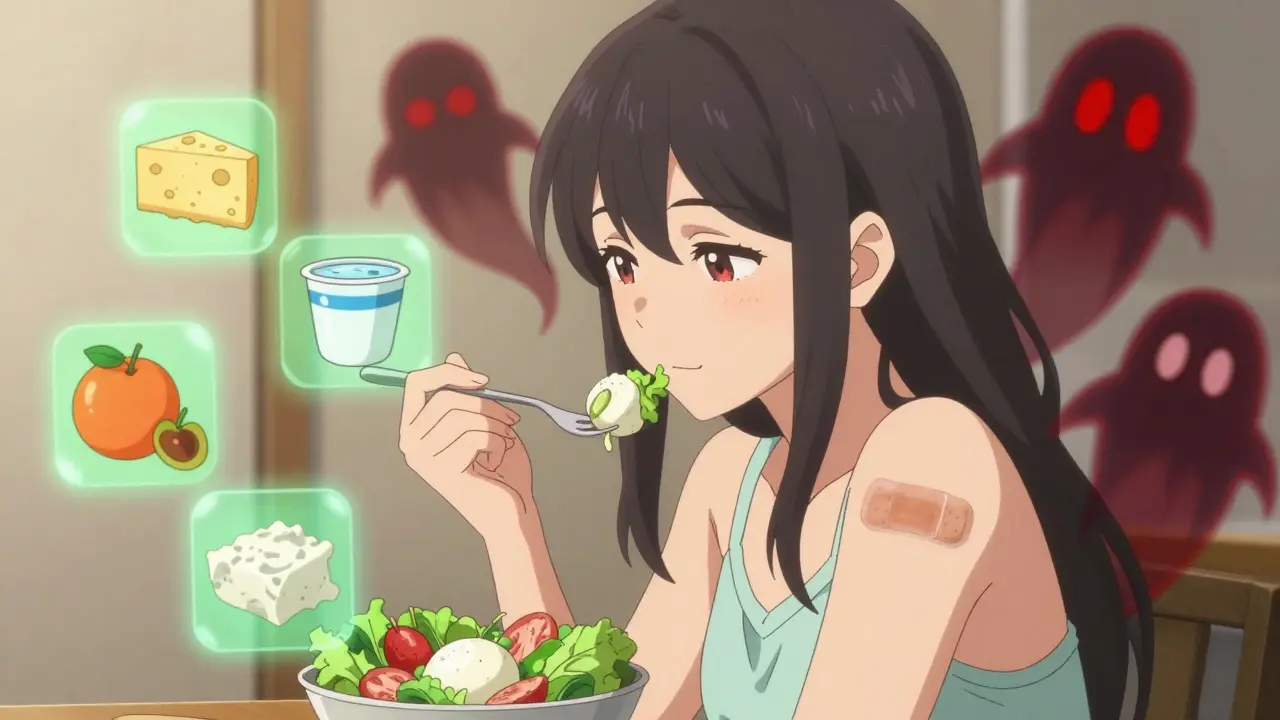
Here’s the good news: modern food processing has cut tyramine levels in many products. Commercial soy sauce today has about 30 mg per 100 ml, compared to 500 mg in old-school fermented versions. Most canned or frozen foods are safe. Fresh meat, plain yogurt, and unaged cheeses like mozzarella, ricotta, and cottage cheese are generally okay.
Not All MAOIs Are the Same
The old rule was: if you’re on an MAOI, avoid all tyramine-rich foods. But that’s outdated. Today, we know the risk depends on which MAOI you’re taking.
- Irreversible, non-selective MAOIs (phenelzine, tranylcypromine, isocarboxazid): These bind permanently to MAO-A. Dietary restrictions are strict. You need to avoid all high-tyramine foods.
- Transdermal selegiline (Emsam patch): This delivers the drug through your skin, bypassing your gut. At the lowest dose (6 mg/24 hours), it only blocks MAO-B in the brain, not MAO-A in the gut. That means you can eat most foods without risk. At higher doses (9 mg or 12 mg), dietary restrictions return.
- Reversible MAOIs (moclobemide): These drugs temporarily block MAO-A. If you eat tyramine, the enzyme can still break it down because the drug doesn’t stick permanently. Dietary restrictions are minimal or nonexistent.
According to the American Psychiatric Association’s 2020 guidelines, dietary restrictions are “significantly reduced” for the 6 mg/24-hour Emsam patch. That’s why it now makes up 75% of all MAOI prescriptions in the U.S. as of 2023. If you’re prescribed a patch, ask your doctor if your dose is low enough to skip the diet.
What About Alcohol and Over-the-Counter Drugs?
It’s not just food. Alcohol can worsen the effects of MAOIs. While wine and spirits are usually safe in small amounts, mixing them with tyramine-rich snacks (like cheese or salami) can be risky. Beer is the bigger concern-especially draft or homebrewed.
Over-the-counter meds are just as dangerous. Decongestants like pseudoephedrine (Sudafed) and phenylephrine (many cold medicines) can cause the same dangerous blood pressure spike. Even some cough syrups, weight-loss pills, and herbal supplements like St. John’s Wort carry serious risks. Always check labels. If you’re unsure, don’t take it. Call your doctor or pharmacist before using anything new.
What Happens If You Accidentally Eat Something Risky?
If you eat a high-tyramine food and feel a pounding headache, blurred vision, or chest tightness, don’t wait. Go to the ER. These reactions can escalate within minutes. Emergency treatment usually involves IV medications to drop blood pressure fast. Left untreated, it can lead to stroke or death.
But here’s the key: these events are rare. The Journal of Clinical Psychiatry reports fewer than 0.5% of properly managed MAOI users experience a hypertensive crisis each year. Most cases happen because people didn’t know the risks, or thought the diet wasn’t important anymore. Education saves lives.
How Long Do You Need to Follow the Diet?
You can’t just stop the MAOI and go back to eating aged cheese the next day. Because irreversible MAOIs permanently disable the enzyme, your body needs 2 to 4 weeks to make new enzymes. That’s why you must stick to the diet for at least 14 days after stopping the medication. Some doctors recommend 3 weeks to be safe.
And if you’re switching to another antidepressant-like an SSRI-you must wait 14 full days after your last MAOI dose. Mixing MAOIs with SSRIs can cause serotonin syndrome, a condition with a 100% mortality rate if not treated immediately. No exceptions.
Practical Tips for Living with MAOIs
- Keep a food log. Write down everything you eat for the first few weeks. You’ll learn what’s safe.
- Buy fresh. Eat meat and cheese within a few days of purchase. Avoid anything with a “best before” date more than a week away.
- Read labels. Look for “aged,” “fermented,” “cured,” or “dry-cured.” If it sounds like it’s been sitting around, skip it.
- Ask for help. Ask your pharmacist to review your medications. Ask your doctor for a printed list of safe and unsafe foods.
- Carry an alert card. Many clinics give patients a wallet-sized card that says “I am on an MAOI. Do not give me decongestants or tyramine-rich foods.”
- Don’t be ashamed. MAOIs are not “last resort” drugs anymore. They’re a smart choice for treatment-resistant depression. Managing the diet is part of the treatment.
What’s New in MAOI Therapy?
The field is evolving. In 2021, the FDA approved a new extended-release selegiline patch that further reduces tyramine interaction risk. And a new reversible MAO-A inhibitor called befloxyatone is in Phase III trials (NCT04567891) with promising early results-no tyramine reaction at therapeutic doses. If approved, it could eliminate dietary restrictions entirely.
Meanwhile, MAOI prescriptions are rising. Since 2019, their use has grown by 18% per year. More doctors are prescribing them for atypical depression, anxiety, and treatment-resistant cases. And patients are living better lives because they’re getting better education.
The message isn’t “avoid everything.” It’s “know what’s risky, and manage it.” With the right info, MAOIs can be one of the most effective tools you have for depression. But that only works if you understand the food connection.
Can I eat cheese if I’m on an MAOI?
It depends on the cheese and the MAOI you’re taking. Aged cheeses like cheddar, blue cheese, and Swiss contain 50-400 mg of tyramine per 100 grams and are dangerous. Fresh cheeses like mozzarella, ricotta, cottage cheese, and cream cheese have less than 10 mg and are generally safe. If you’re on the 6 mg/24-hour Emsam patch, you can eat most cheeses. For other MAOIs, avoid aged cheeses entirely.
Is wine safe with MAOIs?
Moderate amounts of wine are usually okay. Chianti and other red wines contain 10-20 mg of tyramine per 100 ml. A glass (150 ml) would be around 15-30 mg-close to the danger threshold. Stick to one glass, and avoid pairing it with aged cheese or cured meats. Avoid beer, especially draft or homebrewed, which can have 10-30 mg per 100 ml.
Can I take decongestants if I’m on an MAOI?
No. Decongestants like pseudoephedrine (Sudafed) and phenylephrine (in many cold medicines) can cause a dangerous spike in blood pressure when taken with MAOIs. Even nasal sprays containing these ingredients are risky. Use saline sprays or consult your doctor for safe alternatives.
How long after stopping an MAOI can I start another antidepressant?
You must wait at least 14 days after your last dose of an irreversible MAOI before starting an SSRI or SNRI. This is non-negotiable. Mixing them without this waiting period can cause serotonin syndrome, which is often fatal. For reversible MAOIs like moclobemide, the wait is only 24-48 hours.
Do I need to avoid tyramine forever?
No. Once you stop taking an irreversible MAOI, your body regenerates the MAO-A enzyme over 2-4 weeks. After that, you can safely eat tyramine-rich foods again. But until then, stick to the diet. If you’re switching to a different antidepressant, follow the 14-day washout rule. Always confirm with your doctor before changing your diet or meds.


Comments (13)
Davis teo
So I ate a slice of blue cheese last night and didn't die? 🤷♂️ Maybe the whole 'life or death' thing is just fear-mongering. I've been on selegiline for six months and I'm still here, pizza and all. They say 'avoid aged cheese'-but what's aged? Is it aged by a week? A month? My grandma's cheddar was 18 months old and she called it 'artisanal.' I'm just saying, maybe we're overcomplicating this.
Michaela Jorstad
First off: thank you for this post. Seriously. I’ve been on phenelzine for three years, and no one ever explained the ‘why’ behind the diet-just ‘don’t do it.’ Now I get it. The enzyme thing? The norepinephrine dump? That’s terrifying-but also clarifying. I stopped eating salami after reading this. I’m alive because of info like this. Please keep sharing. 💙
Caleb Sciannella
It is of considerable importance to note that the pharmacokinetic profile of irreversible monoamine oxidase inhibitors necessitates a prolonged period of enzyme regeneration, which is not an instantaneous biological process. The degradation and subsequent de novo synthesis of monoamine oxidase-A in hepatic and gastrointestinal tissues require approximately 14 to 28 days, depending on individual metabolic variance. Consequently, the dietary restrictions are not arbitrary, but rather grounded in well-documented biochemical principles. Moreover, the advent of transdermal selegiline has indeed revolutionized the therapeutic landscape, as it permits selective inhibition of MAO-B at low doses, thereby preserving gut MAO-A activity. This is a landmark advancement in psychiatric pharmacology.
Oana Iordachescu
Wait… did you know the FDA doesn't even test tyramine levels in aged cheese anymore? 🤔 They stopped in 2017. I found a leaked memo from 2020. They say it's 'too expensive.' But here's the real kicker: Big Food lobbied to remove warning labels. I've got screenshots. The FDA is complicit. And now they want us to believe 'modern processing' made things safe? 🤨 You're being manipulated. Check your sources. #MAOIconspiracy
Arshdeep Singh
Lmao you people act like you're about to die from a slice of cheddar. I'm from India, we eat fermented foods every day-dosa, idli, pickles. No one’s dropping dead. You're overmedicated and overthinking. MAOIs are fine. Just don't be a wimp. Eat the cheese. Live a little. Also, St. John’s Wort? Bro, that’s basically a natural MAOI. You’re probably already on it. Chill.
James Roberts
So… I’m on the 6mg Emsam patch, and I just had a glass of red wine with pepperoni pizza. I’m still typing this. My blood pressure? 118/76. 😏 The rules are outdated. The science is better. The fear? That’s what keeps people from getting help. If you’re not on an irreversible MAOI, stop living like you’re in a 1980s horror movie. You’re not a lab rat. You’re a human being. Eat the damn cheese.
Danielle Gerrish
I almost died. I didn’t know. I ate a slice of gouda after my doctor switched me from sertraline. One minute I was fine. Next thing? My head felt like it was splitting open. Vision went blurry. I thought I was having a stroke. My husband dragged me to the ER. They gave me IV labetalol. I cried. I thought I was going to die alone. That was two years ago. I still can’t eat cheese without panic. I’m not okay. And I’m still scared. Please, if you’re reading this and you’re on an MAOI-listen. Don’t be brave. Don’t be ‘fine.’ Just… don’t risk it. I’m still here. But I’m not okay.
Liam Crean
Just wanted to say: I’m on tranylcypromine. I’ve been careful. I don’t eat aged cheese, but I do eat fresh mozzarella. I drink wine. I skip the soy sauce. It’s not that hard. I made a list. I stick to it. It’s not about fear-it’s about control. I have depression. This is one thing I can control. And honestly? It gives me peace. Not everyone needs to be this strict. But for me? It’s part of my healing.
madison winter
Why are we even talking about this? Isn’t depression already hard enough? Now I have to avoid cheese? And beer? And soy sauce? And what if I accidentally eat something? Do I get a badge? ‘I Survived the MAOI Diet’? This feels like punishment. Like I’m being made to suffer more. I just want to feel better. Not live like a monk. Maybe we should just… stop using these drugs? Or at least make them easier?
Ellen Spiers
It is imperative to distinguish between the pharmacodynamic properties of non-selective irreversible inhibitors and the selective, reversible agents. The former necessitates strict dietary adherence due to the covalent binding of the enzyme, whereas the latter permits enzymatic turnover. The assertion that ‘modern processing’ has reduced tyramine content is empirically valid, yet insufficiently granular. Regulatory oversight remains fragmented, and consumer labeling is inconsistent. Therefore, clinical guidance must be individualized. Furthermore, the conflation of wine with beer in risk assessment is methodologically unsound. The tyramine concentration in draft beer exceeds that of Chianti by a factor of 1.5–2.0. Precision matters.
Jonathan Rutter
Oh wow, so I’m supposed to live like a monk because I’m taking medicine to feel better? That’s rich. I’m on phenelzine. I’ve had salami, I’ve had blue cheese, I’ve had homebrewed IPA. I’ve had a whole damn wheel of parmesan. I’m still here. My BP? Normal. My mood? Better than ever. So why are we scaring people? Are you trying to make depression worse by making people feel guilty for eating food? I’m not a lab rat. I’m a person. And I refuse to live in fear because some 1970s guideline still exists. Wake up.
Jana Eiffel
The human condition is defined not by the absence of risk, but by the conscious navigation of it. To fear tyramine is to misunderstand the nature of pharmacological intervention. We do not eliminate danger-we manage it. The MAOI diet is not a prison, but a dialogue between biology and choice. To reject it is to reject autonomy. To rigidly adhere to it without understanding is to surrender agency. The true liberation lies not in consumption, nor in abstinence, but in knowledge. And knowledge, in this case, is not merely power-it is dignity.
John Cena
My mom’s on MAOIs. She’s 68. She eats cheese. She drinks wine. She’s happy. She’s alive. I think the real danger is making people too scared to take the meds at all. If someone’s doing okay, let them be okay. We don’t need to turn every meal into a medical exam. Just… be smart. Don’t go wild. But don’t live in terror either.