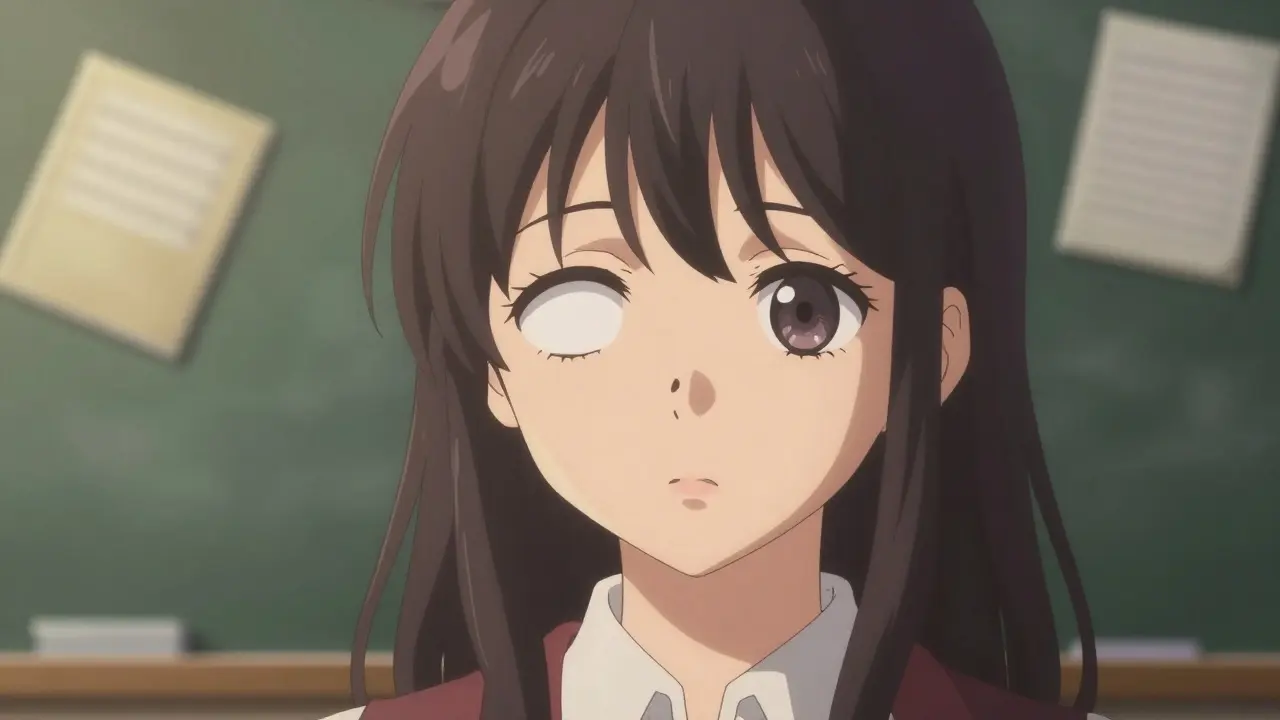
Strabismus, often called a squint, is when your eyes don’t line up properly. One eye might turn inward, outward, up, or down while the other looks straight ahead. It’s not just a cosmetic issue - it affects how your brain processes what you see. If left untreated, it can lead to permanent vision problems like lazy eye or loss of depth perception. This isn’t rare. About 5 in every 100 children have it, and adults can develop it too - often after a stroke, head injury, or nerve damage.
How Strabismus Shows Up
You might notice a child consistently tilting their head to see clearly, or an adult avoiding eye contact because they’re embarrassed. These are common signs. The most obvious symptom is visible eye misalignment. But there’s more:- Double vision (diplopia) - especially in adults
- Eye strain or headaches after reading or focusing
- Difficulty judging distances - bumping into things, trouble parking a car
- Avoiding close-up tasks like reading or using a phone
- Increased sensitivity to bright light
- Children struggling in school because they can’t focus on text
There are four main types, based on direction:
- Esotropia - eye turns inward (most common, about 50% of cases)
- Exotropia - eye turns outward (about 30%)
- Hypertropia - eye turns upward (about 15%)
- Hypotropia - eye turns downward (about 5%)
Some cases are constant. Others come and go - especially when tired or sick. A type called paralytic strabismus happens when a nerve controlling eye movement is damaged. It often comes on suddenly, with dizziness and nausea, and is linked to strokes or trauma.
Non-Surgical Treatments First
Surgery isn’t the first step. Most cases start with simpler, less invasive options:- Corrective glasses - Especially if the misalignment is caused by farsightedness. Glasses can help the eyes focus better and align naturally.
- Patching - Covering the stronger eye for a few hours a day forces the weaker eye to work harder. This helps prevent or treat lazy eye.
- Vision therapy - A series of eye exercises designed to improve coordination between the eyes and brain. Done under supervision, it can help with mild cases, especially intermittent exotropia.
These methods work best when started early. For kids, catching it before age 2 gives the best shot at developing normal depth vision. But even older children and adults can benefit. Studies show up to 60% of intermittent exotropia cases in kids aged 4-10 improve with vision therapy alone - meaning surgery can be avoided.
When Surgery Becomes Necessary
Surgery is considered when non-surgical options don’t fix the problem - or when the misalignment is too severe. Here’s when doctors typically recommend it:- Constant misalignment greater than 15 prism diopters
- Double vision that doesn’t improve with prism glasses
- Significant head tilting or turning to see straight
- Loss of binocular vision or depth perception
The goal isn’t just to make the eyes look straight. It’s to restore how they work together. A technically perfect alignment means nothing if the brain still can’t combine the images from both eyes.
Most surgeries adjust the eye muscles. Two main techniques:
- Recession - The muscle is detached and reattached further back, making it weaker.
- Resection - A portion of the muscle is removed and reattached tighter, making it stronger.
For inward-turning eyes (esotropia), surgeons often weaken both inner muscles with a bilateral medial rectus recession. For outward-turning eyes, they might strengthen the inner muscles or weaken the outer ones.
What the Surgery Involves
The procedure is done under general anesthesia for children. Adults usually get local anesthesia with sedation. It takes about 45 to 90 minutes, depending on how many muscles need adjustment.Modern techniques include adjustable sutures - used in nearly 70% of adult surgeries. This means the surgeon doesn’t fully fix the muscle position during the operation. Instead, they leave the stitches loose enough to fine-tune the alignment within 24 hours after surgery, while the patient is awake. This reduces the chance of needing a second surgery.
Success rates vary. For kids under 2, about 75-85% achieve good alignment after one surgery. For adults, it’s lower - around 55-65%. About 20-30% of patients need another procedure later, usually because the eye drifts again or the first correction was too weak.
Risks and Recovery
Like any surgery, there are risks. Most are minor and temporary:- Double vision after surgery - Happens in 80% of patients right after, but fades in days or weeks for most.
- Overcorrection or undercorrection - The eye might turn too far the other way, or not enough. This is why adjustable sutures help.
- Pain and redness - Normal for the first week. Eye drops are prescribed to reduce swelling and prevent infection.
Serious complications are rare:
- Retinal detachment: 0.1% chance
- Endophthalmitis (eye infection): 0.04% chance
Recovery takes time. Most people return to normal activities within a week, but full healing takes 4-6 weeks. Vision therapy often starts 4-6 weeks after surgery to help the brain relearn how to use both eyes together. Skipping this step is a common reason for incomplete results.
Real Results and Real Challenges
Patient experiences tell a powerful story. On patient forums, 82% say the surgery was “worth it.” People describe life-changing outcomes:- “I could finally look people in the eye at work without feeling awkward.”
- “After 30 years of double vision, I read my granddaughter’s book without squinting.”
But not everyone is happy. About 12% are dissatisfied with how their eyes look - even if their vision improved. Others still have double vision. One big reason? Unrealistic expectations. Many think surgery will make their eyes look “perfect.” But it’s about function, not flawless appearance.
Those who get detailed pre-op counseling - including photos of possible outcomes and clear talk about recovery - report 40% higher satisfaction. Talking to someone who’s had the surgery helps too.
Who Performs the Surgery?
Not every eye doctor does this. Only about 35% of general ophthalmologists are trained in strabismus surgery. It requires extra fellowship training in pediatric or neuro-ophthalmology. Surgeons need to perform 50-75 procedures under supervision before they’re considered proficient.That’s why finding the right specialist matters. Look for someone who:
- Has specific training in strabismus
- Does at least 20-30 of these surgeries a year
- Uses adjustable sutures for adults
- Recommends post-op vision therapy
Academic medical centers and specialized eye hospitals tend to have more experience than private clinics. Ask for their success rates and whether they track long-term outcomes.
What’s New in Strabismus Surgery?
Technology is improving outcomes. In 2023, the FDA approved a new surgical tool called the Steger hook - it measures muscle tension down to 0.5 grams, helping surgeons make more precise adjustments. Another advance? Pre-op virtual reality training. Patients do 10-15 minutes of VR exercises that train their brain to coordinate both eyes before surgery. One study showed this boosted success rates by 18%.Botulinum toxin (Botox) injections are also being used as a temporary fix before surgery. It relaxes the overactive muscle, giving surgeons a clearer picture of what needs fixing. Early results show it can reduce the amount of muscle adjustment needed during surgery.
Robotic-assisted surgery is still in trials, but early results from Johns Hopkins show 32% greater precision in muscle placement. That could mean fewer repeat surgeries in the future.
Access and Cost
Strabismus surgery is growing - the global market is expected to hit $1.8 billion by 2027. But access isn’t equal. In the U.S., 120,000 surgeries are done yearly. In Germany, with a smaller population, the rate is higher. In many developing countries, fewer than 30% of children with strabismus ever get evaluated.Insurance coverage is getting tighter. Medicare and private insurers now often require proof that glasses, patching, or vision therapy failed for at least six months before approving surgery. That delay can hurt kids’ long-term vision.
Non-profits like NORA help low-income families cover costs. They assist with 200-300 surgeries a year. If cost is a barrier, ask your doctor about financial aid options.
What Comes Next?
If you or your child has strabismus, don’t wait. Early evaluation is key. See an eye specialist trained in pediatric or strabismus care. Get a full exam - cover tests, prism measurements, and binocular vision checks. Don’t settle for a quick opinion.Even if surgery is needed, it’s not the end. Recovery includes follow-ups, eye drops, and vision therapy. Sticking with the plan makes all the difference. Many people who thought they’d live with a squint for life end up with clear vision, better confidence, and a new way of seeing the world.
Is strabismus the same as lazy eye?
No. Strabismus is when the eyes are misaligned. Lazy eye (amblyopia) is when one eye has poor vision because the brain ignores it. But they often happen together. If strabismus isn’t treated, it can cause lazy eye. Treating one often helps the other.
Can adults get strabismus surgery?
Yes. Many adults have successful surgery, even after decades of misalignment. The goal is to fix double vision, improve depth perception, and reduce eye strain. Cosmetic improvement is common too. Success rates are lower than in children, but most report major quality-of-life gains.
How long does recovery take after strabismus surgery?
Most people feel back to normal in 1-2 weeks. Redness and swelling fade in a few weeks. Full healing takes 4-6 weeks. Vision therapy usually starts around 4-6 weeks post-op. Avoid swimming and heavy lifting for at least 2 weeks. Follow-up visits are scheduled at 1 day, 1 week, 3 weeks, and 6 weeks.
Is strabismus surgery painful?
The surgery itself isn’t painful - you’re asleep or numb. Afterward, most people feel a scratchy or sore sensation, like having sand in the eye. Pain is usually mild and controlled with over-the-counter medicine. The eye may be red and swollen for several days. Severe pain is rare and should be reported immediately.
Will my child need more than one surgery?
About 20-30% of children need a second procedure. This is more common with large-angle misalignments or if the condition is inherited. It doesn’t mean the first surgery failed - it just means the eye muscles keep adjusting. Surgeons plan for this possibility and often wait 6-12 months before considering a second surgery.
Can strabismus come back after surgery?
Yes, in about 10-20% of cases. The eye can drift again over time, especially if the underlying muscle control issue isn’t fully resolved. That’s why vision therapy after surgery is so important - it trains the brain to keep both eyes working together. Regular check-ups help catch drifting early.
Are there non-surgical alternatives for adults?
Yes. Prism glasses can help with double vision by bending light to realign images. Vision therapy can improve eye coordination in some cases. Botox injections can temporarily weaken overactive muscles. These don’t fix the alignment permanently but can reduce symptoms. They’re often tried before surgery, especially if the misalignment is mild or intermittent.
What should I ask my surgeon before the procedure?
Ask: How many of these surgeries do you do each year? Do you use adjustable sutures? What’s your success rate for my type of strabismus? Will you recommend vision therapy afterward? What are the chances I’ll need another surgery? Can I see photos of similar cases? Getting clear answers helps set realistic expectations.



Comments (13)
Arlene Mathison
Just had my kid’s strabismus surgery last month-6 weeks in and wow. The vision therapy was the real game-changer. We thought the surgery was the finish line, but nope. It’s just the starting block. My daughter went from avoiding eye contact to hugging strangers on the playground. Worth every second of the grind.
Emily Leigh
Why do we even do this? I mean, seriously. Eyes don’t need to be ‘perfectly aligned’ to function. Society just wants people to look ‘normal’ so they don’t feel uncomfortable. Surgery for aesthetics disguised as medicine? Classic.
Carolyn Rose Meszaros
My cousin got this surgery at 42 after 30 years of double vision. She cried when she read her grandson’s bedtime story without squinting. 🥹 It’s not just about looks-it’s about being able to see the world without fighting your own eyes every day.
Greg Robertson
Thanks for this. I’ve been putting off getting checked because I thought it was ‘just how I was.’ Turns out I’ve had intermittent exotropia since I was 8. Just got my first vision therapy appointment scheduled. Fingers crossed it saves me from surgery.
Renee Stringer
It’s irresponsible to promote surgery so casually. People think it’s a quick fix, but the recovery is brutal, the risks are real, and insurance makes it a nightmare. And let’s not pretend this isn’t just cosmetic to some doctors. There’s a profit motive here, and parents are being manipulated into thinking their child is ‘broken’ unless they cut their eye muscles.
Crystal August
Wow. So we’re just supposed to trust that a surgeon who does 20-30 of these a year is somehow an expert? What if they’re just the guy who’s been doing it for 15 years and still messes up half the time? And why are they allowed to use ‘adjustable sutures’ like it’s magic? Sounds like a glorified trial-and-error system with scalpels.
pragya mishra
In India, most kids with strabismus never get seen. My neighbor’s son had it since birth. Family couldn’t afford even the glasses. He’s 10 now and still tilting his head. No one talks about this. The system fails them before they even get to the surgeon. Surgery is a luxury. Not a right.
sagar sanadi
Robotic surgery? Botox? VR training? Next they’ll implant AI chips in our eyeballs to ‘correct’ how we look at people. Wake up. This is all just corporate medicine selling you a new way to feel bad about your face. The real cure? Stop staring at screens and go outside. Your eyes will thank you. Or maybe they won’t. Who knows anymore?
clifford hoang
They’re lying about the 75-85% success rate for kids. Did you know the FDA doesn’t require long-term tracking? The ‘success’ is measured at 6 weeks. After a year? Half of them are drifting again. And the ‘adjustable sutures’? That’s just a way to make you pay for a second surgery under the guise of ‘fine-tuning.’ I’ve seen the reports. They’re hiding data. 🤫👁️🗨️
Edith Brederode
My sister had strabismus and did 18 months of vision therapy. No surgery. She’s 28 now and has perfect depth perception. She even plays volleyball. I know people think surgery is the only way, but therapy is harder-and way more powerful if you stick with it. Don’t give up before you’ve even tried.
Nadia Watson
It is imperative to underscore the critical importance of early intervention, particularly in pediatric populations, as the neuroplasticity of the developing visual cortex permits optimal outcomes when treatment is initiated prior to the age of two. Furthermore, the integration of evidence-based vision therapy protocols has demonstrated statistically significant improvements in binocular function, thereby mitigating the necessity for surgical intervention in a substantial proportion of cases. One must remain vigilant against the commodification of ocular correction.
Courtney Carra
What if the real problem isn’t the eyes… but the brain’s refusal to accept two images as one? We’re cutting muscles to fix a neurological glitch. Isn’t that like fixing a software bug by smashing the keyboard? Maybe we should be training the mind, not the muscles. 🤔
thomas wall
One cannot help but observe the alarming commodification of ocular correction in modern Western medicine. The proliferation of surgical interventions, marketed as transformative, obscures the fact that many cases of strabismus are benign, even aesthetically neutral. To prioritize cosmetic alignment over functional adaptation is not merely medical overreach-it is a cultural pathology. The eye, after all, is not a mirror for social conformity.