
Diarrhea is one of those things you hope never happens - until it does. Suddenly, you’re running to the bathroom every 20 minutes, feeling crampy, dehydrated, and just plain miserable. For many people, the first move is to grab something from the pharmacy shelf: Imodium, Pepto-Bismol, or one of the other OTC options. And for mild cases, that’s fine. But here’s the catch - OTC diarrhea treatments aren’t magic pills. They’re tools. And like any tool, using them wrong can make things worse.
What’s actually in these OTC meds?
There are two main players in the OTC diarrhea aisle: loperamide and bismuth subsalicylate. You’ll find loperamide under the brand name Imodium a synthetic opioid agonist that slows intestinal movement without affecting the brain at normal doses. It works by calming down your gut, reducing how often you have to go. A single 4mg dose after your first loose stool can cut stool frequency by up to 62% in 24 hours, according to clinical studies.
The other option is Pepto-Bismol a compound containing bismuth subsalicylate that coats the gut, reduces inflammation, and fights certain bacteria. It doesn’t just slow things down - it also tackles nausea and stomach cramps. In fact, about 37% of users report less nausea after taking it. But there’s a trade-off: your stool might turn black, and your tongue might look like it’s been dipped in ink. That’s normal. It’s just the bismuth reacting with sulfur in your mouth.
Both are available in liquids, caplets, and chewables. Imodium’s liquid form is approved for kids 6 and up. Pepto-Bismol’s kids’ version is for ages 12 and older. Don’t give adult formulations to children without checking with a doctor.
When should you use them?
OTC treatments work best for short, mild bouts of diarrhea - the kind that comes from a bad sandwich, a travel mishap, or a stomach virus. If you’ve had three or four loose stools in a day, no fever, no blood, and you’re not feeling dizzy or extremely weak, then yes - reach for the medicine.
Here’s how to use them right:
- For loperamide (Imodium): Take 4mg after the first loose stool. Then take 2mg after each new loose stool. Don’t go over 8mg in 24 hours. That’s the max.
- For bismuth subsalicylate (Pepto-Bismol): Take 30mL of liquid or two chewable tablets after each loose stool. No more than eight doses in 24 hours.
- Stop after 48 hours. Even if you still feel off, stop taking it. If it hasn’t cleared by then, something else is going on.
Hydration matters just as much as the pill. Drink fluids with electrolytes - think oral rehydration solutions (like WHO-recommended ones with 75mmol/L sodium). Avoid milk, sugary drinks, and high-fiber foods like beans or bran. Stick to plain rice, toast, bananas, and applesauce. The BRAT diet isn’t a cure, but it’s gentle on your gut.
When NOT to use them - and why
This is where most people get into trouble. You feel bad. You take more. You take it longer. And then things go sideways.
Don’t use OTC meds if you have:
- Bloody or black stools - This isn’t just diarrhea. It could be an infection like C. diff, ulcerative colitis, or even internal bleeding. Slowing your gut down traps harmful bacteria and makes things worse.
- Fever above 100.4°F (38°C) - A fever means your body is fighting an infection. Anti-diarrheals can hide symptoms and delay proper diagnosis.
- Severe abdominal pain - If you’re cramping so hard you can’t sit still, or your belly feels hard and swollen, that’s not normal diarrhea. It could be toxic megacolon - a rare but life-threatening condition linked to loperamide misuse.
- Diarrhea lasting more than 48 hours - If it hasn’t improved in two days, it’s not just a bug. You could have a parasite, antibiotic side effect, or something more serious.
The FDA issued a warning in 2016 after 48 deaths were linked to people taking huge doses of loperamide - sometimes over 100mg a day - to mimic opioid withdrawal symptoms. That’s not a myth. Emergency rooms see it. One doctor in Boston told a Reddit thread he hospitalized three patients this year alone for heart rhythm problems caused by loperamide abuse.

Imodium vs. Pepto-Bismol: What’s the real difference?
Let’s cut through the marketing. Here’s how they stack up:
| Feature | Loperamide (Imodium) | Bismuth Subsalicylate (Pepto-Bismol) |
|---|---|---|
| Primary action | Slows gut motility | Coats gut, reduces inflammation, kills bacteria |
| Best for | Quick relief from frequent stools | Diarrhea with nausea, cramps, or traveler’s diarrhea |
| Onset | 30-60 minutes | 30-60 minutes |
| Common side effect | Constipation (12% of users) | Black stool/tongue (98% of users) |
| Contraindications | Fever, bloody stool, children under 12 (caplets), under 6 (liquid) | Allergy to aspirin, children under 12, flu-like illness |
| Max daily dose | 8mg | 8 doses (262mg each) |
Imodium wins if you just need to stop the leaks. Pepto-Bismol wins if you’re also feeling nauseous, have stomach cramps, or are traveling. It even reduces your risk of traveler’s diarrhea by 65% if taken before meals in risky areas.
What to do if OTC meds don’t work
Here’s the hard truth: 41% of people using OTC meds for viral gastroenteritis report little to no relief. That’s because viruses don’t respond to anti-diarrheals. Your body needs to flush them out.
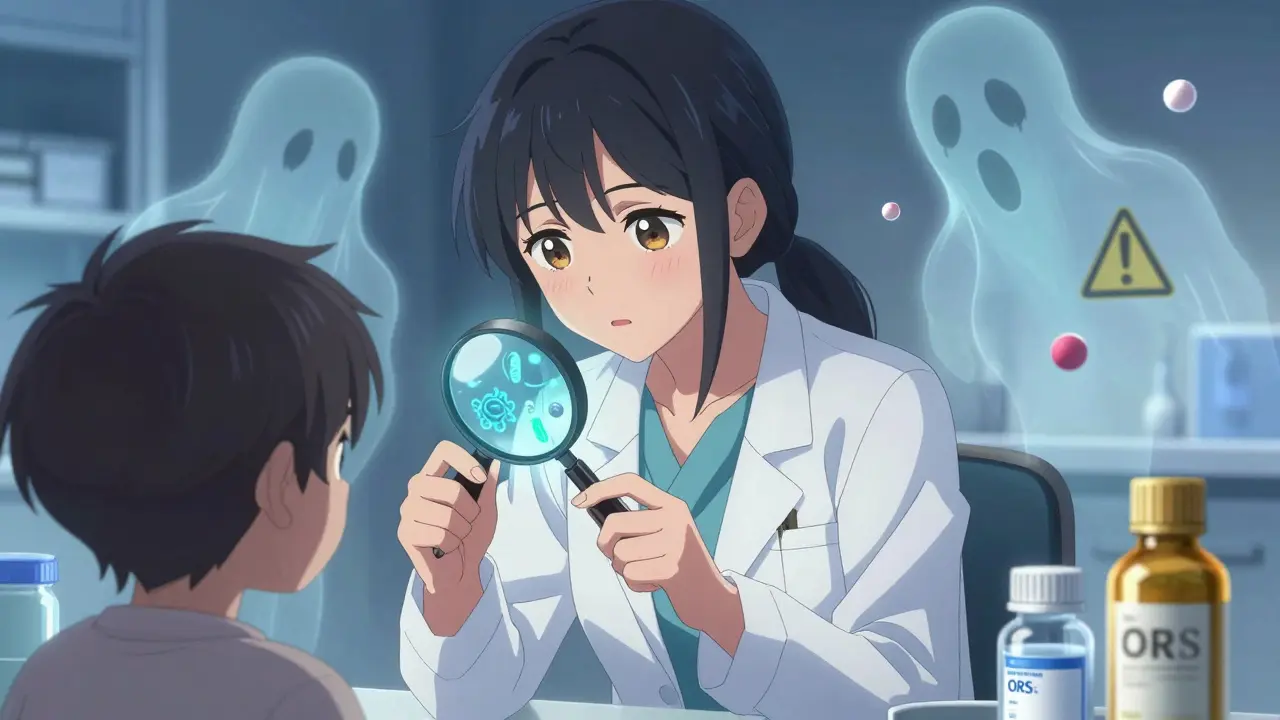
If you’ve followed the dosing rules, stopped after 48 hours, and you’re still having more than four loose stools a day - or you’re dizzy, urinating less than usual, or your lips are dry - it’s time to see a doctor.
Signs you need urgent care:
- Not peeing in 8+ hours
- Heart racing or feeling faint
- Weight loss over 5% of your body weight in a week
- Diarrhea after antibiotics (could be C. diff)
- Diarrhea lasting more than 7 days
Doctors can test your stool for parasites, bacteria, or viruses. They can give you targeted treatment. And they can rule out things like Crohn’s, IBS, or even colon cancer - which can sometimes start with chronic diarrhea.
What’s changing in the OTC space?
There’s new stuff on the horizon. Racecadotril, a drug approved in Europe and Canada for kids, reduces diarrhea duration by a full day compared to placebo. But it’s not available OTC in the U.S. yet.
Meanwhile, the market is shifting. The American College of Emergency Physicians now advises ER staff to skip anti-diarrheals entirely in favor of aggressive hydration. Why? Because the real danger isn’t the diarrhea - it’s dehydration. And in many cases, especially with kids and older adults, fluids do more than any pill.
Also, antibiotic resistance is rising. Over 38% of traveler’s diarrhea cases now don’t respond to standard antibiotics. That means OTC treatments might become even more common - but only if people use them correctly.
Final takeaway: Use smart, not hard
OTC diarrhea treatments are useful. They’re safe. But only if you treat them like medicine - not candy. Don’t take more. Don’t take longer. Don’t give them to kids without checking the label. And never, ever use them to mask symptoms of something bigger.
If your diarrhea lasts more than two days, comes with fever or blood, or leaves you feeling worse instead of better - skip the pharmacy aisle. Go see a doctor. Your gut will thank you.
Can I take Imodium and Pepto-Bismol together?
No. Combining them increases your risk of side effects without added benefit. Loperamide slows your gut; bismuth subsalicylate coats it and fights bacteria. Using both doesn’t make you better faster - it just raises your chance of constipation, nausea, or salicylate toxicity. Pick one and stick to the dose.
Is it safe to use OTC diarrhea meds for kids?
For children under 6, no - unless a doctor says so. Imodium liquid is approved for ages 6+, and caplets for 12+. Pepto-Bismol is only for 12 and up. Kids are more sensitive to side effects. Loperamide can cause paralytic ileus (a dangerous gut shutdown) in young children. Always check the label and talk to a pediatrician if you’re unsure.
Why does my stool turn black after taking Pepto-Bismol?
It’s harmless. Bismuth in Pepto-Bismol reacts with sulfur in your saliva and digestive tract, forming a black compound. It’s not blood. Your stool and tongue may look strange, but it fades within a day or two after you stop taking it. If you’re unsure whether it’s blood or just bismuth, call your doctor - better safe than sorry.
Can I use these meds if I’m pregnant?
Loperamide is generally considered low-risk in pregnancy, but only if taken at the lowest effective dose for the shortest time. Bismuth subsalicylate contains salicylate - similar to aspirin - which is not recommended in the third trimester. Always talk to your OB-GYN before taking anything during pregnancy.
How do I know if I’m dehydrated?
Signs include dark yellow urine, dry mouth, dizziness when standing, sunken eyes, or not peeing in 8+ hours. In kids, fewer wet diapers than usual. If you’re feeling weak, confused, or your heart is racing, you’re likely dehydrated. Drink oral rehydration solution. If symptoms don’t improve in 6 hours, get medical help.
Is it true that loperamide can cause heart problems?
Yes. At doses over 8mg a day - especially if taken with other drugs like antidepressants or antibiotics - loperamide can cause dangerous heart rhythm changes, including QT prolongation and cardiac arrest. The FDA issued a safety alert in 2016 after 48 deaths linked to misuse. Never take more than directed. If you’re using it to manage opioid withdrawal, see a doctor - it’s not safe.
What should I do if I accidentally took too much?
Call poison control or go to the ER. Signs of overdose include severe constipation, dizziness, slow breathing, fainting, or irregular heartbeat. Don’t wait. Even if you feel fine, the effects can build up over hours. Bring the medicine bottle with you.
If you’ve been using OTC meds for diarrhea without improvement, or if you’re unsure whether it’s just a bug or something more - don’t guess. Talk to a healthcare provider. Your body’s signals matter. Listen to them.




Comments (11)
Gloria Ricky
Ugh diarrhea hits so hard lol. I once took Imodium on a road trip and thought "eh, one more won’t hurt"... turned into a 3-day constipation nightmare. Learned my lesson. Hydration > pills every time.
Stacie Willhite
I appreciate how this breaks down the real risks. I used to pop Pepto like candy when I got traveler’s diarrhea. Now I just drink electrolytes and wait it out. My gut’s been happier since. Small changes, big difference.
Jason Pascoe
As someone from Australia, I’ve seen way too many Americans over-rely on these meds. Here, we’re taught from a young age: if it’s not bloody or feverish, let it run its course. Your body knows what it’s doing. The real hero isn’t Imodium - it’s a bottle of oral rehydration salts.
Sonja Stoces
LOL this post is so basic. You didn’t even mention that loperamide can be used as a cheap opioid substitute. People are literally OD’ing on this stuff to get high or manage withdrawal. And you’re just giving dosage charts like it’s a recipe for cookies 🤡
Annie Joyce
My grandma used to say, "If your gut’s throwing a party, don’t lock the doors - let it out." She was onto something. I used to take Pepto for every little tummy rumble. Then I got sick for 10 days straight because I suppressed a parasite. Now? I hydrate, rest, and only reach for meds if it’s a 3-am emergency. Black tongue? Eh. Black stool that won’t fade? That’s the red flag.
Also, if you’re pregnant, skip the Pepto. Salicylates = bad news in third trimester. Loperamide’s safer, but still - talk to your doc. No shame in asking.
And for the love of all things holy, don’t combine them. It’s like putting duct tape over a leaky pipe instead of fixing the pipe. You’re just making a mess.
Hydration isn’t just a suggestion - it’s the MVP. I keep those little electrolyte packets in my purse like emergency cash. You don’t need a pharmacy visit when you’ve got a $2 packet and a water bottle.
Also, BRAT diet? It’s not magic, but it’s gentle. Rice, toast, banana - yes. Bacon, beans, and beer? No. I learned this the hard way after a questionable taco truck experience in Texas. Lesson: trust your gut, not the label.
And if you’re using this stuff to avoid work or school? Please. Let your body reset. You’ll feel better faster if you chill and drink water.
And yes - if you’re dizzy, not peeing, or your heart’s doing the cha-cha - GO TO THE ER. No one wants to be the person who ignored signs until their EKG looked like a Jackson Pollock painting.
Rob Turner
Interesting how the UK’s NHS just says "drink fluids and wait" - no meds unless it’s severe. We’ve got a culture of "fix it fast," but sometimes the body just needs space to heal. I’ve seen blokes in London with diarrhea pop 12 Imodium tablets because they had a job interview. That’s not bravery - that’s just risky.
Also, the black tongue thing? Always makes me laugh. My mate once panicked and called 111 thinking he had internal bleeding. Turned out he’d just had Pepto. The call center lady was not impressed. "Sir, if your tongue’s black and you’ve taken Pepto, it’s not a horror movie. It’s chemistry."
Luke Trouten
This is one of the most balanced takes I’ve read on OTC diarrhea treatments. It’s rare to see someone acknowledge that the body’s natural response - diarrhea - is often protective. Suppressing it without understanding the cause can be dangerous. The emphasis on hydration over pharmacology is scientifically sound and culturally overdue.
Also, the mention of racecadotril is noteworthy. Its mechanism - reducing intestinal secretion rather than slowing motility - is far more physiologically aligned with how the gut should be supported during infection. The fact that it’s unavailable in the U.S. reflects regulatory inertia more than medical necessity.
It’s worth noting that the American College of Emergency Physicians’ stance isn’t anti-medication - it’s pro-physiology. We treat dehydration, not just symptoms. That’s a paradigm shift worth celebrating.
Gabriella Adams
Y’all are overthinking this. Diarrhea is your body’s way of saying "I’m not happy." You don’t need to fight it - you need to support it. Water. Rest. No coffee. No dairy. No drama. If it’s not gone in 48 hours? Call your doctor. Simple. Clean. No pills needed unless you’re on a plane to Tokyo with a 10-minute bathroom window.
Joanne Tan
OMG I just took Imodium and Pepto together after that sushi incident and now I feel like a rock. My stomach’s a cement block. Lesson learned: pick one. And drink water. I’m gonna go chug some Gatorade now 🙃
Carla McKinney
This article is dangerously naive. You act like people just accidentally overdose on loperamide. The truth? Thousands do it on purpose to get high or self-treat opioid withdrawal. And you’re giving exact dosing instructions like a drug dealer’s cheat sheet. This isn’t helpful - it’s enabling.
Ojus Save
India here. We use bismuth stuff all the time - no big deal. But yeah, if you got fever or blood? Go to doc. No pills. My cousin took Imodium for 5 days after food poisoning... ended up in hospital. Don’t be like him.