Imagine your body’s immune system turning against you. That is exactly what happens with sepsis, a life-threatening condition where the body’s response to an infection causes widespread inflammation and organ damage. It is not just a bad fever or a simple infection gone wrong; it is a medical emergency that kills more people annually than breast cancer, prostate cancer, and AIDS combined in the United States. According to the Centers for Disease Control and Prevention (CDC), approximately 1.7 million adults are diagnosed with sepsis each year in the U.S., and roughly 270,000 die from it. The difference between survival and death often comes down to minutes, not hours.
You might think this only happens to the elderly or those with weak immune systems, but anyone can get sepsis. It starts with an infection-pneumonia, a urinary tract infection, or even a skin cut-that triggers a chaotic chain reaction. Your blood pressure drops, your organs begin to fail, and without immediate intervention, the outcome is dire. This article breaks down exactly how to spot the danger signs before it is too late and explains the specific hospital protocols that save lives.
The "Golden Hour": Why Speed Saves Lives
In medicine, time is tissue. With sepsis, every hour of delay increases mortality by 7.6%. This statistic, highlighted by Dr. Craig Coopersmith of the Society of Critical Care Medicine, underscores why sepsis is treated with the same urgency as a stroke or heart attack. The concept of the "golden hour" refers to the critical window immediately after symptom onset. Studies show that recognizing and treating sepsis within this first hour can reduce mortality by up to 79%.
Despite this clear data, many patients face delays. A 2021 survey by the Sepsis Alliance found that 56% of survivors experienced at least three hours of delay before receiving appropriate care. Often, this is because symptoms mimic less serious illnesses like the flu. Understanding the distinction is vital. While the flu makes you feel terrible, sepsis makes you feel like you are dying-and that feeling should never be ignored.
Decoding the Early Warning Signs
Recognizing sepsis requires looking beyond standard illness symptoms. Medical organizations use mnemonics to help the public identify these subtle but critical changes. The Sepsis Alliance promotes the "TIME" acronym:
- T - Temperature: A temperature higher than 38°C (100.4°F) or lower than 36°C (96.8°F). Hypothermia is often a more dangerous sign than fever in sepsis.
- I - Infection: Any known or suspected infection, such as a cough, burning during urination, or a wound that looks red and swollen.
- M - Mental Decline: Confusion, difficulty waking up, or slurred speech. This occurs in 45% of cases and is a major red flag.
- E - Extreme: Patients often report extreme pain or discomfort, describing it as the worst they have ever felt. Many also say, "I feel like I might die."
Another useful framework is the SEPSIS acronym used by emergency rooms:
- S - Slurred Speech: Indication of brain dysfunction due to poor oxygenation.
- E - Extreme Pain: Unexplained severe discomfort reported by 67% of patients.
- P - Pale or Discolored Skin: Look for blue, grey, or blotchy skin, especially around lips and extremities. This appears in 38% of adult cases.
- S - Sleepiness: Difficulty staying awake or being unusually lethargic.
- I - "I Feel Like I Might Die": An intuitive sense of impending doom reported by 78% of patients.
- S - Shortness of Breath: Respiratory rates exceeding 22 breaths per minute are a critical warning sign.
For infants, the signs are different and equally urgent. Watch for no urination for over 12 hours, extreme lethargy, and high fever in babies under three months old. If you see these signs, do not wait for a doctor’s appointment. Call emergency services immediately.
Hospital Protocols: The "Sepsis Six" Bundle
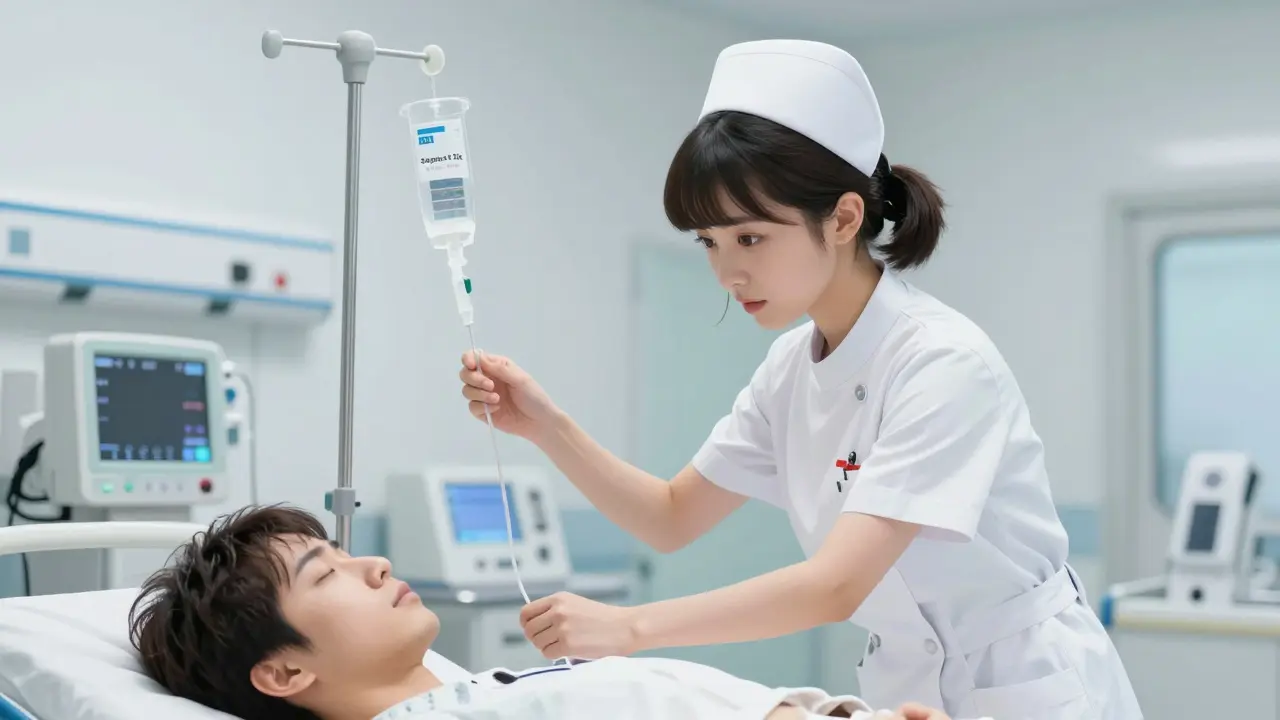
Once you arrive at the hospital, the goal is rapid stabilization. Hospitals follow strict guidelines, primarily those set by the Surviving Sepsis Campaign, an initiative launched in 2002 by the Society of Critical Care Medicine and the European Society of Intensive Care Medicine to standardize care worldwide. In the UK and increasingly in the US, emergency departments implement the "Sepsis Six" bundle. These six actions must be completed within one hour of diagnosis:
- Administer Oxygen: If oxygen saturation is below 94%, supplemental oxygen is given to target levels between 94-98%.
- Take Blood Cultures: Samples are drawn to identify the bacteria causing the infection. Doing this before antibiotics increases the chance of identifying the pathogen, which helps tailor later treatment.
- Give Antibiotics: Broad-spectrum antibiotics like piperacillin-tazobactam or meropenem are administered intravenously. This is the most critical step. Delaying antibiotics by even an hour significantly raises the risk of death.
- Infuse Intravenous Fluids: Patients receive 30mL/kg of crystalloid fluid to boost blood volume and maintain blood pressure. This helps ensure organs receive enough blood flow.
- Measure Lactate Levels: High lactate (>4mmol/L) indicates that cells are not getting enough oxygen and are switching to anaerobic metabolism. This is a marker of severity and predicts higher mortality.
- Monitor Urine Output: A catheter may be inserted to track kidney function. The target is more than 0.5mL/kg/hour. Low output suggests kidney failure is starting.
| Metric | Target Value | Clinical Significance |
|---|---|---|
| Oxygen Saturation | 94-98% | Ensures adequate oxygen delivery to tissues |
| Mean Arterial Pressure (MAP) | ≥65 mmHg | Maintains perfusion to vital organs |
| Serum Lactate | <2 mmol/L | Lower levels indicate reduced tissue hypoxia |
| Urine Output | >0.5 mL/kg/hr | Indicates healthy kidney function |
| Glucose Level | 140-180 mg/dL | Prevents hyperglycemia-induced complications |
Treating Septic Shock: When Things Get Critical
If fluids and antibiotics do not stabilize the patient, they may develop septic shock, a subset of sepsis with profound circulatory and cellular/metabolic abnormalities that markedly increase mortality. Septic shock is defined by persistent low blood pressure requiring vasopressors to maintain a mean arterial pressure (MAP) of at least 65 mmHg, along with serum lactate levels above 2mmol/L despite adequate fluid resuscitation.
In this scenario, doctors initiate norepinephrine, a potent vasopressor medication that constricts blood vessels to raise blood pressure. It is started at 0.1 mcg/kg/min and titrated carefully. The goal is to keep the MAP ≥65 mmHg to ensure the brain, heart, and kidneys continue to receive blood. If norepinephrine alone is insufficient, other agents like vasopressin or epinephrine may be added.
Source control is another critical component. If there is an abscess, infected catheter, or blocked bile duct, it must be drained or removed within 6-12 hours. Antibiotics cannot penetrate an abscess effectively, so physical removal of the infection source is mandatory. Additionally, stress-dose corticosteroids, such as hydrocortisone 200mg/day IV, may be considered if blood pressure remains unstable despite high doses of vasopressors. Recent trials, including the ADRENAL study, show that while steroids may not reduce long-term mortality, they can shorten the duration of shock and ICU stay.

Advanced Diagnostics and Future Directions
Technology is catching up to the urgency of sepsis. Traditionally, identifying the specific bacteria causing sepsis took 48-72 hours using standard culture methods. This forced doctors to guess with broad-spectrum antibiotics, which can lead to resistance. However, the FDA approved the Accelerate PhenoTest BC Kit in 2023. This rapid diagnostic test can identify pathogens in just 1.5 hours. This speed allows clinicians to switch to targeted, narrower-spectrum antibiotics much earlier, potentially reducing side effects and improving outcomes.
Research is also focusing on immunomodulation. Sepsis involves an overwhelming inflammatory response followed by immune suppression. New therapies aim to modulate this balance. For instance, a 2023 phase 2 trial of interferon gamma showed a 15% reduction in organ failure days. While these treatments are still emerging, they represent a shift from just fighting the infection to managing the body’s own destructive response.
Life After Sepsis: Recovery and Challenges
Surviving sepsis is a victory, but it is not the end of the journey. Post-sepsis syndrome affects a significant portion of survivors. A 2020 study tracking 1,500 patients found that 60% experienced persistent fatigue lasting over six months. Other common issues include shortness of breath (45%), chronic body aches (38%), mobility limitations (32%), and sleep disturbances (29%).
Cognitive impairment is also prevalent. Many survivors report "brain fog," memory loss, and difficulty concentrating. This is partly due to the initial lack of oxygen to the brain during the acute phase and partly due to the inflammatory impact on neural pathways. Early rehabilitation, initiated within 72 hours of ICU admission, has been shown to reduce long-term disability by 22%. Physical therapy, occupational therapy, and psychological support are essential components of recovery.
Financially, the burden is heavy. The average cost of a sepsis hospitalization in the US is $18,000, with ongoing post-sepsis care adding another $7,200 annually per survivor. Readmission rates are high, with 25% of survivors returning to the hospital within 30 days, mostly for respiratory complications or recurring infections. Vigilance and follow-up care are crucial.
Can you recover fully from sepsis?
Recovery varies widely. Some people return to their previous level of health, while others experience long-term physical and cognitive challenges known as post-sepsis syndrome. Factors like age, pre-existing conditions, and the severity of the initial episode influence recovery. Early rehabilitation and consistent medical follow-up improve outcomes significantly.
What is the difference between sepsis and septic shock?
Sepsis is a systemic response to infection causing organ dysfunction. Septic shock is a severe subset of sepsis characterized by dangerously low blood pressure that does not respond to fluid resuscitation alone, requiring vasopressors to maintain circulation. Septic shock has a much higher mortality rate than sepsis alone.
How quickly do hospitals need to treat sepsis?
Treatment should begin within the first hour, known as the "golden hour." Administering antibiotics and fluids within this timeframe drastically reduces mortality. Every hour of delay increases the risk of death by 7.6%. Hospitals use bundles like the "Sepsis Six" to ensure these steps are taken rapidly.
Is sepsis contagious?
Sepsis itself is not contagious. It is a complication of an infection. However, the underlying infection (such as pneumonia or a UTI) may be caused by bacteria or viruses that can spread from person to person. Good hygiene practices help prevent the initial infections that could lead to sepsis.
What are the best ways to prevent sepsis?
Prevention focuses on stopping infections before they start. This includes staying up-to-date with vaccinations (like flu and pneumonia vaccines), practicing good hand hygiene, keeping wounds clean and covered, and seeking prompt medical attention for any signs of infection, especially if you have risk factors like diabetes or a weakened immune system.