Does your face feel like it is burning? Do you wake up with red patches on your cheeks that look like a sunburn that never fades? If so, you are not alone. You might be dealing with Rosacea, a chronic skin condition that affects millions of people worldwide. It is more than just embarrassment; it is a medical issue involving blood vessels and inflammation. While there is no cure, managing the symptoms is very possible. One of the most effective tools in your arsenal is topical antibiotic treatment.
Understanding Rosacea and Facial Flushing
Before we talk about creams, we need to understand what is happening under your skin. Rosacea is an inflammatory disorder. It primarily hits the central part of your face-your nose, cheeks, forehead, and chin. The first sign for about 75% of patients is facial flushing. This is different from normal blushing. Normal blushing happens when you are embarrassed or hot, and it goes away quickly. Rosacea flushing can be triggered by many things and lasts much longer.
Think of your facial blood vessels as elastic bands. In rosacea, these bands lose their elasticity. They dilate (widen) too easily and stay wide for too long. This leads to persistent redness, known as erythema. Over time, this constant dilation can cause visible blood vessels, called telangiectasia, to appear near the surface of your skin.
What triggers this reaction? For many, it is environmental. Hot beverages above 140°F (60°C), spicy foods containing capsaicin, alcohol (especially red wine), and extreme temperatures can set off a flare-up. Even stress and ultraviolet radiation from the sun are major culprits. According to data from the Mayo Clinic, women are diagnosed more often, but men tend to experience more severe forms, including rhinophyma, which is the thickening of the skin on the nose.
Why Topical Antibiotics Work for Rosacea
You might wonder why antibiotics are used for a skin condition that isn't caused by bacteria. The answer lies in inflammation. While the exact cause of rosacea is complex, involving genetics and immune system issues, topical antibiotics help calm the immune response in the skin. They reduce the number of inflammatory lesions, such as papules (bumps) and pustules (pimples).
These treatments are considered first-line therapy for papulopustular rosacea, which affects about half of all rosacea patients. They do not kill bacteria in the traditional sense here; instead, they block the enzymes that cause inflammation. This makes them highly effective for clearing up the bumpy texture associated with the condition.
It is important to manage your expectations. These creams and gels are not overnight miracles. You need consistency. Most dermatologists recommend using them twice daily for at least 8 to 12 weeks before judging their effectiveness. Patience is key because the skin barrier needs time to heal and rebalance.
Topical Antibiotic Options Compared
Not all topical treatments are created equal. There are three main options prescribed by doctors today. Each has its own strengths and side effects. Understanding the differences can help you discuss the best choice with your dermatologist.
| Treatment Name | Active Ingredient | Primary Benefit | Time to Results | Common Side Effects |
|---|---|---|---|---|
| Metronidazole | Metronidazole 0.75% | Reduces redness and bumps; gentle on sensitive skin | 6-9 weeks | Dryness, mild stinging |
| Ivermectin Cream | Ivermectin 1% | High efficacy against bumps; targets Demodex mites | 8-12 weeks | Burning, itching, dryness |
| Azelaic Acid | Azelaic Acid 15% | Anti-inflammatory; helps with discoloration | 12-15 weeks | Stinging, itching, dryness |
Metronidazole: The Classic Choice
Metronidazole has been around since the 1980s. It is widely available and often covered by insurance. Studies show it reduces inflammatory lesions by 60-70% after several weeks of use. It is generally well-tolerated, making it a good starting point for those with sensitive skin. However, it may take longer to see full results compared to newer options.
Ivermectin: The Modern Powerhouse
Ivermectin 1% cream (often sold as Soolantra) has gained popularity rapidly. Approved by the FDA in 2014, it works differently than metronidazole. It has anti-inflammatory properties and also targets Demodex mites, microscopic organisms that live on everyone's skin but may be more numerous in rosacea patients. Clinical trials have shown it can reduce lesions by 76%, outperforming metronidazole in head-to-head studies. Many patients report significant improvement within 8 weeks.
Azelaic Acid: The Anti-Inflammatory Alternative
While not technically an antibiotic, azelaic acid is often grouped with these treatments. It works by reducing inflammation and killing bacteria. It is particularly helpful if you also struggle with post-inflammatory hyperpigmentation (dark spots left after pimples heal). It takes longer to work, often requiring 15 weeks for maximum benefit, but it is a solid option for those who do not respond to other treatments.
How to Apply Topical Antibiotics Correctly
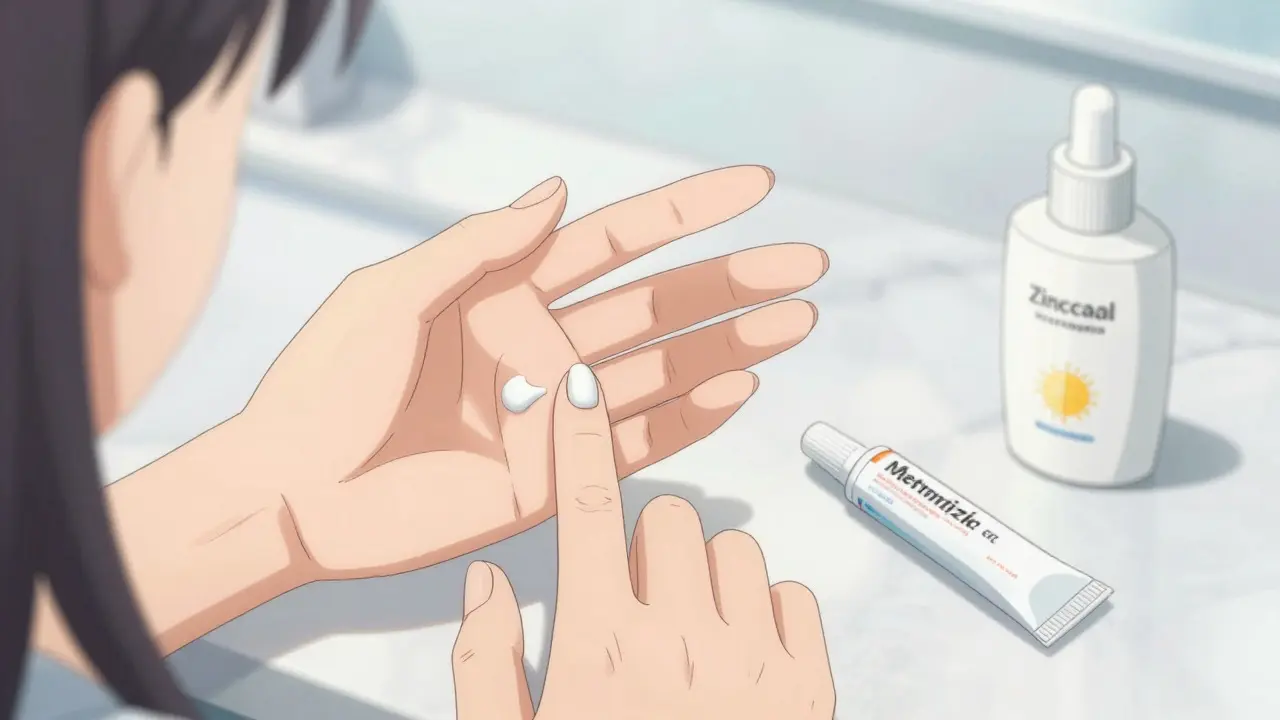
Using the right product is only half the battle. How you apply it matters just as much. Improper application can lead to irritation, which worsens rosacea. Follow these steps for the best results:
- Cleanse Gently: Wash your face with a mild, fragrance-free cleanser. Avoid harsh scrubs or hot water. Pat your skin dry gently.
- Wait for Dry Skin: This is crucial. Applying medication to damp skin can increase absorption too quickly, leading to stinging and irritation. Wait 15-20 minutes after washing until your skin is completely dry.
- Use a Pea-Sized Amount: You do not need a lot. A pea-sized amount is enough for your entire face. Using more does not make it work faster; it just increases the risk of side effects.
- Apply Thinly: Spread the cream or gel thinly over the affected areas. Avoid the eye area unless directed by your doctor.
- Moisturize: After the medication has absorbed (wait another 15 minutes), apply a gentle, non-comedogenic moisturizer. Look for ingredients like ceramides to support your skin barrier.
- Sun Protection: Always finish with a mineral sunscreen containing zinc oxide or titanium dioxide. Sun exposure is a major trigger for rosacea.

Managing Side Effects and Expectations
It is normal to experience some initial discomfort. About 15-25% of users report transient burning or stinging when they first start using these medications. This usually subsides as your skin adjusts. However, if the irritation is severe or persists beyond two weeks, talk to your doctor. They might suggest switching to a different formulation or reducing the frequency of application.
Another common challenge is adherence. Because results take time, many people stop using the medication too early. Remember, it takes 4-8 weeks to see noticeable improvement and up to 12-16 weeks for the full effect. Keep a diary of your skin’s progress. Taking photos weekly can help you see subtle changes that you might miss day-to-day.
If you find that topical antibiotics alone are not enough, do not lose hope. Rosacea management is often multifaceted. Your doctor might add oral antibiotics, laser therapy for visible blood vessels, or vasoconstrictors like brimonidine to reduce redness temporarily. Combining treatments is common and often necessary for complete control.
Lifestyle Changes to Support Treatment
Medication works best when supported by lifestyle adjustments. Identifying and avoiding your personal triggers is essential. Keep a symptom diary to track what causes your flushing. Common triggers include:
- Spicy foods
- Alcohol, especially red wine
- Hot drinks
- Extreme weather (hot or cold)
- Stress
- Certain skincare products (alcohol, fragrances, exfoliants)
Gentle skincare is non-negotiable. Avoid physical exfoliants like apricot scrubs. Stick to chemical exfoliants with low concentrations of lactic acid if needed, but always introduce new products slowly. Protect your skin from the sun every day, even when it is cloudy. UV radiation damages blood vessels and worsens inflammation.
How long does it take for topical antibiotics to work for rosacea?
You typically need to use topical antibiotics consistently for 4 to 8 weeks before seeing noticeable improvement. Full therapeutic effects are usually achieved after 12 to 16 weeks of regular use. Patience is key, as stopping early can lead to a return of symptoms.
Can I use ivermectin cream every day?
Yes, ivermectin 1% cream is generally prescribed for once-daily application. Consistency is important for maintaining results. However, always follow your dermatologist's specific instructions, as they may adjust the frequency based on your skin's tolerance.
Does metronidazole cure rosacea?
No, there is currently no cure for rosacea. Metronidazole helps manage symptoms by reducing inflammation and lesions. If you stop using it, symptoms may return. Long-term maintenance therapy is often necessary to keep the condition under control.
What are the side effects of topical rosacea treatments?
Common side effects include temporary burning, stinging, dryness, and redness. These usually occur during the first few weeks of treatment and subside as your skin adjusts. Serious adverse reactions are rare, occurring in less than 1% of cases.
Is azelaic acid an antibiotic?
Technically, azelaic acid is not classified as an antibiotic, although it has antibacterial properties. It is primarily an anti-inflammatory agent. It is often used alongside or instead of topical antibiotics for rosacea, especially if pigmentation issues are also present.