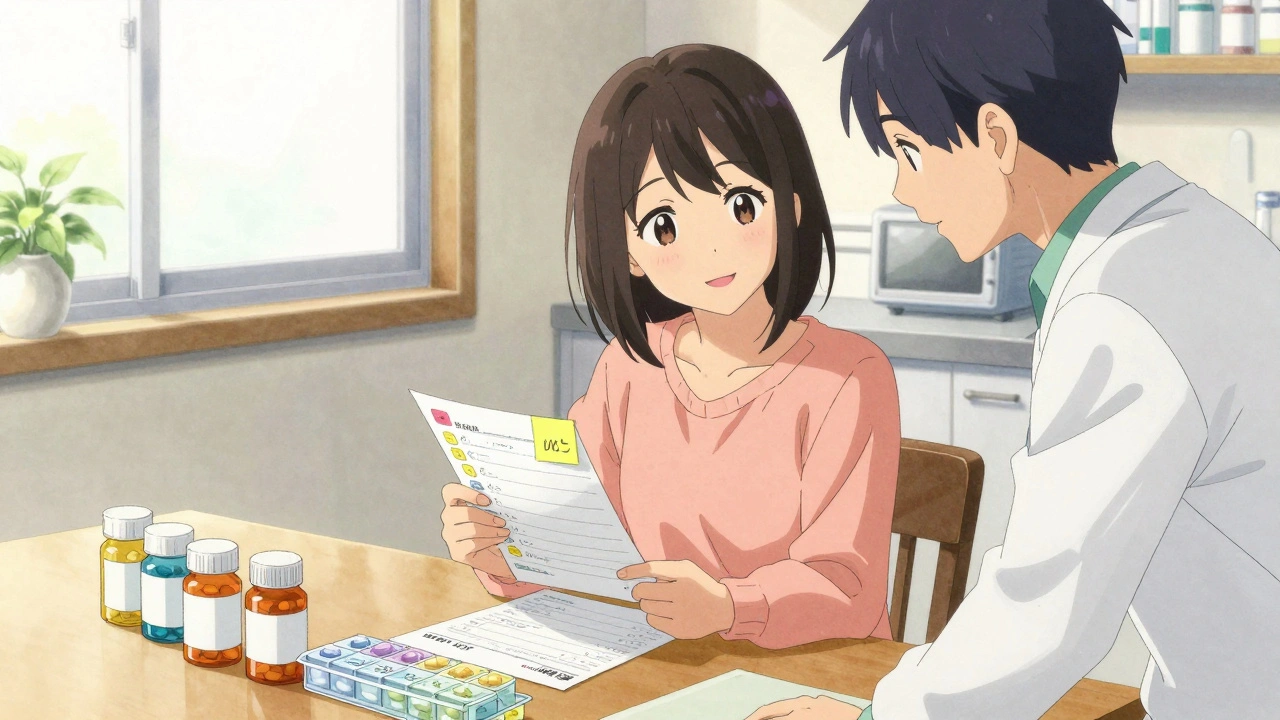
Every year, thousands of people end up in the hospital because of medication mistakes - not because the drugs were wrong, but because the system failed. Maybe they took two pills by accident. Maybe they didn’t know a new prescription clashed with their daily vitamin. Maybe their pill bottle had no label, or their caregiver forgot to tell the doctor about the herbal tea they drink every morning. These aren’t rare events. One in five people getting care at home experience a preventable drug error. But here’s the good news: you don’t have to be one of them. With a simple, clear personal medication safety plan - built with your care team - you can cut that risk dramatically.
Start with a Complete Medication List
Before you even talk to your doctor, sit down with all your medications. Not just the ones in your medicine cabinet. Include every prescription, over-the-counter pill, vitamin, supplement, and herbal remedy. That ginkgo biloba you take for memory? The magnesium for sleep? The ibuprofen you grab for aches? Write them all down. Don’t guess dosages. Check the bottle. Write the exact name, strength, and how often you take it. If you’re not sure what something is for, write “not sure” next to it. That’s okay. This list is your starting point, not your final version.Many people leave out supplements. Big mistake. A 2023 study showed that nearly half of medication-related hospital visits involved a supplement that wasn’t disclosed. St. John’s wort can make antidepressants useless. Garlic pills can thin your blood too much if you’re on warfarin. Even something as simple as grapefruit juice can change how your body processes a drug. Your pharmacist doesn’t know what you’re taking unless you tell them.
Ask Your Doctor and Pharmacist to Review It
Bring that list to your next appointment. Don’t hand it over and say, “Here, check it.” Ask specific questions:- Is there anything here that shouldn’t be taken together?
- Do I still need all of these? Some meds are prescribed for short-term use and get forgotten.
- What’s the main reason I’m taking each one? If you can’t explain it in plain language, you’re at risk.
- What side effects should I watch for - especially ones that could make me fall or feel confused?
Pharmacists are medication experts. If you’re not seeing one regularly, ask your doctor to refer you. Many pharmacies offer free med reviews. They’ll spot duplicates, interactions, or outdated prescriptions you didn’t even know about. One woman in Auckland brought in her list and found she’d been taking two different pills for the same blood pressure issue - for three years. Her doctor hadn’t noticed. The pharmacist caught it.
Label Everything Clearly
Your pills shouldn’t live in unlabeled containers. Even if you’ve been taking them for years. If a pill bottle gets mixed up with another, or if you’re feeling off and can’t think straight, a clear label is your safety net.Every container should have:
- Your full name
- The name of the medicine
- The exact dose (e.g., “5 mg” not “one pill”)
- How often to take it (e.g., “once daily at breakfast”)
- Why you’re taking it (e.g., “for high blood pressure”)
- The prescribing doctor’s name and phone number
If your pharmacy doesn’t do this, do it yourself with waterproof labels. Stick them on the bottle, not just the box. Keep the original packaging too - it has important info you might need later.
Use a Pill Organizer - and Stick to It
A pill box isn’t just for seniors. It’s for anyone juggling multiple meds. A simple seven-day box with morning, afternoon, and night compartments can prevent double-dosing or missed doses.Here’s how to make it work:
- Fill it once a week - set a reminder on your phone.
- Put it where you’ll see it - next to your toothbrush, coffee maker, or breakfast table.
- Don’t just fill it and forget it. Check each compartment as you take your pills.
- If you miss a dose, don’t double up unless your doctor says so.
Some people use apps or smart pill dispensers. They’re helpful, but they’re not foolproof. If you’re forgetful, confused, or live alone, a physical pill box with visual cues works better than a notification you might ignore.
Store Medications Safely
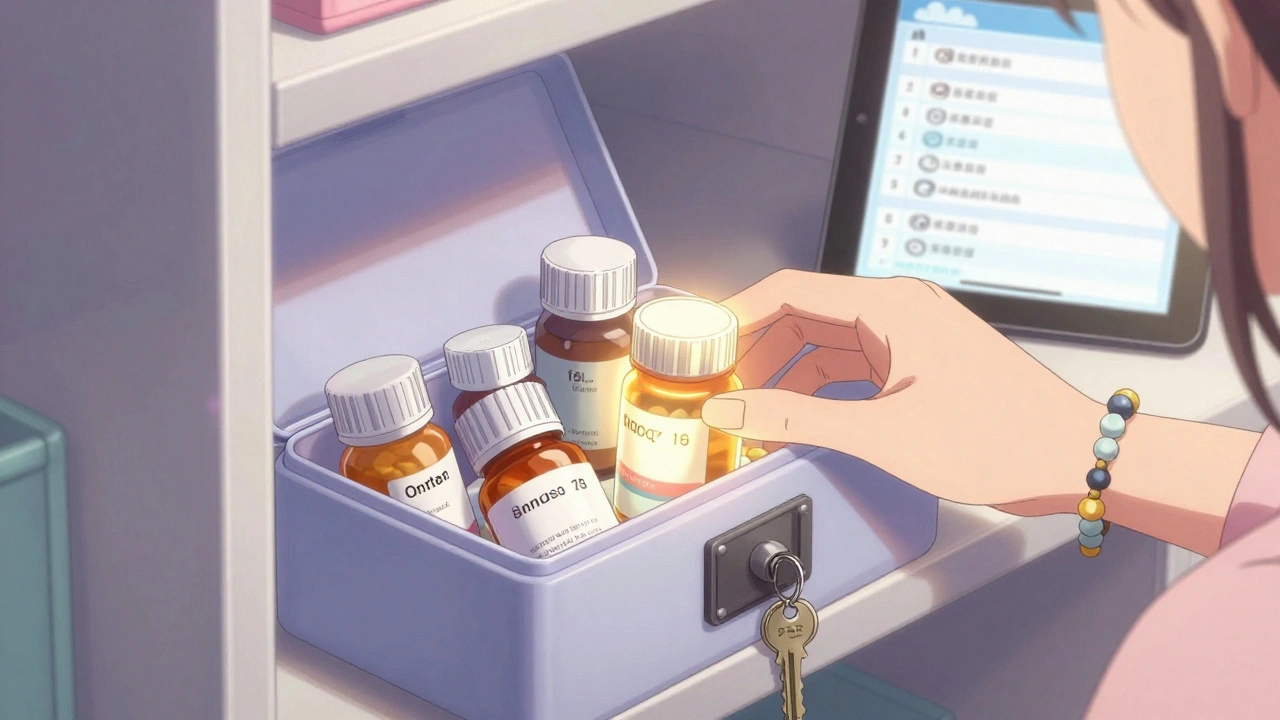
Medications aren’t candy. They can be dangerous if someone else takes them - especially children, teens, or people with cognitive issues.Keep all meds - even your vitamins - in a locked box or cabinet. Not in the bathroom. Not on the nightstand. Not in the kitchen cupboard where the dog can reach it. Heat, moisture, and light can ruin pills. A locked box in a cool, dry room (like a bedroom closet) is ideal.
If someone in your home struggles with memory, impulsivity, or substance use, this step isn’t optional. One caregiver shared how her mother kept her heart pill in a tea tin next to her bed. She took it twice one morning, thinking it was her blood pressure pill. She ended up in the ER. A simple lock would’ve prevented it.
Plan for Emergencies
What if you collapse? What if you’re taken to the hospital and can’t speak? Your medication list becomes your voice.Carry a printed copy in your wallet or purse. Keep a digital copy on your phone, backed up in the cloud. Give a copy to your main caregiver - a spouse, child, or neighbor. Make sure they know where your meds are stored and how to access your list.
Also, write down your emergency contacts and your doctor’s number. Include any allergies - not just “penicillin,” but specifics like “anaphylaxis to sulfa drugs.” If you’re on blood thinners, note that. If you have kidney disease or heart failure, write it down. Emergency staff need this fast.
Check In Regularly
A medication plan isn’t a one-time task. It’s a living document. Your body changes. New conditions come up. Old ones get better. Meds get updated.Set a reminder every six months to review your list with your doctor. Ask:
- Is anything causing side effects I haven’t mentioned?
- Has anything changed in how I should take it?
- Can any of these be stopped or lowered?
Don’t wait until you feel bad. Some side effects creep in slowly - dizziness, confusion, fatigue. You might think it’s just aging. It might be a drug interaction. A 2023 report found that 60% of preventable drug errors came from poor monitoring, not bad prescriptions.
Involve Your Care Team - All of Them
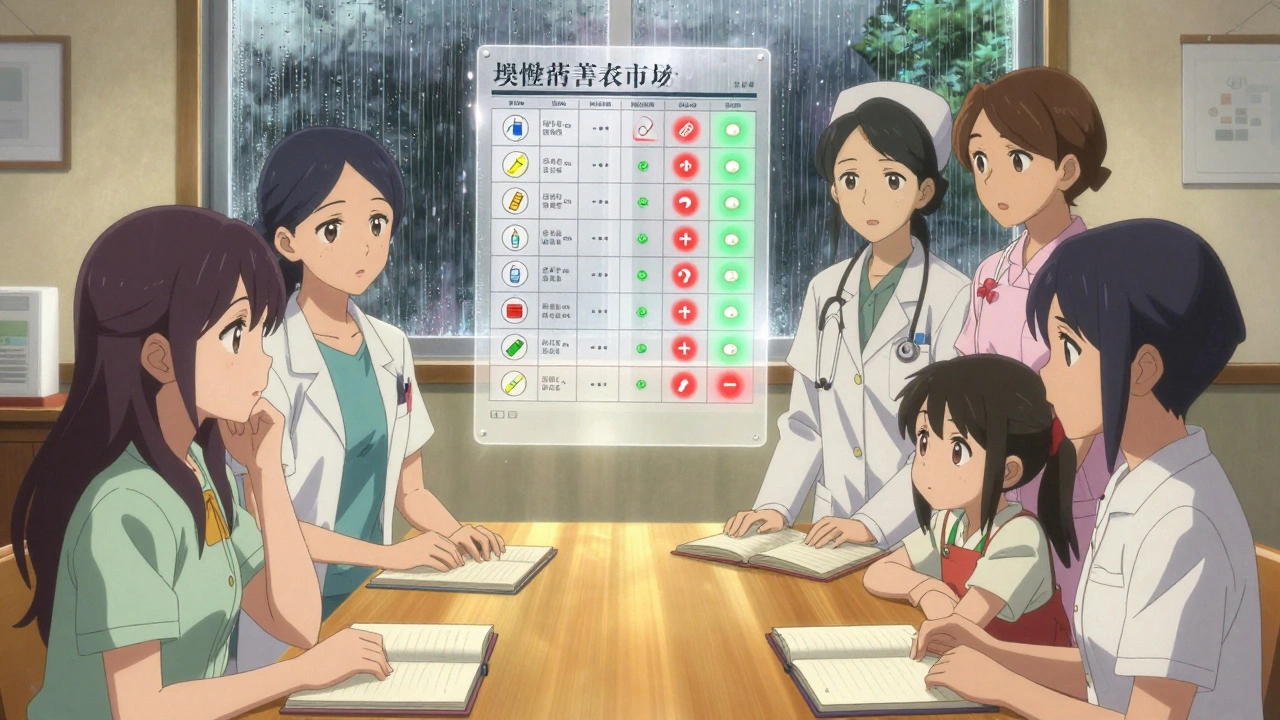
Your care team isn’t just your GP. It’s your pharmacist, your specialist, your physiotherapist, your home care nurse, your caregiver. Everyone who touches your care needs to know what you’re taking.Before any new appointment - even if it’s for your knee - bring your updated list. Say: “Here’s what I’m on. Can you check for interactions?” If you’re seeing a new doctor, hand them the list. Don’t assume they’ll check your records. Different clinics don’t always talk to each other.
If you have dementia or memory loss, assign a trusted person to manage your meds. That doesn’t mean taking control away. It means giving someone the tools to help you stay safe. They can fill your pill box, remind you to take your pills, and call the doctor if something seems off.
What If You’re Still Confused?
You’re not alone. Medication systems are complex. If you’re overwhelmed, ask for help. Ask your doctor to refer you to a medication therapy management (MTM) service. These are free or low-cost programs offered through pharmacies or community health centers. They’ll sit with you for an hour, go through every pill, explain what each one does, and make a simple plan.Or call your local aging service. In New Zealand, organizations like Age Concern or the Alzheimer’s Association offer free medication safety checklists and caregiver support. You don’t have to figure this out alone.
Medication safety isn’t about being perfect. It’s about being prepared. It’s about knowing what you’re taking, why, and who to ask when something doesn’t feel right. It’s about turning confusion into clarity - one label, one list, one conversation at a time.
What should I do if I miss a dose of my medication?
Never double up unless your doctor says it’s okay. Check the medication guide that came with your pill bottle - it usually has instructions for missed doses. If it doesn’t, call your pharmacist. For some drugs, like antibiotics, missing a dose can reduce effectiveness. For others, like blood pressure pills, skipping one might not be dangerous, but it’s still risky. Keep a log of missed doses and mention them at your next check-up.
Can I use a smartphone app instead of a pill organizer?
Apps can help with reminders, but they’re not reliable on their own. If you’re forgetful, confused, or have trouble reading small screens, a physical pill box is safer. Apps can fail - battery dies, notifications get silenced, you forget to open the app. A pill box you can see and touch works even when your phone is dead. Use apps as a backup, not your only system.
Why do I need to tell my doctor about vitamins and herbal supplements?
Because they’re not harmless. Garlic, ginkgo, and St. John’s wort can interfere with blood thinners, antidepressants, and heart medications. Some herbs affect liver enzymes that break down drugs, making them too strong or too weak. Even common supplements like calcium or iron can block absorption of other pills if taken at the same time. Your doctor needs the full picture to keep you safe.
How often should I update my medication list?
Update it every time you start, stop, or change a dose - even if it’s just a new OTC painkiller. At minimum, review it every six months with your doctor. Many people wait until they’re sick or in the hospital to update their list. That’s too late. Keep it current so it’s useful when you need it most.
What if my family member refuses to let me help manage their meds?
Respect their independence, but don’t give up. Start small. Offer to help refill their pill box once a week. Ask if they’d like you to call their pharmacist to check for interactions. Frame it as helping them stay healthy and independent - not taking control. If they’re resistant, ask their doctor to explain why a safety plan matters. Sometimes hearing it from a professional makes a difference.
Are there free resources in New Zealand to help with medication safety?
Yes. Age Concern New Zealand offers free medication safety checklists and caregiver support. Your local pharmacy may provide free med reviews. The Alzheimer’s Association NZ has resources for managing meds in dementia. District Health Boards also offer home care services that include medication management support. Ask your GP for referrals - you don’t need to pay for help like this.



Comments (11)
Michael Robinson
It’s funny how we treat pills like they’re magic beans. You take one, boom, problem solved. But no one ever talks about how messy the whole system is until you’re the one mixing up labels at 2 a.m. This post? It’s the quiet truth we all need to hear. Simple stuff. Clear labels. A list. No fancy tech. Just human care.
And yeah, supplements? They’re not harmless. I took ginkgo for years thinking it was ‘natural brain fuel.’ Turned out it was making my blood thinner than my grandma’s soup. Never told my doctor. Ended up in the ER for a nosebleed that wouldn’t stop. Learned the hard way.
We don’t need more apps. We need more people willing to sit down and say, ‘Hey, let’s look at this together.’
Kathy Haverly
Oh please. This is just fear-mongering dressed up as ‘safety.’ You think labeling pills is going to stop someone from accidentally taking two? People are dumb, not evil. And yes, supplements can interact-but so can coffee, so can stress, so can the weather. Why not just tell people to stop taking meds altogether? That’d be safer.
Also, ‘pharmacist reviews’? That’s a marketing ploy. They’re just trying to upsell you on $40 ‘medication management plans’ that don’t exist outside of insurance brochures.
Stop infantilizing adults. We’re not toddlers with medicine bottles.
Andrea Petrov
Did you know the FDA allows pharmacies to omit the ‘why you’re taking this’ on labels? It’s not an accident. It’s a control mechanism. Big Pharma doesn’t want you to know what you’re really taking. They want you dependent. The ‘pill organizer’? That’s a tool for surveillance. Who’s watching you take it? Your smartwatch? Your caregiver? Your insurance company?
And don’t get me started on ‘medication therapy management’ programs. Those are just Trojan horses for data harvesting. They track your habits, your sleep, your mood-all under the guise of ‘safety.’
Lock your meds? Fine. But lock your phone too. And your doctor’s records. And your insurance portal. Because if you’re not paranoid, you’re not paying attention.
They’re not helping you. They’re harvesting you.
Suzanne Johnston
I’ve worked in home care for 18 years. I’ve seen this play out too many times. A woman in her 80s took four different blood pressure pills because three different doctors prescribed them. She didn’t know why. Her daughter didn’t know either. One day she fainted. Turned out she was overdosing.
This post? It’s not just advice. It’s a lifeline.
And yes, I’ve used pill organizers with my clients. Not because they’re old. Because they’re human. Memory fails. Stress clouds thinking. Labels matter. Not because we’re fragile-but because we’re real.
Also, if your pharmacist offers a free med review? Take it. They’re the unsung heroes of this whole system. They catch what doctors miss. Not because they’re smarter. Because they’re paid to look at the whole picture.
Don’t wait for a crisis. Do this now. For yourself. For your mom. For your neighbor who’s too proud to ask for help.
Graham Abbas
OH MY GOD. I JUST REALIZED I’VE BEEN TAKING MY BLOOD PRESSURE PILLS AT NIGHT FOR FIVE YEARS BECAUSE THE BOTTLE SAID ‘TAKE AT BEDTIME’ AND I THOUGHT THAT MEANT ‘WHEN YOU GO TO SLEEP’ BUT I’M A NIGHT OWL AND I GO TO BED AT 2AM AND I’VE BEEN TAKING THEM AT 2AM WHILE WATCHING REVENGE DRAMA ON NETFLIX.
WHY DID NO ONE TELL ME THAT ‘BEDTIME’ MEANS ‘WHEN YOU WAKE UP’??
I JUST CALLED MY PHARMACY AND THEY LAUGHED. LAUGHED. AND SAID ‘THAT’S A COMMON MISTAKE.’
SO I’M GOING TO WRITE ‘TAKE WITH BREAKFAST’ ON MY BOTTLE IN RED MARKER AND PUT IT NEXT TO MY TOASTER.
AND I’M TELLING MY MOM TO DO THE SAME.
THANK YOU. I FEEL LIKE I JUST GOT MY LIFE BACK.
PS: I’M ALSO THROWING OUT ALL MY ‘HEALTH TONICS’ FROM THE GROCERY STORE. THEY LOOK LIKE FAIRY DUST AND TASTE LIKE REGRET.
Haley P Law
OMG YES I DID THIS AND IT CHANGED MY LIFE!!!
So I started using this rainbow pill box I got on Etsy (it’s got little flowers and stuff) and now I take my meds at the same time every day and I even take a selfie with it every morning 😍
My grandma cried when I showed her my ‘medication journal’ (I use a notebook with glitter pen) and now she’s doing it too!!
Also I printed my list on neon pink paper and laminated it and stuck it on my fridge next to my cat’s vaccination record 🐱💉
Y’all need to do this. It’s not just safety. It’s self-care. It’s art. It’s healing. It’s ✨vibes✨
Andrea DeWinter
Just want to add one thing no one talks about: what if you can’t read the label? Or you’re blind? Or you have shaky hands?
My aunt is diabetic and has macular degeneration. She uses a pill organizer with braille stickers and a talking pill dispenser. It’s $80 but Medicare covered it. She didn’t know she could ask for it.
Call your local disability org. Ask for ‘accessible medication management tools.’ They’ll send you free braille labels, large-print pill bottles, or even a device that says ‘Take your insulin’ in a voice you can hear.
And if you’re helping someone-don’t assume they can read the tiny print. Ask. Don’t guess.
This isn’t about being perfect. It’s about being seen.
Chris Marel
I come from a place where medicine is often bought from street vendors. No labels. No instructions. Just a plastic bag with pills and a prayer.
When I moved to the US, I was shocked by how much care goes into this. The labels. The reviews. The checks.
But I also see people here treat their meds like a chore. Like it’s something to be ‘managed’ instead of something that keeps them alive.
This post reminds me: safety isn’t about rules. It’s about respect. Respect for your body. Respect for the people who care about you.
Even if you’re young. Even if you’re healthy. Even if you think you don’t need it.
Start now. One bottle. One list. One conversation.
Nikhil Pattni
Look, I’ve got a PhD in pharmacology and I’ve published 14 papers on polypharmacy in geriatric populations, and I’m telling you this whole ‘medication safety plan’ thing is oversimplified and dangerously reductive. You can’t just ‘write it down’ and expect outcomes to improve. You need structured medication reconciliation protocols, pharmacokinetic modeling, and real-time EHR integration-none of which are addressed here.
Also, most people don’t even know what a CYP450 enzyme is, so telling them to check for ‘interactions’ is meaningless. You need to know the half-life, bioavailability, and protein binding affinity of each compound to even begin assessing risk.
And why are we still using paper pill boxes in 2025? That’s archaic. You need AI-driven adaptive dispensers with biometric feedback loops and cloud-synced compliance logs.
Also, grapefruit juice? That’s a 1980s scare tactic. Modern pharmacokinetics has moved past that. The real danger is non-adherence due to cognitive load, not juice.
But sure, write it on a sticky note. That’ll fix everything.
Elliot Barrett
This is the most condescending thing I’ve read all year. Like, wow. You really think I need a 12-step plan to take my pills? I’m not a child. I’ve been taking lisinopril for 10 years. I know what I’m doing.
Next you’ll be telling me to label my toothbrush.
Also, ‘herbal remedies’? I take turmeric. It’s not a drug. It’s a spice. Chill out.
People don’t need a safety plan. They need to stop acting like they’re going to die if they miss a dose.
Tejas Bubane
Yeah right. All this ‘label everything’ nonsense. I’ve got 17 prescriptions, 5 supplements, and 3 OTC painkillers. You think I’m writing all that down? I’m not a librarian. I’m just trying to survive.
And don’t get me started on ‘pharmacist reviews.’ They just want to sell you more pills. I once asked mine if I could stop my statin. She gave me a 45-minute lecture on LDL levels and then upsold me on omega-3 gummies.
My grandma died from a pill mix-up? Cool. But she also lived in a trailer with no AC and ate canned beans for 20 years. Maybe the real problem isn’t the labels. Maybe it’s the system that made her need 12 pills just to get through the day.
Stop blaming the patient. Fix the system.
Also, ‘pill organizer’? I use a Ziploc bag. Works fine. I’m not paying $20 for a plastic box with compartments.