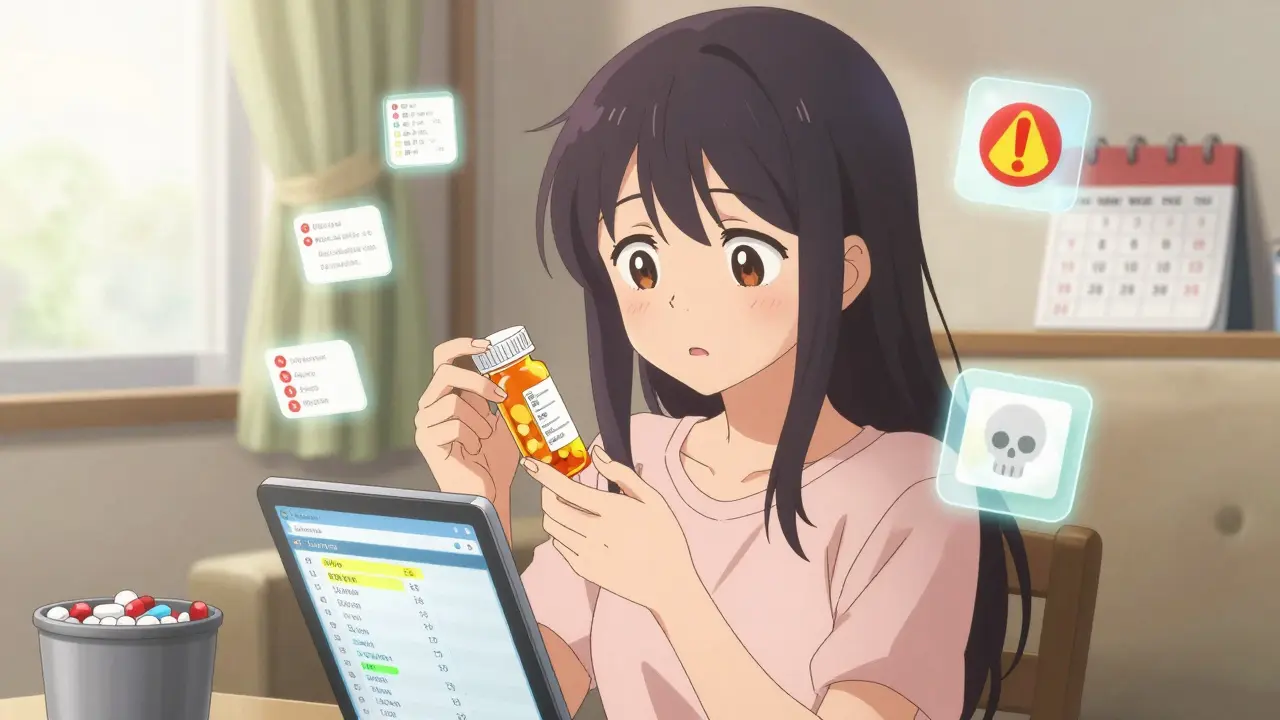
Every year, more than 1.5 million people in the U.S. are harmed by medications they took exactly as prescribed. That’s not a typo. It’s not rare. It’s happening to your neighbor, your parent, maybe even you. And most of these harms are completely preventable.
Medication Errors Are the Most Common Medical Mistake
You might think hospital mistakes mean wrong-site surgery or missed diagnoses. But the real silent killer? Medication errors. They happen more than any other kind of mistake in healthcare - and they kill about 7,000 people in U.S. hospitals every year. That’s more than car accidents or gun violence in hospitals. The World Health Organization says globally, 1 in every 20 patients suffers harm from a medication error. That’s 5% of everyone who takes a pill, injection, or IV drip.
These aren’t just small side effects. These are life-changing or life-ending events: internal bleeding from blood thinners, kidney failure from wrong antibiotic doses, coma from too much painkiller, or cardiac arrest from a mislabeled IV bag. And the worst part? Most of these errors aren’t caused by careless doctors or nurses. They’re caused by broken systems - confusing labels, rushed transitions between hospitals and homes, poor communication, and outdated tech.
Which Drugs Are Most Dangerous?
Not all medications carry the same risk. Some are far more likely to cause harm than others. According to WHO’s 2024 report, antibiotics are the top offender - responsible for about 20% of all medication-related harm. Why? Because they’re overused, misprescribed, and often given without proper testing. Then come antipsychotics (19%), drugs that affect the brain and nervous system (16%), and heart medications (15%).
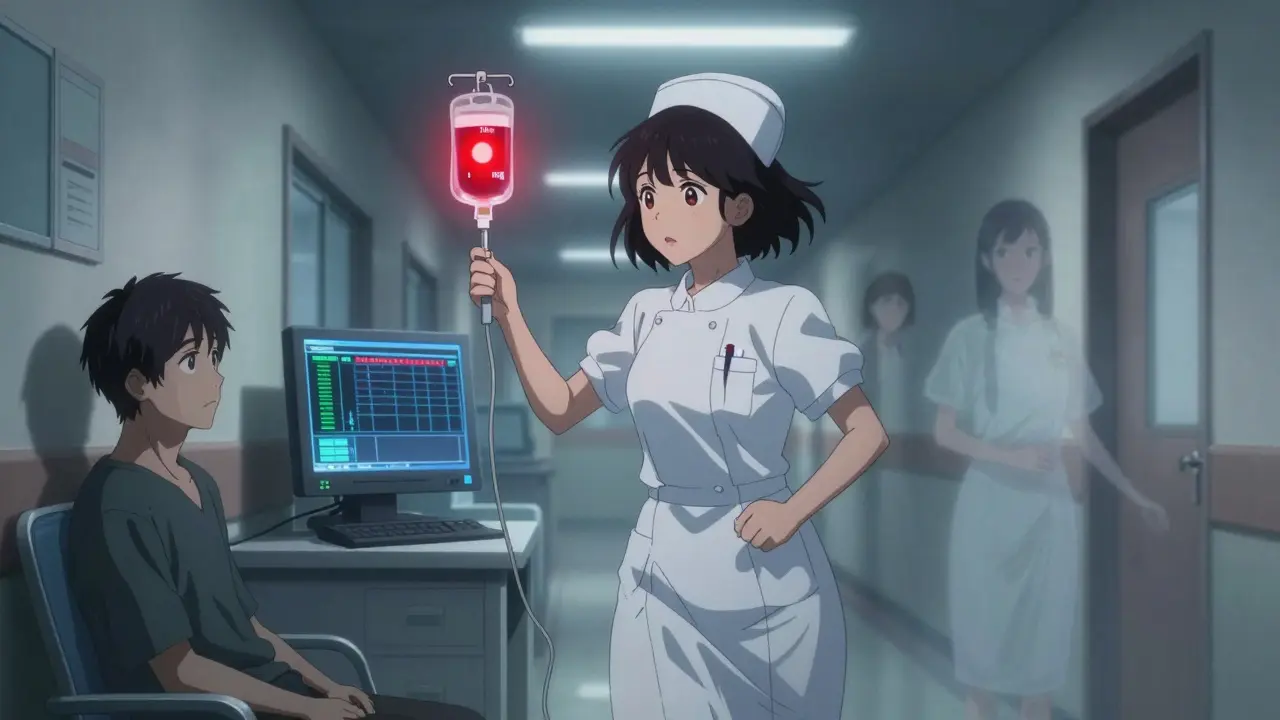
But here’s what really scares experts: intravenous (IV) drugs. In hospitals and nursing homes, nearly half of all medication errors happen with IV medications. One wrong decimal point - giving 10 milligrams instead of 1 - can kill someone. And it happens more often than you’d think.
And then there’s the fake drug crisis. In the U.S., 1 in 3 counterfeit drug seizures happen here. Between 2019 and 2021, more than half of all overdose deaths involved fake oxycodone pills laced with fentanyl. In 2023 alone, the DEA seized over 80 million fake pills - many sold on social media or disguised as legitimate prescriptions. Fentanyl is now the leading cause of death for Americans aged 18 to 45.
What Happens at Home? The Hidden Danger
Hospital errors get headlines, but most medication harm happens at home. SingleCare’s 2025 analysis found that between 2% and 33% of patients make mistakes with their meds at home. That’s not just forgetting a dose - it’s taking two pills thinking it’s one, mixing alcohol with painkillers, stopping antibiotics early because you “feel better,” or taking someone else’s leftover pills.
Reddit users shared over 1,200 medication stories in early 2025. Nearly 7 out of 10 said they were confused about dosage. A quarter didn’t know why they were taking the drug. And many didn’t realize their new pill looked different from last time - a red flag that something changed.
Older adults are especially vulnerable. In Australia, they cut inappropriate antipsychotic use in seniors by 11% in just five years - because doctors finally started asking: “Do we really need this?” Many elderly patients are on 10 or more medications. Each one adds risk. One wrong interaction can send them to the ER.
Why Do These Errors Keep Happening?
Dr. Donald Berwick, a top patient safety expert, put it simply: “Most medication errors are system failures, not individual failures.”
That means it’s not your fault if you mixed up your pills. It’s not the nurse’s fault if the label was smudged. It’s the system that lets labels be unclear. It’s the pharmacy that doesn’t check for interactions. It’s the hospital that transfers you without sending your full med list.
Here are the big problems:
- Doctors write prescriptions by hand or use outdated software that doesn’t flag dangerous combos.
- Pharmacies are overloaded - pharmacists dispense up to 300 prescriptions a day. Mistakes slip through.
- Patient records don’t talk to each other. Your cardiologist doesn’t know what your psychiatrist prescribed.
- Patients aren’t told what the drug is for, or what to watch for. You’re handed a bottle and told to “take one daily.” No explanation.
How to Protect Yourself - Simple Steps That Save Lives
You can’t control the hospital’s software or the pharmacy’s workload. But you can control your own actions. Here’s what actually works:
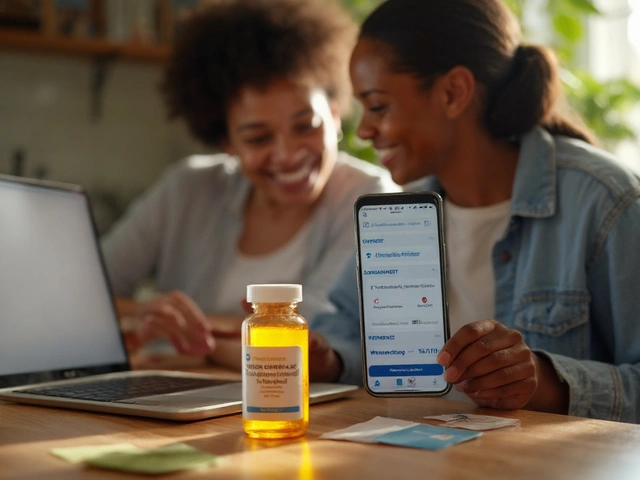
- Keep a live list of everything you take. Include prescriptions, over-the-counter pills, vitamins, and supplements. Update it every time something changes. Bring it to every appointment - even if you think the doctor already knows.
- Use one pharmacy for all your meds. They can check for dangerous interactions across all your drugs. If you switch pharmacies, your safety net disappears.
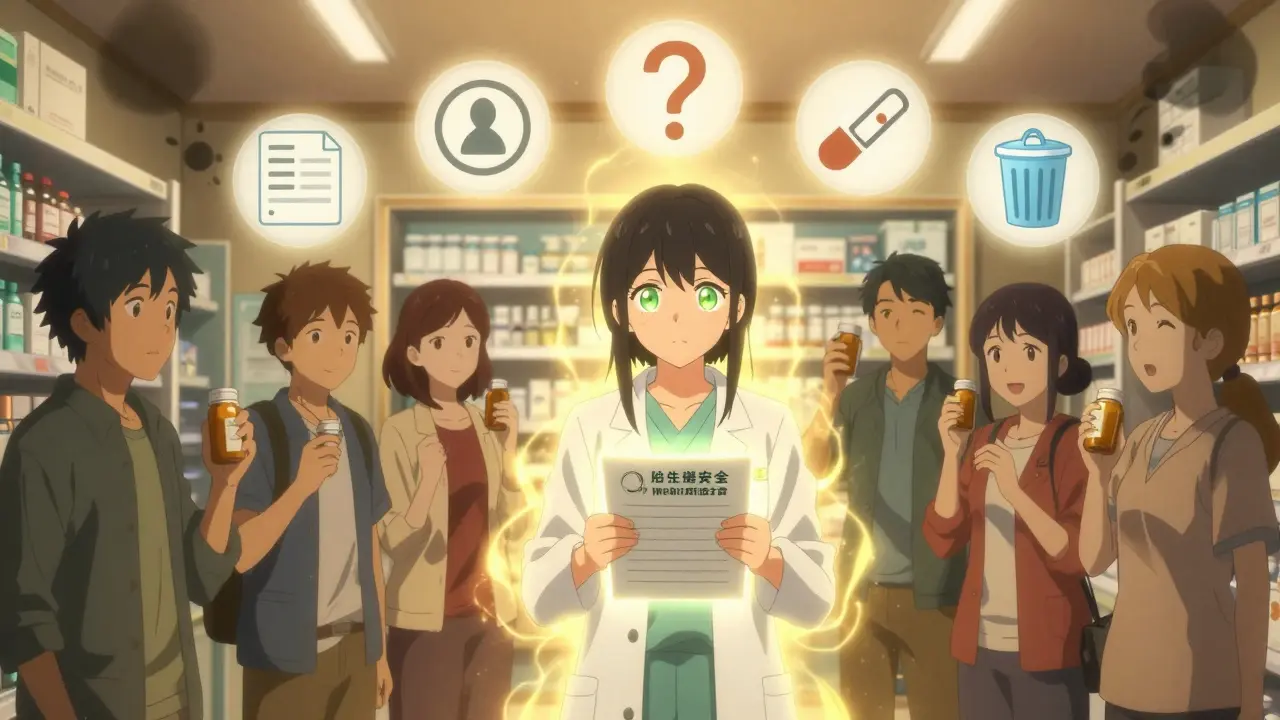
- Ask the 3 questions before you leave the pharmacy: “What is this for?”, “How and when do I take it?”, and “What side effects should I watch for?” If they can’t answer clearly, ask again.
- Check the pill. If your new prescription looks different - color, shape, markings - ask why. It could be a generic switch, or it could be counterfeit.
- Never take leftover pills. Especially opioids or antibiotics. If you were prescribed them for someone else, or for a different condition, don’t use them.
- Know your high-risk meds. If you’re on blood thinners, insulin, chemotherapy, or antipsychotics, double-check every dose. These are the drugs that cause the most harm.
Australia’s “5 Moments for Medication Safety” is a simple framework anyone can use:
- When you start a new treatment
- When you add a new medication
- When you move between care settings (hospital to home, doctor to pharmacy)
- When you’re on high-risk drugs
- When you review your meds every 6 months
What’s Being Done - And What’s Not Working
There are efforts to fix this. The U.S. Centers for Medicare & Medicaid Services now tracks 16 medication safety metrics monthly - from statin use in diabetics to opioid doses in seniors. The FDA requires safety plans for high-risk drugs. The EU mandates special labels on prescription packages to fight counterfeits. Australia uses real-time prescription monitoring to cut opioid deaths by 37% since 2018.
But the system is still falling short. Online pharmacies are flooding the market with fake pills. Social media ads sell counterfeit Adderall and Xanax like candy. The global market for fake drugs is growing - and the U.S. is one of the biggest targets.
Technology can help. AI tools that automatically reconcile your meds across all providers could cut errors by 30% by 2027. But they’re not widely used yet. Most hospitals still rely on paper lists and phone calls.
You’re Not Powerless
Medication safety isn’t just a hospital problem. It’s a patient problem - and you’re the most important part of the solution. You’re the one who takes the pills. You’re the one who notices if something feels wrong. You’re the one who can ask the hard questions.
Don’t assume your doctor knows everything you’re taking. Don’t trust a label that doesn’t make sense. Don’t ignore a pill that looks different. And don’t feel bad for asking again - because your life depends on it.
The numbers are scary. But they’re not inevitable. With a little awareness and a few simple habits, you can cut your risk dramatically. You don’t need to be a medical expert. You just need to be informed - and willing to speak up.
How common are medication errors in the U.S.?
More than 1.5 million Americans are harmed by medication errors each year, and about 7,000 die from them in hospitals alone. These are the most common type of medical mistake in the U.S. healthcare system.
What types of medications cause the most harm?
Antibiotics cause about 20% of medication-related harm, followed by antipsychotics (19%), central nervous system drugs (16%), and cardiovascular medications (15%). Intravenous (IV) drugs have the highest error rate in hospitals - nearly half of all errors involve them.
Can fake or counterfeit drugs really kill me?
Yes. In the U.S., over 55% of overdose deaths from fake oxycodone between 2019 and 2021 were caused by pills laced with fentanyl. In 2023, the DEA seized over 80 million counterfeit pills - many sold online or through social media. These pills can contain deadly doses of fentanyl, sometimes enough to kill multiple people.
What should I do if my pill looks different?
Don’t take it. Call your pharmacy immediately. The change could be harmless - like switching to a generic version - but it could also mean you received a counterfeit or wrong medication. Always verify the drug name, dose, and appearance with your pharmacist before using it.
Is it safe to take leftover prescription pills?
No. Leftover pills - especially opioids, antibiotics, or psychiatric drugs - can be dangerous if taken for a different condition, by a different person, or after expiration. They may be ineffective, contaminated, or interact badly with other meds you’re now taking. Always dispose of unused medications properly.
How can I reduce my risk of medication errors at home?
Use one pharmacy for all your prescriptions, keep a written or digital list of everything you take (including vitamins and supplements), ask your pharmacist to explain each new medication, check pill appearance every time you refill, and never take someone else’s meds. Review your meds with your doctor every 6 months.
Comments (9)
Rhiannon Bosse
Okay but have you seen the FDA’s latest whistleblower report? 🤯 The same batch of fake oxycodone that killed 12 people in Ohio was ALSO sold on Instagram as ‘Adderall for focus’ - and the seller’s profile still exists. Someone’s making bank off dead teenagers and no one’s shutting it down. #BigPharmaIsComplicit
Colin Pierce
I work in a community pharmacy and this is 100% real. We’re stretched so thin we’re literally scanning 300 scripts a day with one pharmacist and two techs. I’ve caught three wrong doses this month alone - all because the system doesn’t flag interactions between a patient’s 12 meds. If you’re on more than 5 drugs, ask for a med review. It’s free. And it might save your life.
Lexi Karuzis
They don’t want you to know this… but the real reason medication errors are rising? It’s the EHR systems. All the big ones - Epic, Cerner - they’re owned by private equity firms that prioritize profit over safety. They don’t update drug interaction databases because it costs money. And your doctor? They’re forced to use it. You’re not being careless - you’re being exploited. #HealthcareIsACorporateScam
Brittany Fiddes
Oh please. In the UK, we’ve had real-time prescription monitoring since 2016. We don’t have 80 million fake pills floating around because we actually regulate our pharmacies. The US is a pharmaceutical Wild West. You people let corporations run your health system and then act shocked when people die. Honestly, it’s embarrassing. 🇬🇧
John Rose
This is the most important public health article I’ve read all year. I’ve started carrying a printed med list in my wallet - and I ask the three questions every single time. My mom’s on 11 meds. Last month, we caught a dangerous interaction between her blood pressure med and a new OTC sleep aid. She’s alive because we asked. Simple. But so few do.
fiona vaz
I’m a geriatric nurse. I see this daily. Elderly patients are often handed a bag of 10+ pills with no explanation. One woman came in confused because she was taking two different versions of the same blood thinner - one from each pharmacy. She didn’t know they were the same drug. We need better education, not just more warnings. You’re not the problem - the system is.
SRI GUNTORO
People are so careless. If you can’t even read the label on your pill bottle, maybe you shouldn’t be taking anything at all. It’s not the system’s fault - it’s yours. You don’t need AI to tell you not to mix alcohol with painkillers. Basic human responsibility. 😒
Amber Daugs
And yet… you still trust your doctor? 😂 I’ve seen my GP prescribe a beta-blocker to someone with severe asthma - and she didn’t even look at the chart. She just clicked ‘approve.’ I’m not paranoid - I’m just paying attention. If you’re on high-risk meds, don’t trust anyone. Print your own med list. Bring it. Demand a review. Or die quietly. Your choice.
Mark Alan
Just got my refill and my new Xanax looked like a different color… I called the pharmacy. Turns out it was generic. But I almost took it without asking. 🙈 Thanks for the reminder - this post saved me from a potential disaster. 🙏 #StayVigilant