
What Makes an Oil Heart-Healthy?
Not all fats are created equal. Some oils can actually help lower your risk of heart disease, while others quietly increase it. The key is in the type of fat. Heart-healthy oils are high in unsaturated fats-especially monounsaturated and omega-3 polyunsaturated fats-and low in saturated fat. These fats help reduce LDL (the "bad" cholesterol) and raise HDL (the "good" cholesterol), which keeps your arteries clear and your heart pumping smoothly.
Research from the PREDIMED study, published in The New England Journal of Medicine, showed that people who swapped out butter and lard for olive oil cut their risk of heart attack by nearly 30%. That’s not a small win. It’s the kind of change that adds up over years, not weeks.
What you want to avoid? Trans fats and too much saturated fat. Trans fats, found in partially hydrogenated oils, raise LDL by 7-15% and drop HDL by 10-15%. The FDA banned them from processed foods in 2020, but you still need to check labels. Why? Because if a product has less than 0.5 grams of trans fat per serving, it can legally say "0g trans fat" on the label. One serving might be fine. Five servings? That’s a problem.
The Best Oils for Your Heart
Here are the oils that actually deliver on heart health, backed by science and real-world use:
- Extra virgin olive oil: Contains 73% monounsaturated fat and powerful antioxidants called polyphenols. These compounds reduce inflammation like a mild ibuprofen dose. Perfect for salad dressings, drizzling over roasted veggies, or low-heat sautéing. Smoke point: 375-410°F.
- Avocado oil: With 67% monounsaturated fat and a smoke point of 520°F, it’s the go-to for searing, roasting, and grilling. It’s pricier than olive oil-often $15-$20 per bottle-but it handles high heat without breaking down into harmful compounds.
- Algae oil: A newer player, but a strong one. It’s 86% monounsaturated fat, has a smoke point of 535°F, and a neutral taste that doesn’t overpower food. It’s more expensive ($25 per bottle), but it’s sustainable and performs better than olive or avocado oil at high heat.
- Canola oil: 62% monounsaturated fat, only 7% saturated fat, and packed with ALA (a plant-based omega-3). It’s affordable and works well for baking and stir-frying. Just make sure it’s non-GMO and cold-pressed if you can find it.
- Almond and hazelnut oils: These are great for flavoring, not frying. With only 7% saturated fat, they’re heart-smart, but they’re delicate. Use them in dressings or drizzle over finished dishes.
What about coconut oil? It’s trendy, but don’t be fooled. Coconut oil is 82% saturated fat-higher than butter. The American Heart Association says it’s not heart-healthy. Claims about "medium-chain triglycerides" improving cholesterol aren’t backed by strong human trials. Stick to the oils with real evidence.
What Oils to Avoid
Some oils sound healthy but are actually doing more harm than good:
- Corn, sunflower, and safflower oils: These are high in omega-6 fatty acids-50-65%. Too much omega-6 without enough omega-3 fuels inflammation, which is a major driver of heart disease. Use them sparingly, if at all.
- Palm oil: High in saturated fat (about 50%), and its production harms rainforests. Skip it unless you’re buying certified sustainable versions, which are rare.
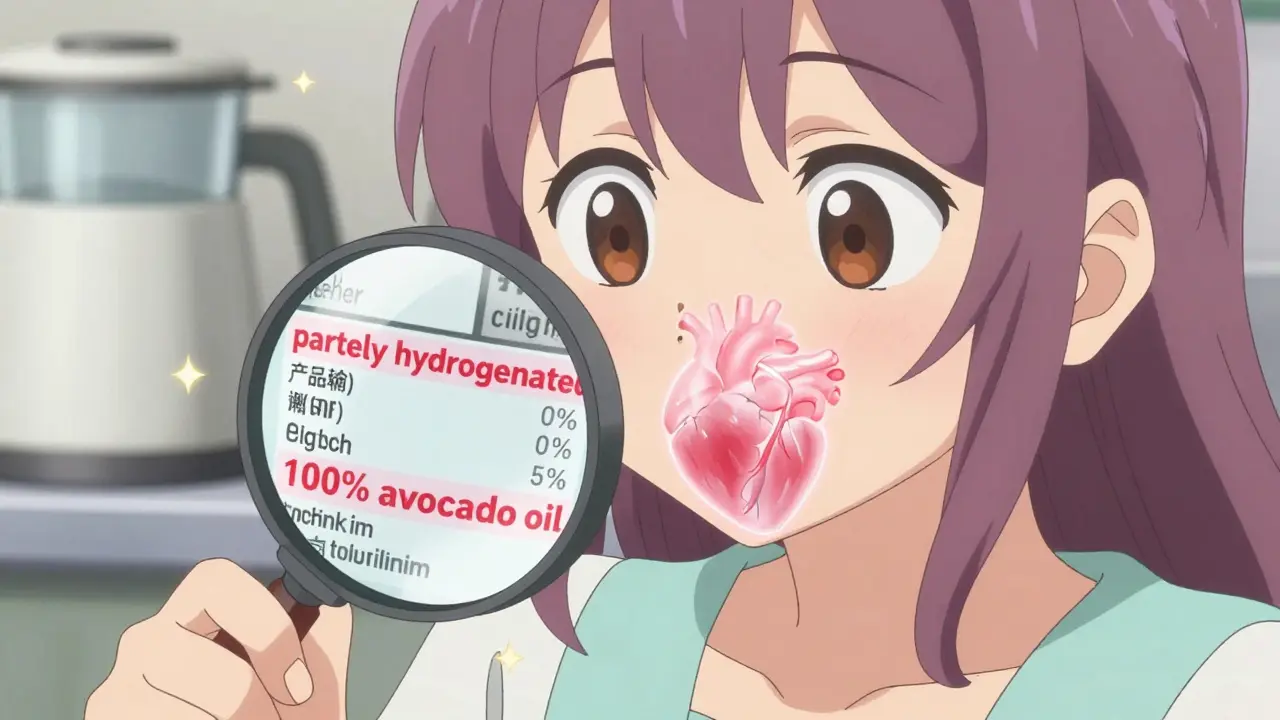
- Partially hydrogenated oils: These are the main source of trans fats. Even if the label says "0g trans fat," check the ingredient list. If you see "partially hydrogenated," walk away.
- Reused frying oil: Every time you heat oil, it breaks down. Reheating it creates free radicals and toxic compounds. Never reuse oil more than once or twice.
How to Read Labels Like a Pro
Label reading isn’t about counting calories-it’s about spotting hidden dangers.
- Check the saturated fat: Aim for less than 2 grams per serving. If a tablespoon of oil has more than 2g saturated fat, reconsider it.
- Look for "trans fat" on the ingredients: Even if the nutrition label says "0g," scan the list. "Partially hydrogenated" means it’s there.
- Watch for "blended oils": These often hide cheaper, less healthy oils like soybean or cottonseed. Look for oils that list one ingredient: "100% avocado oil," not "a blend of canola, soy, and sunflower oil."
- Choose cold-pressed or expeller-pressed: These methods don’t use chemicals or high heat, so they preserve antioxidants and nutrients. "Extra virgin" on olive oil means it’s unrefined and hasn’t been chemically treated.
- Check the expiration date: Oils go rancid. Rancid oils are oxidized and can damage your cells. Buy smaller bottles, store them in a dark cabinet, and use them within 3-6 months.
Smoke Point Matters-Don’t Burn Your Oil
Heating oil past its smoke point doesn’t just ruin the flavor-it creates harmful chemicals. You don’t need to be a chef to get this right.
- Extra virgin olive oil: Use for dressings, drizzling, or sautéing at low heat. Don’t fry with it.
- Regular olive oil: Better for medium-heat cooking like stir-fries or baking. Smoke point: 390-465°F.
- Avocado oil: Your best bet for searing steak, roasting veggies at 425°F, or deep-frying. It won’t break down.
- Algae oil: The new champion for high-heat cooking. Perfect for air fryers, woks, or grilling.
- Flaxseed and walnut oils: Never heat these. They’re rich in omega-3s, but they oxidize fast. Use them cold, in smoothies or on oatmeal.
Pro tip: If your kitchen starts to smell smoky, you’ve gone too far. Turn off the heat. That smoke is a warning sign.
Storage and Longevity
Even the best oil turns bad if you store it wrong. Light, heat, and air are the enemies.
- Keep oils in dark glass bottles, not clear plastic.
- Store them in a cool, dark cupboard-not next to the stove.
- Refrigerate flaxseed, walnut, and algae oils after opening. They’ll last 2-3 months instead of 3-4 weeks.
- Buy in smaller quantities. You don’t need a 32-ounce bottle of avocado oil if you only cook with it once a week.
Signs your oil has gone rancid? A stale, paint-like smell or a bitter taste. Toss it. No amount of cooking fixes rancid oil.

Real-Life Tips for Everyday Cooking
Switching to heart-healthy oils doesn’t mean giving up flavor or convenience.
- Use olive oil for pasta sauces, beans, and roasted vegetables.
- Swap butter for avocado oil when baking muffins or cookies-it works just as well.
- Make your own salad dressing: 3 parts olive oil, 1 part vinegar, a pinch of salt and pepper. No store-bought dressing needed.
- For stir-fries, use avocado or algae oil. They won’t smoke or taste bitter.
- When in doubt, pick the oil with the fewest ingredients and the lowest saturated fat.
And here’s one more thing: You don’t need to buy every fancy oil on the shelf. Start with one-extra virgin olive oil-and use it for everything cold or low-heat. Then add avocado oil for high-heat needs. That’s 90% of what you’ll ever need.
What About Butter and Coconut Oil?
Butter and coconut oil aren’t poison, but they’re not heart-healthy either. They’re fine in small amounts-once in a while, for flavor. But if you’re cooking every day, you’re better off replacing them with unsaturated fats.
Studies show that replacing just 5% of your daily saturated fat with unsaturated fat lowers heart disease risk by 15%. That’s like adding a daily walk to your routine. Small changes, big results.
Final Thought: It’s Not About Perfection
You don’t need to be perfect. One meal with coconut oil won’t ruin your heart. But if you’re consistently choosing oils that support your heart-olive, avocado, algae, canola-you’re stacking the deck in your favor.
Heart disease is the number one killer worldwide. But the foods you cook with every day? They’re one of the most powerful tools you have to fight it. You don’t need supplements. You don’t need expensive pills. You just need to know what’s in your pan.
What’s the best oil for frying chicken?
Avocado oil or algae oil are your best choices. Both have smoke points above 500°F, so they won’t break down or produce harmful compounds when frying. Olive oil is too delicate for deep frying, and canola oil has more omega-6 fats, which aren’t ideal for frequent high-heat use.
Is olive oil still healthy if it’s not extra virgin?
Yes, but not as much. Extra virgin olive oil has the highest levels of antioxidants and polyphenols. Regular olive oil is refined, which strips away some of those benefits. But it still has 70%+ monounsaturated fat, so it’s far better than butter or coconut oil. Use it for cooking; save extra virgin for dressings and finishing.
Can I use olive oil for baking?
Absolutely. Replace butter or vegetable oil with olive oil in a 1:1 ratio in muffins, cakes, and quick breads. Use mild or light olive oil if you don’t want a strong flavor. It adds moisture and heart-healthy fats without the saturated fat of butter.
Are all "cold-pressed" oils really better?
Generally, yes. Cold-pressed means the oil was extracted without heat or chemicals, preserving nutrients and flavor. But the term isn’t regulated in the U.S., so look for third-party certifications like the International Olive Council seal or USDA Organic to be sure. Avoid oils that just say "cold-pressed" without any proof.
Why does my olive oil taste bitter?
Bitterness in olive oil is often a sign of freshness-it comes from polyphenols, which are good for you. But if it tastes rancid or like wet cardboard, it’s gone bad. Check the harvest date (if listed) and store it properly. If it’s been open for more than 6 months, replace it.
Should I buy organic oils?
Organic doesn’t automatically mean healthier for your heart. What matters more is the fat profile and processing method. But if you’re concerned about pesticides, especially with oils like olive or avocado that come from skins and pits, organic is a good choice. Just don’t assume organic = heart-healthy-check the saturated fat content anyway.




Comments (10)
Ian Detrick
This is the kind of guide I wish I had five years ago. I used to fry everything in coconut oil because I read it was 'natural.' Turns out 'natural' doesn't mean 'good for your arteries.' Now I keep avocado oil on the stove and olive oil in the pantry. Small swap, huge difference.
Neela Sharma
Olive oil is my love language 🌿 I drizzle it on everything-even my morning oatmeal. No butter no problem. My grandma used to say 'oil is the soul of the kitchen' and she was right. Stop fearing fat start choosing wisely.
Palesa Makuru
Honestly I don’t get why people are so obsessed with 'heart-healthy' oils. I mean if you’re eating clean why do you even need to worry about the oil? Also I’ve been using ghee for years and my cholesterol is perfect. Maybe the science is just corporate propaganda.
Haley Parizo
You’re all missing the point. This isn’t about olive oil vs avocado oil. It’s about the entire food system being engineered to keep us confused. The FDA allows '0g trans fat' with loopholes because they’re paid off by Big Oil. The real enemy isn’t coconut oil-it’s the corporations that profit from your ignorance. Wake up.
Angela Fisher
I knew it!! 😳 I told my husband last week that olive oil was a scam and now I see it’s worse! They’re hiding trans fats in EVERYTHING even the 'organic' brands! I checked my almond oil and it said 'cold-pressed' but no certification-IT’S A TRAP!! I’ve been poisoning my kids for years!! My skin is breaking out and my joints ache and now I know why!! 😭
Michael Burgess
One thing nobody mentions: smoke point isn’t just about health-it’s about taste. Burnt oil tastes like regret. I used to fry eggs in coconut oil until I tried avocado oil. Suddenly my eggs tasted like food again not a chemical fire. Also fridge your flaxseed oil. Trust me. I learned the hard way. Rancid oil smells like a broken pencil.
Liam Tanner
I’ve been using canola oil for years and felt guilty. But now I see it’s actually decent if it’s cold-pressed. My mom used it for everything and she’s 82 and still hikes every weekend. Maybe the hate is overblown. I’m switching to non-GMO now though. Just in case.
Brittany Wallace
I love how this post doesn’t shame people for using butter once in a while. That’s the real win. Health isn’t about perfection. It’s about consistency. I use coconut oil on my popcorn every Friday night. It’s my little joy. And I use olive oil the other six days. That’s my balance.
veronica guillen giles
Wow. Someone actually wrote a 2000-word essay on cooking oil. I’m impressed. I just use whatever’s cheapest and hope for the best. Also why is algae oil $25? Is it distilled from space dolphins?
Shruti Badhwar
The data is clear. Replacing saturated fats with unsaturated fats reduces cardiovascular events. But the real barrier isn’t knowledge-it’s access. Not everyone can afford avocado oil. We need policy changes to make healthy oils affordable. Education alone won’t fix systemic inequality in nutrition.