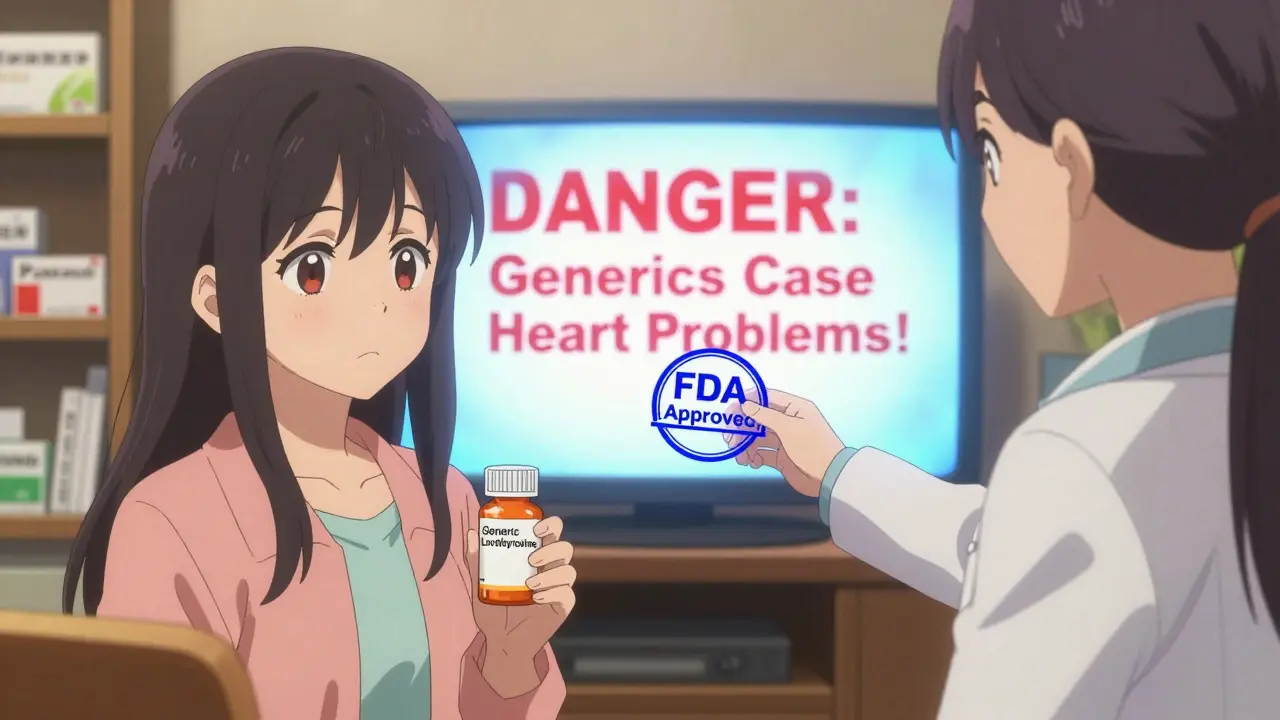
Every year, Americans fill over 6.8 billion prescriptions. Nearly 90% of them are for generic drugs. These medications save the U.S. healthcare system an estimated $300 billion annually. But behind the low price tag, a quiet battle is being waged-not in labs or clinics, but in ads on TV, online, and in magazines. Some of those ads are lying. And when they do, people get hurt.
What Counts as False Advertising in Generic Drugs?
False advertising in generics isn’t about fake pills. It’s about misleading claims. It’s when a company says a generic drug is "less effective," "unsafe," or "not FDA approved"-even though it’s chemically identical to the brand-name version and has passed the FDA’s strict bioequivalence tests. It’s when an ad implies that a brand-name drug is "better" without clinical proof. It’s using scary language like "health alert" or "recall warning" to scare patients away from generics that have never been recalled.
The FDA requires generics to prove they deliver the same amount of active ingredient into the bloodstream at the same rate as the brand-name drug-within 80% to 125% of the original. That’s not a guess. That’s science. But ads don’t always show that. Some use visuals that look just like the brand-name pill. Others use voiceovers that suggest the brand is "the original" and the generic is "a copy," implying inferiority.
One 2024 FDA analysis found that 32% of patients who stopped taking their generic thyroid medication after seeing a misleading online ad experienced worsening symptoms. These aren’t hypothetical risks. They’re real, documented health consequences.
The Laws That Stop False Claims
There are three main legal tools that crack down on false generic drug ads:
- The Federal Food, Drug, and Cosmetic Act (FD&C Act)-This is the FDA’s main weapon. It says drug ads must present a "fair balance" between benefits and risks. No exaggerating. No hiding side effects. And absolutely no false claims about equivalence or safety.
- The Lanham Act-This is the one competitors use. If a generic drug maker runs an ad that falsely claims its product is "just as good" as a brand-name drug without FDA-recognized therapeutic equivalence, the brand-name company can sue for damages. In 2025, at least five lawsuits were filed under this law after ads implied superiority without clinical proof.
- State Consumer Protection Laws-Each state has its own rules. New York’s General Business Law § 349 lets courts award up to $1,000 per violation, plus triple damages. California’s Unfair Competition Law requires ads to be backed by "competent and reliable scientific evidence." Florida bans ads from using government logos or terms like "health alert" to scare people.
The September 2025 presidential memorandum directed the Department of Health and Human Services to shut down ads that "inappropriately intervene in the physician-patient relationship" and "advantage expensive drugs over cheaper generics." That’s a clear signal: regulators are watching-and they’re getting tougher.
The FDA’s New Rules (2025 Update)
In September 2025, the FDA dropped a bombshell: it’s closing the "adequate provision" loophole.
For nearly 30 years, TV and radio ads could say, "For full risk information, visit [website]." That meant the ad could skip listing major side effects entirely. Patients never saw them. Now, under new rules, every broadcast and digital ad must include all serious risks right in the message. No links. No fine print. No "visit our site" tricks.
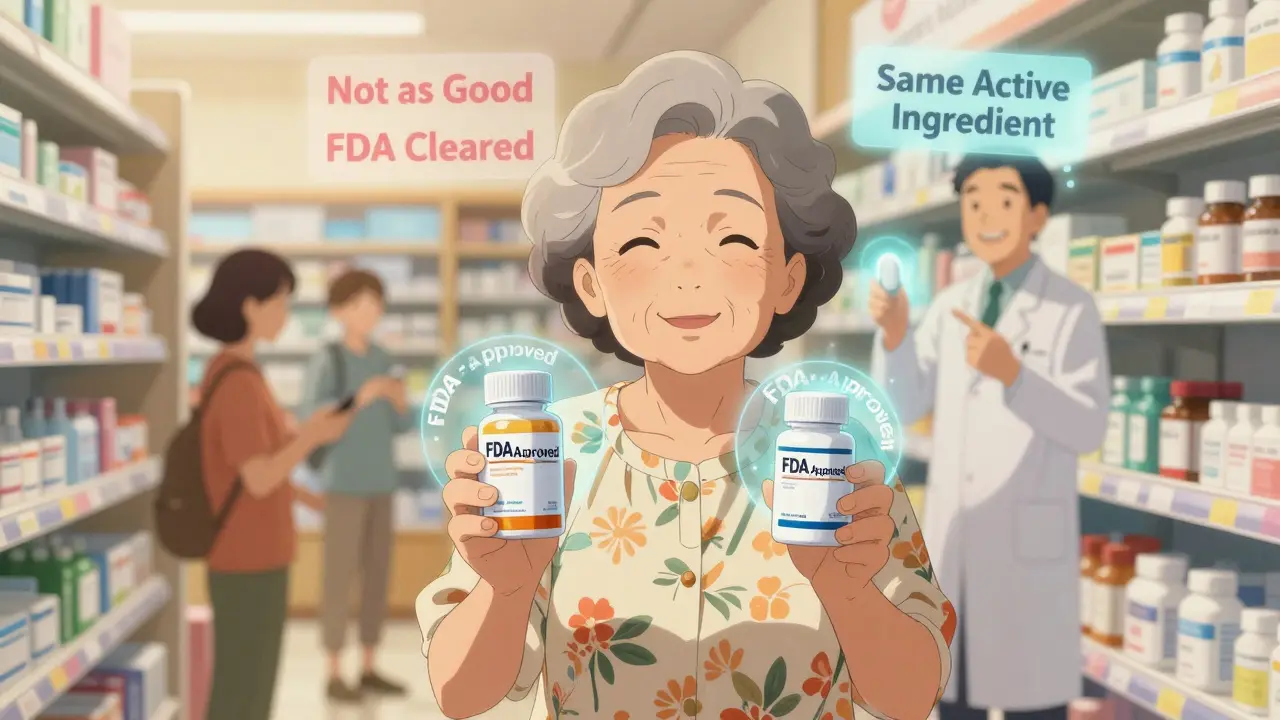
Also, ads can no longer say "FDA Approved" for a generic drug unless it’s been through the full ANDA (Abbreviated New Drug Application) process. Some companies used "FDA Clearance"-a term that sounds similar but applies to devices, not drugs-to imply legitimacy. That’s now a violation.
The FDA issued 100 cease-and-desist letters in the first quarter of 2025 alone-almost all targeting misleading comparisons between brand-name and generic drugs. Teva, Sandoz, and other major players got warnings for ads suggesting their generics were "equivalent" for narrow therapeutic index drugs like levothyroxine without physician oversight. That’s dangerous. Even if the drug is bioequivalent, switching thyroid meds without a doctor’s input can cause serious health issues.
What Generic Drug Ads Can and Can’t Say
Here’s what’s allowed-and what’s not:
| Allowed | Prohibited |
|---|---|
| "This is a generic version of [Brand Name]" | "This generic is just as good as the brand" (without FDA-recognized therapeutic equivalence) |
| "Save up to 80%" (if backed by published pricing data) | "Generic drugs are dangerous" or "avoid generics" |
| "FDA-approved generic" | "FDA Cleared" (used for devices, not drugs) |
| "Same active ingredient as [Brand Name]" | Using brand-name pill colors, shapes, or logos to confuse patients |
| Stating cost savings with documented sources | Implying superiority over other generics without head-to-head trials |
Even "lower cost" is risky if you can’t prove it. The FTC requires advertisers to have "competent and reliable evidence" before claiming savings. A 2025 case in Texas forced a company to retract an ad that claimed "up to 90% savings"-because the actual savings were closer to 65%.
Who Gets Hurt When Ads Lie?
It’s not just the companies that lose. It’s the patients.
A 2024 survey by the National Community Pharmacists Association found that 41% of patients didn’t trust generic drugs after seeing DTC ads that emphasized brand-name superiority. One Reddit thread from March 2025 had over 2,000 comments from people who refused to take generic levothyroxine because of ads claiming "generics cause heart problems." The FDA has repeatedly stated that generic thyroid drugs meet the same standards as the brand. But fear doesn’t care about science.
Patients who stop taking their meds because of false ads end up in ERs. They get sicker. They pay more. And doctors lose trust in their patients’ judgment. The American Medical Association found that 67% of physicians believe misleading ads lead patients to request drugs they don’t need.
On the flip side, patients who see honest, compliant ads report 78% higher awareness of cost savings. Seniors on fixed incomes, especially, benefit when ads clearly explain that a $4 generic can do the same job as a $40 brand.
How Companies Stay Compliant
Big generic manufacturers like Teva and Mylan have entire teams-15 to 25 people-dedicated to reviewing every ad before it runs. They check for:
- Correct use of "bioequivalent" vs. "therapeutically equivalent"
- Proper disclosure of side effects in 14-point font or higher
- No visual mimicry of brand-name packaging
- Verified cost-saving claims with pharmacy benefit manager data
Smaller companies struggle. Compliance costs average $2.1 million per year for top manufacturers. For smaller players, that’s a huge burden. Only 47% of smaller generic makers meet FDA standards, according to October 2025 enforcement data.
Training takes time. New compliance officers need 18 months to master the rules, according to the Regulatory Affairs Professionals Society. They have to know FDA guidance documents, FTC guidelines, and 50 different state laws. One mistake can cost millions.
What’s Next? The Future of Generic Drug Ads
Legislation is moving fast. H.R. 4582, the "Transparency in Drug Advertising Act," is currently in committee. It would force all drug ads-brand or generic-to use the same risk disclosure format across TV, radio, and digital. No more loopholes.
Enforcement is only getting stricter. Evaluate Pharma projects a 35% annual increase in FDA actions through 2027. Generic manufacturers are now the primary target-not because they’re the worst offenders, but because they’re the most vulnerable. A single misleading ad can cost a small company its entire business.
Companies that invest in compliance-like Pfizer’s $45 million advertising review system-are winning. Those that cut corners? They’re getting hit with penalties. GlaxoSmithKline paid $3 billion in 2012 for misleading claims. Today, the price could be even higher.
What You Can Do
If you’re a patient: Don’t believe every ad you see. Ask your pharmacist: "Is this generic the same as the brand?" They know the answer. If your doctor switches you to a generic, don’t panic. The FDA requires it to be safe and effective.
If you’re a marketer or manufacturer: Don’t test the limits. The FDA isn’t just watching. They’re recording. And they’re sharing data with competitors who will sue you.
If you’re a policymaker or advocate: Push for transparency. Demand that all drug ads include full risk information-not links. Support laws that protect patients from fear-based marketing.
Generics aren’t second-rate. They’re the backbone of affordable healthcare. But only if the ads telling you that are honest.
Can a generic drug be advertised as "FDA Approved"?
Yes-but only if it has gone through the FDA’s Abbreviated New Drug Application (ANDA) process. Generic drugs are approved under the same standards as brand-name drugs. The term "FDA Approved" is correct for generics that have completed this process. However, "FDA Clearance" is not correct-it applies to medical devices, not drugs. Using "Clearance" for a generic drug is a violation of FDA regulations and can trigger legal action.
Are generic drugs really as effective as brand-name drugs?
Yes. The FDA requires generics to be bioequivalent to the brand-name drug, meaning they deliver the same amount of active ingredient into the bloodstream at the same rate. For 90% of medications, this results in identical clinical outcomes. The only exceptions are narrow therapeutic index drugs like levothyroxine, warfarin, and some seizure medications, where small differences in absorption can matter. Even then, the FDA has approved hundreds of generic versions after rigorous testing. The myth that generics are weaker is false-and often spread by misleading ads.
Can a generic drug maker sue a brand-name company for false advertising?
Yes. Under the Lanham Act, a generic manufacturer can sue a brand-name company if its advertising falsely implies that the brand is superior, safer, or more effective without clinical proof. In 2025, multiple lawsuits were filed after brand-name ads claimed "the original" or "the only one proven to work"-implying generics aren’t. Courts have ruled in favor of generics in several cases, awarding damages for lost market share and reputational harm.
Why do some ads say "This is not the brand-name drug"?
This is a compliance tactic. Some generic companies use this phrase to avoid implying they are identical to the brand, especially for narrow therapeutic index drugs where substitution requires physician approval. It’s a way to stay legally safe. But it also feeds patient confusion. The FDA encourages clear, neutral language like "This is a generic version of [Brand Name]" rather than disclaimers that sound like warnings.
What happens if a company violates generic drug advertising rules?
Penalties vary. The FDA can issue warning letters, demand ad removal, or require corrective advertising. Under the Lanham Act, competitors can sue for damages-including lost profits and legal fees. State laws like New York’s allow for triple damages and up to $1,000 per violation. In extreme cases, companies face criminal charges. In 2024, a small generic maker was fined $1.2 million after running ads claiming its drug was "FDA approved" when it had only applied for approval.
Can I trust generic drugs prescribed by my doctor?
Absolutely. Your doctor prescribes generics because they’re safe, effective, and regulated just like brand-name drugs. The FDA inspects generic manufacturing facilities as often as brand-name ones. In fact, many brand-name companies make their own generics. If your doctor says it’s okay, then it’s okay. If you’re unsure, ask your pharmacist for the FDA’s list of approved generics-it’s public information.


Comments (8)
Bridget Molokomme
So let me get this straight-companies spend millions to scare people away from $4 pills so they’ll buy $40 ones, and we’re surprised when grandma stops her thyroid med because an ad made it look like a death sentence? 😒 The real generic here is common sense.
Vatsal Srivastava
Everyone knows generics are just knockoffs with the same active ingredient but different fillers. The FDA’s 80-125% range is a joke. Real medicine doesn’t have a margin of error. If it’s not identical, it’s not the same. This whole system is a corporate compromise disguised as science.
Brittany Marioni
Wait-so if a company says "FDA Approved" for a generic, that’s fine? But if they say "FDA Clearance," that’s illegal? And people are confused because the language is so similar? I’m so glad someone’s finally fighting this. Seriously, if you’re a patient, ask your pharmacist. They’re the real heroes here. They know which generics are truly equivalent and which ones just look pretty on the shelf. And if you’re a marketer? Stop playing word games with people’s health. Please. Thank you. We’re all just trying to survive.
Monica Slypig
Why are we even talking about this? America’s healthcare is broken because we let foreigners make our meds. If you want real safety, buy American. These generic companies are all overseas anyway. FDA rules are just window dressing. We need tariffs on pills, not ads. And stop letting lawyers sue each other-this is a national security issue.
Becky M.
Just wanted to say-i’ve been on generic levothyroxine for 7 years. no issues. my doctor switched me because my insurance wouldn’t cover the brand. i was scared too. but my labs came back perfect. same as before. i think the ads are scary because they make you feel like you’re taking a risk. but the truth? you’re not. you’re just saving money. and that’s ok. really. it’s more than ok. it’s smart. 💛
jay patel
You know what’s wild? I work in a pharmacy in rural India and we get these same ads translated into Hindi and Tamil-same fear tactics, same fake "health alerts," same brand-name pill images. People here are even more vulnerable because they don’t have access to pharmacists who can explain the science. So when they see an ad saying "avoid generics" with a red warning sign, they just stop taking everything. It’s heartbreaking. And the worst part? The companies behind these ads don’t even care where they’re broadcast. They’re not targeting Americans-they’re targeting anyone with a phone and a fear of paying more.
Ansley Mayson
More regulation. More lawsuits. More bureaucracy. That’s all this is. The FDA’s just trying to control the narrative. If people want to believe generics are dangerous, let them. It’s their choice. Stop wasting time policing ads. The market will sort it out. Or not. Who cares?
phara don
Wait so if a generic maker can sue a brand under the Lanham Act for implying superiority… does that mean the brand could also sue the generic for saying "same active ingredient"? Because technically, that’s not always true-some generics use different salts or esters. Is that legal? 🤔