
When you start trying to lose weight, one of the first questions you’ll hear is: cardio or weights? It feels like a battle - run until you’re exhausted, or lift heavy and hope it melts the fat. But here’s the truth: neither one alone is the answer. The real game-changer is how you combine them.
Cardio Burns Calories Fast - But Only While You’re Doing It
Cardio is the quick hitter. A 30-minute jog burns 300-400 calories for someone weighing 155 pounds. Cycling hard? That can push you past 600. Swimming laps? You’re looking at 400-500. That’s why the scale drops fast in the first few weeks. You’re using up energy fast, and your body responds by tapping into stored fat. But here’s the catch: once you stop moving, the calorie burn stops too. Your metabolism goes back to baseline. And after 8-12 weeks of steady cardio, your body adapts. You burn fewer calories doing the same workout. That’s when the plateau hits - and people quit because the scale won’t budge. Cardio also doesn’t protect your muscle. In fact, if you’re doing too much without enough protein, you can lose muscle along with fat. That’s bad news long-term. Muscle burns more calories at rest than fat. Lose muscle, and your body becomes a slower furnace.Strength Training Burns Fewer Calories - But Changes Your Body Forever
A 30-minute weight session? You might only burn 90-150 calories. That’s less than half of what you’d burn jogging. So why do people who lift weights look leaner, even if the scale doesn’t change? Because strength training doesn’t just burn calories during the workout. It turns your body into a calorie-burning machine for the next 24 to 48 hours. This is called EPOC - excess post-exercise oxygen consumption. Your body works harder to repair muscle, restore oxygen levels, and balance hormones. That means you keep burning extra calories even while you’re sitting on the couch. And here’s the real secret: muscle tissue burns 13-15 calories per kilogram every day. Fat? Only 4.5-5. So if you gain 2kg of muscle and lose 2kg of fat, your resting metabolism jumps by about 150-200 calories a day. That’s like eating an extra banana every day - without actually eating it. People who lift regularly often say: “The scale didn’t move, but my jeans fit better.” That’s not magic. It’s body recomposition. You’re losing fat while gaining muscle. Your shape changes. Your strength improves. And your metabolism gets a permanent upgrade.The Science Says: Combine Them
A 2022 study in Obesity followed 120 overweight adults for six months. One group did only cardio. Another did only strength training. The third did both - 150 minutes of cardio and 120 minutes of strength training per week. The results? The combo group lost 12.4% body fat and gained 1.8kg of muscle. The cardio-only group lost 9.7% fat - but also lost 0.3kg of muscle. The strength-only group gained 2.3kg of muscle but only lost 7.1% fat. Another study tracked people who had lost 30kg or more and kept it off for over five years. These were the real success stories. They didn’t just run or lift - they did both. On average, they spent 220 minutes a week on cardio and 120 minutes on strength training. The ones who did 3+ strength sessions per week kept the most muscle and had the lowest chance of regaining weight. The message is clear: cardio gets you to the starting line. Strength training keeps you there.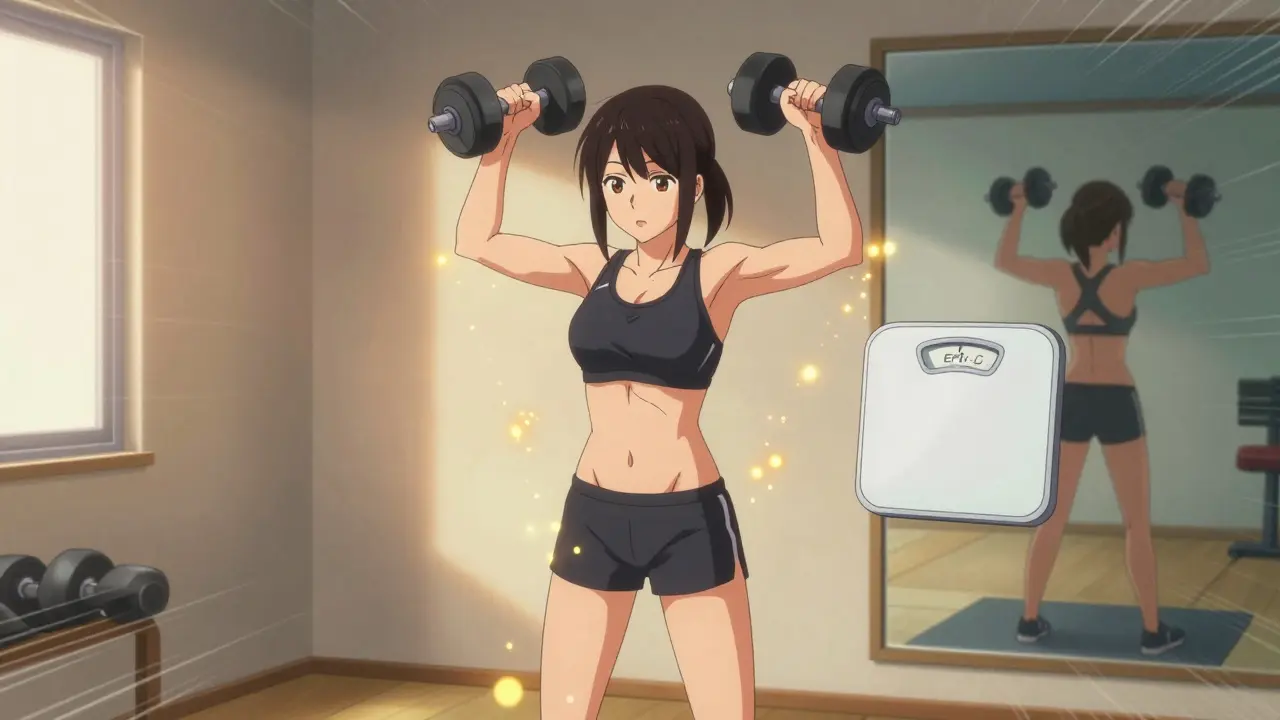
What About HIIT? The Middle Ground
High-Intensity Interval Training (HIIT) is the hybrid solution. Think sprinting for 30 seconds, then walking for 90. Repeat. Or burpees, kettlebell swings, jump squats - all done in short, intense bursts. HIIT burns 25-30% more calories than steady-state cardio in the same time. It also triggers 12-15% more EPOC than regular cardio. You get the calorie burn of running, plus the metabolic afterburn of lifting. Best part? You can do HIIT in 20 minutes. Three times a week. That’s less time than most people spend scrolling through their phones. But don’t go full HIIT every day. Your body needs recovery. Mix it with steady cardio and strength training. That’s the sweet spot.What Most People Get Wrong
Here’s where people fail - even when they know what to do. Not eating enough protein. If you’re lifting weights and trying to lose fat, you need 1.6-2.2 grams of protein per kilogram of body weight. That’s about 120g for a 70kg person. But only 32% of people trying to lose weight hit that mark. Without enough protein, you lose muscle. And that kills your metabolism. Not getting stronger. If you’re doing the same weights every week, you’re not building muscle. You’re just going through the motions. To grow muscle, you need to increase the weight or reps every 1-2 weeks. Even a 2.5-5% increase is enough. Thinking the scale tells the whole story. If you’ve been lifting for 6 weeks and the scale hasn’t moved, don’t quit. Take measurements. Look in the mirror. See how your clothes fit. Muscle is denser than fat. You might be losing 4kg of fat and gaining 3kg of muscle. The scale says “no change.” Your body says “I’m transforming.”
How to Start - Even If You’re a Beginner
You don’t need a gym membership. You don’t need fancy equipment. You just need consistency. Start with this plan:- 3 days a week: 20-30 minutes of brisk walking, cycling, or dancing (keep your heart rate at 55-65% of max)
- 2 days a week: Full-body strength training (bodyweight or light dumbbells)
- Focus on form over weight. Squats, push-ups, lunges, rows, planks - do 2-3 sets of 10-12 reps
- Rest one day between strength sessions
The Bigger Picture: It’s Not Just About Exercise
Dr. James Levine from Mayo Clinic says something most people ignore: movement outside the gym matters more than the gym itself. He calls it NEAT - non-exercise activity thermogenesis. That’s walking to the store, taking the stairs, standing while you work, fidgeting. Studies show NEAT burns 2-3 times more calories than structured workouts for most people. So if you sit all day and then do 45 minutes of cardio, you’re fighting an uphill battle. Move more in your daily life. Park farther away. Stand up every hour. Walk while you talk on the phone. These small habits add up - and they’re sustainable.Final Answer: Do Both - and Do It Right
Cardio is great for burning calories and improving heart health. Strength training is better for keeping muscle, boosting metabolism, and shaping your body. Neither one is enough. The best approach? Mix them. Do cardio to burn fat. Do strength to keep your metabolism high. Add HIIT to save time. Eat enough protein. Track progress beyond the scale. Move more every day. This isn’t about finding the “best” workout. It’s about building a routine that lasts. Because weight loss isn’t a sprint. It’s a lifestyle.Should I do cardio or weights to lose belly fat?
You can’t spot-reduce fat - meaning doing endless crunches won’t melt belly fat. But combining cardio and strength training helps reduce overall body fat, including belly fat. Cardio burns calories fast, while strength training builds muscle that keeps your metabolism high. Studies show people who do both lose more belly fat than those who do only one. Add walking, standing more, and eating less sugar to see faster results.
Can I lose weight with strength training alone?
Yes - but slowly. Strength training burns fewer calories during the workout, but it builds muscle, which increases your resting metabolism. Over time, that leads to fat loss. However, without cardio, you’ll lose fat slower than if you added even 2-3 days of brisk walking or cycling. Most people who lose weight with strength training alone also cut calories significantly. For faster, more sustainable results, combine it with cardio.
Why am I gaining weight while working out?
If you’ve started strength training, you might be gaining muscle - which is heavier than fat. Water retention from muscle repair can also cause a temporary scale increase. This is normal, especially in the first 4-8 weeks. Don’t panic. Take measurements, check how your clothes fit, and look in the mirror. If you’re eating more than before because you think “I worked out, so I can eat more,” that’s likely the real issue. Track your food, not just your workouts.
How often should I do cardio and strength training?
For weight loss, aim for 150 minutes of moderate cardio (like brisk walking) and 120 minutes of strength training per week. That’s about 3-4 days of cardio and 2-3 days of strength. Beginners can start with 3 days total: 2 cardio, 1 strength. Add more as you get stronger. Don’t do intense workouts every day - your body needs rest to recover and build muscle.
Is walking enough to lose weight?
Yes - if you do enough of it. Walking burns fewer calories than running, but it’s sustainable. A 30-minute walk burns 150-200 calories. Do that daily, and you’ll burn over 1,000 extra calories a week. Combine it with strength training twice a week and watch your body change. Many people who keep weight off long-term walk daily. It’s not glamorous, but it works.
If you’ve tried one approach and hit a wall, it’s not you - it’s the plan. Try combining cardio and strength. Track your progress with measurements, not just the scale. Eat enough protein. Move more every day. And give it 8 weeks. That’s when real change starts to show.





Comments (8)
Lana Kabulova
I tried just cardio for 6 months... scale barely moved. Then I started lifting. Now my jeans fit like they're from a different planet. Who knew muscle could be so sneaky? I didn't lose weight, but I lost 4 inches off my waist. And I'm stronger than my 22-year-old nephew. 😤
arun mehta
This is beautifully articulated 🙏. In India, we often think lifting weights is for bodybuilders only. But the science here is undeniable. Muscle is not just about looks-it's metabolic insurance. I've seen elderly relatives regain mobility after starting light resistance training. It's not about intensity-it's about consistency. 🌿💪
Chiraghuddin Qureshi
Bro, in India we say 'dil se karo, phir kuch bhi kar lo' - do it from the heart, then do whatever. Cardio is like chai - quick energy, but fades fast. Strength is like roti - keeps you full for hours. And HIIT? That’s masala chaat - spicy, chaotic, but you crave it. 🇮🇳🔥
Tatiana Bandurina
You say 'do both' like it's that simple. But have you considered that most people don't have the time, money, or mental bandwidth to do 3 cardio days AND 3 strength days? And let's be real - you're ignoring the fact that 80% of weight loss is diet. You're just giving people a workout fantasy to avoid the real issue: they're eating too much junk. 🤷♀️
Philip House
Look, I'm American. We've been lied to for decades. Cardio is a scam sold by gyms to keep you running on treadmills while they make money off your membership. Strength training? That's real power. You want to know why Americans are getting weaker? Because we let corporations tell us what 'fitness' is. I don't need a gym. I do push-ups, pull-ups, and carry my groceries. That's functional. That's survival. The scale? It's a capitalist tool. 🇺🇸
Akriti Jain
Funny how they never mention the pharmaceutical companies that profit from people thinking they need to 'fix' their bodies. Also, who funded this study? 🤔 Maybe the dumbbells are sponsored. I did 2 years of HIIT and lost 30 lbs... then gained back 40 because I started eating 'protein bars' that had 22g sugar. 😂
Mike P
You think this is new? My grandpa lifted weights in the 1950s with milk crates and dumbbells made of concrete. He never ran a mile. He worked construction. He ate eggs and potatoes. He lived to 92. You're overcomplicating it. Move. Eat protein. Sleep. Stop chasing trends. And for god's sake, stop posting about your 'gains' on Instagram. Real strength doesn't need a filter. 🤘
Jasmine Bryant
I just wanted to say thank you for the protein recommendation - I was only eating 70g a day and wondering why I wasn't getting stronger. I upped it to 140g and my arms actually feel different now. Also, the NEAT thing? I started taking the stairs and standing while brushing my teeth. I swear I burned like 200 extra calories this week. Not bad for zero effort 😅