After a heart attack, bypass surgery, or other major cardiac event, the last thing you want to do is push yourself too hard. But doing nothing can be just as dangerous. The truth is, exercise is one of the most powerful tools you have to rebuild your heart and life - if you do it right.
Why Exercise After a Heart Event Isn’t Risky - It’s Essential
For decades, doctors told heart patients to rest. Now we know better. Studies show people who join a cardiac rehab program cut their risk of dying within five years by 30%. That’s not a small gain. That’s life-changing. And it’s not just about living longer. It’s about being able to walk to the mailbox without gasping, playing with your grandkids, or climbing stairs without stopping.
The science is clear: moving your body after a heart event helps your heart heal stronger. It lowers blood pressure, improves circulation, reduces inflammation, and even eases anxiety. People who skip rehab are twice as likely to be readmitted to the hospital within a year. And here’s the kicker - those who stick with it for just 12 weeks report feeling more confident, less scared, and more in control of their health.
The Three Phases of Safe Exercise After a Heart Event
Recovery isn’t a one-size-fits-all sprint. It’s a carefully timed journey with three clear stages. Each phase has its own rules, goals, and safety checks.
Phase 1: Hospital and Early Recovery (Days 1-7)
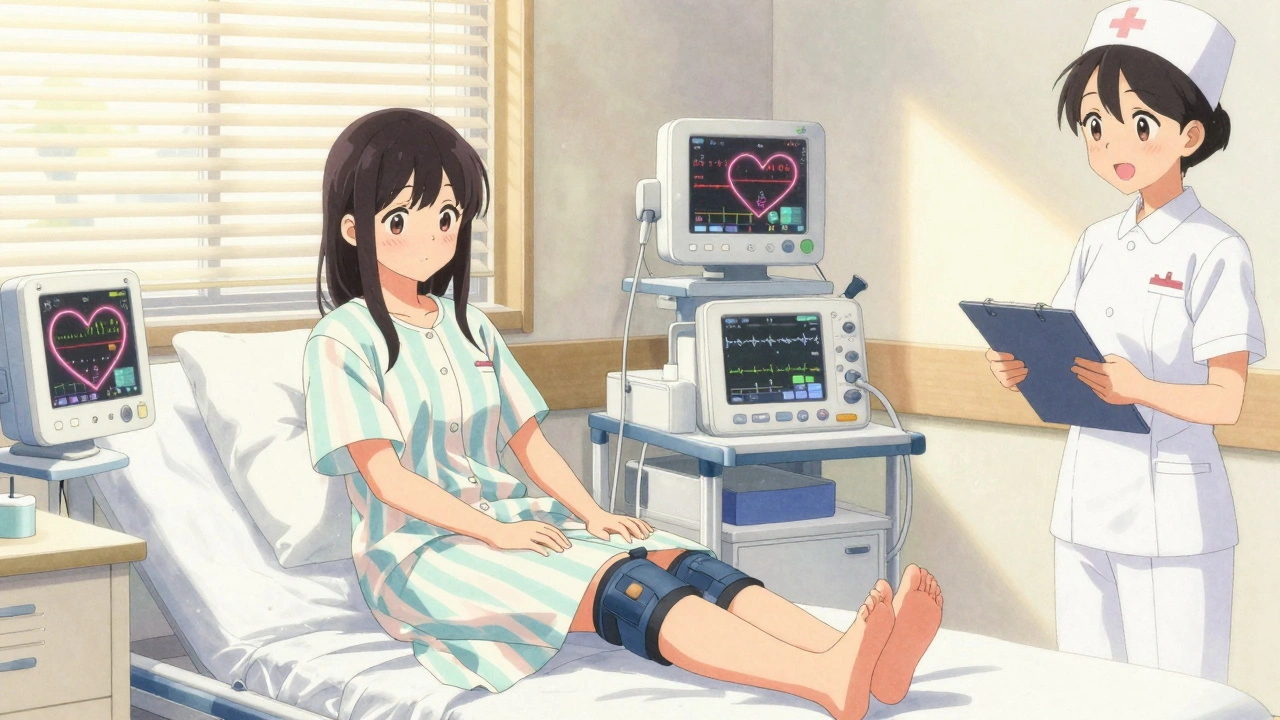
This starts the moment you’re stable - sometimes even the same day after surgery. The goal isn’t fitness. It’s circulation. You’re not here to burn calories. You’re here to keep your blood moving so clots don’t form.
Typical exercises: ankle pumps (flexing your feet up and down), seated marches (lifting knees gently while sitting), and short walks around your room - maybe just 50 feet at first. All of this is done while you’re still in bed or sitting in a chair. Your heart rate should stay below your resting heart rate plus 20 beats. If you feel dizzy, short of breath, or get any chest pressure, stop immediately. That’s not weakness. That’s your body telling you to slow down.
Phase 2: Early Outpatient (Weeks 2-8)
Once you’re home and cleared by your doctor, you’ll likely start supervised rehab. This is where real progress begins. Sessions usually happen two to three times a week at a clinic, hospital, or even through telehealth.
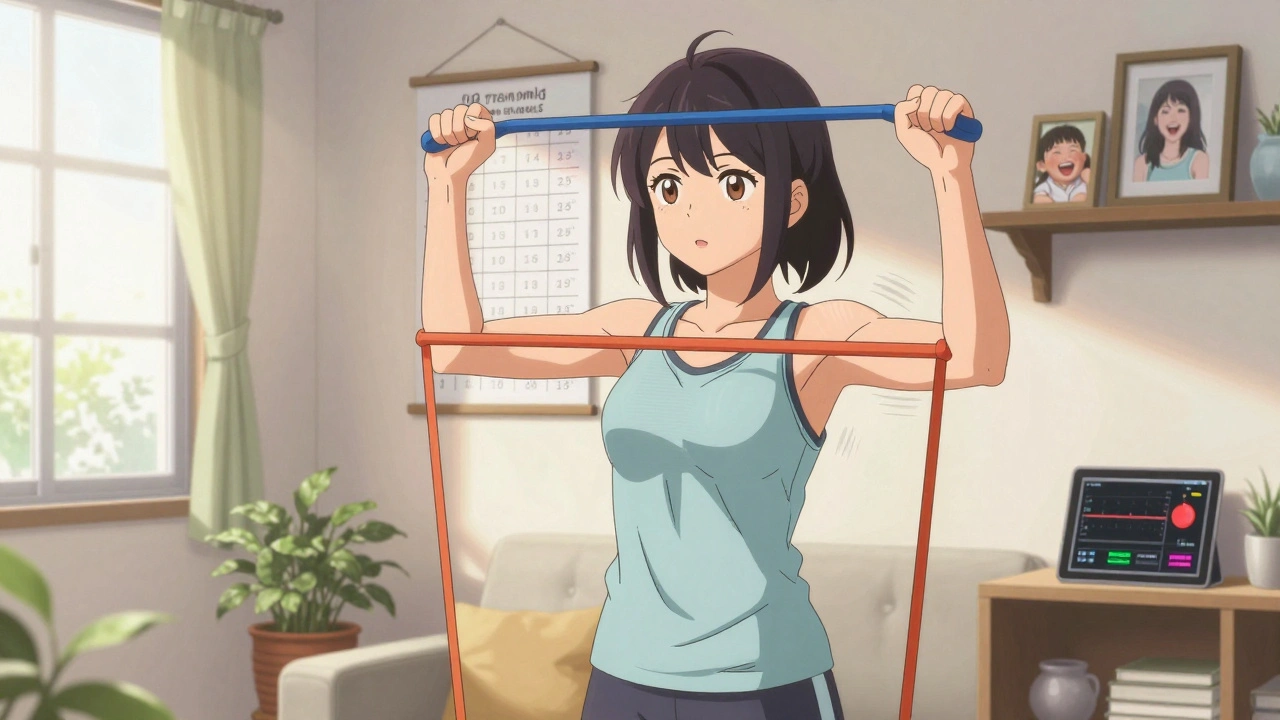
Workouts now include walking on a flat surface, light stationary cycling, and simple resistance bands. You’ll start with 5-10 minutes of activity and build up to 30 minutes over six weeks. The key is intensity. You should be able to talk in full sentences - not sing, but not gasping either. That’s the “talk test.”
Your heart rate target? Resting heart rate +20 to +30 beats per minute. If you’re on beta-blockers, your max heart rate might be lower. Your rehab team will adjust for that. Don’t guess. Use a monitor. And never push past a Rating of Perceived Exertion (RPE) of 14 on the 6-20 scale. If you feel like you’re working “fairly light to somewhat hard,” you’re in the zone.
Phase 3: Long-Term Maintenance (After 8-12 Weeks)
By now, you’ve built a foundation. This phase is about making exercise a habit - not a chore. The American Heart Association recommends at least 150 minutes of moderate aerobic activity each week. That’s 30 minutes, five days a week. Or 75 minutes of vigorous activity if you’re ready.
Include strength training twice a week: bodyweight squats, wall push-ups, light dumbbells. But don’t hold your breath. Exhale on effort. Avoid heavy lifting or pushing/pulling that strains your chest. And always warm up and cool down. A five-minute walk before and after counts.
Supervised Rehab vs. Going It Alone
You might think, “I’ve got a fitness tracker. I can do this myself.” But here’s the problem: 27% of people who exercise on their own push past safe limits in the first month. That’s not because they’re lazy - it’s because they don’t know what’s normal.
Supervised rehab gives you more than just a workout plan. It gives you:
- Real-time heart rate and blood pressure monitoring
- Immediate access to nurses or physiologists if something feels off
- Personalized adjustments based on your meds, damage, and recovery speed
- Education on warning signs you didn’t even know to watch for
Studies show people in formal programs recover 25% faster and are 47% less likely to be readmitted. That’s not magic. That’s structure.
That said, if you’re low-risk - say, a young person with a minor blockage treated with a stent and no other conditions - you might transition to self-guided exercise after a few supervised sessions. But even then, start slow. And keep checking in with your doctor every 3-6 months.

What to Watch For - The 7 Red Flags
You’re not just exercising to get fit. You’re exercising to stay alive. So know the signs your heart is sending you trouble signals:
- Chest pain or pressure - not just discomfort. A squeezing, heavy feeling
- Pain radiating to your arm, neck, jaw, or back
- Dizziness or lightheadedness - especially if it makes you want to sit or lie down
- Irregular or pounding heartbeat - palpitations that feel like your heart is skipping or racing
- Unusual shortness of breath - not from exertion, but from doing something you used to do easily
- Slurred speech or confusion - signs of a stroke, which can be linked to heart issues
- Sudden weakness or numbness on one side of your body
If any of these happen during exercise, STOP. Sit down. Call your doctor. Don’t wait. Don’t hope it’ll pass. Your heart doesn’t bluff.
How Medications Change Your Exercise Rules
Many heart patients take beta-blockers. These drugs help your heart recover - but they also lower your heart rate. That means the old “220 minus your age” max heart rate formula? Useless.
For example, if your resting heart rate is 70 and you’re on beta-blockers, your max might only be 95-100 during exercise. That’s not a failure. That’s your body adapting. Your rehab team will calculate your target zone based on your actual resting rate, not a textbook number.
Other meds like diuretics can make you dehydrated. ACE inhibitors might drop your blood pressure too low. Always tell your trainer what you’re taking. And never skip your meds to “feel better” during a workout. That’s dangerous.
Real People, Real Success
At the Mayo Clinic, 1,200 patients completed 36 rehab sessions. At the 12-month mark, 92% were still exercising on their own. That’s not luck. That’s the power of support.
One patient, a 68-year-old retired teacher in Ohio, started rehab after a stent placement. She could barely walk to her kitchen. After 10 weeks, she walked 2 miles a day. After six months, she joined a walking group. “I used to be scared every time my heart beat fast,” she said. “Now I know what normal feels like.”
On the flip side, a 55-year-old man in Florida skipped rehab. He started walking 30 minutes a day on his own. By week three, he was pushing harder, chasing his kids around the yard. He ended up in the ER with chest pain. His heart rate had spiked to 150 - way over his safe limit. He spent the next two weeks in rehab, learning what he should’ve done from the start.
Barriers and How to Beat Them
Only 30-40% of eligible patients join cardiac rehab. Why? Transportation. Cost. Work. Shame. But things are changing.
Medicare covers 36 sessions. Many private insurers do too. If you’re told it’s not covered, ask for a written denial - you can appeal.
Can’t get to a clinic? Hybrid programs now exist. You do 12 in-person visits and 24 virtual ones using a Bluetooth heart rate monitor. The tech is FDA-cleared. Your data is reviewed by a clinical team. Adherence rates? 89%.
Weather’s bad? Walk in a mall. Use a stationary bike. Do chair exercises. You don’t need a gym. You just need consistency.
What’s Next for Cardiac Rehab
Technology is making rehab smarter. Wearable ECG patches now track your heart rhythm 24/7. AI algorithms are being tested to adjust your workout plan in real time based on your breathing, heart rate, and movement patterns. One pilot showed 28% better adherence when the program adapted to your daily energy levels.
High-intensity interval training (HIIT) is no longer forbidden. New research shows that for stable patients, short bursts of harder effort - like 30 seconds of fast walking followed by 90 seconds of slow - can improve heart function faster than steady walking. But only under supervision. Don’t try this at home until your team says it’s safe.
The goal isn’t just to survive your heart event. It’s to thrive. To live without fear. To move without pain. And the path to that life? It starts with a walk. A safe one. A guided one. A smart one.
Can I start exercising the same day after a heart attack?
Yes - but only gentle movement, like ankle pumps or sitting up and walking a few steps. This starts in the hospital within 24 hours for low-risk patients. The goal is to prevent blood clots and keep circulation going, not to get fit. Always follow your medical team’s instructions.
How long until I can return to normal activities like driving or sex?
Most people can drive again after 1-2 weeks if they’re not on strong pain meds and have no dizziness. Sexual activity is usually safe after 4-6 weeks, as long as you can walk up two flights of stairs without symptoms. If you’re unsure, ask your doctor. It’s a common concern - and they’ve heard it before.
Do I need to keep doing cardiac rehab forever?
No - but you should keep exercising. Cardiac rehab is a bridge, not a destination. After 12-24 weeks, you’ll transition to independent exercise. But the habits you build - walking daily, monitoring intensity, recognizing warning signs - should last a lifetime. Think of it like brushing your teeth. You don’t stop after one year.
Is it safe to lift weights after a heart event?
Yes - but only light resistance and with proper form. Use bands or light dumbbells. Avoid heavy lifting, pushing, pulling, or holding your breath. Focus on 1-2 sets of 10-15 reps, 2 days a week. Always warm up first. Your rehab team will teach you safe techniques.
What if I’m too scared to exercise?
You’re not alone. Two out of three patients feel fear at first. That’s normal. Cardiac rehab teams are trained to help with this. They’ll start with tiny steps - even just sitting in a chair and breathing deeply. Over time, with support and education, that fear fades. Many patients say the biggest surprise? How good they felt after their first session.
Can I do cardiac rehab at home without going to a clinic?
It’s possible - but only after you’ve had at least 6-8 supervised sessions. You need to learn how to monitor your heart rate, use the RPE scale, and recognize warning signs before going solo. Telehealth programs with remote monitoring are now a valid option, but don’t skip the initial in-person phase. Safety comes first.
What if my doctor didn’t refer me to cardiac rehab?
Ask for a referral. Cardiac rehab is a standard of care - not an optional extra. If your doctor says you’re not eligible, ask why. Most people qualify after a heart attack, stent, bypass, or heart failure diagnosis. If they say it’s not covered, request a written denial so you can appeal. Your heart deserves this support.



Comments (14)
Lydia Zhang
I just dont feel like doing any of this. Why can't i nap instead?
Kay Lam
Ive seen too many people push too hard after heart stuff and end up back in the hospital. The three phase approach here makes sense because its not about how fast you go its about how steady you are. Its like learning to walk again but with your heart instead of your legs. You dont rush the steps you just show up every day and do the tiny thing even if its just ankle pumps. Thats how you rebuild trust in your own body.
Irving Steinberg
So you mean i cant just go full beast mode on the treadmill like i used to 😅
Courtney Co
I had a stent last year and i was terrified to move at all. I cried the first time i walked to the mailbox. Now i walk 3 miles every morning. This post saved my life. I just needed someone to tell me it was okay to go slow.
Shashank Vira
The empirical data presented here is indeed compelling yet one must question the ontological implications of reducing human recovery to quantifiable metrics. Is the heart merely a pump to be optimized or is it the seat of existential resilience? The article assumes utility without addressing the metaphysical burden of survival.
Jack Arscott
This is gold. I showed this to my dad after his bypass. He finally listened. 🙌
Jaswinder Singh
You people think you know everything but you dont. I did rehab and i did it my way. I lifted weights after two weeks. I beat the system. Youre all just scared. Your doctors are holding you back.
Bee Floyd
There's something quietly revolutionary about walking 50 feet in a hospital room after a heart attack. It's not glamorous. No one posts it on Instagram. But that tiny step? That's where courage lives. The body remembers fear. But it also remembers the rhythm of moving forward even when your mind screams stop.
Jeremy Butler
It is imperative to underscore that the paradigm of cardiac rehabilitation constitutes a paradigmatic shift in the clinical management of post-myocardial infarction patients. The evidentiary basis for this intervention is robust, yet its implementation remains fraught with systemic inefficiencies.
Eric Vlach
My wife did the virtual rehab thing after her stent. She did 12 in person and 24 at home with a monitor. It worked. She walks every day now and she's not scared anymore. The tech is legit. No need to wait for a clinic if your doc says its okay.
Souvik Datta
You dont have to be perfect. You just have to be consistent. One step. One day. One breath. Thats how you heal. Its not about speed. Its about showing up for yourself when you feel broken. And you are not broken. You are becoming.
Priyam Tomar
Everyone says rehab works but what about the guy who skipped it and lived to 80? You cant generalize. My uncle did zero rehab and he still outlived half his friends. This is fearmongering dressed as science.
Matt Dean
Ive been in cardiac rehab for 6 months and let me tell you the biggest lie they tell you is that you can do it alone. You cant. You need the team. You need the monitor. You need the person who says stop when you think you can go harder. Thats not weakness. Thats wisdom.
Walker Alvey
So the solution to surviving a heart attack is to follow a 12 week program? Wow. What a shocker. Next theyll tell us breathing is good for lungs. Truly groundbreaking science here.