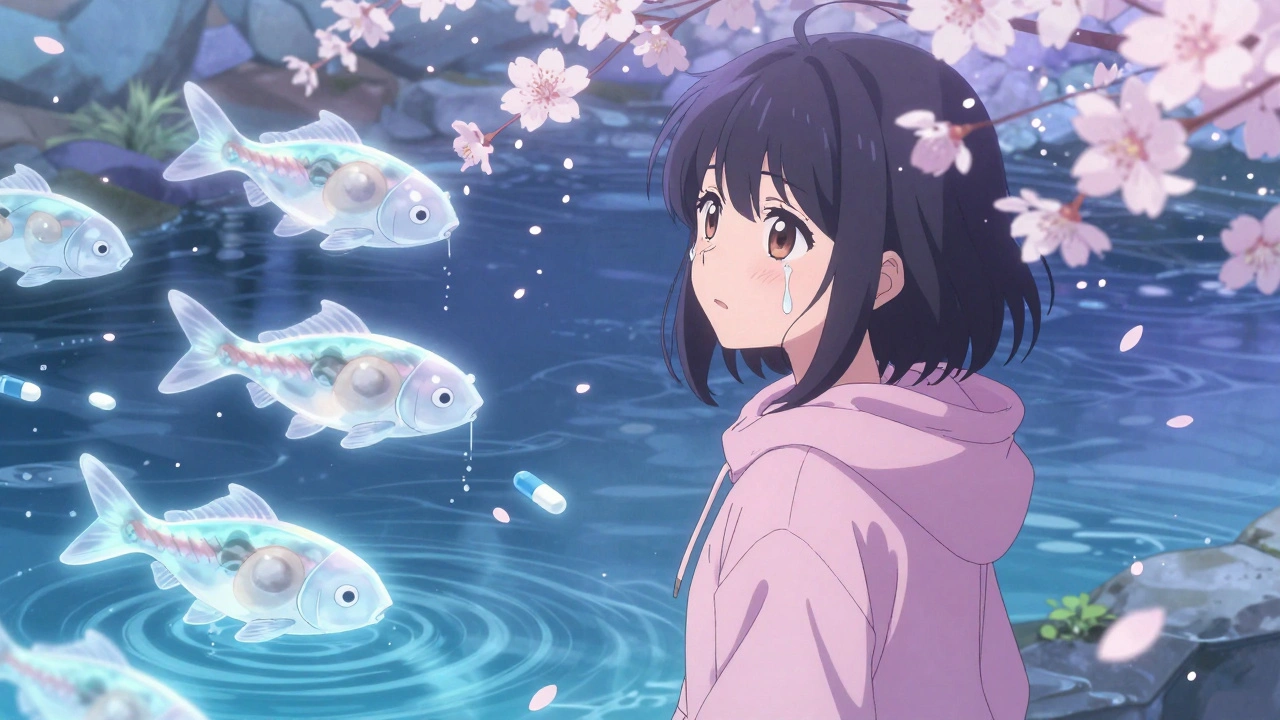
Every year, millions of Americans flush unused pills down the toilet or pour liquid medicine down the sink, thinking they’re doing the right thing. But what feels like a quick, clean solution is actually polluting our rivers, lakes, and even drinking water with powerful chemicals that nature can’t break down. The problem isn’t new-scientists have been tracking pharmaceuticals in waterways since the early 2000s-but awareness still lags behind the damage. You won’t see oily slicks or dead fish floating in plain sight, but under a microscope, the evidence is clear: fish are changing sex, antibiotics are losing effectiveness, and trace drugs are showing up in groundwater near landfills. Flushing isn’t the only culprit, but it’s one of the easiest things to stop.
Why Flushing Medications Hurts the Environment
When you flush a pill, it doesn’t vanish. It enters the sewage system, where most wastewater treatment plants aren’t designed to remove drugs. These plants were built to catch solids, kill bacteria, and remove nutrients like nitrogen and phosphorus-not to filter out tiny molecules like ibuprofen, antidepressants, or birth control hormones. Studies from the U.S. Geological Survey found pharmaceuticals in 80% of the rivers and streams tested across 30 states. Some of the most common drugs detected include acetaminophen, ibuprofen, ciprofloxacin, and estrogen from birth control pills.
These chemicals don’t just sit there. They get absorbed by algae, insects, and small fish. Then bigger fish eat them. And when people eat those fish, they’re consuming trace amounts of medications they never prescribed. In one study, male fish downstream from wastewater plants were found producing eggs-a sign of hormonal disruption from estrogen-like compounds. Other research shows antibiotics in water may be speeding up the rise of drug-resistant bacteria, a global health crisis already responsible for over 1.2 million deaths annually.
Even landfills aren’t a perfect fix. When pills end up in the trash, rainwater can wash chemicals out of the waste and into the soil, eventually reaching groundwater. One study found acetaminophen levels in landfill leachate as high as 117,000 nanograms per liter-far beyond what’s found in treated drinking water. So whether you flush it or toss it, the medicine still finds its way into ecosystems.
The FDA’s Flush List: What’s Safe and What’s Not
The FDA used to tell people to flush certain medications to prevent accidental poisoning, especially opioids. That’s why you might still see old labels saying “flush if no take-back program is available.” But the agency updated its guidance in October 2022. Now, only 15 specific drugs are on the official flush list-most of them powerful opioids like fentanyl patches, oxycodone, and morphine. These are the only medications the FDA says pose a greater risk if misused than if flushed.
For everything else? Don’t flush. The agency now recommends alternatives because the environmental harm from flushing outweighs the risk of accidental ingestion for most drugs. Even though the ecological impact of flushing these 15 drugs is considered “negligible,” experts still argue that flushing any medicine should be a last resort. If you have opioids at home and no take-back option, flushing may be the safest choice to prevent overdose-but it’s not the only one.
What You Should Do Instead: Safe Disposal Options
The best way to dispose of unused or expired medications is through a drug take-back program. These are collection sites-often at pharmacies, hospitals, or police stations-where you can drop off pills, patches, liquids, and even needles safely. The drugs are then incinerated at high temperatures, destroying the chemicals completely and preventing them from entering water or soil.
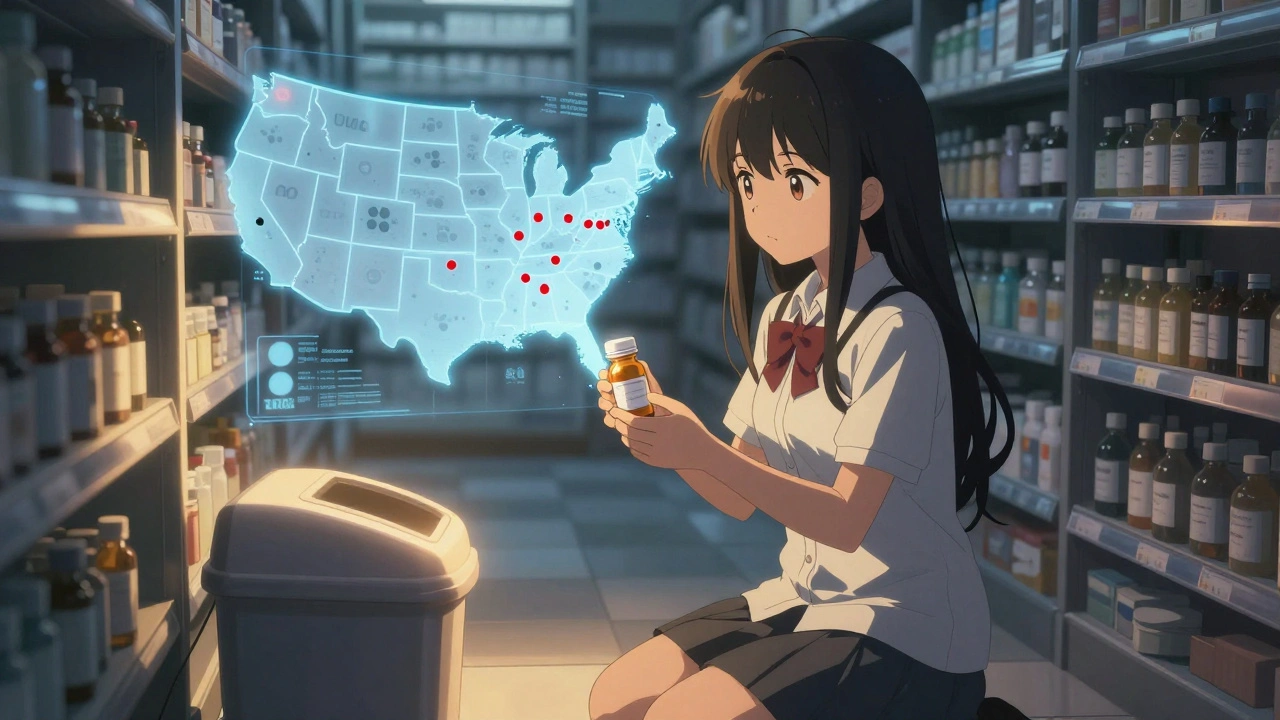
But here’s the catch: only about 15% of U.S. counties have permanent drop-off locations. The DEA runs two National Prescription Drug Take Back Days each year, but those are one-day events. If you live in a rural area, you might have to drive 20 miles or more to find a site. That’s why awareness is so low-only 30% of Americans know where to go.
If you can’t get to a take-back site, the EPA recommends this method:
- Take the pills out of their original bottles.
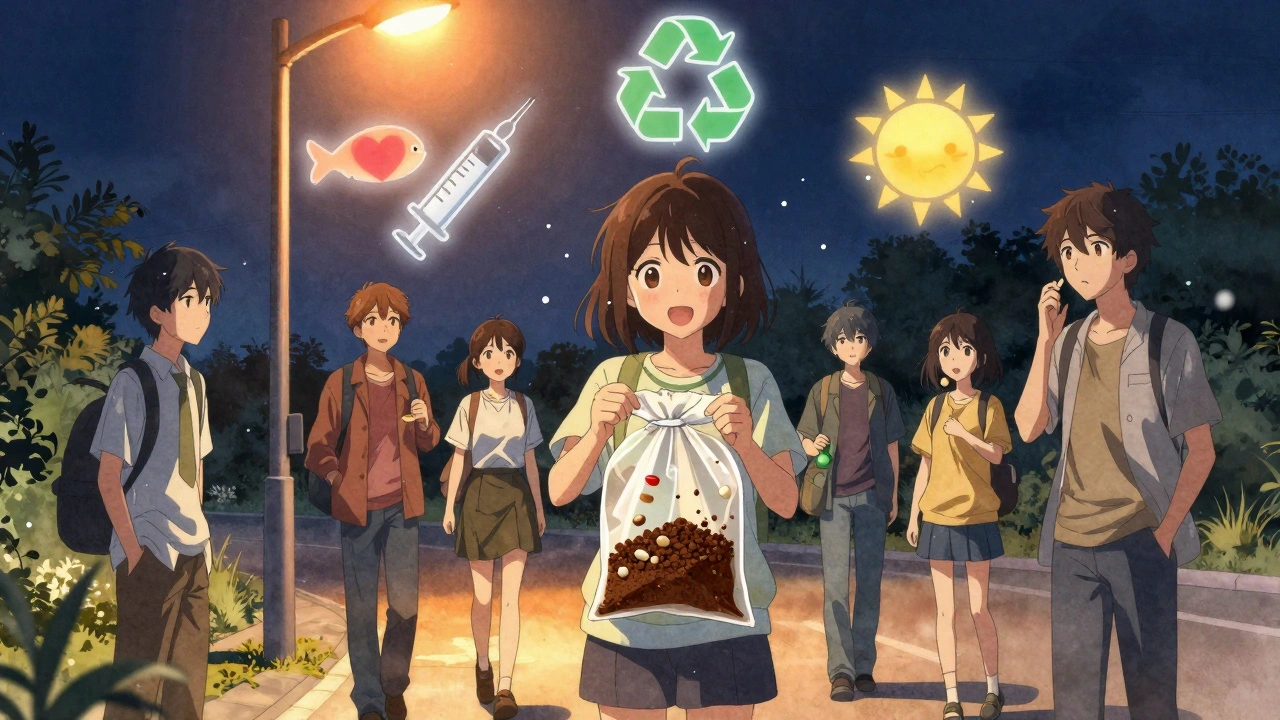
- Mix them with something unappetizing-used coffee grounds, cat litter, or dirt.
- Put the mixture in a sealed plastic bag or container.
- Throw it in the trash.
This doesn’t solve the landfill problem, but it makes it harder for kids, pets, or people searching through trash to find and misuse the drugs. It also slows down leaching into groundwater because the chemicals are bound in dense material.
Some companies sell at-home disposal kits like Drug Buster, which use chemicals to break down medications safely. But they cost around $30, require careful handling, and aren’t widely available. For most people, the coffee grounds method is simpler, cheaper, and just as effective at reducing misuse.
Why Take-Back Programs Are the Real Solution
Take-back programs don’t just prevent pollution-they also stop drug diversion. Opioid abuse has been tied to pills found in home medicine cabinets. When people know they can drop off unused meds safely, they’re more likely to clean out their cabinets. In states with strong take-back infrastructure, like California and Vermont, public participation has risen by over 40% since 2020.
Europe is ahead of the U.S. here. The European Union requires pharmaceutical companies to pay for take-back programs under Extended Producer Responsibility (EPR) laws. That means manufacturers fund collection bins, public education, and transportation. In 16 EU countries, you can return any unused medicine to a pharmacy-no questions asked. The U.S. has the Secure and Responsible Drug Disposal Act of 2010, which allows pharmacies to run take-back programs, but funding is limited. As of 2023, there were only 2,140 authorized collection sites nationwide.
California’s SB 212, which went into effect January 1, 2024, is a step forward. It now requires pharmacies to give patients written instructions on how to dispose of prescriptions. That kind of policy change-pairing education with access-is what turns awareness into action.
What’s Being Done to Fix the Problem
Scientists are working on better ways to clean wastewater. Advanced treatments like ozone, activated carbon, and membrane filtration can remove 85-95% of pharmaceuticals. But retrofitting a single municipal plant can cost between $500,000 and $2 million. Most cities can’t afford it.
Meanwhile, prevention is gaining traction. Doctors are being encouraged to prescribe smaller quantities-especially for chronic conditions like pain or anxiety-so patients don’t end up with extra pills. Pharmacists are starting to ask, “Do you need all of this?” before filling prescriptions. Some hospitals now include disposal instructions on the prescription label itself.
Research shows the most effective strategy isn’t just better disposal-it’s less waste to begin with. A German study found that if patients only took what they needed and returned the rest, environmental contamination from household drugs could drop by 60-75%. That’s not just a win for the environment. It’s a win for your wallet, too.
What You Can Do Today
You don’t need to wait for a government program or a new law to make a difference. Here’s what you can do right now:
- Check your medicine cabinet. Go through expired or unused pills, patches, and liquids. Don’t wait for a take-back day-start now.
- Find your nearest drop-off location. Visit dea.gov/takeback or call your local pharmacy. If you’re in a rural area, ask your county health department.
- Don’t flush unless it’s on the FDA list. If you’re unsure, don’t flush. Use the coffee grounds method instead.
- Ask your doctor for smaller prescriptions. If you’re on a new medication, request a 7- or 14-day supply first. You might not need a full 30-day bottle.
- Talk to others. Share what you’ve learned. A friend might not know flushing is harmful. A neighbor might not know take-back sites exist.
Every pill you keep out of the water is a small victory. It’s not about being perfect. It’s about making better choices than before.
Common Misconceptions
There’s a lot of confusion around medication disposal. Here are the most common myths-and the truth:
- Myth: “Expiration dates mean the medicine becomes dangerous.” Truth: Most pills remain safe and effective years after the printed date. The date is more about potency than safety. If it’s not expired, consider using it-or donating it if your state allows.
- Myth: “Flushing is better than throwing it in the trash.” Truth: For almost all medications, throwing it in the trash (after mixing with coffee grounds) is safer for the environment than flushing.
- Myth: “My local water treatment plant filters out all chemicals.” Truth: Standard treatment plants remove very little of what’s in medications. That’s why they’re found in drinking water supplies across the country.
- Myth: “Only opioids are dangerous to flush.” Truth: Opioids are the only class the FDA says you can flush as a last resort. Everything else should be taken to a drop-off site or disposed of in the trash.
Is it ever okay to flush medications?
Yes-but only for 15 specific medications on the FDA’s flush list, mostly powerful opioids like fentanyl patches and oxycodone tablets. These are the only drugs the FDA says pose a greater risk from misuse than from environmental contamination. For every other medication, flushing increases pollution without reducing harm. Always check the latest FDA flush list before deciding.
Can I recycle medicine bottles?
Most medicine bottles are made of HDPE (#2 plastic) or PP (#5 plastic), which many curbside programs accept. But first, remove or scratch out all personal information. Then, rinse the bottle to remove residue. Check your local recycling rules-some areas require caps to be removed, others don’t. If in doubt, throw the bottle away. It’s better to keep the plastic out of the recycling stream than risk contamination.
Do take-back programs accept needles or sharps?
Some do, but not all. Many pharmacies and hospitals only accept pills and patches. For needles, syringes, or lancets, you’ll need a specialized sharps disposal program. These often require you to place used sharps in a FDA-approved container (like a hard plastic bottle with a tight lid), seal it, and drop it at a designated location. Some pharmacies sell these containers, and some states offer free mail-back programs. Always check with your local health department or pharmacy for options.
Why don’t more pharmacies offer take-back bins?
Cost and logistics. Pharmacies have to pay for collection, transportation, and destruction of the drugs. Without federal funding or mandatory producer responsibility laws (like in the EU), most don’t have the budget. The Secure and Responsible Drug Disposal Act of 2010 allowed pharmacies to run take-back programs, but it didn’t fund them. As a result, only about 1 in 5 pharmacies nationwide have permanent drop-off bins.
Are there any apps or tools to find take-back locations?
Yes. The DEA’s website has a searchable map of authorized collection sites. You can also use the Medicine Drop app (available on iOS and Android), which pulls data from the DEA and local health departments. It shows nearby pharmacies, police stations, and hospitals that accept medications year-round-not just during take-back events.
Can I donate unused medications?
In some states, yes. Programs like Medicine Drop and PhRMA’s Medication Donation Initiative allow patients to donate unopened, unexpired medications to clinics serving low-income communities. But rules vary by state. Only certain drugs are eligible-usually prescription pills, not liquids or controlled substances. Check your state’s health department website to see if donation is allowed and how to participate.
What’s Next?
The problem won’t disappear overnight. But progress is happening. More states are passing laws that require disposal instructions on prescriptions. More pharmacies are installing drop-off bins. More people are learning that flushing isn’t the answer.
Your next step? Clean out your medicine cabinet. Find your nearest take-back site. And next time you’re prescribed a new medication, ask: “Do I really need all of this?”
Small changes add up. And when it comes to protecting water, every pill kept out of the drain matters.

Comments (9)
olive ashley
So let me get this straight-we’re supposed to trust the FDA now? After they told us for years to flush opioids, then changed their mind because someone finally noticed the fish are turning into hermaphrodites? Classic. And don’t get me started on how the same agencies that let pharmaceutical companies dump billions of pills into our water also tell us to ‘just use coffee grounds.’ Like that’s gonna stop the corporate machine. This isn’t about disposal-it’s about who’s profiting from the mess.
Ibrahim Yakubu
Listen here, America-you think you're the only ones with this problem? In Nigeria, we don't even have running water in half the neighborhoods, and you're worried about pills in the river? You flush your meds? We flush our *lives* every day. At least your water has medicine in it-mine has sewage and hope. Maybe stop complaining and fix your own damn infrastructure before lecturing the world.
Billy Schimmel
Wow. So the solution is… mix your pills with coffee grounds and toss them? That’s it? No fancy tech, no government funding, just… garbage? I mean, I guess it’s better than flushing. But also kind of sad. Like we’re all just trying to survive capitalism’s leftovers while pretending we’re saving the planet one coffee-stained pill at a time.
Shayne Smith
Just cleaned out my cabinet today-found three expired anxiety meds from 2020, a half-bottle of antibiotics I never finished, and a weird patch that looked like it belonged on a robot. Mixed everything with cat litter (RIP Mr. Whiskers, you’re a hero), sealed it up, and tossed it. Felt weirdly cathartic. Also, I asked my doctor for a 14-day trial next time. Small wins, y’all.
Kumar Shubhranshu
The FDA flush list is a joke 15 drugs out of thousands and they call it progress Meanwhile in India we have zero disposal systems and still no one is dying from trace ibuprofen in the Ganges
Mayur Panchamia
America!! You flush your pills?!! You think this is clean? You dump plastic, pills, and your guilt into rivers while your politicians drink bottled water from Switzerland! We in India-we don’t flush! We burn! We bury! We respect the earth because we’re not spoiled children with medicine cabinets full of mood stabilizers!! You need to wake up!!
Saketh Sai Rachapudi
i cant belive you people are still talking about this like its a big deal i mean sure fish are turning into girls but at least theyre not starving like in africa or something i mean come on its just a few pills who cares really
joanne humphreys
I appreciate how thorough this post is. It’s easy to feel overwhelmed by environmental issues, but breaking it down into actionable steps-like checking your cabinet or asking for smaller prescriptions-makes it feel possible. I didn’t know about the DEA’s map or the Medicine Drop app. I’m going to share this with my mom. She’s got a whole drawer of old painkillers.
Nigel ntini
Brilliantly laid out. You’ve turned a complex, often ignored issue into something human, practical, and urgent. The coffee grounds method isn’t perfect-but it’s a bridge. And the real win? Asking your doctor, “Do I need all of this?” That’s a cultural shift. That’s how change begins. Keep pushing this message. Someone out there is reading this and will finally clean out their cabinet tonight.