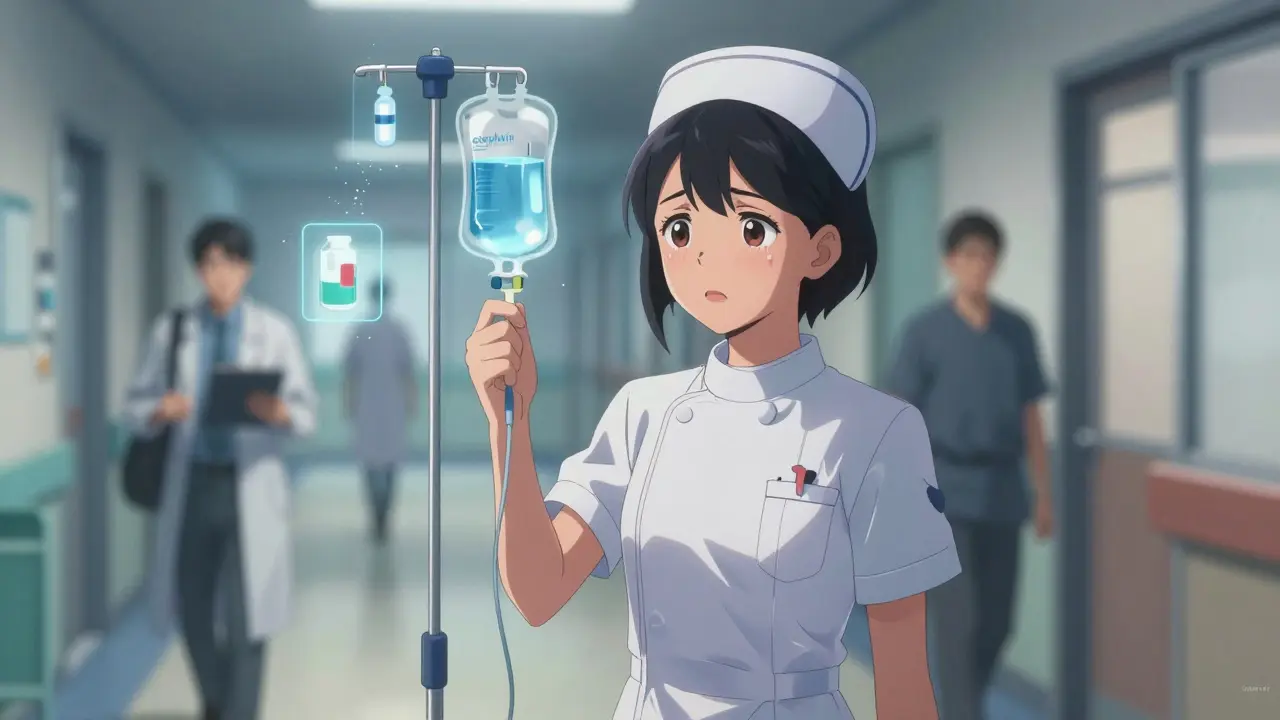
Right now, over 270 medications are in short supply across the United States - and it’s not just a minor inconvenience. For patients with cancer, chronic illnesses, or emergency conditions, these shortages can mean delayed treatments, dangerous substitutions, or even life-threatening gaps in care. As of January 2026, the problem hasn’t improved. In fact, some of the most critical drugs are still hard to find, and new shortages are popping up faster than they’re being resolved.
What’s Actually in Short Supply?
The drugs most affected aren’t obscure or niche. They’re the backbone of modern medicine. Sterile injectables - especially those given intravenously - make up the bulk of current shortages. These include:- 5% Dextrose Injection (small volume bags) - shortage since February 2022, expected to last until August 2025
- 50% Dextrose Injection - shortage since December 2021, resolution expected September 2025
- Cisplatin - a key chemotherapy drug for testicular, ovarian, and lung cancers. A 2022 FDA shutdown of an Indian manufacturing plant that supplied half the U.S. market still echoes today.
- Vancomycin - a last-resort antibiotic for serious infections. Hospitals are rationing doses, and some patients are waiting days for treatment.
- Leucovorin - used to counteract the side effects of methotrexate in cancer treatment. Without it, patients risk severe toxicity.
- Saline solutions - especially 0.9% sodium chloride. Used in nearly every hospital procedure, from IV hydration to flushing catheters.
- GLP-1 agonists (like semaglutide and liraglutide) - while not sterile injectables, demand has surged 35% since 2020, overwhelming production capacity.
- ADHD medications (methylphenidate, amphetamine salts) - shortages have worsened as prescriptions climbed, with pharmacies limiting fills to 30-day supplies.
These aren’t random glitches. They’re systemic failures tied to how these drugs are made - and who makes them.
Why Are These Drugs So Hard to Find?
Most of the active ingredients in U.S. medications come from just two countries: India and China. About 45% of active pharmaceutical ingredients (APIs) are made in India, and another 25% come from China. That’s not a backup plan - it’s the main supply line.When a single factory in India fails an FDA inspection - like the one that produced cisplatin - it doesn’t just delay production. It creates a nationwide blackout. There are no quick alternatives. These drugs aren’t like smartphones or clothing. You can’t switch brands overnight.
And the problem isn’t just foreign manufacturing. It’s the economics of generic drugs. Generic medications make up 90% of prescriptions filled in the U.S., but they only bring in 20% of total drug revenue. Manufacturers operate on profit margins of 5-8%. Compare that to brand-name drugs, which often have 30-40% margins. Why would a company invest in new equipment, hire skilled workers, or pass costly FDA inspections for a drug that barely pays for itself?
That’s why sterile injectables - which require clean rooms, complex sterilization, and strict quality control - are the first to disappear. They’re expensive to make, low-profit, and easy to cut when budgets tighten.
Who’s Getting Hurt?
It’s not just hospitals. It’s patients.One in three cancer patients reported treatment delays in 2024 because their drugs weren’t available. The average delay? Nearly 15 days. For someone with aggressive cancer, those days can mean the difference between remission and progression.
Emergency rooms are running out of saline. Nurses are reusing IV bags. Pharmacists are substituting drugs that aren’t identical - and sometimes less effective. A 2025 survey found that 67% of hospital pharmacists had seen medication errors directly linked to substitutions during shortages.
Doctors are being forced to make impossible choices. A pediatrician might give a child a lower dose of a vital antibiotic because the full dose isn’t available. A cardiologist might delay a procedure because the IV fluids needed to stabilize the patient aren’t in stock. In Ohio, a hospital had to ration cisplatin - prioritizing patients with testicular cancer, where the drug is most effective, over others with different cancers.
And it’s not just hospitals. Community pharmacies are running out of ADHD meds. Parents are calling multiple pharmacies just to fill a prescription. Some are turning to online pharmacies - risky, unregulated, and sometimes dangerous.
What’s Being Done?
The FDA says it blocks about 200 potential shortages every year by stepping in early - warning manufacturers, helping fix quality issues, or fast-tracking approvals. But the agency doesn’t have the power to force companies to produce more. They can’t mandate production. They can’t require transparency. They can only ask.In January 2025, the FDA launched a new public reporting portal. Healthcare providers can now submit reports on shortages not yet listed in official databases. In just three months, they received over 1,200 reports - and acted on 87% of them. That’s progress. But it’s reactive, not preventative.
Some states are stepping up. New York is building an online database that shows which pharmacies have which shortage drugs in stock. Hawaii’s Medicaid program now allows imported drugs approved in other countries - if they meet safety standards - to be used during shortages. These are smart, practical fixes.
The American Society of Health-System Pharmacists (ASHP) recommends hospitals keep a 30-day buffer stock of critical drugs. But only 28% of hospitals do it - because it’s expensive. And most don’t have the space or budget.
What Can You Do?
If you’re a patient:- Ask your doctor or pharmacist: “Is this drug currently in shortage?” If it is, ask about alternatives.
- Don’t wait until your prescription runs out. Call your pharmacy a week before refill date.
- Check the ASHP Drug Shortages Database - it’s updated daily and lists expected resolution dates.
- If you’re on a life-saving drug like cisplatin or vancomycin, ask if your provider has a backup plan - and document it.
If you’re a caregiver:
- Keep a written list of all medications your loved one takes - including dosage and frequency.
- Know the generic names, not just brand names. A drug might be listed as “cisplatin” but sold under multiple brand names.
- Stay in contact with your pharmacy. They’re often the first to know when stock arrives.
For healthcare professionals:
- Use the FDA’s new reporting tool - even if you think it’s already listed. Your report might trigger faster action.
- Work with your pharmacy to establish a substitution protocol. Know which alternatives are safe and effective.
- Advocate for strategic stockpiling. Even a 14-day buffer can prevent a crisis.
What’s Next?
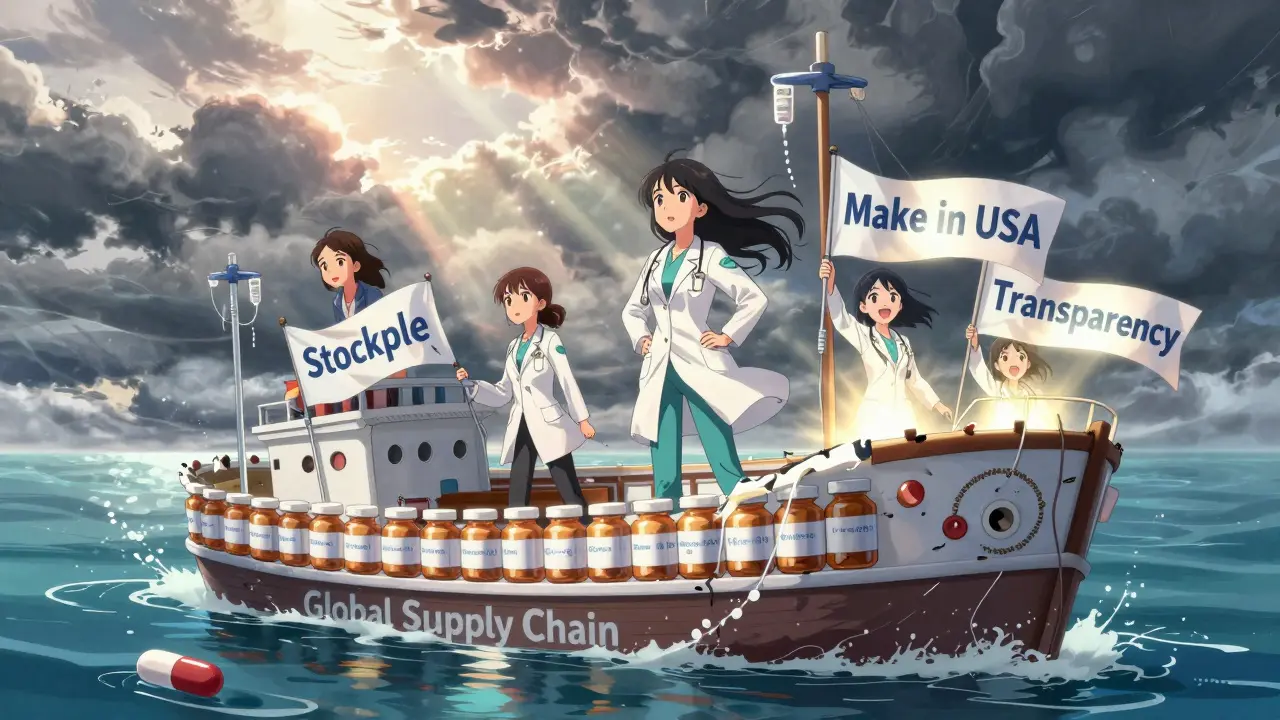
Without major policy changes, the number of drug shortages will stay above 250 through 2027. If proposed tariffs on Chinese and Indian pharmaceuticals go through - up to 200% on some imports - that number could spike to 350 or more.The fix isn’t simple. It requires:
- Financial incentives for U.S.-based API manufacturing
- Mandatory strategic stockpiles for critical drugs
- A national early warning system that connects manufacturers, distributors, and hospitals
Right now, we’re treating symptoms, not the disease. We’re patching holes in a sinking ship instead of fixing the hull. But change is possible - if enough people demand it.
What are the most common drugs in short supply right now?
As of early 2026, the most common shortages include sterile injectables like 5% and 50% Dextrose, saline solutions, cisplatin, vancomycin, leucovorin, and ADHD medications like methylphenidate. GLP-1 weight loss drugs are also in high demand and short supply due to surging prescriptions.
Why are generic drugs more likely to be in shortage than brand-name drugs?
Generic drugs make up 90% of prescriptions but only 20% of drug revenue. Manufacturers make only 5-8% profit on them, compared to 30-40% for brand-name drugs. This leaves little room to invest in quality control, equipment upgrades, or backup production lines - so when a factory shuts down, there’s no backup.
Can pharmacists substitute a different drug if mine is out of stock?
In 47 states, pharmacists can substitute a therapeutically equivalent generic drug during a shortage. But only 19 states allow substitutions without a doctor’s approval. Always ask your pharmacist if the substitute is safe for your condition - especially for drugs like chemotherapy, antibiotics, or seizure medications.
How long do drug shortages usually last?
Some shortages resolve in weeks; others last years. The average resolution time improved by 15% in 2025 compared to 2023, thanks to better FDA coordination. But many shortages from 2022 and 2023 are still active. Check the ASHP Drug Shortages Database for real-time updates and expected resolution dates.
Is it safe to use a drug from another country if mine is unavailable?
In some cases, yes. Hawaii’s Medicaid program now permits FDA-approved drugs from other countries during shortages. But importing drugs privately is risky. Many online sellers sell counterfeit or contaminated products. Only use alternatives approved by your doctor or a regulated public health program.
Are drug shortages getting worse?
They’re not improving. While the number dropped slightly from 323 in early 2024 to 270 in early 2026, the underlying causes - global supply chain dependence, low generic drug profits, and weak regulation - haven’t changed. Without structural reforms, shortages will remain common, and new ones will keep emerging, especially for high-demand drugs like GLP-1s and ADHD meds.

Comments (12)
Darren McGuff
Just got off a 12-hour shift at the ER. We had to use half-doses of vancomycin on a septic patient because the full vials were gone. Her family didn’t know what was happening. We didn’t have the heart to tell them. This isn’t a policy issue-it’s a human crisis. And no, I don’t have a solution. I just know we’re running on fumes.
And yes, I cried in the supply closet after. Don’t judge me.
Meghan Hammack
If you’re a parent of a kid on ADHD meds, you know the panic. I’ve called 12 pharmacies in one day. One had a single bottle. I had to drive 45 minutes to get it. My son missed school because we couldn’t get his dose. This isn’t ‘inconvenient’-it’s terrifying. And no one in Washington is listening.
But we’re not giving up. We’re organizing. We’re calling reps. We’re sharing info. You’re not alone. Let’s fight this together.
Jeffrey Hu
Look, the real issue isn’t India or China-it’s the FDA’s idiotic pricing regulations. Generic drug manufacturers aren’t lazy. They’re rational. Why spend $50 million on a sterile line for a drug that nets you $0.12 per vial when you can make $500 per pill selling some overhyped GLP-1? The market is rigged. The solution? Let generics compete on price without artificial caps. Let the free market decide. Stop treating pharmaceuticals like public utilities.
Also, ‘strategic stockpiles’? That’s just taxpayer-funded waste. Hospitals should buy what they need. Period.
Lindsey Wellmann
OMG I just found out my mom’s cisplatin is on shortage and they’re trying to give her some ‘alternative’ that’s not even the same thing??? I’m literally screaming into my pillow right now. This is a nightmare. Who approved this?? I’ve been checking ASHP every 2 hours. I’ve emailed my senator. I’ve posted on 5 Facebook groups. I’m not stopping until she gets her damn meds. 🥺💔 #DrugShortageCrisis #CancerWarrior
tali murah
Oh, so now we’re pretending this is a ‘systemic failure’? Newsflash: it’s a direct result of 40 years of outsourcing everything to the lowest bidder while pretending we still have a manufacturing base. We let China and India own our medicine supply chain because it was ‘cheaper.’ Now we’re shocked when the lights go out?
Stop acting like this is a tragedy. It’s the inevitable outcome of decades of corporate greed and political cowardice. The only surprise is that it took this long.
Diana Stoyanova
I’ve been thinking about this nonstop since I read the post. It’s not just about drugs-it’s about how we value life. We’ll spend billions on a new smartphone, but when it comes to a vial of saline that keeps a child alive? We shrug. We say ‘it’s just a generic.’
But here’s the truth: every time we treat a life-saving drug like a commodity instead of a right, we’re saying some lives are cheaper than others. The cisplatin shortage isn’t about supply chains-it’s about who we’ve decided is worth saving.
I used to think change was impossible. Now I think the only thing more dangerous than this shortage… is our silence.
Maggie Noe
My dad’s on vancomycin for a stubborn infection. We got lucky-his pharmacy got a shipment yesterday. But the pharmacist said it’s the last one for the month.
I’m not mad. I’m just… tired. Tired of feeling like I’m begging for medicine. Tired of hearing ‘we’re doing our best.’ Tired of knowing this isn’t rare-it’s routine.
It’s not about politics. It’s about dignity. No one should have to choose between their health and their peace of mind.
Gregory Clayton
Let’s be real. We let China and India run our medicine supply. We got soft. We stopped making stuff here. Now we cry when we can’t get our drugs? Grow a spine. Bring manufacturing back. Tariff the hell out of foreign APIs. Fund U.S. sterile labs. Stop begging for mercy from foreign factories that don’t even follow our safety rules.
This isn’t a shortage. It’s a surrender.
Alicia Hasö
To every parent, patient, nurse, and pharmacist reading this: you are not alone. Your voice matters. Your story is power.
Don’t wait for someone else to fix this. Call your representative. Write to the FDA. Share your experience on social media. Join a patient advocacy group. The system doesn’t change because of reports-it changes because of people who refuse to be silent.
And if you’re reading this and you’re not sure where to start? Start here: go to ASHP.org. Bookmark it. Check it weekly. Share it with someone who needs it.
We’ve been told this is too complex. Too political. Too broken.
But I’ve seen what happens when communities rise up. And I believe we can fix this-together.
Matthew Maxwell
Let me be clear: this is the direct consequence of decades of moral decay in American healthcare. We’ve allowed profit to replace principle. We’ve normalized the commodification of human survival. And now we’re surprised when people die because a vial of saline isn’t available?
There are no victims here-only accomplices. The politicians who took corporate donations. The CEOs who cut corners. The consumers who chose ‘cheap’ over ‘safe.’
This isn’t an accident. It’s a moral failure. And until we stop pretending otherwise, nothing will change.
Catherine Scutt
My sister’s on leucovorin. She’s been waiting 18 days. The hospital says they’re ‘prioritizing.’ Translation: they’re letting her die slowly so someone else gets to live.
And you know what? I’m not even angry anymore. Just numb. Because this isn’t a glitch. It’s the system working exactly as designed.
Darren McGuff
Just read Catherine’s comment. That’s my sister too. 18 days. Same hospital. Same story. I’ve been calling every pharmacy in three counties. One finally had a vial. We got it yesterday. She’s stable now.
But I won’t forget. And I won’t stop talking. Not until this stops happening to someone else.