
Antihistamine Safety Checker for Seniors
Select a medication commonly used by seniors to see its safety profile regarding confusion, falls, and cognitive decline.
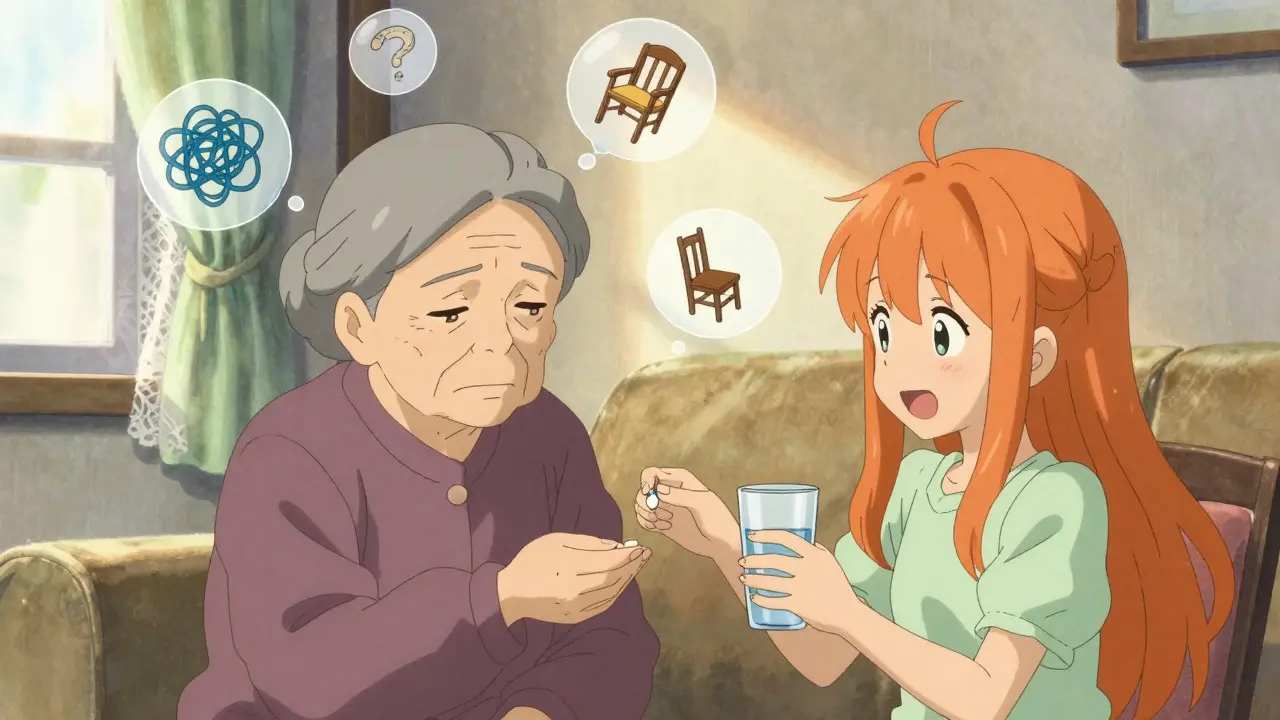
Imagine your 78-year-old mother suddenly packing her bags to "go home" while sitting in her own living room. She isn't having a stroke. She isn't experiencing early-onset dementia. She just took an over-the-counter sleep aid or allergy pill-likely diphenhydramine (Benadryl)-to help her rest. This scenario plays out in clinics and homes across the country more often than you might think. For older adults, common medications can trigger acute confusion, dangerous falls, and long-term cognitive decline.
The problem isn't allergies; it's the medication used to treat them. Many seniors rely on first-generation antihistamines, which are medications that block histamine receptors to relieve allergic symptoms but carry significant risks for older populations due to their ability to cross the blood-brain barrier. These drugs were designed decades ago without considering how aging bodies process chemicals. Today, we know better, yet these medications remain widely available and frequently misused by those over 65.
The Blood-Brain Barrier Breakdown
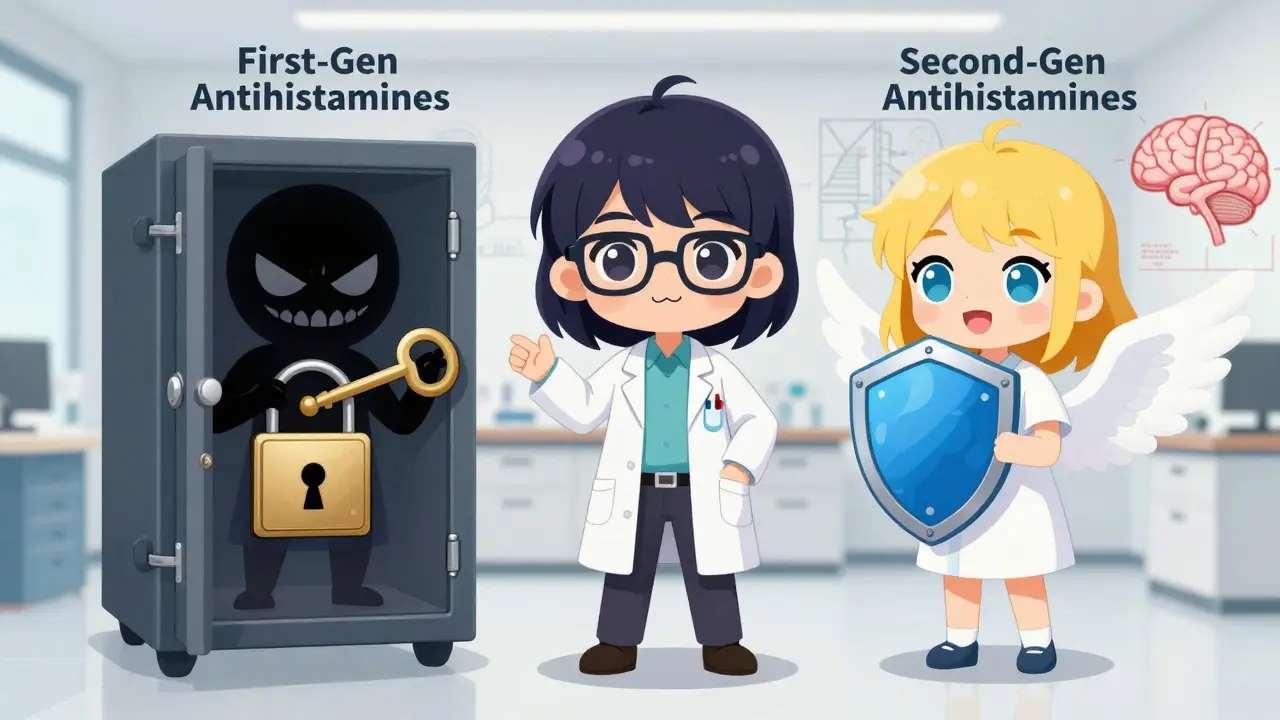
To understand why these drugs affect seniors so severely, you have to look at chemistry. First-generation antihistamines like diphenhydramine (Benadryl), doxylamine (Unisom), and chlorpheniramine are lipophilic. That means they love fat. Because the brain is largely composed of fatty tissue, these molecules easily slip through the blood-brain barrier-the protective shield that keeps harmful substances out of your central nervous system.
Once inside, they don't just block histamine. They also block acetylcholine, a crucial neurotransmitter responsible for memory, attention, and muscle control. As we age, our bodies naturally produce less acetylcholine. When you add a drug that blocks what little remains, the result is a "double whammy" on cognitive function. Dr. Shelly Gray from the University of Washington School of Pharmacy explains that this blockade delivers severe impacts on older people's mental clarity.
In contrast, second-generation antihistamines such as cetirizine (Zyrtec), loratadine (Claritin), and fexofenadine (Allegra) are engineered with polar molecules. These structures repel the fatty layers of the blood-brain barrier, keeping the drug's effects mostly outside the brain. This structural difference is why one generation causes drowsiness and confusion while the other allows you to stay alert.
Falls, Fractures, and the Hidden Dangers
Confusion is scary, but physical injury is deadly. A 2018 systematic review published in PubMed analyzed data from five observational studies involving elderly patients. The findings were stark: using first-generation antihistamines increased the risk of injurious falls or fractures by 103%. The odds ratio was 2.03, meaning users were twice as likely to suffer a fall compared to non-users.
Why does this happen? It comes down to psychomotor impairment. These drugs cause sedation, dizziness, and blurred vision. For an older adult with potentially slower reflexes or balance issues, taking a step toward the bathroom at night becomes a high-stakes maneuver. One fall can lead to a hip fracture, which often requires surgery and prolonged rehabilitation. In many cases, recovery never fully returns to pre-fall levels.
Dr. William Elliott, writing for Today's Geriatric Medicine, warned that even at the lowest recommended doses, these side effects persist. He noted that next-day sedation-a lingering grogginess the morning after taking a nighttime dose-greatly increases fall risk during daytime activities. The impact of a single fall in an older adult can have tremendous negative consequences, including loss of independence.
The Anticholinergic Burden and Cognitive Decline
Beyond immediate falls, there is a quieter, longer-term threat: cognitive decline. First-generation antihistamines are potent anticholinergics. They act as muscarinic receptor antagonists, essentially turning off the signals your brain uses to form memories and maintain focus. The classic mnemonic for anticholinergic toxicity is "blind as a bat, dry as a bone, red as a beet, mad as a hatter, and hot as a hare." While this describes extreme overdose, mild versions of these symptoms occur daily in seniors taking standard doses.
A landmark 2015 study published in JAMA Internal Medicine tracked participants for an average of seven years. Among 800 volunteers who developed dementia, those who had taken anticholinergic medications equivalent to three years' worth of use showed a 54% higher risk compared to those who took them for only three months. This suggests a cumulative effect. Every day you block acetylcholine, you may be eroding your cognitive reserve.
Caregivers often report "sundowning" behavior-increased agitation and confusion in the evening-in elderly relatives taking diphenhydramine for sleep. When the medication is stopped, these behaviors often resolve within 72 hours. This reversibility proves the link between the drug and the symptom, yet many families continue using these aids out of habit or lack of awareness.
| Feature | First-Generation (e.g., Benadryl) | Second-Generation (e.g., Claritin, Zyrtec) |
|---|---|---|
| Blood-Brain Barrier Penetration | High (Lipophilic) | Low (Polar molecules) |
| Anticholinergic Effects | Strong (Blocks acetylcholine) | Minimal to None |
| Fall Risk Increase | 103% higher risk (OR 2.03) | Negligible association |
| Dementia Risk Link | 54% higher risk with long-term use | No significant link established |
| Sedation Level | High (Drowsiness, somnolence) | Low (Non-drowsy formulations) |
| Beers Criteria Status | Potentially Inappropriate Medication | Preferred Alternative |
Why Are Seniors Still Taking Them?
If the risks are this clear, why do 34.7% of adults aged 65+ still regularly use first-generation antihistamines? According to a 2023 study in the Journal of the American Geriatrics Society, nearly 18% use them daily. The reasons are complex. Diphenhydramine remains one of the top 20 over-the-counter medications purchased by Americans over 65, with annual sales exceeding $350 million.
Availability is a major factor. These drugs are hidden in plain sight. They are not just sold as allergy pills. You find them in "PM" versions of pain relievers (like Tylenol PM), cough syrups, and standalone sleep aids. Many seniors buy these products for insomnia, unaware that the active ingredient causing sleepiness is the same one causing confusion. The FDA has not mandated specific age-based warnings strong enough to deter purchase, though the Consumer Healthcare Products Association voluntarily added stronger labels in 2020.
There is also a perception of efficacy. Some patients feel first-generation drugs work "better" for itching or sleep because the sedation is profound. However, this perceived benefit comes at a steep cost. The American Academy of Allergy, Asthma & Immunology (AAAI) notes that while first-gen drugs may seem effective, their side effects-such as urinary retention, constipation, and dry mouth-often outweigh the benefits for older adults.

Safer Alternatives and Management Strategies
You don't need to suffer through allergies or insomnia to avoid these risks. Safer alternatives exist and are highly effective. For allergies, second-generation antihistamines are the gold standard. Loratadine (Claritin) at 10 mg daily or cetirizine (Zyrtec) at 5 mg daily provide relief with minimal side effects. Fexofenadine (Allegra) at 60 mg twice daily is another excellent option that rarely causes drowsiness.
For sleep issues, behavioral changes should come before medication. GoodRx recommends non-pharmacological approaches first: saline nasal sprays for congestion, HEPA air filters to reduce allergens, and allergen-proof bedding. If sleep aids are necessary, discuss options with a doctor that do not contain anticholinergic properties. Melatonin or cognitive behavioral therapy for insomnia (CBT-I) are safer starting points than doxylamine.
Medication reviews are critical. Healthcare providers should conduct comprehensive checks at least quarterly for elderly patients. Look specifically for over-the-counter products containing diphenhydramine or doxylamine. Check the "Drug Facts" label on every bottle. If you see these names, put the bottle back. The Beers Criteria, updated in 2019 by the American Geriatrics Society, explicitly lists first-generation antihistamines as "potentially inappropriate medications" for older adults.
Signs Your Loved One Is Affected
Recognizing the signs early can prevent hospitalization. Watch for sudden changes in mental status that don't align with a known diagnosis like Alzheimer's. Acute confusion, disorientation, or hallucinations after taking a new OTC product are red flags. Physical signs include dry mouth, constipation, urinary retention, and dilated pupils. If your loved one seems unusually drowsy during the day or unsteady on their feet, suspect the medication.
Healthcare professionals in geriatric practices report seeing at least two cases per month of "anticholinergic delirium" traced back to sleep aids. The good news is that stopping the medication usually resolves the confusion within days. Don't assume confusion is permanent or part of normal aging. It might just be the Benadryl.
Is Benadryl safe for elderly patients to take occasionally?
Even occasional use carries risk. The 2018 meta-analysis showed a doubled risk of falls even with short-term exposure. Because individual sensitivity varies, some seniors experience severe confusion after a single dose. It is generally recommended to avoid first-generation antihistamines entirely in favor of second-generation alternatives like loratadine or fexofenadine.
What are the best antihistamines for seniors with allergies?
Second-generation antihistamines are the preferred choice. Loratadine (Claritin), cetirizine (Zyrtec), and fexofenadine (Allegra) do not readily cross the blood-brain barrier. They provide effective allergy relief with significantly lower risks of sedation, confusion, and falls compared to first-generation options.
Can antihistamines cause dementia in older adults?
Long-term use of anticholinergic medications, including first-generation antihistamines, is associated with a higher risk of dementia. A 2015 JAMA Internal Medicine study found a 54% increased risk in those taking equivalent doses for three years or more. While correlation doesn't always equal causation, the mechanism of blocking acetylcholine supports a plausible link to cognitive decline.
How do I check if my medication contains risky antihistamines?
Read the "Active Ingredients" section on the Drug Facts label. Look for diphenhydramine, doxylamine, chlorpheniramine, or hydroxyzine. These are first-generation antihistamines. Avoid products labeled "PM" or "Nighttime" unless confirmed by a pharmacist to be free of these ingredients.
What should I do if my elderly parent shows confusion after taking an antihistamine?
Stop the medication immediately and monitor their condition. Contact their healthcare provider to report the reaction. In most cases, confusion and delirium resolve within 72 hours of discontinuing the drug. Ensure they are hydrated and supervised to prevent falls during the recovery period.