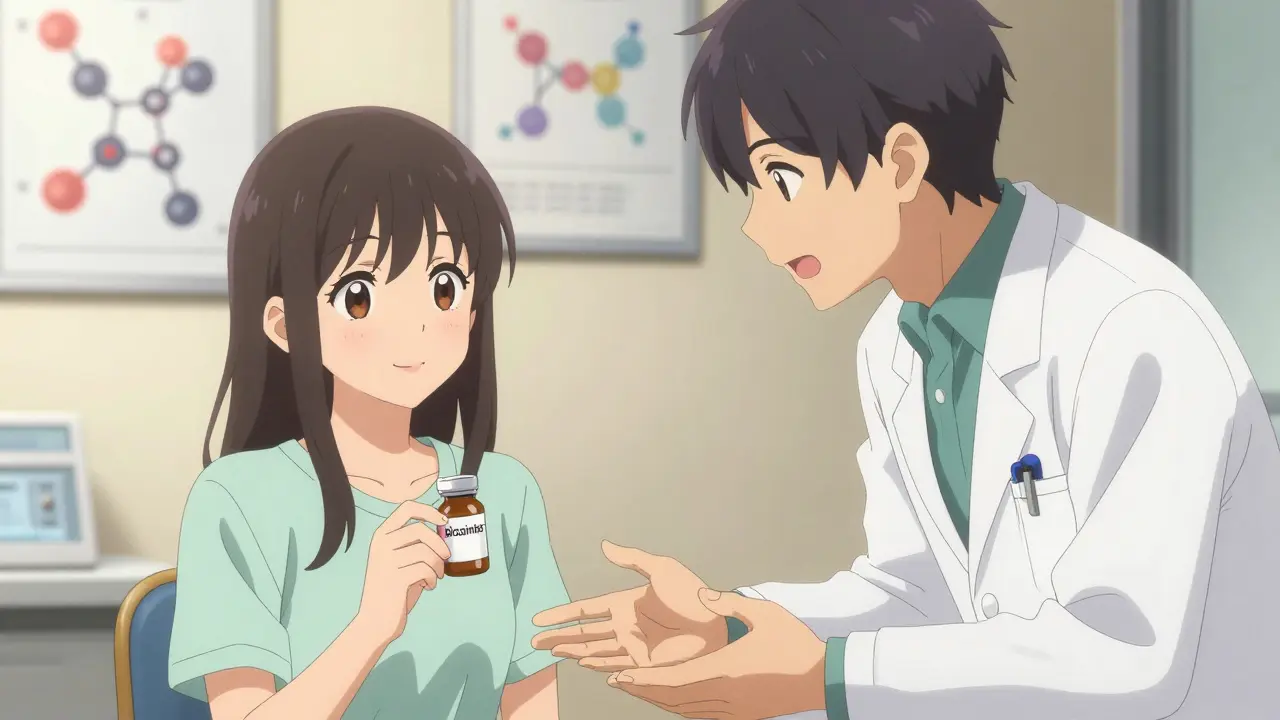
When your doctor suggests switching from Humira to a biosimilar, it’s natural to feel uneasy. You’ve been stable on your medication for years. It works. You know how your body reacts to it. Now you’re being asked to try something new - something with a complicated name, and rumors that it might not be as safe or effective. You’re not alone. Biosimilars are saving the healthcare system billions, but most patients still don’t trust them. And the reason isn’t about money - it’s about fear.
What Exactly Is a Biosimilar?
A biosimilar isn’t a generic. That’s the first thing you need to understand. Generics are exact chemical copies of brand-name pills - like taking ibuprofen instead of Advil. They’re made in labs using simple formulas. Biosimilars are different. They’re made from living cells - yeast, bacteria, or animal cells - and are designed to be nearly identical to complex biologic drugs like Enbrel, Remicade, or Rituxan. These biologics treat serious conditions: rheumatoid arthritis, Crohn’s disease, cancer, and psoriasis.
The FDA requires biosimilars to go through more than 100 tests before approval. They’re checked at the molecular level, tested in animals, and studied in clinical trials with hundreds of patients. The goal? To prove there are no clinically meaningful differences in safety, purity, or how well they work. That’s not just marketing talk - it’s science. Since 2015, the FDA has approved 74 biosimilars. None have been pulled for safety issues.
Think of it like this: two different brands of insulin aren’t identical in every tiny detail, but they both lower blood sugar the same way. That’s what biosimilars are - different manufacturing processes, same outcome.
Why Are Patients So Hesitant?
Only 31% of patients with chronic illnesses even know what biosimilars are, according to the Evernorth Research Institute. Meanwhile, 79% worry they won’t work as well. Sixty-three percent fear new or worse side effects. And it’s not irrational. Patients have been burned before.
One Reddit user, ChronicPainPatient87, shared how their doctor switched them to a biosimilar for Humira without warning. They had a flare-up. They blamed the switch. They’re terrified to try anything new again. That story isn’t rare. When patients aren’t told what’s happening - when they feel like a lab experiment - trust vanishes.
Even worse, many patients don’t save money. Despite biosimilars costing 35% less for insurers, out-of-pocket costs often stay the same. A 2025 study found no drop in patient expenses after biosimilars entered the market for infliximab or pegfilgrastim. If you’re paying $200 a month and your copay doesn’t change, why switch? You’re not getting the benefit - but you’re still taking the risk.
Biosimilars vs Generics: The Big Difference
It’s easy to assume biosimilars are just generics for fancy drugs. They’re not. Generics are chemically identical. Biosimilars are highly similar - but not identical - because they come from living systems. A single change in temperature during production can alter the protein structure slightly. That’s why biosimilars take 8-10 years and $100-250 million to develop. Generics? Three years and $2-3 million.
That complexity scares people. But here’s the truth: those tiny differences don’t matter in real life. The FDA doesn’t approve a biosimilar unless it works just as well and is just as safe. Real-world data from over 1.2 million patients shows no increase in adverse events compared to the original biologics. In fact, some studies show fewer immune reactions with biosimilars because manufacturing has improved since the original drug was first made.

Why Don’t More Doctors Recommend Them?
Doctors aren’t immune to fear either. A 2025 survey found only 68-88% of healthcare providers fully understood biosimilar safety. Many haven’t seen them used in their own practice. Some worry about liability if something goes wrong. Others are stuck in reimbursement systems that still pay more for the original brand.
Pharmacy benefit managers (PBMs) like CVS, OptumRx, and ESI have started pushing biosimilars by removing the original drugs from their formularies. That’s good for costs - it dropped the median cost of biologics by 2.3% in just four months. But it also caused patient satisfaction to drop 15%. Why? Because patients felt forced. They weren’t consulted. They weren’t educated.
Switching without consent breeds distrust. But switching with clarity? That builds confidence.
How to Build Trust - One Conversation at a Time
There’s a simple fix: talk. Not just to patients, but with them.
Start by saying: “This isn’t a cheaper version. It’s a different way to make the same medicine. We’ve tested it. It works the same. Thousands of people are using it safely.”
Use visuals. Show a side-by-side comparison of molecular structures - not to overwhelm, but to show they’re nearly identical. Share data: “In 10 studies with over 10,000 patients, biosimilars had the same response rate as the original.”
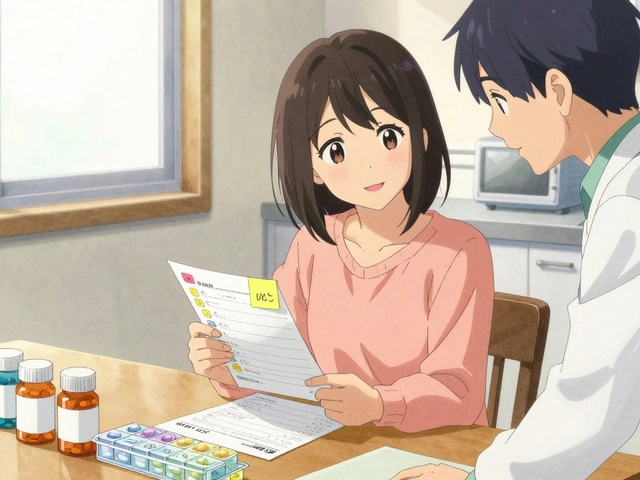
Offer to monitor you. Ask if you’re open to checking your biomarkers - like drug levels or anti-drug antibodies - after the switch. That’s not a test of suspicion. It’s a way to prove it’s working. Real-time data beats rumors every time.
And never switch without consent. If your doctor wants to change your medication, they should say: “I’d like to try a biosimilar because it’s just as effective and could help the system save money. But this is your choice. I’ll answer any questions you have.” That simple shift - from directive to collaborative - changes everything.

What’s Changing Now - And What’s Coming
The FDA’s 2024 draft guidance is a game-changer. It says developers don’t always need to run full clinical trials if they can prove similarity through advanced lab tests. That could cut development time and cost. More biosimilars will hit the market. By 2030, nearly 120 biologic drugs will lose patent protection - worth $232 billion in sales.
Experts predict biosimilar adoption could hit 50% by 2030 - if we get the education right. The IQVIA Institute says $300 billion in savings is possible by 2030 - but only if patients and doctors feel safe using them.
Some manufacturers are still delaying biosimilars with legal tactics. But the tide is turning. More insurers are requiring biosimilars. More doctors are learning. And more patients - once they understand - are choosing them.
What You Can Do Today
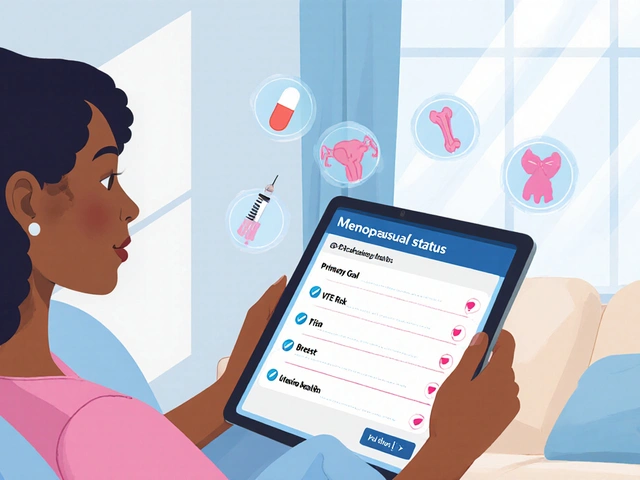
- Ask your doctor: “Is there a biosimilar for my medication?”
- Ask: “Will my out-of-pocket cost go down?”
- Ask: “Can we monitor how I respond after the switch?”
- Ask: “Can you explain how it’s different from the original - and why it’s safe?”
- If you’re switching: Track your symptoms. Keep a simple log. If you feel worse, tell your doctor - but don’t assume it’s the biosimilar. It might be stress, diet, or something else.
Biosimilars aren’t magic. They’re science. And science, when explained clearly, can ease fear.
You deserve safe, affordable care. You also deserve to understand your treatment. Don’t let silence keep you from the truth.
Are biosimilars as safe as the original biologic drugs?
Yes. Every biosimilar approved by the FDA must prove it has no clinically meaningful differences in safety, purity, or effectiveness compared to the original biologic. That means the risk of side effects, how well it works, and how your body responds are the same. Over 1.2 million patients have used biosimilars in real-world settings, and studies show no increase in adverse events compared to the reference products.
Why don’t biosimilars cost me less even though they’re cheaper for insurers?
Because insurance companies and pharmacy benefit managers (PBMs) often don’t pass savings directly to patients. Even when a biosimilar costs 35% less for the system, your copay may stay the same. This happens when PBMs keep rebates from drugmakers instead of lowering your out-of-pocket cost. You need to ask your pharmacy or insurer: “Will my monthly payment go down if I switch?”
Can I switch back if I have a bad reaction?
Absolutely. Switching to a biosimilar doesn’t lock you in. If you experience new or worsening symptoms, your doctor can switch you back to the original biologic. But don’t assume the biosimilar caused it - many factors can trigger a flare-up, including stress, infection, or changes in diet. Work with your provider to track your response using lab tests like drug levels and anti-drug antibodies before making a decision.
Are biosimilars approved by the FDA the same as those in other countries?
Yes. The FDA’s standards are among the strictest in the world. A biosimilar approved in the U.S. has gone through the same rigorous testing as those approved in the EU or Canada. The only difference is the brand name and manufacturer. The active ingredient and how it works in your body are identical.
Why are there so few biosimilars available if they save so much money?
Because developing a biosimilar is expensive and legally complex. It costs 50-100 times more than making a generic. Some drugmakers use legal tactics to delay competition, like filing lawsuits or paying biosimilar makers to wait. Also, only 21% of patients know what biosimilars are - so demand is low. But that’s changing. With over 100 biologics set to lose patent protection by 2034, more biosimilars are on the way.
Final Thought: Trust Isn’t Built in Brochures - It’s Built in Conversations
Biologics changed medicine. They saved lives. Biosimilars can do the same - for more people, at lower cost. But trust doesn’t come from a pamphlet or a website. It comes from a doctor who listens. From a pharmacist who explains. From a system that lets you ask questions without judgment.
You’re not a number. You’re not a cost center. You’re someone managing a chronic condition - and you deserve to understand your treatment. Ask. Learn. Speak up. Your health is worth it.

Comments (12)
Joanna Ebizie
Wow. Just wow. I switched to a biosimilar last year after my doctor pushed it, and I ended up in the ER with a full flare-up. Now I’m on Humira again and actually feel human. They told me it was 'the same'-but my body knew better. Don’t trust the hype. If it ain’t broke, don’t fix it.
Elizabeth Bauman
Let me get this straight-some foreign lab cooked up a copy of my life-saving drug and now they want me to swallow it? The FDA? Please. They’re on Big Pharma’s payroll. I’ve seen the data-biosimilars are just a Trojan horse for global healthcare control. Who’s funding these studies? China? The EU? I’m not a guinea pig for some corporate agenda.
Dylan Smith
I’ve been on a biosimilar for 2 years now and honestly I haven’t noticed any difference. My joint pain is under control, my blood work is clean, and I’ve saved maybe $50 a month even if my copay didn’t drop. I think the fear is mostly from not knowing. Doctors don’t explain it well. But the science checks out. I’m not scared anymore.
Mike Smith
Thank you for writing this with such clarity and compassion. This is exactly the kind of patient-centered communication that is too often missing in modern healthcare. The data is unequivocal: biosimilars are safe, effective, and life-changing for millions. What’s missing isn’t science-it’s dialogue. When clinicians take the time to sit down, listen, and educate, patients don’t just comply-they choose. That’s the real win.
Ron Williams
Been on a biosimilar for my Crohn’s for three years. My mom’s from India and she’s always said, 'If it works, it works.' I didn’t even know what a biosimilar was until my doctor mentioned it. Now I tell my buddies on Reddit to ask their docs. It’s not magic, it’s medicine. And honestly? I’d rather have a cheaper version that works than pay $200 a month for the same thing.
Dave Alponvyr
So you’re telling me I’m supposed to trust a drug made by a company I’ve never heard of… just because some guy in a lab coat says it’s ‘similar’? Cool. I’ll stick with the brand that’s been saving my life since 2012. Thanks, but no thanks.
Cassandra Collins
Did you know the FDA lets biosimilars skip animal testing now? They just run some computer sims and call it good. And the people who make them? They’re all owned by the same Big Pharma companies that make the originals. It’s a scam. They’re just repackaging the same thing and calling it new. I’m not taking it. I’ve got my own lab results. I know what’s happening.
Kitty Price
I switched last year and it was fine 🤷♀️ I even got a free month of therapy from my insurance for switching. No flare-ups, no weird side effects. My doctor gave me a chart and we tracked everything. It’s not scary if you’re informed. Also, my cat approves 😺
Aditya Kumar
Why do I care? I’m from India. We don’t even have access to the original. Biosimilars are all we’ve got. If it works, it works. No drama.
Colleen Bigelow
Let me get this straight-some corporate suit in a suit thinks my body is a vending machine? I’m supposed to trade my proven, American-made medicine for some cheap knockoff that’s probably made in a basement in Bangalore? I’m not some dollar-sign to be optimized. My health is sacred. This isn’t about cost-it’s about control. And I won’t be part of this dystopian healthcare fantasy.
Billy Poling
It is my considered opinion, based on a thorough review of the clinical literature, regulatory frameworks, and pharmacoeconomic models, that the widespread adoption of biosimilars represents a paradigmatic shift in the delivery of chronic disease management, particularly within the context of a rapidly aging population and escalating healthcare expenditures. The FDA’s approval process, while rigorous, must be contextualized within the broader global regulatory ecosystem, which includes the EMA, Health Canada, and PMDA. The variance in manufacturing protocols, while statistically insignificant in aggregate outcomes, may nevertheless introduce subtle immunogenic profiles that require longitudinal surveillance. Moreover, the absence of direct patient cost reduction, despite systemic savings, suggests a structural misalignment between payer incentives and patient welfare. Therefore, I submit that the ethical imperative to expand access must be balanced with the epistemological necessity of patient autonomy and informed consent, which, regrettably, remains underdeveloped in many clinical settings.
sue spark
I was scared too but I asked my doctor to check my drug levels after switching. They were perfect. I didn’t feel different. I didn’t need to. The numbers said it was fine. I’m still here. Still working. Still alive. That’s all I needed to know