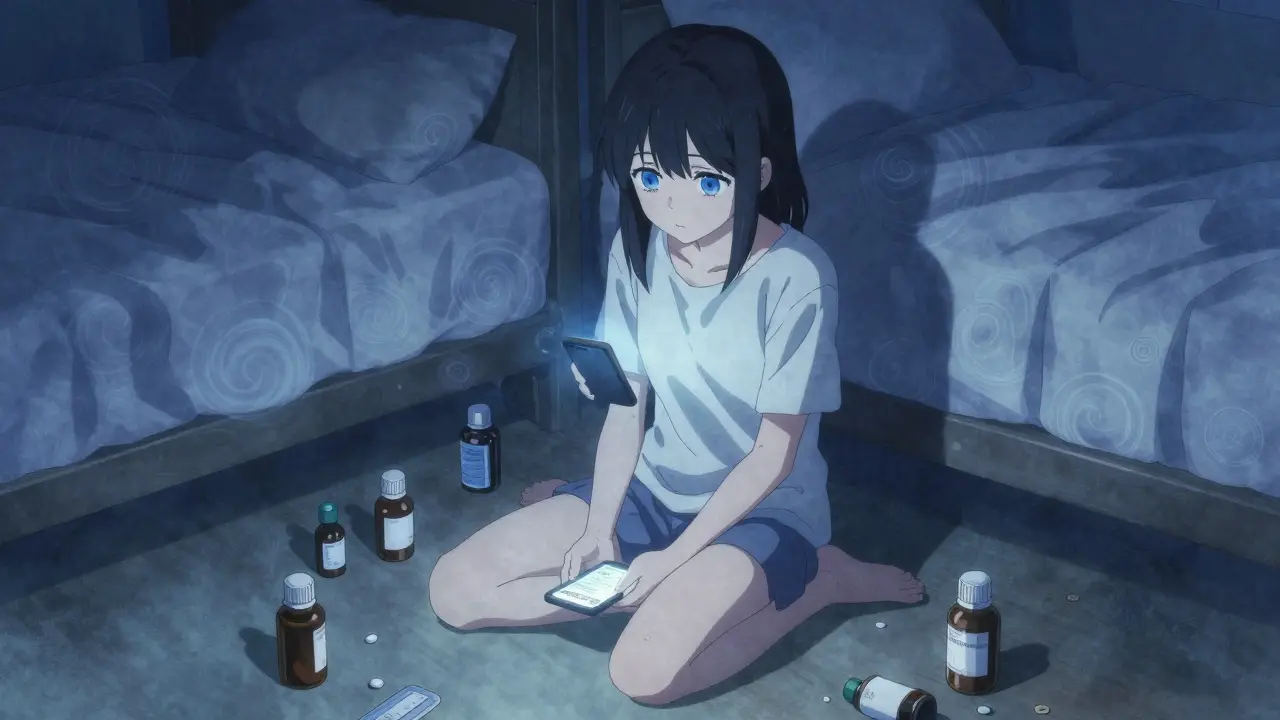
Over-the-counter (OTC) drugs are meant to help - a headache, a cold, a stuffy nose. But when they’re taken in ways they weren’t designed for, they can turn dangerous. What starts as an occasional extra pill or a few extra teaspoons of syrup can spiral into something much worse. And it’s not just teens. People of all ages are misusing these meds, often without realizing how serious it is.
You’re Taking More Than the Label Says
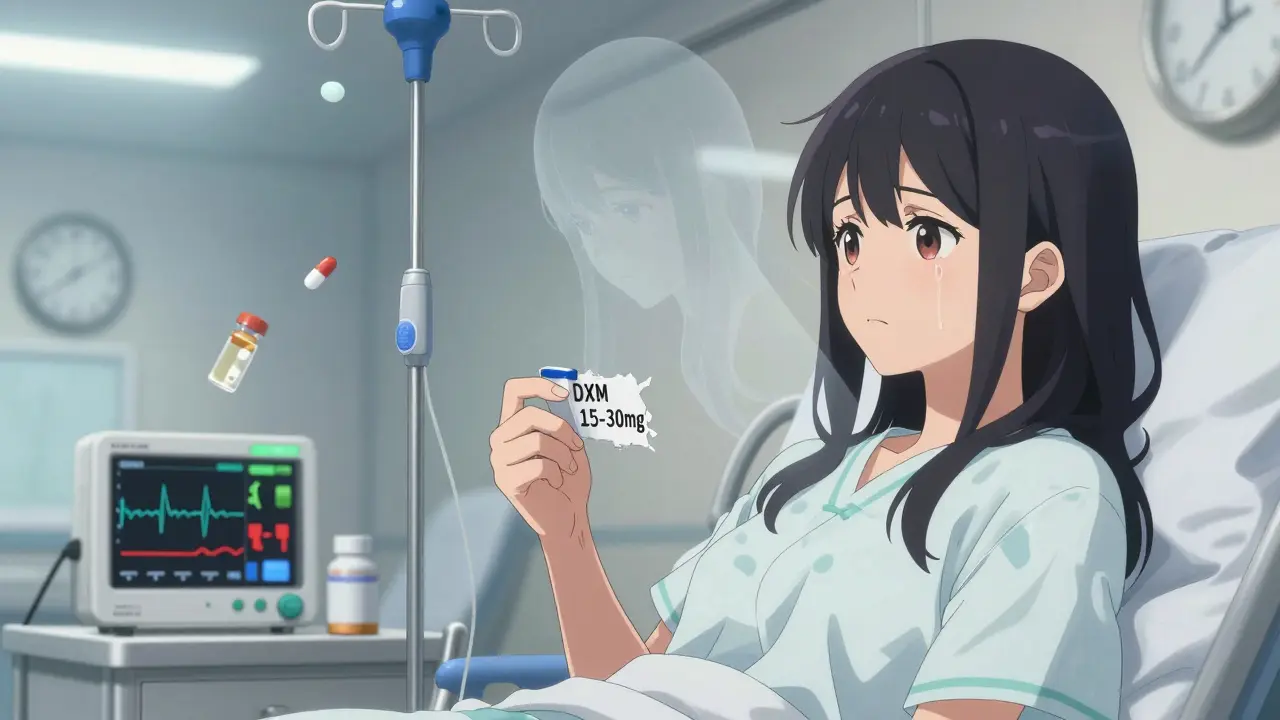
It’s easy to think, "I just need a little more to feel better," but that’s where the line blurs. The FDA requires all cough syrups containing dextromethorphan (DXM) to carry a warning in bold font: "Taking more than directed may cause serious injury." That’s not just a formality. It’s a fact. A single dose of DXM is 15-30 mg. But people misusing it often take 100 mg or more - sometimes 1,000 mg or higher. At those levels, DXM isn’t treating a cough anymore. It’s causing hallucinations, out-of-body feelings, and even temporary paralysis.
One user on a health forum described being stuck on the floor for 8 hours after taking 1,200 mg of DXM. Their heart was racing at 147 beats per minute. That’s not a party trick - that’s a medical emergency. And it’s not rare. In 2022, over 14,000 calls were made to SAMHSA’s national helpline just about OTC drug misuse. Most of them involved people who thought they were "just experimenting."
Your Body Is Sending Warning Signs
Your body doesn’t lie. If you’re misusing OTC meds, it will show you. Look for these physical signs:
- Dilated or constricted pupils - This happens in 78% of DXM abuse cases. It’s not something you can fake.
- Slurred speech - Speech becomes thick and slow when DXM levels hit abusive doses. Studies show articulation errors jump from 2% at normal doses to 68% at high doses.
- Unexplained weight loss - Chronic users lose an average of 12.7 pounds over three months, often because they stop eating or feel too nauseous to keep food down.
- High body temperature - Fevers of 103°F to 105°F have been recorded. This isn’t a cold - it’s a toxic reaction.
- Heart rate spikes - Going from 80 bpm to over 160 bpm isn’t normal. It can trigger arrhythmias, especially if the product also contains acetaminophen.
And here’s the hidden danger: many cough syrups mix DXM with acetaminophen. The liver can only handle 4,000 mg of acetaminophen in 24 hours. One bottle of some syrups contains 650 mg. Taking just six bottles in a day? That’s 3,900 mg - right at the limit. Add a couple of Tylenol on top? You’re at risk for liver failure. The FDA recorded over 1,200 cases of liver damage from OTC meds in 2023 alone.
Your Behavior Has Changed
It’s not just about your body. Your actions change too. If someone you care about starts acting differently, pay attention:
- Secretive behavior - Locking doors, changing phone passwords, hiding pills in vitamin bottles. These aren’t quirks - they’re red flags. One rehab center found 87% of teens misusing DXM visited 3 or more pharmacies each month to avoid detection.
- Sudden drop in grades - GPA drops from 3.4 to 2.1 in one semester aren’t coincidence. Cognitive function declines with chronic use. Memory, focus, and decision-making all suffer.
- Unaccounted spending - Spending $127 a month on something you can’t explain? That’s the average amount teens spend monthly on OTC drugs. It’s often bought in bulk from gas stations or online.
- Isolation - Social interactions drop from 5.2 per day to 1.7. They stop calling friends, skipping family dinners, avoiding eye contact. It’s not shyness - it’s the drug.
- Risky behavior - Driving while high on DXM is 3.2 times more likely to lead to traffic violations. People report blacking out behind the wheel, not remembering how they got home.
The Mental Toll Is Real
OTC drug misuse doesn’t just mess with your body - it rewires your brain. Mood swings happen 5.7 times more often than in non-users. Paranoia episodes last 2 to 4 hours after the high fades. Some users describe emotional numbness that lasts over a day. It’s not "just being moody." It’s a neurological reaction.
Dr. Nora Volkow, director of the National Institute on Drug Abuse, says high-dose DXM abuse causes changes in the brain similar to ketamine - a powerful anesthetic. After just six months of heavy use, users show an 8.3% reduction in hippocampal volume, the part of the brain responsible for memory and learning. That’s not reversible in all cases.
And it gets worse. One in three chronic DXM users develops persistent psychosis - meaning they hear voices, see things that aren’t there, or believe things that aren’t true - even when they’re not using. They need antipsychotic medication to function. That’s not a phase. That’s a psychiatric condition triggered by OTC drugs.
It Doesn’t Stop With OTCs
Here’s the scariest part: OTC drug misuse is often the first step toward something worse. Research from American Addiction Centers shows that 67% of people who start with cough syrup or loperamide end up using prescription painkillers or even heroin within 18 months. Why? Because tolerance builds fast. After 4 to 6 weeks, users need 3 to 5 times the original dose to feel the same effect. When that’s no longer enough, they look for stronger highs.
Loperamide - the active ingredient in Imodium - is another major concern. People take up to 100 pills a day (5,000 mg) to get high. The recommended dose is 16 mg. At those levels, it causes QT prolongation - a heart rhythm problem that can lead to sudden cardiac arrest. Since 2011, misuse of loperamide has jumped 278%. In 2023, the FDA approved the first treatment protocol using low-dose naltrexone to help people stop.

What To Do If You Recognize These Signs
If you see these signs in yourself or someone else, don’t wait. Don’t assume it’s "just a phase." Action now can prevent disaster later.
- Stop the use immediately. Even one more dose could trigger a dangerous reaction.
- Remove access. Lock up all OTC meds. Throw out expired or unused bottles. Many households keep these in unlocked cabinets - and that’s how misuse starts.
- Call for help. SAMHSA’s National Helpline (1-800-662-4357) is free, confidential, and available 24/7. They’ll connect you to local treatment options.
- Seek medical evaluation. A doctor can check liver enzymes, heart rhythm, and brain function. Blood tests can detect drug levels even after the high is gone.
- Start therapy. Cognitive behavioral therapy (CBT) combined with family therapy has a 68% success rate in helping teens quit. For adults, motivational interviewing within 72 hours of recognition increases treatment success by 63%.
There’s also hope. Since 2021, 32 states have launched "Know the Dose" education programs in schools. In areas where these programs are active, first-time DXM misuse among 8th graders dropped by 29%. Prevention works. But it only works if people know the risks.
It’s Not About Willpower
People who misuse OTC drugs aren’t weak. They’re not "bad kids." They’re often trying to cope - with stress, anxiety, boredom, or trauma. The drugs offer a quick escape. But the cost is too high. The brain changes. The body breaks. The relationships fray. And the path forward often leads to something even more dangerous.
OTC doesn’t mean harmless. It means accessible. And accessibility doesn’t make it safe - it makes it easier to abuse. If you’re using these meds differently than the label says, you’re not alone. But you don’t have to stay that way. Help exists. Recovery is possible. And the sooner you act, the better your chances.
Can you really get high from cough syrup?
Yes. Dextromethorphan (DXM), a common ingredient in cough syrups, can cause hallucinations, out-of-body experiences, and altered perception when taken in doses far higher than recommended - often 10 to 50 times the normal amount. This misuse is sometimes called "robotripping." It’s not harmless experimentation - it’s dangerous and can lead to seizures, respiratory failure, or permanent brain damage.
Is it safe to take extra doses of OTC pain relievers for better relief?
No. Taking more than directed increases the risk of liver damage, especially with acetaminophen (Tylenol). The maximum daily dose is 4,000 mg. Exceeding that, even by a few pills, can cause acute liver failure. Many OTC pain relievers also contain hidden ingredients like NSAIDs or antihistamines, which can cause stomach bleeding, drowsiness, or heart problems when taken in excess.
Can OTC drug misuse lead to addiction?
Yes. Tolerance builds quickly - often within 4 to 6 weeks. Users need increasingly higher doses to feel the same effect. Studies show 63% of people misusing OTC drugs develop dependence. Many then move on to stronger substances like prescription opioids or heroin. This progression is well-documented and preventable with early intervention.
How do I know if my teenager is misusing OTC drugs?
Watch for sudden changes: declining grades, secrecy, unexplained spending, mood swings, or hiding pills in vitamin bottles. They may visit multiple pharmacies to buy cough syrup or loperamide. Physical signs include dilated pupils, slurred speech, weight loss, or high body temperature. If three or more of these signs appear together, it’s time to talk - and possibly seek professional help.
What should I do if someone I know overdoses on OTC meds?
Call 911 immediately. Do not wait for symptoms to worsen. Overdoses can cause seizures, coma, or cardiac arrest. If possible, bring the medication bottle with you to the hospital - it helps doctors identify the active ingredients. Do not try to induce vomiting or give home remedies. Medical monitoring is essential, even if the person seems fine at first.
Are there treatments for OTC drug addiction?
Yes. Treatment includes medical detox, counseling, and sometimes medication. For DXM withdrawal, antidepressants are often needed to manage depression and anxiety. For loperamide misuse, low-dose naltrexone has been approved since 2023 and shows 82% effectiveness in reducing cravings. Cognitive behavioral therapy combined with family support has a 68% success rate in helping teens stay drug-free after six months.


Comments (11)
Hariom Sharma
Bro, I grew up in Delhi where cough syrup was basically a party drink at weddings. My uncle used to say, "One shot for the cough, two for the chill." We didn’t know it was dangerous-just thought it was fun. Now I tell my cousins: don’t touch it. The body ain’t a game. Real talk.
Nina Catherine
omg i had no idea loperamide could do that?? i used to take 4 pills when i had diarrhea like it was nothing… now im kinda freaked out. my heart was racing once after and i thought it was just anxiety lol
Taylor Mead
Appreciate this breakdown. I work in urgent care and see this way more than people realize. One kid came in last month with a 1,400 mg DXM binge. He thought he was just "getting creative." Didn’t know he nearly fried his liver. The fact that it’s OTC makes it way scarier-no one warns you.
Amrit N
my cousin did this for like 6 months. started with cough syrup, ended up stealing his dad’s painkillers. he’s clean now, thanks to his mom forcing him into therapy. point is: it’s not a phase. it’s a cry for help. if you see someone acting weird, don’t ignore it.
Courtney Hain
Let me tell you something they don’t want you to know-this whole OTC drug scare is just a gateway for Big Pharma to push prescription antidepressants and rehab centers. Who profits when people start panicking about cough syrup? Hospitals. Insurance companies. The FDA. They’ve been quietly pushing this narrative since 2018. And don’t get me started on how they banned dextromethorphan in 3 states under "public safety" but still let kratom and nicotine lozenges fly. Double standards. Always. The real danger is control, not chemistry.
Robert Shiu
My sister went through this. I didn’t know what to do. I thought she was just being moody. Then I found a bottle of NyQuil in her sock drawer. I didn’t yell. I didn’t lecture. I just sat with her and said, "I’m here. Let’s call someone." Two weeks later, she started therapy. She’s back to normal now. It’s not about punishment. It’s about showing up.
Greg Scott
Just read this. My mom used to give me Robitussin for every little cough. Never thought twice. Now I’m 28 and I realize I probably took 20x the dose over the years. I’m gonna go throw out every OTC bottle in the house tonight. Better safe than sorry.
Scott Dunne
How is it that in a country with the highest per capita healthcare spending, we allow dangerous substances to be sold next to gum and candy? This is not a health issue-it is a societal collapse. In Ireland, we lock away even aspirin. Why? Because we respect the body. This American "do whatever you want" culture is poisoning the youth. Shameful.
Caleb Sciannella
There’s a profound paradox here: the very systems designed to protect public health-regulatory labeling, pharmacovigilance, consumer education-are being undermined by commercial incentives and lack of enforcement. The FDA warning on DXM is a legal safeguard, not a cultural deterrent. We’ve commodified wellness to the point where "safe" is defined by market accessibility, not biological consequence. The solution requires structural change: mandatory pharmacist counseling, age-restricted sales, and public health campaigns that don’t rely on fear but on embodied understanding. Until then, we’re just rearranging deck chairs on the Titanic.
Liam Crean
My therapist said something that stuck: "Addiction doesn’t start with wanting to escape. It starts with thinking you can control it." I thought I could handle a little DXM every weekend. Turns out, control was an illusion. One dose turned into three. Three turned into a whole bottle. Now I don’t touch anything without reading the label twice. Just… be honest with yourself.
madison winter
So… if OTC drugs are so dangerous, why are they even legal? Shouldn’t we treat them like opioids? If someone can OD on NyQuil, shouldn’t it be behind the counter? Or require a prescription? Or maybe we should just ban all of it. People can’t be trusted with anything. It’s not about education. It’s about control. And we’re too soft on this.