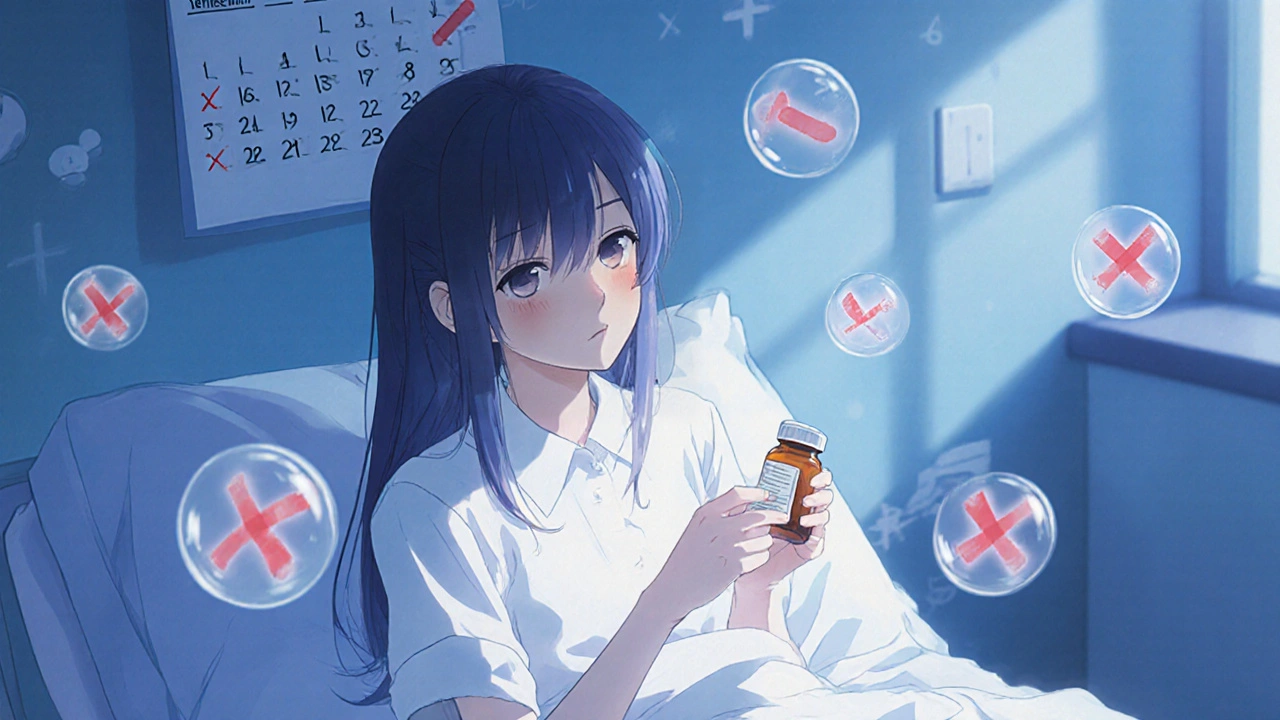
Opioid Tolerance Recovery Calculator
Safe Dose Calculator After Abstinence
Calculate your safe starting dose after stopping opioids. Tolerance decreases during abstinence - returning to your old dose can cause overdose.
Have you ever been prescribed opioids for pain-maybe after surgery or for a chronic condition-and noticed that what once helped no longer does? You’re not alone. More people than you think find themselves needing higher and higher doses just to feel the same relief. That’s not a sign the pain is getting worse. It’s opioid tolerance.
What Exactly Is Opioid Tolerance?
Opioid tolerance means your body has adjusted to the drug. Over time, the same dose stops working like it used to. Your brain and nervous system have changed how they respond. It’s not addiction. It’s not dependence. It’s a physical adaptation. The FDA defines it simply: exposure to opioids causes changes that reduce their effects. So you need more to get the same result.
This isn’t rare. About 30% of people taking opioids long-term for chronic pain need higher doses within the first year. For some, it happens in weeks. For others, it takes months. It depends on your genes, your metabolism, how often you take it, and even your pain condition. But no one is immune.
Why Does This Happen in Your Body?
It starts at the cellular level. Opioids bind to special receptors in your brain, spinal cord, and nerves-mostly the mu-opioid receptor, encoded by the OPRM1 gene. When they attach, they block pain signals and trigger dopamine release, giving you relief and sometimes a sense of calm or even euphoria.
But when this happens over and over, your cells don’t like it. They respond by:
- Reducing the number of receptors available (downregulation)
- Changing how those receptors respond (desensitization)
- Shutting down internal signaling pathways
It’s like turning down the volume on a speaker that’s too loud. Your body’s trying to protect itself. But that also means the pain relief fades. So you take more. And the cycle continues.
There’s more to it than just receptors. Inflammation in the nervous system-triggered by long-term opioid use-also plays a role. Proteins like TLR4 and NLRP3 inflammasomes get activated, making tolerance worse. Scientists are now testing drugs that block these proteins, hoping to stop tolerance before it starts.
Tolerance Isn’t the Same as Dependence or Addiction
This is where confusion happens. People mix up tolerance, dependence, and opioid use disorder (OUD). They’re related-but not the same.
- Tolerance: You need more of the drug to get the same effect.
- Dependence: Your body has adapted to having the drug. If you stop suddenly, you get withdrawal-sweating, nausea, anxiety, muscle aches.
- Opioid Use Disorder: You keep using despite harm-problems at work, relationships, health, or legal trouble. It’s a brain disorder.
The CDC is clear: you can have tolerance without addiction. Many patients on long-term opioids for back pain or arthritis develop tolerance but don’t misuse their meds. But tolerance can be a stepping stone. The more you need, the harder it becomes to stop. And if you do stop, that’s when things get dangerous.

The Dangerous Drop: Losing Tolerance After Abstinence
Here’s the part no one talks about until it’s too late: tolerance can disappear.
If you stop taking opioids-even for a few days-you lose your body’s adaptation. Your receptors reset. Your sensitivity goes back up. That means if you go back to your old dose, even after a short break, you could overdose.
This isn’t theoretical. Studies show 74% of fatal overdoses among people with opioid use disorder happen in the first few weeks after they’re released from jail or rehab. Why? They return to the dose they used before, unaware their tolerance is gone. One study found 65% of overdose deaths in recovery involved people taking their old dose without adjusting.
And it’s worse with street drugs. Fentanyl is 50 to 100 times stronger than morphine. A pill that looks like your old prescription might contain enough fentanyl to kill someone with no tolerance. People who’ve built tolerance to oxycodone think they can handle it. They can’t.
What Doctors Do When Tolerance Develops
When a patient needs a higher dose, good doctors don’t just keep increasing it. They ask: Is this still working? Are there better options?
The CDC recommends that before raising doses above 50 morphine milligram equivalents (MME) per day, providers should:
- Reevaluate the treatment goals
- Check for non-opioid alternatives like physical therapy, nerve blocks, or certain antidepressants
- Look for signs of misuse or OUD
Some doctors use opioid rotation-switching from one opioid to another, like from oxycodone to hydromorphone. This can sometimes restore pain relief without raising the dose. Others are testing low-dose naltrexone, a medication that blocks opioid receptors briefly, which may help prevent tolerance from building. Early trials show it cuts dose escalation by 40-60%.
Lab tests can help too. Blood tests don’t diagnose tolerance, but they can show if someone is taking what they’re supposed to-or if they’re using more than prescribed. It’s not about suspicion. It’s about safety.

What You Can Do
If you’re on opioids and feel like they’re losing their power:
- Don’t increase your dose on your own. Talk to your doctor.
- Ask about non-opioid options. Physical therapy, acupuncture, cognitive behavioral therapy, and certain anti-seizure or antidepressant meds can help chronic pain.
- If you’ve taken a break-whether from rehab, hospitalization, or quitting-never go back to your old dose. Start with a fraction. A quarter. Maybe even an eighth.
- If you’re using street drugs, assume every pill or powder could be laced with fentanyl. Test strips are free and easy to use. Know your risk.
The CDC’s 2023 public health campaign says it plainly: “Your tolerance is lower now-start with a fraction of your previous dose.” That message saves lives.
The Bigger Picture: Why This Matters
In 2022, over 107,000 Americans died from drug overdoses. More than 81,000 involved synthetic opioids like fentanyl. Tolerance is a silent driver of this crisis. It pushes people to take more. It makes them vulnerable when they stop. It blinds them to the danger of street drugs.
Research is moving fast. Scientists are designing new opioids that don’t trigger tolerance as easily. Others are exploring non-opioid painkillers that target inflammation or nerve pathways differently. But until those arrive, the best tools we have are awareness and caution.
Opioid tolerance isn’t a failure. It’s a biological fact. Understanding it doesn’t mean giving up on pain relief. It means finding safer ways to manage it.
Does opioid tolerance mean I’m addicted?
No. Tolerance means your body has adapted to the drug and needs more to get the same effect. Addiction-called opioid use disorder-means you keep using despite harm to your health, relationships, or job. You can have tolerance without addiction. But tolerance can make addiction more likely if doses keep rising.
Can I reverse opioid tolerance?
Yes, but not by taking more. Tolerance reverses naturally when you stop using opioids for a period of time. Your body resets its receptors. But this is dangerous if you return to your old dose. There’s no safe way to speed up this process. The key is to avoid escalating doses and work with your doctor on alternatives.
Why do some people develop tolerance faster than others?
Genetics play a big role. The OPRM1 gene affects how your opioid receptors respond. Metabolism, liver function, age, and how often you take the drug also matter. People who take opioids daily for chronic pain often develop tolerance faster than those who use them occasionally after surgery. Some people need higher doses within weeks; others stay stable for months.
Is it safe to take higher doses if my pain isn’t controlled?
Not without medical supervision. Increasing your dose on your own raises your risk of overdose, dependence, and side effects like breathing problems. If your pain isn’t improving, talk to your doctor about other treatments-physical therapy, nerve blocks, non-opioid meds, or even psychological support. Higher doses aren’t always the answer.
What should I do if I’ve been off opioids for a while and want to start again?
Never go back to your old dose. Your tolerance has dropped. Start with 25% or less of what you used before. If you’re using street drugs, assume they’re laced with fentanyl. Use a test strip. Carry naloxone. Tell someone you’re using. This isn’t about willpower-it’s about survival. Most fatal overdoses happen because people don’t realize how much their tolerance has changed.


Comments (13)
Erin Nemo
This hit hard. I was on oxycodone for three years after my back surgery and one day it just stopped working. I didn't realize tolerance wasn't addiction until I read this.
Rachel Stanton
The neurobiology here is fascinating. Downregulation of mu-opioid receptors via OPRM1 polymorphisms is a well-documented adaptive mechanism, but what's underdiscussed is the glial activation-TLR4/NLRP3 inflammasome crosstalk that potentiates central sensitization. That’s why some patients develop tolerance faster despite low doses. Low-dose naltrexone may modulate this via TLR4 antagonism, which is why early trials show such promise in dose stabilization.
Bonnie Youn
Stop blaming the meds and start blaming the system. Doctors push opioids like candy then act shocked when people get hooked. You think this is science? It’s profit. Pharma made billions while patients got addicted and abandoned. This isn’t biology-it’s capitalism
Edward Hyde
So let me get this straight-you’re telling me people who take painkillers for years are just… biologically unlucky? Cool. So now we’re giving out medals for tolerance? Meanwhile, my cousin OD’d after rehab because some doctor didn’t warn him. This article reads like a corporate white paper written by someone who’s never held a dying person’s hand
Suzanne Mollaneda Padin
As someone who’s worked in chronic pain management for 18 years, I’ve seen this play out too many times. The real tragedy isn’t tolerance-it’s how rarely patients are offered alternatives before doses climb. Physical therapy, mindfulness-based stress reduction, even tai chi-these aren’t ‘nice-to-haves,’ they’re first-line. But insurance won’t cover them unless you’ve maxed out opioids first. We’re failing people systematically.
Charlotte Collins
It’s ironic how the CDC promotes ‘start with a fraction’ while hospitals still discharge patients on 120 MME. The contradiction is breathtaking. They want you to believe this is a public health crisis while the same institutions that created the problem now hand out pamphlets like it’s a parenting class. Tolerance isn’t the villain-complacency is.
Mary Ngo
Let’s be honest-this whole narrative is a distraction. The real issue is that the government and Big Pharma have weaponized pain relief as a social control mechanism. Opioid tolerance? It’s engineered. They want you dependent, docile, and dosed. The science they cite? Partial truths. The studies? Funded by manufacturers. Wake up. This isn’t biology-it’s behavioral conditioning disguised as medicine.
Margaret Stearns
I’ve been on long-term opioids for fibromyalgia. I never increased my dose. I switched to gabapentin and it helped more. I wish more people knew you don’t have to keep going higher. Just talk to your doctor. And if you’ve been off, start low. I did. I’m alive because I did.
elizabeth muzichuk
My brother died two weeks after he got out of jail. They gave him his old prescription like nothing happened. No warning. No education. Just a script and a shrug. Now I have to raise his kids. And you want me to believe this is just ‘biology’? This is murder by bureaucracy.
Debbie Naquin
The ontological paradox of opioid tolerance lies in its self-referential nature: the mechanism designed to preserve homeostasis becomes the very agent of its own collapse. Receptor downregulation is homeostatic, yet the behavioral response-dose escalation-subverts it. Thus, the system’s attempt to stabilize generates instability. This is not failure-it is emergence. The body adapts. The culture does not.
Lauryn Smith
I know someone who used to take 80mg of oxycodone a day. After rehab, he started at 10mg. He’s been clean for two years. He says the hardest part wasn’t quitting-it was learning he wasn’t weak for needing help. You’re not broken if your body changes. You’re human.
Karandeep Singh
bro america is just full of cucked ppl who think pills fix everything. in india we just take painkillers for 2 days then go back to work. no tolerance no problem. stop being soft
Scotia Corley
It is not the responsibility of the medical establishment to manage individual biological variability. The patient must assume accountability for their pharmacological response. To suggest otherwise is to infantilize the human condition. Tolerance is not a failure of medicine-it is a failure of discipline.