Forget a dose of blood pressure medicine once in a while? You aren't alone. Roughly half of all patients with chronic conditions miss doses, skip days, or stop taking meds entirely. This isn't just about bad memory; it's a massive public health issue that costs the U.S. healthcare system an estimated $300 billion annually. But here is the good news: your smartphone might be the most effective tool you have to fix this.
We are moving past the era of simple plastic pill organizers. Today, medication adherence apps and smart hardware solutions offer sophisticated, personalized support that can literally save lives by ensuring you take the right drug at the right time. Whether you manage diabetes, hypertension, or HIV, these digital tools are changing how we handle daily health routines.
Why Traditional Methods Fail (And Why Apps Work)
You probably have a weekly pill box sitting on your counter. It’s cheap, it’s simple, but it has a fatal flaw: it doesn’t talk back. If you forget to put pills in for Tuesday, the box won’t remind you. If you take Tuesday’s pills on Monday, the box assumes you’re compliant when you’re not.
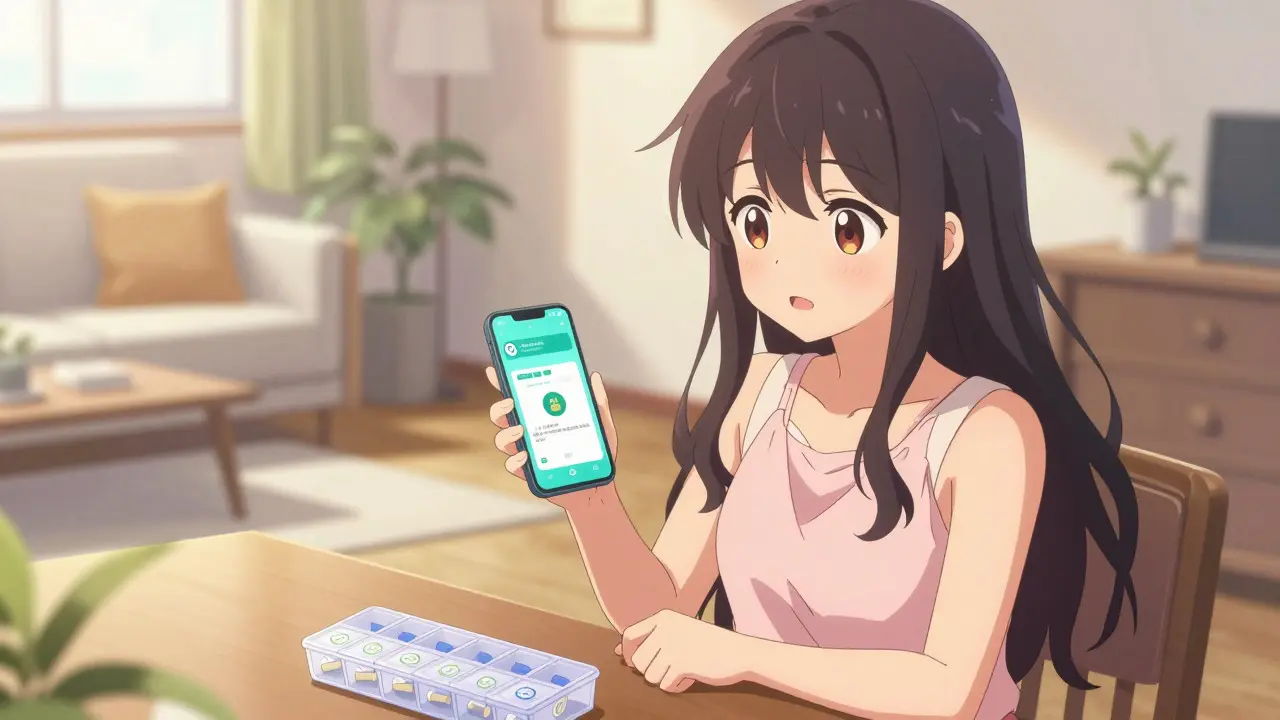
Medication adherence apps are digital health interventions designed to improve patient compliance through reminders, tracking, and education. Unlike static boxes, these apps leverage the device you already carry everywhere: your phone. With smartphone penetration hitting 97% among U.S. adults, these tools are accessible to almost everyone. They don't just send a beep; they create a feedback loop. You log the dose, the app tracks it, and if you miss it, it nudges you again. This active engagement addresses the root cause of non-adherence: forgetfulness and lack of routine.
Research backs this up. Systematic reviews from 2023 to 2025 show that apps consistently outperform traditional methods. In fact, studies indicate that mobile apps improve adherence rates by 22.7% compared to standard pill organizers. That’s a significant jump that translates directly to better health outcomes.
Key Features to Look For in Medication Apps
Not all apps are created equal. When choosing a tool to manage your health, you need more than just a calendar. Based on extensive analysis of top-rated platforms, here are the non-negotiable features:
- Customizable Reminders: The app must allow you to set specific times, frequencies, and even snooze options. Over 92% of effective apps include this feature because timing is everything for drugs like insulin or antibiotics.
- Digital Logging: You need a way to record whether you actually took the med. This data helps you spot patterns-like always missing morning doses before work.
- Refill Tracking: Running out of medication is a common failure point. Good apps calculate when you’ll run low and alert you to request a refill from your pharmacy.
- Educational Content: Understanding *why* you are taking a medication improves compliance. Look for apps that provide drug interaction warnings and side effect information.
- Caregiver Support: If you live with family members who help manage your care, choose an app that allows them to receive alerts if you miss a dose.
Apps vs. Smart Hardware: Which Is Right for You?
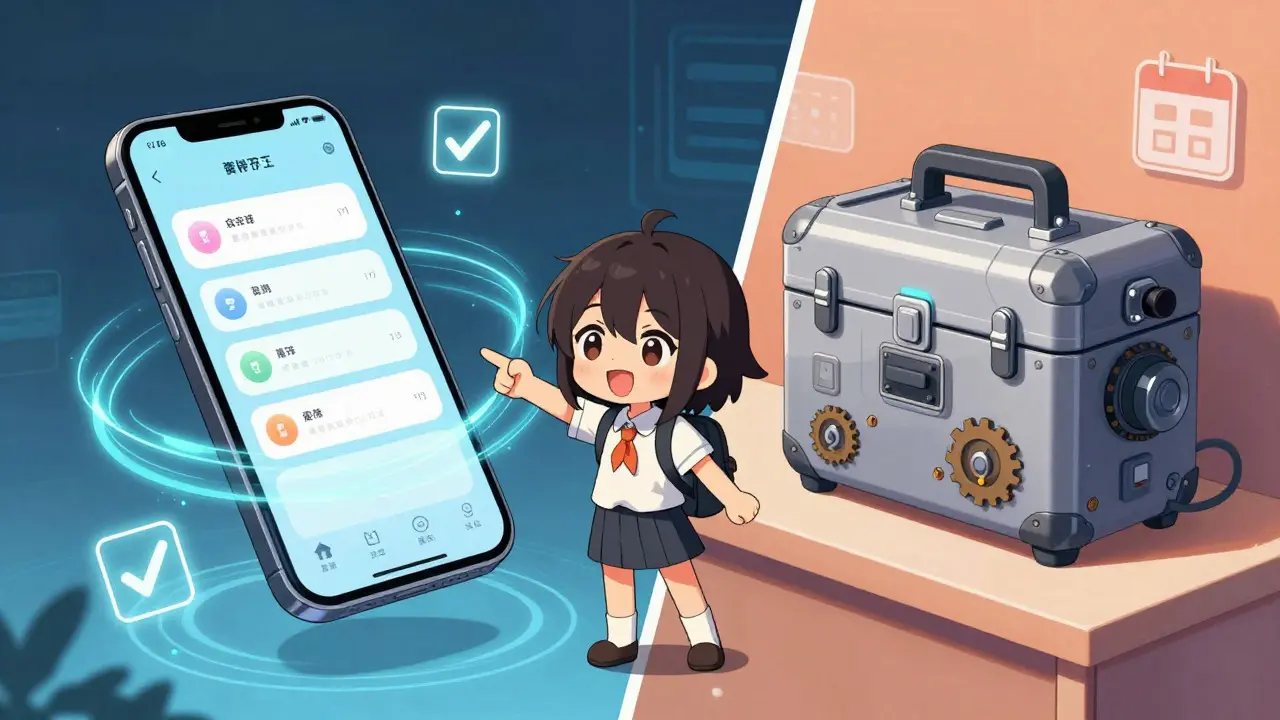
While apps are the dominant solution, there is another category gaining traction: electronic medicine boxes. These devices, such as the MedMinder or Hero systems, physically dispense pills and lock until the correct time arrives. They register opening times automatically, removing the need for manual logging.
So, which should you choose? It comes down to cost, complexity, and user capability.
| Feature | Medication Apps | Electronic Medicine Boxes |
|---|---|---|
| Cost | $0 - $5/month | $30 - $50/month |
| Setup Effort | Low (15-20 mins) | Medium (Requires loading pills) |
| Data Accuracy | Self-reported (User must log) | Automatic (Sensor-based) |
| Portability | High (Works anywhere) | Low (Bulky device) |
| Best For | Most users, complex regimens | Cognitive impairment, elderly |
For most people, apps win on value and convenience. However, if you have severe cognitive decline or struggle significantly with technology, an electronic box might be safer because it removes the human error of forgetting to log the dose. Just be aware that these devices require regular maintenance and a higher financial commitment.
The Reality of User Engagement
Let’s be honest: downloading an app is easy. Using it every day for a year is hard. One of the biggest challenges with digital health tools is "notification fatigue." After three months, many users find themselves dismissing alerts without thinking, or worse, uninstalling the app entirely. Studies show adherence to the *app itself* can drop by 35-40% after the initial novelty wears off.
To combat this, look for apps with gamification or social support features. Some platforms, like Medisafe, use AI-driven "Adherence Coaches" that learn your habits and adjust reminders to prevent burnout. Others connect you with communities where you can share progress. Human connection remains a powerful motivator. If you feel guilty about missing a dose, tell your doctor-they can simplify your regimen. No app can replace a conversation with your healthcare provider about making your treatment plan realistic.
Privacy and Security Concerns
Your health data is sensitive. Before handing over details about your prescriptions, check the app’s security protocols. Reputable apps should be HIPAA-compliant and use end-to-end encryption. Unfortunately, only about 64% of reviewed apps clearly document their security measures. Always read the privacy policy. Ask yourself: Who owns my data? Is it sold to third parties? For most general wellness apps, the risk is low, but for those managing critical conditions like insulin-dependent diabetes, ensure the app meets strict medical device standards if applicable.

Getting Started: A Simple Checklist
If you are ready to try a medication timer app, follow these steps to set yourself up for success:
- Choose one platform: Don’t juggle multiple apps. Pick one that fits your operating system (iOS 12+ or Android 8.0+) and budget.
- Input your schedule carefully: Take photos of your prescription labels to enter dosages accurately. Double-check interactions if the app offers this feature.
- Enable notifications: Go into your phone settings and ensure the app has permission to send push notifications, even when the screen is locked.
- Involve your support network: Add a spouse, adult child, or caregiver to the notification list. Having someone else watch your back increases accountability.
- Review weekly: Spend five minutes each Sunday reviewing your logs. Did you miss doses? Was it due to travel, illness, or confusion? Adjust your strategy accordingly.
The Future of Medication Safety
The landscape of medication adherence is evolving rapidly. We are seeing the rise of AI-powered personalization that predicts missed doses before they happen. Voice-activated management is also on the horizon, allowing users to simply say, "I took my metformin," and have it logged automatically. By 2027, experts predict that 75% of adherence solutions will incorporate biometric feedback loops, integrating with wearables to monitor physiological responses to medication.
For now, the technology is mature enough to make a real difference today. The barrier to entry is low, and the potential payoff-better health, fewer hospital visits, and peace of mind-is enormous. Start small, pick a reliable tool, and let technology handle the memory so you can focus on living well.
Are medication reminder apps free?
Many popular medication apps, such as Medisafe and MyTherapy, offer robust free versions that include basic reminders and logging. Premium tiers, typically costing between $3 and $5 per month, often add advanced features like refill management, detailed analytics, and priority customer support.
Do medication apps work for older adults?
Yes, but usability varies. While younger users can set up apps in under 20 minutes, adults over 65 may take longer (averaging 42 minutes) due to lower digital literacy. Look for apps with large text, simple interfaces, and voice commands. Involving a family member in the setup process is highly recommended for this demographic.
Is my health data safe in these apps?
Reputable apps use encryption and comply with regulations like HIPAA. However, not all apps are created equal. Check the app’s privacy policy to see if data is shared with third parties. For critical medications, prefer apps developed by established healthcare companies or those certified as medical devices by the FDA.
Can an app replace talking to my doctor?
No. Apps are tools for adherence, not diagnosis or treatment planning. If you consistently miss doses despite using an app, it may indicate that your regimen is too complex or causing side effects. Share your app logs with your doctor to discuss simplifying your medication schedule.
What happens if I lose my phone?
Most modern apps sync your data to the cloud. If you download the app on a new device and log in with the same account, your medication history and schedules should restore automatically. Ensure you enable cloud backup in the app settings immediately after setup.