
You might be sitting in your doctor's office right now, wondering if it is finally time to get a scan. If you have smoked for years, the fear of lung cancer is real, but so is the solution. Low-dose CT is a specialized imaging test that uses lower radiation levels than standard scans to detect small tumors in the lungs before they spread. It is not just a precaution; it is a proven tool that has saved thousands of lives by catching disease at stage one, when surgery or other treatments are most effective. For many smokers, this technology turns a terrifying diagnosis into a manageable medical event rather than a death sentence.
Who Actually Needs This Screen?
Not every smoker needs an annual scan. The U.S. Preventive Services Task Force (USPSTF) updated its guidelines in March 2021 to make the net benefit clearer for specific groups. You likely qualify if you fall into this sweet spot:
- Age: Between 50 and 80 years old.
- Smoking History: At least 20 pack-years.
- Current Status: You currently smoke or quit within the last 15 years.
A "pack-year" is a simple math formula: multiply the number of packs you smoked per day by the number of years you smoked. So, if you smoked half a pack a day for 40 years, that equals 20 pack-years. Or, if you smoked two packs a day for 10 years, that also equals 20 pack-years. The 2021 update was a game-changer because it lowered the age threshold from 55 to 50 and the smoking history requirement from 30 pack-years to 20. This expansion means roughly 14.5 million more Americans are now eligible for life-saving monitoring compared to previous rules.
How the Scan Works and What to Expect
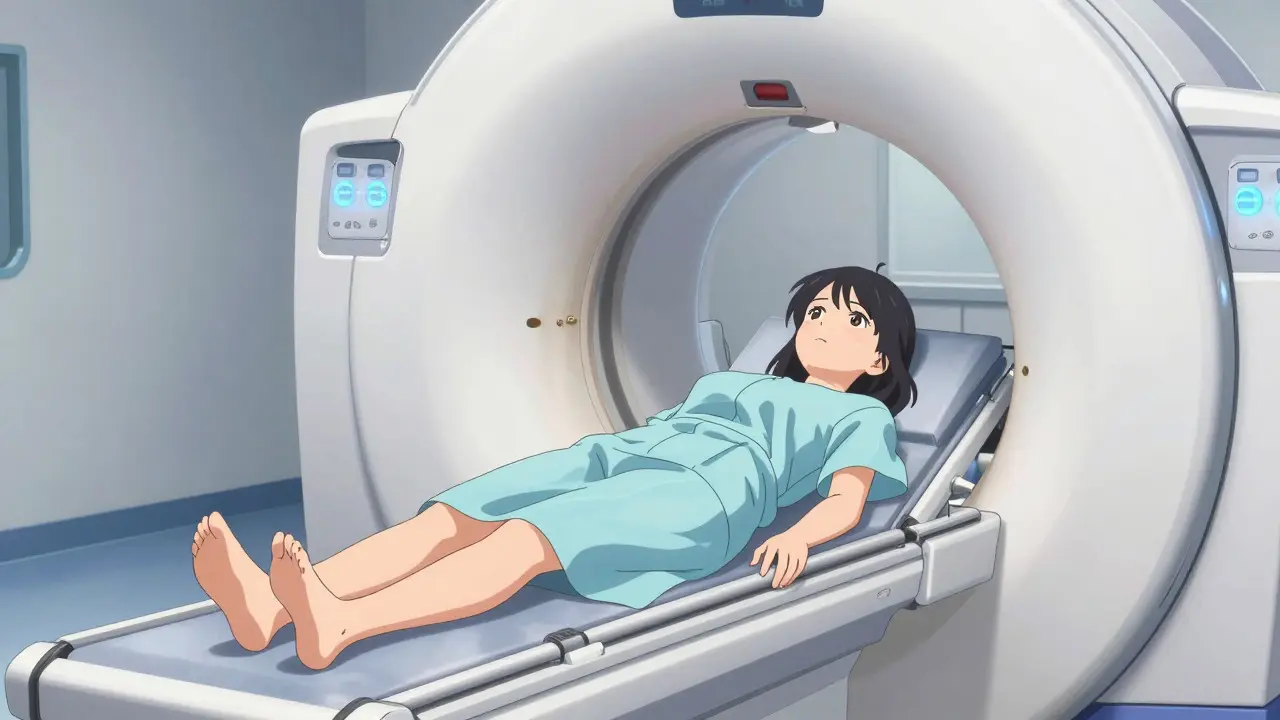
The procedure itself is surprisingly quick and painless. You lie on a table while an X-ray machine rotates around you, taking detailed cross-sectional images of your chest. Unlike a standard CT scan which delivers about 7-8 millisieverts of radiation, a Low-dose CT is an imaging modality that delivers approximately 1.5 millisieverts of radiation, significantly reducing cumulative exposure risks for annual screenings. The entire process usually takes less than 10 minutes. You don't need to hold your breath for long periods, though you may be asked to take a deep breath and hold it for a few seconds to get clear images.
There is no needle, no anesthesia, and no recovery time. You can drive yourself home. The main thing to prepare for is the waiting period after the scan. Results are typically reviewed by a radiologist using a standardized system called Lung-RADS. This system categorizes findings from 1 (negative/clear) to 4 (suspicious). If you get a category 1 result, you simply wait another year. If it’s higher, your doctor will discuss next steps, which might include a follow-up scan in three months or a biopsy.
The Benefits vs. The Risks
Why do doctors push this so hard? The data is compelling. The National Lung Screening Trial (NLST), a massive study published in 2011, showed that LDCT reduced lung cancer mortality by 20% compared to chest X-rays. That is a significant drop in a disease that remains the leading cause of cancer death in the United States, accounting for over 135,000 deaths annually. However, it is not without downsides, and honest conversations with your provider should cover these points:
| Metric | LDCT Screening | Chest X-Ray |
|---|---|---|
| Lung Cancer Mortality Reduction | ~20% | 0% (No significant benefit) |
| False Positive Rate | ~13.9% per round | Lower, but misses more cancers |
| Radiation Dose | ~1.5 mSv | ~0.1 mSv |
| Detection Capability | Detects nodules < 6mm | Often misses early-stage tumors |
The biggest drawback is the false positive rate. In the NLST, nearly 14% of scans showed something suspicious that turned out to be benign. This can lead to unnecessary biopsies, anxiety, and extra radiation exposure from follow-up tests. About 37% of patients who received a false positive reported moderate to severe anxiety lasting more than six months. Your doctor should walk you through this trade-off during a pre-screening discussion, which is mandatory for Medicare coverage and highly recommended by all major health organizations.
Navigating Insurance and Access
If you are on Medicare, coverage is straightforward but requires specific steps. CMS covers annual screenings for adults aged 50-77 who meet the 20 pack-year criterion. You need a written order from your healthcare provider after a shared decision-making visit. This visit isn't just a formality; it ensures you understand the pros and cons. If you are under 50 or over 77, or if you have private insurance, coverage varies widely. Some insurers require additional documentation or limit coverage based on specific risk calculators like the PLCOm2012 model, which factors in family history and education level alongside smoking habits.
Access can also be a barrier. Not every hospital performs accredited lung cancer screenings. As of late 2023, only about 40% of U.S. counties have ACR-accredited facilities. If you live in a rural area, you might face travel challenges. One user reported driving 127 miles to find a center that met the necessary accreditation standards. Before booking, verify that the facility participates in an ACR-accredited registry and follows the technical protocols outlined in CMS National Coverage Determination 210.13.

What Happens After the Scan?
Let's say your scan comes back with a nodule. Panic is a natural reaction, but remember that most nodules found on LDCT are benign. They could be scars from old infections, tiny blood vessels, or lymph nodes. The Lung-RADS score dictates the timeline:
- Category 1: No abnormality. Next screen in 12 months.
- Category 2: Benign finding. Next screen in 12 months.
- Category 3: Probably benign. Follow-up scan in 6 months.
- Category 4: Suspicious. Immediate diagnostic workup (biopsy or PET scan).
Staying calm and following the recommended interval is crucial. Skipping a follow-up because you feel fine is how early-stage cancers can progress. Conversely, rushing to invasive procedures without proper staging can lead to overtreatment. Work closely with a pulmonologist or oncologist who specializes in lung cancer screening programs. Many large academic centers now use nurse navigators to guide you through this process, helping to keep your stress levels down and ensuring you don't fall through the cracks.
Frequently Asked Questions
Is low-dose CT safe for annual use?
Yes. The radiation dose is very low (about 1.5 mSv), comparable to a few months of natural background radiation. The benefit of detecting early cancer outweighs the minimal radiation risk for high-risk individuals.
Do I need to stop smoking before getting screened?
No, you do not need to stop smoking to get screened. In fact, quitting increases your eligibility if you have been smoke-free for less than 15 years. Screening is most effective when combined with cessation efforts, as it detects damage that has already occurred.
What if I quit smoking more than 15 years ago?
You generally do not need routine annual screening if you have been smoke-free for 15 consecutive years. Your risk drops significantly after this period. However, if you have other risk factors like occupational asbestos exposure, talk to your doctor about individualized care.
How accurate is the scan?
LDCT is highly sensitive for detecting small nodules, often finding tumors smaller than 6mm. However, specificity is lower, meaning there is a higher chance of false positives. Radiologists use the Lung-RADS system to manage this uncertainty effectively.
Can I get screened if I have COPD?
Yes, having COPD does not disqualify you. In fact, COPD is an independent risk factor for lung cancer. As long as you are healthy enough to undergo potential curative treatment if cancer is found, screening is appropriate.