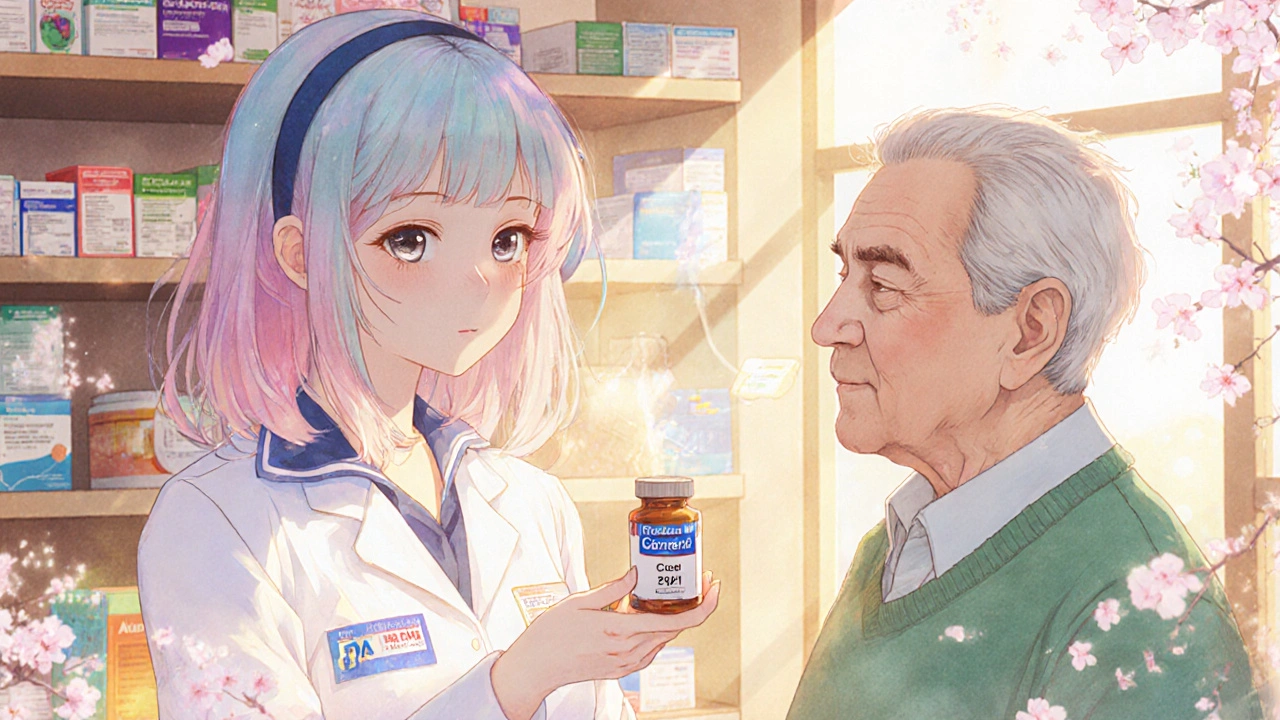
Every time you pick up a prescription and see a lower price tag than the brand-name version, you’re seeing the result of the Abbreviated New Drug Application - or ANDA. This isn’t some backdoor loophole. It’s a carefully designed, science-backed system that lets generic drug makers bring affordable medicines to market without repeating every single clinical trial ever done. In fact, 9 out of 10 prescriptions filled in the U.S. today are for generics. And they’re saving Americans $373 billion a year.
What Exactly Is an ANDA?
The ANDA is the official form generic drug companies submit to the FDA to get approval to sell a copy of a brand-name drug. It’s called "abbreviated" because it doesn’t require the same mountain of data as a brand-new drug application. Instead, it builds on what the FDA already knows: that the original drug is safe and effective.To qualify, the generic version must be identical in key ways:
- Same active ingredient
- Same strength and dosage form (pill, injection, cream, etc.)
- Same way it’s taken (by mouth, injected, inhaled)
- Same intended use (same conditions it treats)
- Same labeling (with minor exceptions)
The only new data the applicant needs to provide? Proof that the generic drug behaves the same way in the body as the brand-name version. That’s called bioequivalence. If the generic releases the same amount of medicine into your bloodstream at the same rate, the FDA considers it interchangeable.
How the ANDA Process Works - Step by Step
Getting approval isn’t quick, but it’s predictable if you know the steps. Here’s how it unfolds:- Submission: The company files the ANDA electronically through the FDA’s Electronic Submission Gateway. It includes detailed chemistry data, manufacturing info, and bioequivalence study results. Two key forms are required: FDA-356h and FDA-3674.
- Filing Review: Within 60 days, the FDA checks if the application is complete enough to review. If it’s missing critical info, it gets rejected outright.
- Discipline Reviews: Teams of scientists dig into every part: chemistry, manufacturing, microbiology, labeling, and bioequivalence. Each team looks for gaps or inconsistencies. This is where most applications get tripped up.
- Information Requests: If something’s unclear or incomplete, the FDA sends an Information Request (IR). Companies have to respond with more data - sometimes multiple times. On average, applicants get 10-15 IRs per application.
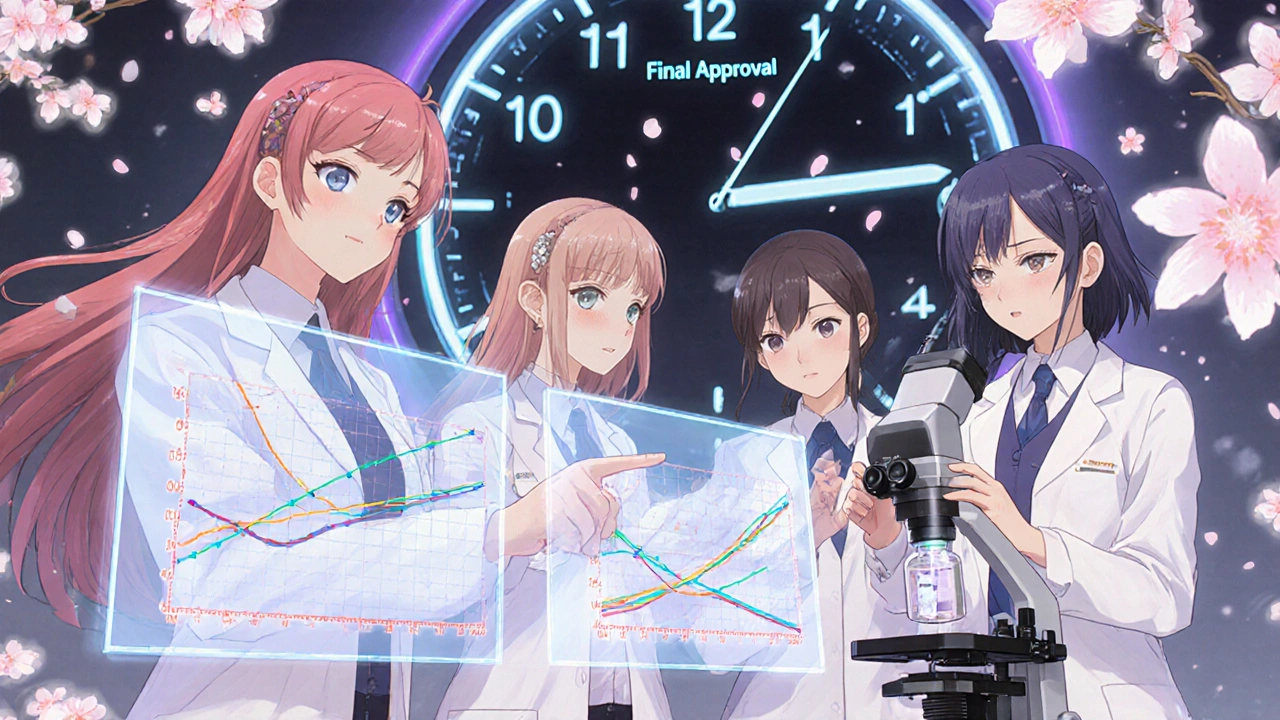
- Final Decision: If everything checks out and there are no legal blocks (like patents), the FDA issues Final Approval. If patents or exclusivity periods are still active, the application gets Tentative Approval - meaning it’s scientifically approved but can’t be sold yet.
The FDA’s goal under GDUFA III (the current user fee program) is to approve 90% of original ANDAs within 10 months of submission. But in reality, the whole process takes about 30 months on average. Why? Because of delays in inspections, complex science, or back-and-forth with the FDA.
Why ANDA Costs So Much Less Than a New Drug
Developing a brand-new drug costs around $2.3 billion. That includes 10-15 years of research, dozens of clinical trials, and massive failure rates. The ANDA process? Typically $1 million to $5 million. That’s because the generic maker doesn’t have to prove the drug works - they just have to prove they can make a copy that acts the same way.Here’s the trade-off: while the science is simpler, the regulatory hurdles are still high. Many companies fail because they underestimate how strict the FDA is about manufacturing quality. In 2022, 28% of Complete Response Letters - the FDA’s official rejection notice - cited problems with manufacturing facilities. Another 35% were due to flawed bioequivalence studies.
Complex Generics Are the New Challenge
Not all generics are created equal. Simple pills? Easy. Inhalers, injectables, topical creams, or patches? Not so much.These are called "complex generics." They’re harder to copy because their effectiveness depends on how the drug is delivered - not just what’s inside. For example, a generic asthma inhaler must deliver the exact same particle size and spray pattern as the brand. A generic cream must absorb into the skin at the same rate.
That’s why 35% of pending ANDAs now involve complex products. And why the FDA has published over 2,000 product-specific guidance documents to help applicants get it right. One company spent $1.2 million and went through three rounds of bioequivalence testing just to get a topical cream approved.
Who’s Playing the Game - And Winning
The generic drug market is huge: $127.6 billion in 2022, and growing fast. A handful of big players dominate:- Teva Pharmaceuticals - 22% market share
- Viatris (formerly Mylan) - 15%
- Sandoz - 12%
But 75% of ANDAs come from companies that have already approved at least five generic drugs. Experience matters. Teva’s regulatory team says after their tenth ANDA, they hit GDUFA timelines 92% of the time. Newer companies? They often get hit with 17 information requests and lose over a year waiting.
Smaller firms are stepping up too, especially for high-demand, low-cost generics. That’s how we’ve seen prices drop to just 15% of the brand-name price within a year of generic launch.

What Goes Wrong - And How to Fix It
Most ANDA failures aren’t about bad science. They’re about sloppy preparation.Here are the top three reasons applications get rejected:
- Bioequivalence study design: Too small, wrong dosing, poor statistical analysis. Solution: Use FDA’s product-specific guidance and run pilot studies.
- Manufacturing quality: Facilities don’t meet cGMP standards. Solution: Invest in quality systems early - don’t wait until submission.
- Labeling mismatches: Minor differences in wording, font size, or warnings. Solution: Copy the brand’s label exactly, then check every comma with a regulatory expert.
Successful companies use pre-ANDA meetings with the FDA - 78% of approved applicants do. These meetings let you ask questions before spending millions. They’re free and confidential.
Another trick? Adopting Quality by Design (QbD). It’s a mindset: build quality into the product from the start, not as an afterthought. Sixty-eight percent of top generic makers now use QbD principles.
What’s Next for ANDAs?
The FDA is adapting. AI tools are now used by 78% of reviewers to analyze chemistry data faster. Real-world evidence from patient databases is being tested for complex generics. And international standards are syncing up through the ICH.But challenges remain. Some brand-name companies use patent thickets - layering dozens of patents - to delay generics. Others lock in access through Risk Evaluation and Mitigation Strategies (REMS), which can block generic makers from getting samples to test.
Still, the system works. Generics are cheaper, widely available, and just as safe. The ANDA process isn’t perfect - but it’s the reason millions of Americans can afford their prescriptions. And as long as the FDA keeps refining it, that’s not changing anytime soon.
Is a generic drug really the same as the brand-name version?
Yes - if it’s FDA-approved. The FDA requires generic drugs to have the same active ingredient, strength, dosage form, and route of administration as the brand. They must also prove bioequivalence - meaning they deliver the same amount of medicine into your bloodstream at the same rate. The only differences are in inactive ingredients (like dyes or fillers), packaging, and price. These don’t affect how the drug works.
Why do some generics cost more than others?
Price depends on competition. If only one or two companies make a generic, prices stay higher. Once five or more manufacturers enter the market, prices drop dramatically - often to 10-15% of the brand’s price. Complex generics (like inhalers or injectables) also cost more to make, so they’re priced higher than simple pills. Supply chain issues and manufacturing delays can also temporarily raise prices.
What’s the difference between Tentative Approval and Final Approval?
Tentative Approval means the FDA has found the generic drug scientifically equivalent to the brand and meets all quality and safety standards. But it can’t be sold yet because of an active patent or exclusivity period on the brand-name drug. Final Approval means all scientific and legal hurdles are cleared - the drug can be manufactured and sold immediately. Many companies get Tentative Approval years before they can launch.
How long does it take to get an ANDA approved?
The FDA’s goal is 10 months from submission for original ANDAs under GDUFA III. But in practice, the full process - including preparation, submission, review, and inspections - usually takes 24 to 36 months. Complex generics often take longer. Delays usually come from Information Requests, facility inspections, or patent disputes. Expedited review is available for drugs addressing shortages or unmet medical needs.
Can I trust a generic drug as much as a brand-name one?
Absolutely. The FDA holds generic drugs to the same strict standards as brand-name drugs. They’re made in the same type of facilities, tested for purity and potency, and monitored for safety after approval. In fact, the same companies often make both the brand and generic versions. If your doctor or pharmacist says a generic is safe, it’s because the FDA says so - and they’ve reviewed every detail.
Do all generic drugs come from overseas?
No. While many generic drugs are manufactured outside the U.S., the FDA inspects all facilities - whether in the U.S., India, China, or elsewhere - using the same standards. About 50% of generic drug manufacturing facilities are located in the U.S. and Europe. The FDA conducts thousands of inspections each year. Where a drug is made doesn’t determine its quality - compliance with cGMP does.
Next Steps for Patients and Providers
If you’re a patient: Ask your pharmacist if a generic is available. It’s almost always cheaper and just as effective. If you notice a difference in how a generic works, talk to your doctor - but don’t assume it’s unsafe. Sometimes, inactive ingredients affect absorption slightly, and switching brands may help.If you’re a prescriber: Support generic use when appropriate. It’s not just about cost - it’s about access. Patients who can’t afford their meds skip doses or stop taking them. Generics keep people healthy and reduce hospitalizations.
If you’re in the industry: Start early. Use pre-ANDA meetings. Study the product-specific guidances. Don’t cut corners on manufacturing. The path is clear - it just takes precision.


Comments (11)
Justina Maynard
Just saw a generic version of my blood pressure med at the pharmacy for $4. I used to pay $120 for the brand. Same pill. Same effect. Just... cheaper. The FDA’s ANDA system is quietly saving lives every day, and nobody even notices.
Evelyn Salazar Garcia
Why do we even let foreign factories make our meds? This system is a joke.
Travis Freeman
Love how this post breaks it down without the usual hype. Seriously, if you’ve ever been scared to switch to a generic, just remember: your pharmacist isn’t gambling with your health. The FDA’s got their eyes on every batch. And yeah, sometimes the filler dye is different - but your heart doesn’t care what color the pill is.
Also, shoutout to the guys in India and China making these under strict FDA oversight. We’re all connected in this.
jobin joshua
Brooo 🤯 90% of prescriptions are generic?! And we still act like they’re ‘fake medicine’? 🤦♂️ I take 3 generics daily and I’m still alive. Also, my cat took one once. He’s fine. 😎
King Property
You people are naive. The FDA doesn’t ‘approve’ generics - they rubber-stamp them while big pharma owns the regulators. Bioequivalence? Ha. I’ve seen people have seizures switching to generics. You think the FDA checks every single batch? They inspect one plant in India once every 5 years. Wake up.
Yash Hemrajani
Oh wow, so the FDA’s ‘10-month goal’ takes 30 months? And you’re surprised? 🤡 You’d think after 2,000 guidance documents, someone would’ve figured out how to not make applicants jump through flaming hoops. Meanwhile, my cousin’s startup spent $2M and got rejected because the label used Times New Roman instead of Arial. Welcome to American bureaucracy.
Pawittar Singh
Hey everyone - I’ve been in the generic biz for 12 years. The system isn’t perfect, but it works. I’ve seen companies fail because they skipped QbD and thought they could cut corners. Don’t be that guy. Use the pre-ANDA meetings. They’re free. Seriously. Talk to the FDA early. And yes - 78% of approved apps did it. You’re not too cool for help. 💪
Also, if you’re a patient - don’t panic if your new generic looks different. That’s not a bug, it’s a feature. Your body doesn’t care about the logo.
Josh Evans
My pharmacist switched me to a generic for my anxiety med last month. I was nervous, but I didn’t notice any difference. Honestly? I just feel less broke. 🙌
Allison Reed
Reading this made me so proud of how far we’ve come. Generics aren’t just about saving money - they’re about dignity. No one should have to choose between medicine and groceries. The ANDA process is one of the most quietly brilliant public health victories in modern history. Thank you for explaining it so clearly.
Jacob Keil
Think about it - we’re living in a world where a pill’s worth is determined not by its chemistry, but by its brand name. Capitalism turned healing into a marketing campaign. The ANDA? It’s the rebellion. The quiet revolution. The FDA, in its bureaucratic way, is the last honest broker in a world where everything’s a product. We’re not just taking pills - we’re taking back our autonomy. 🤔
Rosy Wilkens
Let’s be real. The FDA is compromised. The same people who approve these generics also get paid by big pharma through revolving door jobs. And those ‘bioequivalence’ studies? They’re often done by the same labs that the brand-name company hires. There’s no way they’re truly independent. This isn’t science - it’s a shell game. I stopped taking generics after my cousin died from a ‘safe’ generic seizure med. The FDA knew. They just didn’t care.