It is a familiar morning routine for millions of people with ADHD: you take your prescribed Adderall or amphetamine-based medication, wash it down with a cup of black coffee, and head out the door. You expect to feel focused, calm, and ready to tackle the day. But sometimes, instead of clarity, you get jittery anxiety, a racing heart, or a sudden crash that leaves you exhausted by mid-afternoon. This happens because mixing two central nervous system stimulants creates a complex pharmacological interaction that can amplify both benefits and risks.
Understanding how caffeine interacts with ADHD medications is not just about avoiding discomfort; it is about optimizing your treatment plan. With approximately 6.1 million children and millions more adults in the United States diagnosed with ADHD, this combination is one of the most common drug interactions in psychiatry today. The goal is to harness the potential synergy without triggering dangerous side effects like tachycardia or hypertension.
How Caffeine and Stimulants Work Together
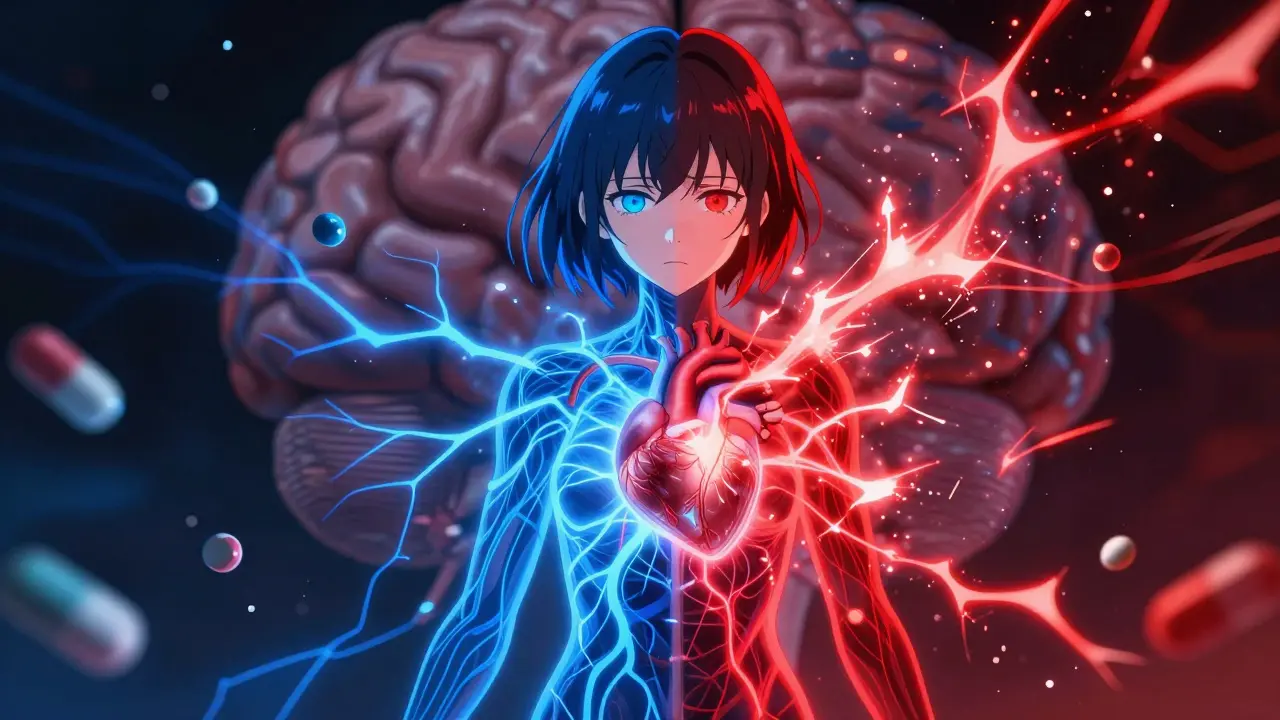
To understand why this mix feels so intense, we need to look at what these substances do inside your brain. Both caffeine and prescription ADHD medications are stimulants, but they operate through different mechanisms. Caffeine, chemically known as trimethylxanthine, works primarily by blocking adenosine receptors, which prevents you from feeling tired. It also modestly increases dopamine levels, the neurotransmitter associated with focus and reward.
Prescription stimulants like Adderall (containing amphetamine and dextroamphetamine) work much more aggressively. They act as potent dopamine and norepinephrine reuptake inhibitors. According to a 2016 meta-analysis published in the Journal of the American Academy of Child & Adolescent Psychiatry, prescription stimulants are roughly 3 to 5 times more effective than caffeine alone for managing core ADHD symptoms. When you combine them, you are essentially pressing two gas pedals at once.
This synergy can be helpful for some. A 2020 study by Kahathuduwa et al., involving boys with ADHD, found that while caffeine alone worsened inhibitory control, a specific combination of L-theanine and caffeine improved total cognition scores. However, the same study highlighted that caffeine’s effect on brain chemistry involves increasing glutamate levels, which can lead to over-excitability if not balanced correctly. For many patients, the result is not better focus, but heightened sensory sensitivity and restlessness.
The Hidden Risks: Cardiovascular Strain and Anxiety
The most significant danger of combining caffeine with ADHD medication lies in cardiovascular health. Dr. David Goodman, an Assistant Professor at Johns Hopkins University School of Medicine, warned in his 2022 publication in Current Psychiatry Reports that combining two CNS stimulants without medical supervision increases the risk of tachycardia (rapid heart rate) by 37% and hypertension (high blood pressure) by 29%. These figures were based on data from VA Hospital records in 2021.
Why does this happen? Both substances increase sympathetic nervous system activity. Your heart beats faster, your blood vessels constrict, and your body enters a state of high alert. For a healthy adult, this might just feel like a strong buzz. For someone with underlying cardiac issues-or even those who develop them due to chronic stress-this can be dangerous. A 2023 study in JAMA Internal Medicine noted that 23% of adult ADHD patients have comorbid cardiovascular issues, making this interaction particularly risky for a large segment of the population.
Anxiety is another major side effect. On Reddit’s r/ADHD community, a 2023 thread analyzed 487 respondents who used caffeine with Adderall. While 41% reported improved focus, a staggering 59% experienced increased anxiety. One user, u/ConcentratedChaos, described taking 20mg of Adderall with a full-strength coffee (95mg caffeine): "I feel amazing until hour 3, then I crash hard with severe anxiety." This pattern is common because the initial surge of dopamine wears off, leaving behind the physical toll of the stimulants without the mental clarity.
| Feature | Caffeine | Adderall / Amphetamines |
|---|---|---|
| Primary Mechanism | Adenosine receptor antagonist; mild dopamine increase | Dopamine and norepinephrine reuptake inhibitor |
| Efficacy for ADHD | d>Low (60-70% less effective than prescriptions) | High (Gold standard for symptom management) |
| Half-Life | 3-7 hours (average 5 hours) | 9-13 hours (complete clearance ~65 hours) |
| Regulatory Status | Generally Recognized As Safe (GRAS) up to 400mg/day | Schedule II Controlled Substance |
| Common Side Effects | Jitters, insomnia, mild anxiety | Appetite suppression, dry mouth, potential tachycardia |
Dosing and Timing: How to Minimize Side Effects
If you choose to consume caffeine while on ADHD medication, timing is everything. The half-life of caffeine is approximately 5 hours, meaning it takes five hours for your body to process half of the amount you consumed. Adderall has a much longer half-life of 10 to 13 hours. If you take both at the same time, their peak effects overlap, creating a spike in stimulation that can overwhelm your system.
Clinical guidelines from the Granite Mountain Behavioral Health Center, based on data from 1,200 patients, recommend waiting at least 4 to 5 hours between consuming caffeine and taking your ADHD medication. Spacing out these doses reduced side effects by 68% in their study while maintaining cognitive benefits. This strategy allows the medication to establish its therapeutic baseline before introducing the additional stimulant load of caffeine.
Start small. Board-certified psychiatrist Dr. Ned Hallowell recommends starting with no more than 100mg of caffeine-one small cup of coffee-while on stimulants. Monitor your body closely. Do you feel anxious? Is your heart palpitations noticeable? These symptoms occur in 31% of initial combination users according to Dr. Hallowell’s 2022 clinical data. If you experience these signs, cut back immediately. Switching to half-caf or decaf coffee, as suggested by many users online, can provide the ritual of coffee without the pharmacological punch.

Hidden Sources of Caffeine and Metabolism Variability
One of the biggest mistakes people make is underestimating their caffeine intake. Caffeine is not just in coffee. It is hidden in energy drinks, pre-workout supplements, chocolate, tea, and even some pain relievers. The FDA defines the maximum safe caffeine intake for healthy adults as 400 mg per day, but for someone on ADHD medication, this limit should be significantly lower. The European Food Safety Authority (EFSA) suggests an acute reference dose of 200mg per single dose, which is a safer benchmark for those on stimulants.
Your genetics also play a crucial role. A 2022 study in the Pharmacogenomics Journal found that 40% of the population are "slow metabolizers" due to variations in the CYP1A2 gene. These individuals process caffeine much slower than others. If you are a slow metabolizer, caffeine stays in your system longer, leading to accumulation and increased side effects when combined with long-acting ADHD meds. This is why two people can drink the same amount of coffee with Adderall and have completely different experiences.
Food intake matters too. Taking stimulants on an empty stomach speeds up absorption, leading to a sharper, more intense peak. A 2021 study in the Journal of Psychopharmacology found that taking both substances with food reduces gastrointestinal distress, which affects 45% of combination users. Eating a balanced meal before your medication can help smooth out the absorption curve, reducing the likelihood of a harsh crash later in the day.
When to Seek Medical Attention
While mild jitters are common, certain symptoms require immediate attention. The FDA issued a draft guidance in 2024 recommending against routine caffeine use with ADHD medications without physician supervision, citing a 27% increase in emergency department visits related to stimulant combinations between 2019 and 2023. Be vigilant for signs of severe cardiovascular strain, such as chest pain, shortness of breath, or fainting. Persistent anxiety that interferes with daily life is also a red flag.
A 2022 survey by the National Alliance on Mental Illness (NAMI) found that 33% of adult ADHD patients who combined caffeine and stimulants required medical attention for side effects, compared to only 8% of those using medication alone. This stark difference highlights the importance of monitoring. Keep a log of your caffeine intake, medication timing, heart rate (using wearable devices if possible), and symptom severity. Tools like the ASRS-v1.1 scale can help track changes in your ADHD symptoms objectively.
Remember, the goal of ADHD treatment is stability and function, not extreme stimulation. If adding caffeine makes your life harder rather than easier, it is worth reconsidering. There are alternatives, such as L-theanine, which has shown promise in calming the nervous system and improving focus without the cardiovascular risks of caffeine. Always consult your healthcare provider before making changes to your regimen, especially when dealing with controlled substances.
Can I drink coffee with my ADHD medication?
Yes, but with caution. Many people consume caffeine with ADHD meds, but it can increase side effects like anxiety and rapid heartbeat. It is best to space them out by 4-5 hours and start with a low dose of caffeine (under 100mg) to see how your body reacts. Always consult your doctor first.
Does caffeine make Adderall last longer?
No, caffeine does not extend the duration of Adderall. In fact, because caffeine has a shorter half-life (3-7 hours) compared to Adderall (10-13 hours), it may wear off quicker, leading to a more pronounced crash as the medication continues to work. Combining them often leads to overlapping peaks rather than extended efficacy.
What are the dangers of mixing caffeine and stimulants?
The primary dangers are cardiovascular, including increased risk of tachycardia (rapid heart rate) and hypertension (high blood pressure). Other risks include severe anxiety, insomnia, and gastrointestinal distress. Studies show a 37% increase in tachycardia risk when combining these substances without supervision.
How much caffeine is safe if I take ADHD medication?
While the FDA states 400mg is safe for healthy adults, experts recommend significantly less for those on stimulants. Starting with no more than 100mg (one small coffee) is advised. Individuals with heart conditions should limit intake to 200mg daily or avoid it entirely, as recommended by the American Heart Association.
Is L-theanine a safer alternative to caffeine with ADHD meds?
L-theanine is often considered a safer option. Studies suggest that L-theanine can improve focus and reduce anxiety without the cardiovascular strain of caffeine. A 2020 study showed that a combination of L-theanine and caffeine improved cognition in ADHD patients, but L-theanine alone may offer calming benefits without the stimulant overload.