When you pick up a prescription, you might see two names on the label: one you recognize from TV ads, and another that’s cheaper and unfamiliar. You might wonder: Are generic drugs really the same as the brand-name version you’ve been taking? The answer isn’t just yes-it’s backed by science, regulation, and millions of real-world prescriptions.
What Exactly Makes a Generic Drug a Generic Drug?
A generic drug isn’t a copycat. It’s not a knockoff. It’s a legally required exact match in one critical way: the active ingredient. That’s the part of the pill that actually does the work-whether it’s lowering blood pressure, killing bacteria, or balancing thyroid hormones. The U.S. Food and Drug Administration (FDA) doesn’t allow a generic to hit shelves unless it contains the same active ingredient, in the same strength, and delivered the same way (pill, injection, patch, etc.) as the original brand-name drug. But here’s where people get confused: generics often look different. They’re a different color, shape, or size. That’s because the inactive ingredients-fillers, dyes, binders, and coatings-are not required to match. These make up most of the pill’s weight, but they don’t affect how the medicine works. Think of it like two different brands of bottled water: same H₂O, different bottle design.How Do We Know Generics Work the Same?
The FDA doesn’t just trust the manufacturer’s word. Every generic drug must pass a strict test called bioequivalence. This means the generic must deliver the same amount of active ingredient into your bloodstream at the same speed as the brand-name version. The acceptable range? Between 80% and 125% of the brand’s performance. That’s not a wide margin-it’s a tight one. If a generic falls outside that range, it’s rejected. This isn’t theoretical. In 2019, a study published in JAMA Internal Medicine looked at data from over 3.5 million patients. It compared generic and brand-name drugs across common conditions: high blood pressure, diabetes, depression, and osteoporosis. The results? No meaningful difference in outcomes. Patients on generic amlodipine had the same blood pressure control as those on Norvasc. Those on generic sertraline had the same improvement in depression symptoms as those on Zoloft. The FDA approves between 1,000 and 1,200 generic drugs every year. Each one goes through this same process. And the agency inspects every manufacturing facility-whether it’s making brand-name or generic drugs-with the same standards. No special treatment. No exceptions.Why Are Generics So Much Cheaper?
Brand-name drugs cost a lot because the company had to pay for years of research, clinical trials, and marketing before the drug even hit the market. That’s why a new drug can cost thousands per month. Generics skip all that. Once a brand-name drug’s patent expires, another company can make the same medicine without repeating expensive trials. They only need to prove bioequivalence. That cuts costs dramatically. The numbers speak for themselves. Metformin, the generic for Glucophage, costs about $4 for a 30-day supply. The brand version? Around $350. Amlodipine, the generic for Norvasc, runs $2 versus $400. Brown University Health reports generics cost, on average, 85% less than their brand-name equivalents. That’s not a small discount-it’s life-changing for people on fixed incomes. According to the Congressional Budget Office, the average patient saves $1,500 to $2,000 a year just by using generics instead of brand-name drugs. Over the past decade, generics saved the U.S. healthcare system more than $2.2 trillion.
Are There Any Exceptions?
For almost every drug, the answer is no. But there’s a small group where extra caution is sometimes taken: narrow therapeutic index (NTI) drugs. These are medications where even tiny changes in blood levels can cause problems. Examples include warfarin (a blood thinner), levothyroxine (for thyroid disease), and some anti-seizure drugs. Even here, the FDA says approved generics are safe and effective. But because the margin for error is so small, some doctors and patients prefer to stick with one version-brand or generic-to avoid any possible fluctuation. That’s a personal or clinical choice, not a safety issue. The FDA has approved generics for all these drugs, and studies show they perform just as well. A 2022 review by Harvard Medical School’s Dr. Aaron Kesselheim analyzed 47 high-quality studies on cardiovascular generics. He found no difference in heart attacks, strokes, or deaths between brand and generic versions. The same holds true for most NTI drugs when used as directed.Why Do Some People Say Generics Don’t Work for Them?
You’ll hear stories. “I switched to generic sertraline and felt awful.” “My blood pressure spiked after the pharmacy changed my pill.” These aren’t lies. But they’re rarely about the active ingredient. The most common cause? Changes in inactive ingredients. Some people are sensitive to dyes, preservatives, or fillers. A small number report stomach upset, headaches, or rashes after switching. According to a GoodRx survey of 5,000 patients, 12% noticed mild side effects after switching to generics-with gastrointestinal issues being the most frequent. That’s rare. Only about 0.05% of generic switches lead to reported adverse events, according to FDA data. And if this happens, it’s fixable. Talk to your pharmacist. They can often switch you back to the brand, or to a different generic made by another company with different inactive ingredients. Also, appearance changes can mess with adherence. If your pill suddenly looks different, you might think it’s the wrong medicine. That’s why pharmacists are trained to explain the switch. At UC Health Net, 95% of patients understand the concept after just a two-minute conversation.Who’s Making These Drugs-and Are They Safe?
About 80% of the active ingredients in U.S. generics come from overseas, mostly India and China. That sounds scary, but the FDA inspects every facility-domestic or foreign-with the same rules. In 2022, the agency conducted over 3,500 inspections. When problems are found, the FDA issues import alerts and blocks shipments. Less than 0.5% of generic production has been affected by these alerts. Major generic manufacturers include Teva, Mylan, and Sandoz. But there are over 150 companies competing in the U.S. market. That competition keeps prices low and quality high.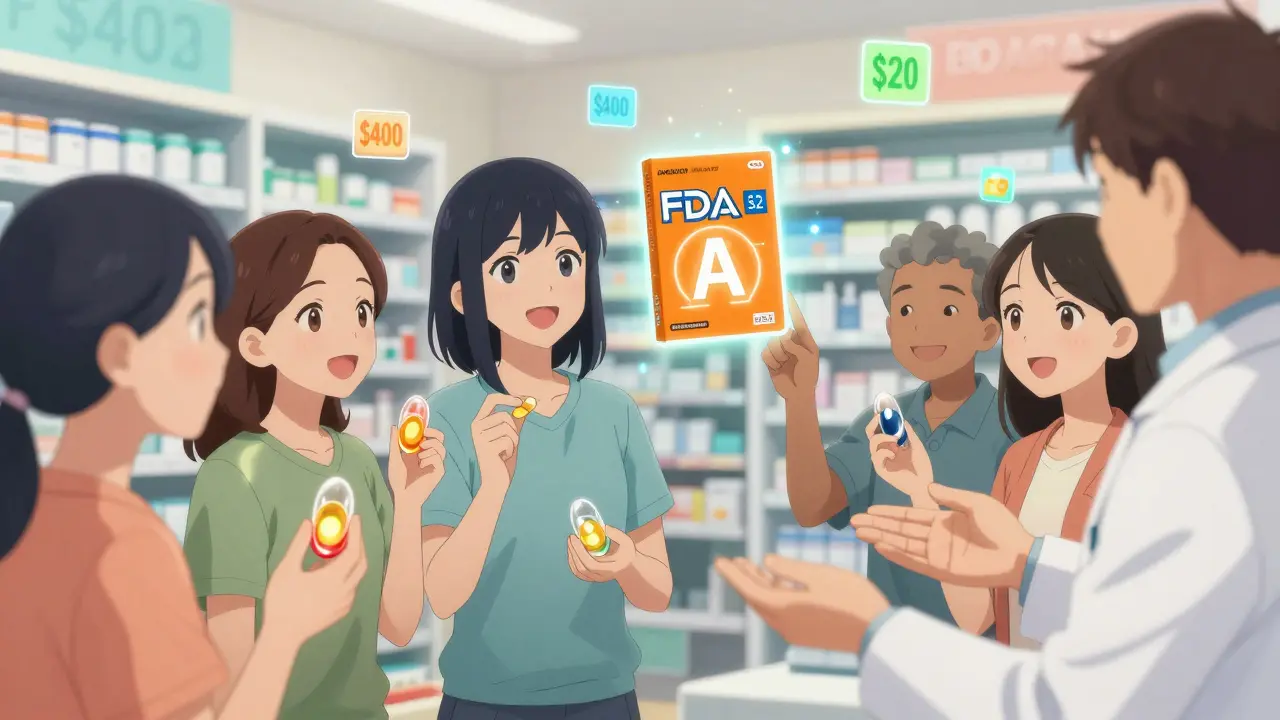
How Do You Know If a Generic Is Right for You?
Ask your doctor or pharmacist. They can tell you if your medication is on the list of drugs where generics are proven equivalent. You can also check the FDA’s Orange Book online-it lists every approved drug and its therapeutic equivalence rating. Drugs marked with an “A” rating are considered interchangeable. If your insurance requires you to use a generic, that’s standard practice. Humana reports 92% of brand-name requests are automatically switched to generics unless the doctor says otherwise. That’s because it’s not just cost-effective-it’s evidence-based.What About Newer Drugs? Are There Generics Yet?
Most brand-name drugs have patents that last 20 years from the filing date. But they often get extra exclusivity-up to 5-7 years-after approval. So if a drug was approved in 2018, you might not see a generic until 2025 or later. But that’s changing fast. The FDA’s 2023 Drug Competition Action Plan is targeting 50 drugs that have stayed brand-only for too long. Major blockbusters like Eliquis and Stelara are set to lose patent protection by 2025. That means generics for these $10 billion-a-year drugs will hit the market soon, potentially saving patients hundreds of thousands of dollars per year.Bottom Line: Generics Are Not Second-Best
They’re not cheaper because they’re worse. They’re cheaper because the system works the way it should. The active ingredient is identical. The performance is identical. The safety standards are identical. The only real difference? The price tag. If you’ve been hesitant to switch to a generic because you’re worried it won’t work, you’re not alone. But the data doesn’t lie. For over 90% of prescriptions, generics are the smart, safe, and effective choice. The next time your pharmacist hands you a different-looking pill, don’t hesitate. Ask them to explain it. Then take it. Your wallet-and your health-will thank you.Are generic drugs as effective as brand-name drugs?
Yes. The FDA requires generic drugs to contain the same active ingredient, strength, dosage form, and route of administration as the brand-name version. They must also prove bioequivalence-meaning they deliver the same amount of medicine into your bloodstream at the same rate. Studies involving millions of patients show no meaningful difference in effectiveness for conditions like high blood pressure, diabetes, depression, and more.
Why do generic drugs look different from brand-name drugs?
The appearance-color, shape, size-is determined by the inactive ingredients, which are not required to match the brand. Trademark laws prevent generics from looking identical to brand-name drugs. But these differences don’t affect how the medicine works. The active ingredient, the part that treats your condition, is exactly the same.
Can generic drugs cause side effects that brand-name drugs don’t?
Sometimes, but rarely. Side effects from generics are usually due to differences in inactive ingredients-like dyes or fillers-that some people may be sensitive to. Less than 0.05% of generic switches result in reported adverse events. If you notice new symptoms after switching, talk to your pharmacist. They can often switch you to a different generic version or back to the brand.
Are all generic drugs approved by the FDA?
Yes. Every generic drug sold in the U.S. must be approved by the FDA. Manufacturers must prove bioequivalence and meet the same strict manufacturing standards (cGMP) as brand-name companies. The FDA inspects all facilities-domestic and foreign-before approving a generic and continues to monitor quality after approval.
Can I switch between different generic brands of the same drug?
Yes. The FDA considers all approved generics of the same drug to be therapeutically equivalent. However, if you’re on a narrow therapeutic index drug like warfarin or levothyroxine, your doctor may recommend sticking with one version to avoid any potential fluctuations. For most other medications, switching between generic brands is safe and common.
Why does my insurance make me use generics?
Because generics are just as effective and cost far less. Insurance plans use generics to keep premiums and out-of-pocket costs down for everyone. In fact, 92% of brand-name prescription requests are automatically substituted with generics unless your doctor specifically says not to. This isn’t a cost-cutting trick-it’s standard, evidence-based practice.
Are generic drugs made in the same facilities as brand-name drugs?
Sometimes, yes. Many brand-name companies also make generic versions of their own drugs. Other times, generics are made by separate manufacturers. But regardless of who makes them, every facility-whether producing brand or generic-must meet the same FDA standards for quality, cleanliness, and testing. The FDA inspects all of them equally.


Comments (14)
Sally Dalton
i switched my blood pressure med to generic last year and honestly? i didn’t notice a difference. my doctor said it’d be fine, but i was scared. turns out, my wallet is way happier than my body ever was. also, the pill looks like a rainbow now, which is kinda fun lol.
eric fert
Oh please. Let’s not pretend this is some grand scientific triumph. The FDA’s bioequivalence range of 80–125%? That’s a 45% swing in absorption. That’s not ‘the same’-that’s ‘close enough for government work.’ I’ve seen people crash after switching generics. And don’t get me started on the fact that 80% of the active ingredients come from factories in India where inspectors show up five minutes before the audit and the workers are paid in chai and hope. This isn’t medicine-it’s a gamble dressed up in a lab coat.
Curtis Younker
Guys, let’s take a second to appreciate how amazing this is. Generics save people’s lives every single day. I’ve got a friend on fixed income who couldn’t afford her diabetes meds until she switched to metformin. Now she’s hiking, cooking for her grandkids, and actually sleeping through the night. That $4 pill? It’s not just a drug-it’s freedom. And yeah, maybe the color’s different, but your health doesn’t care what shade the pill is. It just cares that it works. So thank you, FDA, and thank you, generic manufacturers-you’re the real MVPs.
Renia Pyles
So let me get this straight-you’re telling me that a pill that looks like a piece of neon candy from a 90s arcade is just as good as the one I’ve been taking for 12 years? That’s not science. That’s corporate propaganda. I switched and got migraines for three weeks. They told me it was ‘stress.’ I know better. Someone’s profit margin is my headache.
TONY ADAMS
i just take whatever the pharmacy gives me. dont care what it looks like. as long as it stops my pain. also, my cat licked my pill once and lived. so it’s probably fine.
George Rahn
One must interrogate the epistemological foundations of pharmaceutical equivalence. The FDA’s regulatory framework, while ostensibly grounded in empirical rigor, is in fact a product of late-capitalist efficiency logic-a system that prioritizes cost-reduction over ontological certainty. The pill, as an artifact, is no longer a vessel of healing, but a commodified signifier of bureaucratic trust. When one ingests a generic, one does not merely consume chemistry; one surrenders to a techno-economic apparatus that reduces the sacred act of healing to a line item on a balance sheet.
rasna saha
in india, we’ve been using generics for decades. my mom takes her thyroid med as generic and she’s been fine for 10 years. i think people in the us overthink this too much. if the FDA says it’s good, it’s good. no need to panic.
Skye Kooyman
my pill changed color again. guess i’m on the new generic. whatever. i take it. it works. end of story.
James Nicoll
so let me get this straight-we’re celebrating a system where the same drug is sold under two names, one with a $400 price tag and a fancy logo, and the other with a 1997 Windows 95 aesthetic? That’s not innovation. That’s capitalism doing its best impression of a magician pulling a rabbit out of a hat-except the rabbit is just a slightly different shade of white.
Kipper Pickens
From a pharmacokinetic standpoint, the bioequivalence threshold of 80–125% AUC and Cmax is statistically robust within the context of population-level outcomes, but individual pharmacogenomic variance-particularly in CYP450 polymorphisms-can introduce inter-individual variability that may not be captured in aggregate data. Thus, while the FDA’s framework is epidemiologically sound, it may not account for subphenotypic responses in sensitive populations, particularly those with polypharmacy or metabolic comorbidities.
Aurelie L.
I’ve been on the same generic for years. Never had an issue. But I still check the label. Because I’m British. And we don’t trust anything that doesn’t come with a manual.
Joanna Domżalska
you say generics are the same but what about the placebo effect? if you think the brand is better, it works better. the pill doesn’t care. your brain does. so maybe the real difference is in your head. and if your head believes in magic, then the brand is magic. and that’s fine. but don’t pretend science backs it.
bella nash
The regulatory architecture governing pharmaceutical equivalence is predicated upon a utilitarian calculus that privileges macroeconomic efficiency over microindividual fidelity. While the aggregate outcomes demonstrate statistical parity, the ontological discontinuity between the branded and generic artifact remains unacknowledged in public discourse. One must ask: Is therapeutic equivalence a scientific conclusion, or a sociopolitical concession?
Geoff Miskinis
Let’s be honest-this entire system is a farce. The FDA inspects factories? Sure. But how many of those inspections are scheduled? How many are surprise? And let’s not forget the fact that the same companies that make brand-name drugs often make the generics too-just under a different label. It’s like a magician saying, ‘I’m not cheating-I’m just using the same deck.’