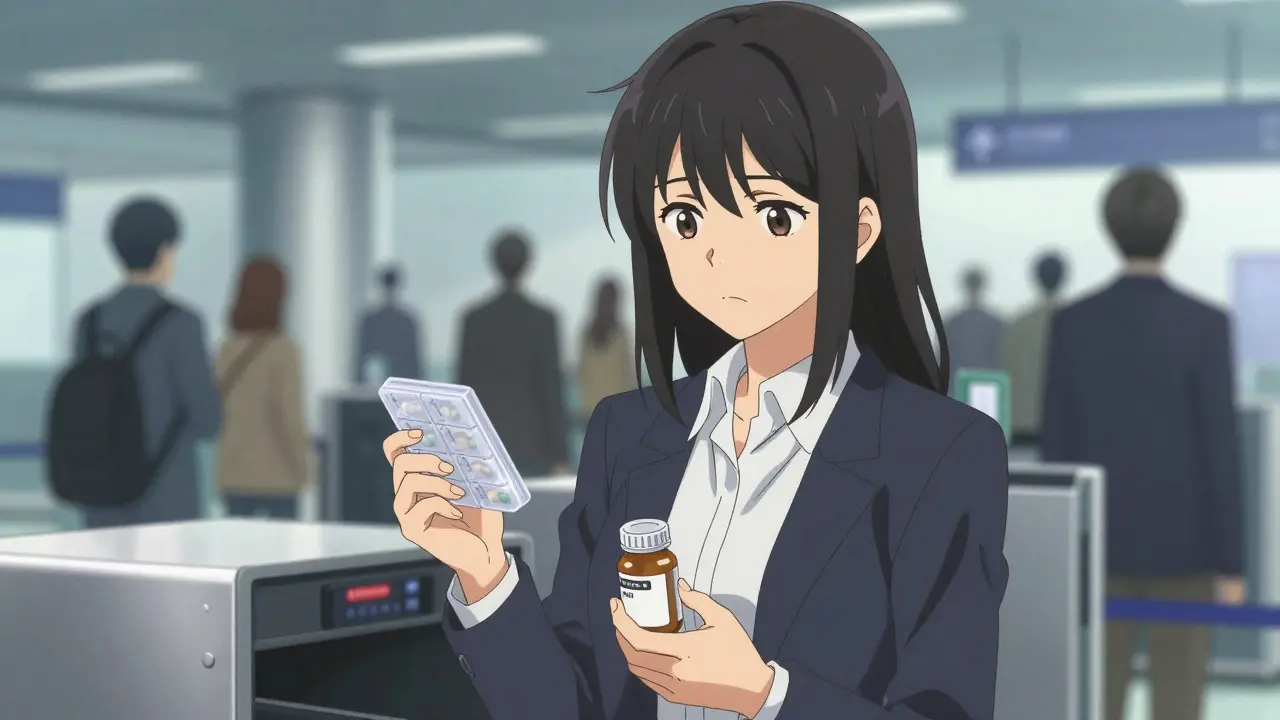
Imagine standing at the security checkpoint with a pill organizer full of your daily meds. The officer scans it, asks what it is, and you realize you don't have the bottle or the label. This simple moment can turn into a stressful delay, especially if you're heading to a country with strict import laws. While the U.S. Transportation Security Administration (TSA) doesn't strictly require you to keep medicines in their original containers is the pharmacy-issued packaging that includes the drug name, strength, dosage, and prescribing physician information. Keeping your meds in these specific bottles isn't just about following rules; it's your best defense against legal trouble, customs delays, and lost medication.
Why Original Containers Matter More Than You Think
You might assume that because TSA says you can use pill cases, it's safe to transfer everything. But that's only half the story. Federal security guidelines are permissive, yet state laws and international regulations often tell a different tale. According to the National Association of Boards of Pharmacy, 37 U.S. states have specific labeling requirements that mandate prescription medications be in their original containers when transported across state lines. If you fly from California to Texas, you're technically crossing regulatory boundaries where the container matters legally, not just for security.
The real risk lies in international travel. The Centers for Disease Control and Prevention reported that nearly half of medication-related travel incidents in 2023 involved common drugs deemed illegal in destination countries. When customs officers see pills in a generic plastic case, they have no way to verify authenticity or legality. A study by the International Association for Medical Assistance to Travelers found that travelers using original containers experienced 73% fewer delays during customs inspections compared to those using pill organizers. That’s a significant difference when you’re already tired from flying.
TSA Rules: What Is Actually Allowed?
Let's clear up the confusion around domestic flights within the United States. The TSA's official position, updated in September 2023, states there is no limit to the amount of medicine you can bring in pill or solid form, provided it is screened at the airport. They explicitly note that they don't ask you to keep medicines in their original prescription bottles. So, technically, a weekly pill organizer is fine for a short domestic trip.
However, there are nuances. Liquid medications over 3.4 ounces are allowed in reasonable amounts, but you must declare them to a TSA officer at the start of screening. United Airlines' accessibility guidelines emphasize a critical point: never place medication in a checked bag. Why? Because cargo holds can get extremely cold or hot. An International Air Transport Association report showed that 17.3% of medications in checked luggage experienced temperature excursions beyond manufacturer specifications. Keep your meds in your carry-on, whether in a bottle or a case.
Navigating International Borders and Legal Risks
This is where keeping original containers becomes non-negotiable. Different countries have wildly different rules about what you can bring in. For example, pseudoephedrine (found in Sudafed) is prohibited in Japan, the UAE, and South Korea. Codeine-containing medications are restricted in Thailand, Singapore, and the UAE. Even popular ADHD medications like Adderall and Ritalin are banned in several European and Middle Eastern countries without special permits.
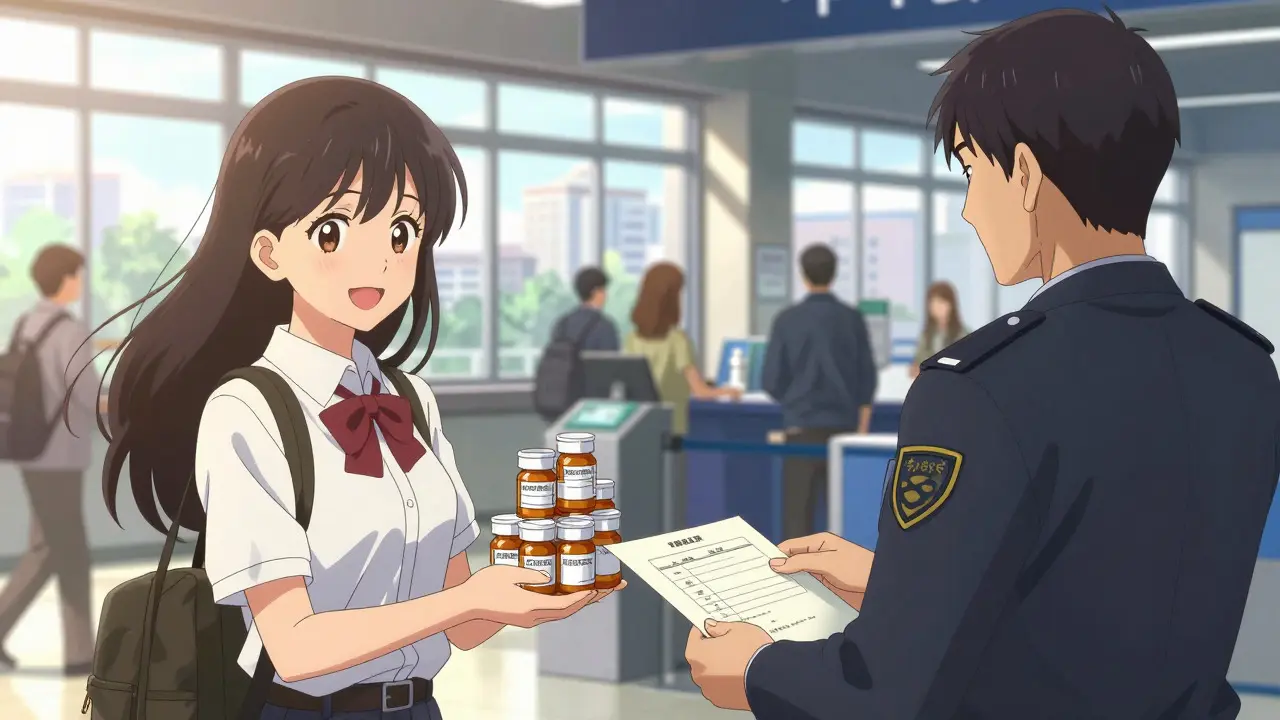
When you present a medication in its original pharmacy-labeled container, you provide immediate proof of what the drug is, how much you have, and who prescribed it. The U.S. Embassy in Mexico reported a 68% reduction in medication-related entry denials when travelers presented meds in pharmacy-labeled containers with accompanying physician documentation. Without that label, you're essentially guessing with your freedom on the line. Always check the specific entry requirements for your destination country before packing.
Documentation: Your Safety Net
Even with the right container, having extra paperwork makes life easier. Experts from the Cleveland Clinic recommend carrying a copy of the prescription or a letter from your doctor. This letter should describe your medical condition, list the medicines by their generic names, and include the physician's license number and contact info. Printing this on official letterhead adds a layer of credibility that border agents appreciate.
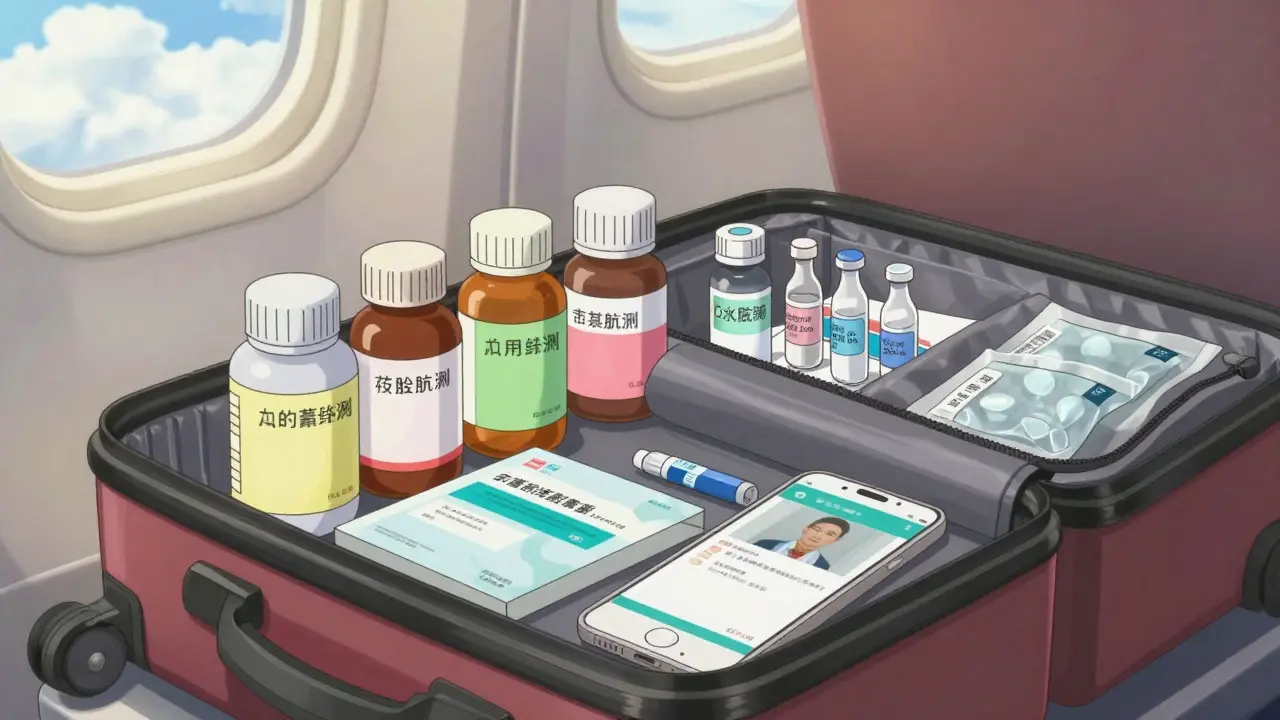
If you do choose to use a pill organizer for convenience, make sure to label it clearly. Write down the medication name, dose, frequency, and expiration date on each compartment. Alternatively, take a photo of the original bottle and save it in your phone. If asked, showing the photo alongside the organized pills can bridge the gap between convenience and compliance. Just remember, for long trips or international flights, sticking to the original bottles is the safest bet.
Handling Special Cases: Liquids and Temperature
Not all medications come in solid pills. Liquid insulin, liquid antibiotics, or compounded gels need special attention. TSA allows medically necessary liquids exceeding the standard 3.4-ounce limit, but you must declare them. Place them separately in your bin during screening to avoid confusion. If your medication requires refrigeration, ice packs are permitted, but they must also be declared. Note that dry ice has stricter weight limits, so gel ice packs are usually safer for short flights.
Temperature control is crucial. The Cleveland Clinic advises consulting your pharmacist about storage requirements. Some biologics degrade quickly if exposed to heat. If you're traveling in summer, consider insulated pouches designed for medical transport. Don't rely on the cabin air conditioning to keep your insulin cool; the variance can be too high. Proactive storage prevents expensive replacement costs if your meds spoil mid-trip.
Comparison: Pill Organizers vs. Original Containers
| Feature | Pill Organizer | Original Container |
|---|---|---|
| TSA Compliance (US) | Allowed | Allowed |
| State Law Compliance | Risky in 37 states | Compliant everywhere |
| International Customs Risk | High (verification issues) | Low (clear identification) |
| Convenience | High (pre-sorted doses) | Medium (bulkier) |
| Documentation Needs | Requires labels/photos | Built-in label |
Practical Checklist Before You Fly
To ensure a smooth journey, run through this quick checklist before you head to the airport:
- Check Destination Laws: Verify if your specific medications are legal in your destination country. Use resources like the U.S. Department of State Travel Advisories.
- Keep Meds in Carry-On: Never put essential medications in checked baggage due to temperature risks and potential loss.
- Use Original Bottles: For international travel or if unsure, stick to the pharmacy-issued containers with labels intact.
- Bring Extra Supply: Pack enough for the whole trip plus a few extra days in case of delays. Treatment may not be available abroad.
- Prepare Documentation: Carry a doctor's letter or prescription copy. Include generic names and dosage instructions.
- Declare Liquids: Tell TSA officers about any liquid medications over 3.4 ounces and any ice packs.
Frequently Asked Questions
Does TSA require medications to be in original bottles?
No, the TSA does not strictly require medications to be in original prescription bottles for domestic flights within the U.S. However, they recommend it for smoother screening. State laws and international customs often have stricter requirements, making original containers the safer choice for most travelers.
Can I bring liquid medication over 3.4 ounces?
Yes, you can bring liquid medications in reasonable amounts exceeding 3.4 ounces in your carry-on. You must declare these liquids to a TSA officer at the start of the screening process. They are exempt from the standard liquid limits for toiletries.
What documents should I carry with my medications?
It is best to carry a copy of your prescription or a letter from your doctor. The letter should include your name, the medication's generic name, strength, dosage, and the doctor's contact information. This helps verify the medication's legitimacy at customs or security checkpoints.
Is it safe to put pills in checked luggage?
Generally, no. It is recommended to keep all essential medications in your carry-on bag. Checked bags are subject to extreme temperatures and pressure changes that can degrade certain drugs. Additionally, if your luggage is delayed, you lose access to your medication.
Do I need a permit for controlled substances abroad?
Often, yes. Many countries restrict or ban common controlled substances like opioids, benzodiazepines, and stimulants. Check the specific entry requirements for your destination. Some countries require a special import permit or a notarized letter from your doctor to allow entry with these medications.