
Antidepressant Risk Assessment Tool
Personal Risk Assessment
This tool helps you understand your personal risk of side effects from antidepressants with black box warnings. Based on your health profile and medication use, it calculates your relative risk and provides guidance.
How This Works
Based on FDA black box warning data and clinical studies, this tool calculates your relative risk of experiencing serious side effects from antidepressants, particularly increased suicidal thoughts in certain age groups.
When a drug comes with a black box warning, it’s not just a caution - it’s a red flag. This isn’t a small print footnote or a vague note tucked into the side of a label. It’s the FDA’s loudest, most urgent signal that a medication can cause serious harm - even death - if used the wrong way. You’ll see it as a thick black border around bold text at the very top of the drug’s prescribing information. It’s designed to stop you in your tracks. And it should.
What Exactly Is a Black Box Warning?
A black box warning, also called a boxed warning, is the highest level of safety alert the U.S. Food and Drug Administration (FDA) can issue for a prescription drug. It’s not used lightly. The FDA only puts it on a drug when there’s clear evidence from clinical studies or real-world use that the medication carries a significant risk of death or serious injury. These aren’t hypothetical risks. They’re proven, documented, and serious enough that doctors need to think twice before prescribing. The warning appears in three key places: the drug’s official prescribing information (also called the package insert), the patient labeling, and any promotional materials the manufacturer sends to doctors. The black border makes it impossible to miss. It’s meant to be the first thing a prescriber sees before reading anything else about the drug. Since the 1960s, the FDA has required these warnings, but the modern black box format became standard in the 1980s. Today, more than 400 prescription drugs carry one. That includes medications for depression, diabetes, seizures, pain, and even some cancer treatments. Just because a drug has a black box warning doesn’t mean it’s unsafe for everyone - but it does mean the risks are real and must be weighed carefully.Why Does the FDA Use Black Box Warnings?
The FDA doesn’t slap these warnings on drugs just to scare people. They’re there to make sure the benefits of a drug truly outweigh its dangers - and that patients and doctors are fully aware of what they’re getting into. The agency typically requires a black box warning in three situations:- The drug has a risk so serious that it could outweigh its benefits for some patients - like a 1 in 100 chance of life-threatening liver damage.
- The side effects can be reduced or avoided if the drug is used in a specific way - such as requiring regular blood tests, avoiding certain other medications, or not giving it to people with certain health conditions.
- There are strict rules around who can take it - like only allowing it to be prescribed by specialists, or banning it for pregnant women or children.
How Are These Warnings Decided?
Getting a black box warning isn’t a quick process. It’s the result of years of research and ongoing monitoring. First, a drug goes through lab tests, animal studies, and clinical trials in humans. If serious risks show up during this phase, the FDA might require the warning before approval. But more often, the warning comes after the drug is already on the market. That’s because some dangers only appear when thousands - or millions - of people start using the drug in real life. That’s where the FDA’s Adverse Event Reporting System (FAERS) comes in. Doctors, patients, and drug companies report side effects. When enough reports point to the same serious problem - like sudden heart rhythm changes or liver failure - the FDA investigates. If the evidence is strong enough, they require the manufacturer to add a black box warning. The most recent comprehensive guidance on how to write these warnings came from the FDA in 2011. But updates happen constantly. A drug might get a new warning in 2025 based on data collected in 2024. That’s why it’s important to check the latest prescribing information, even if you’ve been taking a medication for years.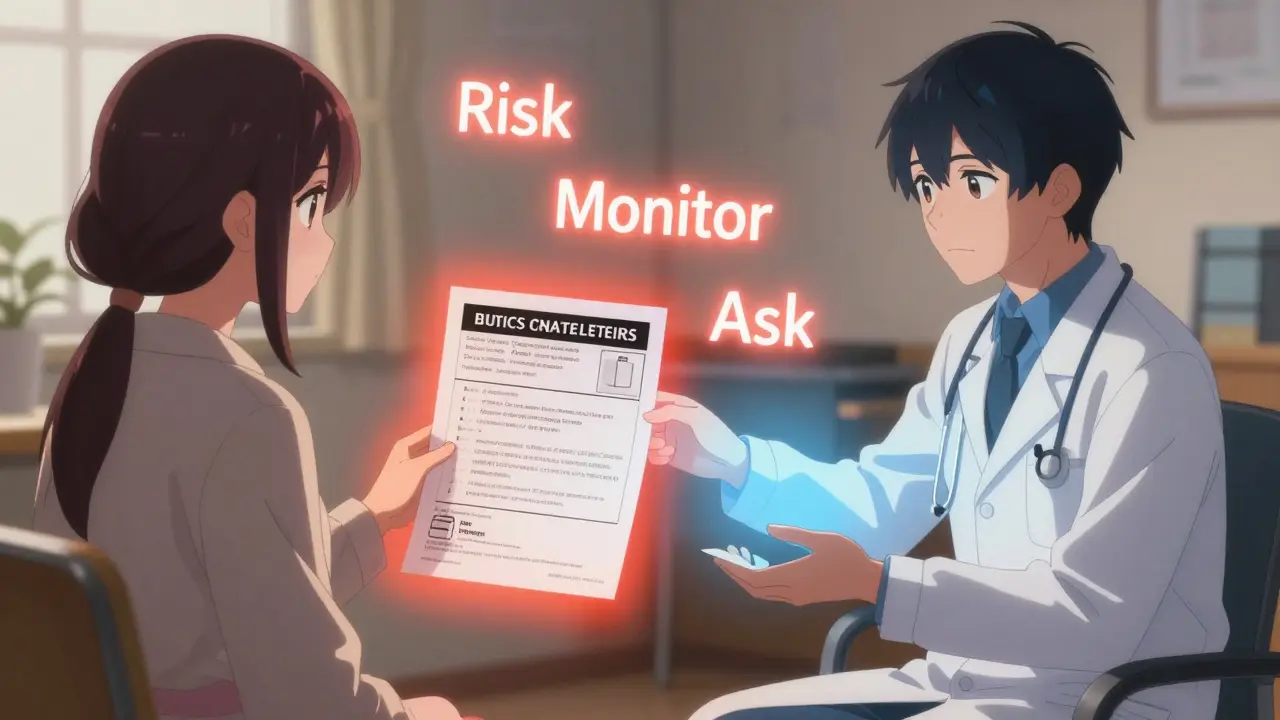
Do Black Box Warnings Actually Work?
Here’s the tricky part: they don’t always change behavior. Take rosiglitazone, a diabetes drug that got a black box warning in 2007 over heart attack risk. After the warning, prescriptions dropped by 70%. But that drop wasn’t just because of the warning. It was because of media coverage, public concern, and new studies published in major journals. Meanwhile, another diabetes drug, pioglitazone, got a similar warning - but with far less media attention - and prescriptions barely changed. This shows something important: the warning alone isn’t enough. It needs to be paired with education, media attention, and clear guidance from doctors. Some prescribers still use drugs with black box warnings because the benefits for their patients are clear - like using a high-risk psychiatric drug when nothing else works. But they do it with full awareness. Experts agree: the goal isn’t to stop doctors from using these drugs. It’s to make sure they use them intentionally - not by accident.What Should You Do If Your Medication Has a Black Box Warning?
If you’re taking a drug with a black box warning, don’t panic. Don’t stop cold turkey. Talk to your doctor. Ask these questions:- What’s the specific risk? (Not just “it’s dangerous” - what exactly could happen?)
- How likely is it to happen to me?
- Are there tests I need to have regularly? (Like blood work or heart monitoring?)
- Are there other drugs I should avoid while taking this one?
- Is there a safer alternative? And if so, how do they compare in effectiveness?
How Can You Help Improve Drug Safety?
You’re not just a passive recipient of these warnings. You can help make the system better. If you experience a serious side effect - even if you think it’s unrelated - report it. The FDA’s MedWatch program lets patients, caregivers, and doctors submit reports online or by phone. These reports go into FAERS, the system that helps the FDA spot new safety signals. You can also use independent resources to compare drugs. Sites like the Drug Effectiveness Review Project and Consumer Reports’ Best Buy Drugs offer unbiased comparisons of safety, effectiveness, and cost. They don’t push brand names. They just tell you what the data says. And if you feel a black box warning is missing for a drug you think is dangerous, you can petition the FDA. Patient advocacy groups have successfully pushed for warnings on several medications over the years.What’s Next for Black Box Warnings?
The system isn’t perfect. Critics say the warnings are too vague - they say “serious risk” without saying how serious or how likely. Some experts want warnings to include numbers: “1 in 500 patients may develop liver failure.” That would help patients understand their personal risk. The FDA has said it’s exploring ways to make warnings more patient-friendly - clearer language, better formatting, maybe even visual icons. But for now, the black box remains the gold standard. What won’t change is its role as the most serious tool the FDA has to protect public health. It’s not about fear. It’s about awareness. It’s about making sure that when a drug carries a risk that could kill someone, no one misses it. If you’re prescribed a drug with a black box warning, you’re not being handed a dangerous pill. You’re being handed a responsibility - to ask questions, to pay attention, and to speak up if something feels wrong.Do all drugs with black box warnings cause death?
No. A black box warning means there’s a serious risk of death or severe injury - but that doesn’t mean it will happen to you. Many people take these drugs safely for years. The warning is there because the risk is real enough that doctors need to evaluate it carefully for each patient. For some, the benefits - like controlling seizures or treating life-threatening depression - far outweigh the risks.
Can I stop taking a drug with a black box warning on my own?
Never stop a prescription medication without talking to your doctor first. Some drugs with black box warnings - like antidepressants or seizure medications - can cause dangerous withdrawal symptoms or rebound effects if stopped suddenly. Your doctor can help you taper off safely or switch to a different treatment if needed.
Are over-the-counter drugs ever given black box warnings?
No. Black box warnings only apply to prescription drugs. The FDA doesn’t use this format for over-the-counter (OTC) medications. But OTC drugs still come with warning labels - especially pain relievers like NSAIDs, which can cause stomach bleeding or kidney damage with long-term use. Always read the Drug Facts label carefully.
How often are black box warnings added after a drug is already on the market?
Most of them. The FDA approves drugs based on data from clinical trials, which involve a few thousand patients. But once millions of people start using a drug in the real world, rare or long-term side effects can appear. About 80% of black box warnings are added after approval, based on reports from doctors and patients through the FDA’s MedWatch system.
Can a drug lose its black box warning?
Yes, but it’s rare. If new research shows the risk was overestimated - or if safety measures like monitoring programs make the risk manageable - the FDA can remove or modify the warning. For example, some older warnings about birth control pills were updated as better data became available. But once a warning is added, it usually stays unless strong evidence proves it’s no longer needed.




Comments (15)
Jodi Harding
Black box warnings aren't scary because they exist-they're scary because we pretend they're just paperwork. I've seen doctors gloss over them like they're ads for cereal. If your life depends on it, you better read every word.
Chuck Dickson
My grandma’s on one of these meds-seriously, she’s been on it for 12 years and still hikes every weekend. It’s not about fear, it’s about awareness. Talk to your doc, don’t panic. We’re not helpless here.
Danny Gray
They’re not warnings-they’re propaganda. The FDA’s just another branch of Big Pharma’s PR machine. You think they’d let a drug with real lethal potential stay on the market? Nah. They just want you scared enough to pay for the ‘safer’ alternatives they own.
Zoe Brooks
Love how this post doesn’t just scare people-it gives you tools. Asking ‘What’s the specific risk?’ is the smartest thing you can do. Too many people just quit meds cold turkey and wonder why they crash. 🙏
Kristin Dailey
Why are we even talking about this? If you’re dumb enough to take a drug with a black box warning, you deserve what you get. America’s too soft. Just ban the stuff.
Wendy Claughton
I’ve been reading this for 20 minutes… and I’m still not sure if I’m supposed to be terrified or grateful. 😅 Maybe both. But I do know-I’m printing this out and taking it to my next appointment. Thank you for not just yelling into the void.
Stacey Marsengill
You think this is bad? Wait till you find out how many drugs were pulled after people died… and the FDA still didn’t update the label for another three years. They don’t care. They just want your subscription fee.
Aysha Siera
Black box? More like black op. They’re hiding the real dangers-like how these drugs are tested on poor countries first. You think this is about safety? It’s about control.
rachel bellet
It’s statistically irresponsible to conflate relative risk with absolute risk. A 1 in 500 chance of hepatotoxicity is not equivalent to ‘likely death.’ The FDA’s language is deliberately vague to induce behavioral compliance without scientific rigor.
Pat Dean
My cousin died from one of these. They told her it was ‘rare.’ Rare doesn’t matter when it’s your kid. If you’re not screaming about this, you’re part of the problem.
Robert Davis
Interesting how they never mention that 70% of black box warnings are added after the drug’s been on the market for over 5 years. That’s not safety-it’s negligence. We’re using patients as lab rats.
Max Sinclair
Thank you for writing this with clarity and care. Too many posts on this topic either panic people or dismiss them entirely. The STEPS framework is gold. I’m sharing this with my patients tomorrow.
Praseetha Pn
They’re lying. The FDA doesn’t have the power to force recalls. The drug companies do it themselves-only when the lawsuits get too big. That’s why warnings come late. It’s not science. It’s money.
Robert Cassidy
Let me ask you this: if a drug can kill you, why is it even legal? We don’t let people drive cars that might explode. Why do we let them take pills that might shut down their liver? It’s not medicine-it’s Russian roulette with a prescription.
Chuck Dickson
Robert, I get where you’re coming from-but if we banned every drug with a black box, we’d lose half the treatments for cancer, epilepsy, and severe depression. The system’s flawed, but it’s not broken. It’s just underused. Talk to your doctor, don’t just rage at the label.