
Azathioprine vs. Mycophenolate Interaction Checker
Step 1: Select Medication
Select the primary immunosuppressant you are taking.
Step 2: Check Interactions
Select any other medications or supplements you are considering or currently taking.
Safety Analysis
No DataSelect a medication and potential interactions to view safety guidelines.
Imagine your immune system is a security guard. When it works correctly, it keeps threats out. But in autoimmune diseases or after an organ transplant, that guard goes rogue, attacking your own body or rejecting the new organ. To calm it down, doctors prescribe immunosuppressants like Azathioprine, a thiopurine prodrug converted to 6-mercaptopurine to inhibit DNA synthesis or Mycophenolate Mofetil (MMF), a prodrug that selectively inhibits inosine monophosphate dehydrogenase (IMPDH). These aren't just vitamins you pop when you feel under the weather; they are powerful medications with complex rules for how they interact with other drugs, your genes, and even your diet.
Getting these interactions wrong can lead to severe toxicity or treatment failure. You might experience dangerous drops in blood counts, severe gastrointestinal distress, or worse-your body might reject the transplanted organ. Understanding the specific mechanics of how Azathioprine and Mycophenolate work, and what you must avoid taking with them, is not just good advice; it’s a safety requirement.
How They Work: The Mechanism Matters
To understand why certain drugs interfere with Azathioprine or Mycophenolate, you first need to know what they are doing inside your body. Both drugs stop cells from dividing too quickly, which calms the immune response. However, they take different paths to get there.
Azathioprine is a prodrug, meaning it isn’t active until your liver converts it into 6-mercaptopurine. This substance then forms thioguanine nucleotides, which essentially jam the machinery that builds DNA. It’s a blunt instrument-it affects all rapidly dividing cells, including healthy ones like those in your bone marrow and gut lining.
Mycophenolate takes a more targeted approach. It converts into mycophenolic acid (MPA), which blocks a specific enzyme called IMPDH. This enzyme is crucial for making purines, the building blocks of DNA, specifically in immune cells (T and B lymphocytes). Because normal cells have backup pathways to make purines, Mycophenolate spares them better than Azathioprine does. This selectivity is why Mycophenolate often causes less bone marrow suppression but still wreaks havoc on the gut, leading to diarrhea in up to 40% of patients.
The Azathioprine Interaction Minefield
Azathioprine has one major, non-negotiable interaction that every patient needs to know about: Allopurinol, a xanthine oxidase inhibitor used to treat gout.
Here is the problem. Your body uses an enzyme called xanthine oxidase to break down Azathioprine safely. Allopurinol stops this enzyme from working. If you take both, Azathioprine builds up to toxic levels in your blood. According to FDA data, this combination increases the risk of severe myelotoxicity (bone marrow damage) by 6.3 times. It can lead to life-threatening infections because your white blood cell count plummets.
If you need Allopurinol for gout while on Azathioprine, it is not always impossible, but it requires extreme caution. Doctors usually reduce the Azathioprine dose by 75% and monitor blood counts weekly. Never start Allopurinol without telling your specialist you are on Azathioprine.
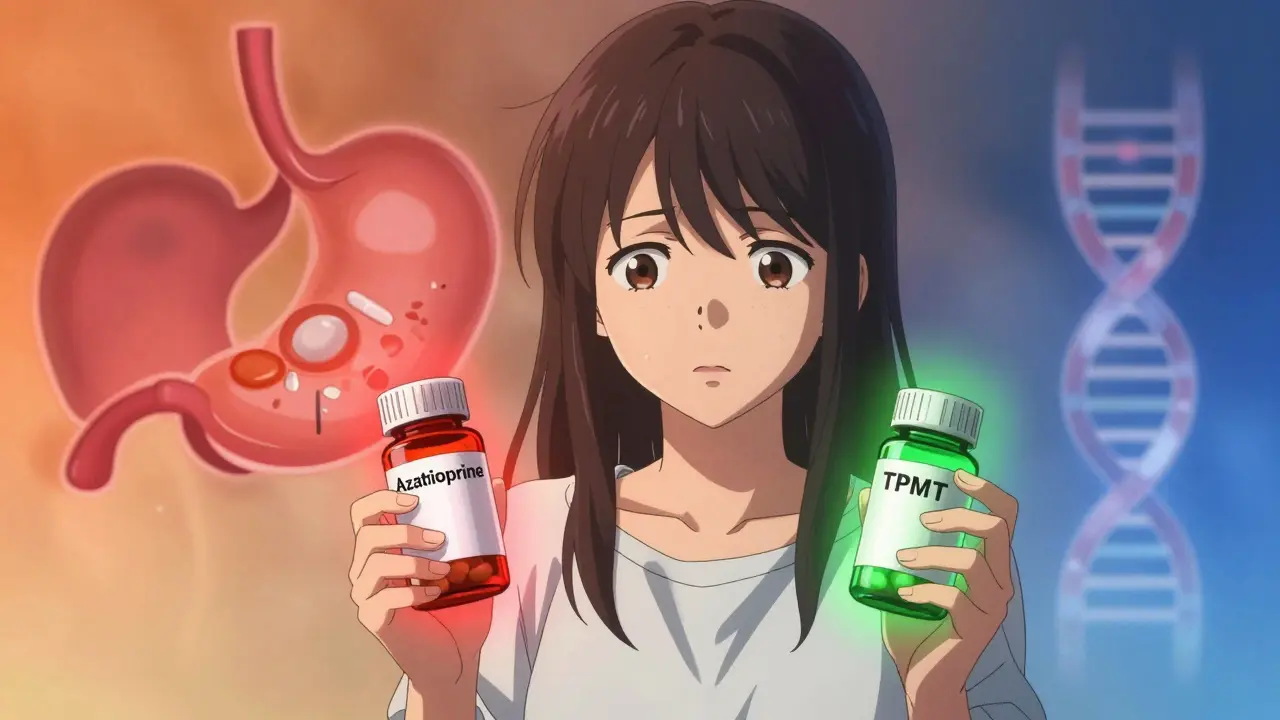
Another critical factor is your genetics. About 11% of people have intermediate activity, and 0.3% have deficient activity of an enzyme called TPMT (thiopurine methyltransferase). This enzyme helps clear Azathioprine. If you lack it, standard doses become toxic. This is why TPMT testing (costing $250-$400) is standard before starting therapy. Without it, you risk severe hematological toxicity.
Mycophenolate: Food, Acids, and Absorption Issues
Mycophenolate doesn’t have the same dramatic genetic trap as Azathioprine, but it is finicky about absorption. Its active form, MPA, binds heavily to proteins in your blood. Anything that changes protein binding or gut acidity can change how much drug actually gets into your system.
Proton Pump Inhibitors (PPIs): Drugs like omeprazole or pantoprazole raise stomach pH. Research shows this can reduce MPA exposure by 25-35%. For lupus nephritis patients, this drop in drug levels can mean the difference between remission and flare-up. If you need acid reflux medication, ask your doctor if switching to famotidine (an H2 blocker) is safer, or if you need a higher dose of Mycophenolate.
Antacids and Multivalent Ions: Calcium, magnesium, aluminum, and iron bind to Mycophenolate in the gut, preventing absorption. Taking calcium carbonate or iron supplements at the same time as Mycophenolate can reduce its effectiveness by 25%. The rule is simple: separate them by at least two hours. Take Mycophenolate on an empty stomach-one hour before or two hours after meals-to ensure consistent absorption.
Cyclosporine: Many transplant patients take Cyclosporine alongside Mycophenolate. Here’s the catch: Cyclosporine reduces MPA exposure by 35-50% by blocking its reabsorption in the gut. If your doctor switches you from Cyclosporine to Tacrolimus, your Mycophenolate levels will suddenly rise. You don’t need to adjust the Mycophenolate dose, but you do need to monitor for increased side effects like nausea or low white blood cells.
| Feature | Azathioprine | Mycophenolate Mofetil (MMF) |
|---|---|---|
| Primary Mechanism | Inhibits DNA synthesis broadly | Selectively inhibits IMPDH enzyme |
| Critical Drug Interaction | Allopurinol (toxic buildup) | PPIs, Antacids (reduced absorption) |
| Genetic Testing Required? | Yes (TPMT testing) | No routine genetic test |
| Common Side Effect | Bone marrow suppression, pancreatitis | Diarrhea, nausea, vomiting |
| Cost (Generic Monthly) | ~$25 | ~$600 (varies by insurance/formulation) |
| Dosing Frequency | Once or twice daily | Twice daily (strict timing) |
Monitoring and Safety: What You Must Track
You cannot manage these drugs by feeling alone. You need data. For Azathioprine, the key metric is your complete blood count (CBC). Watch for neutrophils dropping below 1,000/μL, which signals bone marrow stress. Also, watch for signs of pancreatitis-severe abdominal pain radiating to the back-which occurs in 4% of patients within the first two weeks.
For Mycophenolate, monitoring is trickier because routine trough levels aren’t always standard unless you are high-risk. However, therapeutic drug monitoring targeting an MPA Area Under the Curve (AUC) of 30-60 mg·h/L is recommended in complex cases. If you have kidney impairment (eGFR <30 mL/min), be extra careful. Reduced kidney function leads to a buildup of inactive metabolites that displace active MPA from albumin, increasing free drug concentration by 40-50% and raising toxicity risks.
Pregnancy prevention is another critical safety step. Mycophenolate has a 49% higher teratogenicity risk compared to Azathioprine. The FDA mandates strict pregnancy prevention programs, including two negative tests before starting. Azathioprine is generally considered safer in pregnancy but still requires careful management.

Practical Tips for Daily Management
Living on these meds means managing a schedule. Here is how to stay safe:
- Never self-medicate for gout. If your joints hurt, call your doctor. Do not buy Allopurinol over the counter without checking.
- Space out supplements. Take iron, calcium, and antacids at least two hours away from Mycophenolate.
- Watch the sun. Azathioprine increases sensitivity to sunlight. Use SPF 50+ sunscreen daily to prevent severe burns and skin cancer risks.
- Know your formulation. If MMF gives you terrible stomach issues, ask about enteric-coated Myfortic (EC-MPS). It has slightly lower bioavailability (72% vs 94%) but causes 30% fewer GI adverse events.
- Keep a drug list. Show this list to every doctor, dentist, and pharmacist you see. Include OTC meds like ibuprofen or herbal supplements.
When to Switch or Seek Help
Sometimes, one drug just doesn’t work for you. If Azathioprine causes intolerable nausea or pancreatitis, doctors may switch you to Mycophenolate. Conversely, if Mycophenolate causes unmanageable diarrhea, Azathioprine might be the answer, provided your TPMT status is normal.
Don’t hesitate to report side effects. Diarrhea affecting your daily life, unusual bruising, fever, or mouth sores are red flags. Early intervention prevents hospitalization. Remember, these drugs are tools to protect your health, but only when used with precise knowledge of their interactions.
Can I take Azathioprine and Mycophenolate together?
Generally, no. Combining them increases the risk of severe bone marrow suppression and infection without adding significant benefit. Guidelines recommend using one or the other, not both simultaneously, except in very rare, specialized protocols under strict expert supervision.
Does food affect Azathioprine absorption?
Food does not significantly impact Azathioprine absorption. You can take it with or without meals. However, consistency is key-try to take it at the same time relative to meals each day to maintain steady blood levels.
Why do I need TPMT testing before Azathioprine?
TPMT is an enzyme that breaks down Azathioprine. If you have low or missing TPMT activity, the drug builds up to toxic levels, causing severe bone marrow damage. Testing identifies this risk before you start, allowing doctors to adjust the dose safely.
Is Mycophenolate safe for kidneys?
Mycophenolate is used to protect transplanted kidneys, but it requires dose adjustment in patients with existing kidney disease. Poor kidney function reduces the clearance of its metabolites, which can increase toxicity. Regular monitoring of kidney function (eGFR) is essential.
What should I do if I miss a dose of Mycophenolate?
Take it as soon as you remember, unless it is almost time for your next dose. Never double up to make up for a missed dose, as this increases the risk of side effects like diarrhea and low white blood cell counts.





Comments (11)
Tumble Farm
The bit about separating antacids and Mycophenolate by two hours is crucial because so many people just swallow everything at once with their morning coffee. I work in pharmacy and see this mistake constantly. The chelation effect of calcium and magnesium literally binds the drug in your gut before it can even cross the membrane into your bloodstream. It renders the dose almost useless. You have to be disciplined with the timing or you are basically throwing money away and risking a flare up.
Amy Bogdahn
People ignore these warnings until they get sick then they complain.
Ashley Jacelyn
I really appreciate how clear this guide is on the genetic testing aspect. It feels like such a scary unknown when you first start these meds but knowing that TPMT testing exists gives me so much peace of mind. It’s reassuring to know there are concrete steps doctors take to keep us safe rather than just guessing. We all deserve to feel secure in our treatment plans without fearing hidden dangers lurking in our own biology.
KESHAV KUMAR
Oh look another medical pamphlet trying to scare us into submission. Like we don't already live in constant fear of our own immune systems. But sure let's add more anxiety about xanthine oxidase inhibitors to the mix. Thanks for nothing.
Alex Johnston
They want you to believe it's just chemistry but it's deeper than that. The pharmaceutical companies push Azathioprine because it's cheap and keeps you dependent on their monitoring protocols. They profit from your confusion over drug interactions. Wake up sheeple. The real interaction is between your wallet and their greed. :)
Hafiz Omeiza
It is an absolute moral failing of modern medicine that patients are expected to memorize pharmacokinetic pathways while dealing with chronic illness. The burden should not rest on the patient to remember that Cyclosporine reduces MPA exposure by thirty-five percent. This is negligence disguised as education. One must demand better systemic support rather than relying on self-preservation tactics in a broken healthcare apparatus.
Sam Dudgeon
i had a friend who took allopurinol with azathioprine and ended up in the icu for three weeks. nobody warned him properly. doctors are so arrogant they think we read the labels. it makes me sick how careless they are with our lives
Koushiki Behera
This article highlights the delicate balance of life 🌿 Just as nature requires equilibrium, our bodies need careful management. The interaction between Allopurinol and Azathioprine reminds us that harmony is fragile. We must listen to our bodies and respect the science 🧬 Thank you for sharing this wisdom. It helps us navigate the storm with grace ✨
Sonam Norbu
In America we expect top tier care not excuses about enzyme deficiencies. If your doctor can't manage your gout and transplant meds simultaneously they should hang up their stethetoscope. We pay the highest prices in the world for subpar coordination. Fix the system stop blaming the patient for basic drug interactions.
Bruno Sarri
I found the section on proton pump inhibitors particularly insightful for those of us managing both autoimmune issues and acid reflux. It is frustrating to realize that common heartburn remedies could undermine our primary treatment. I plan to discuss switching to famotidine with my specialist next week since it seems like a safer alternative. It is important we advocate for ourselves and understand these nuances to ensure our therapy remains effective.
Dez Johnston
I quietly appreciated the breakdown of the cost differences. $25 versus $600 is a massive gap that affects so many people's access to care. It makes me wonder if insurance companies prioritize cheaper drugs regardless of side effect profiles. I suppose we just have to do what we can with what we have but it is worth noting the financial strain alongside the physical one.