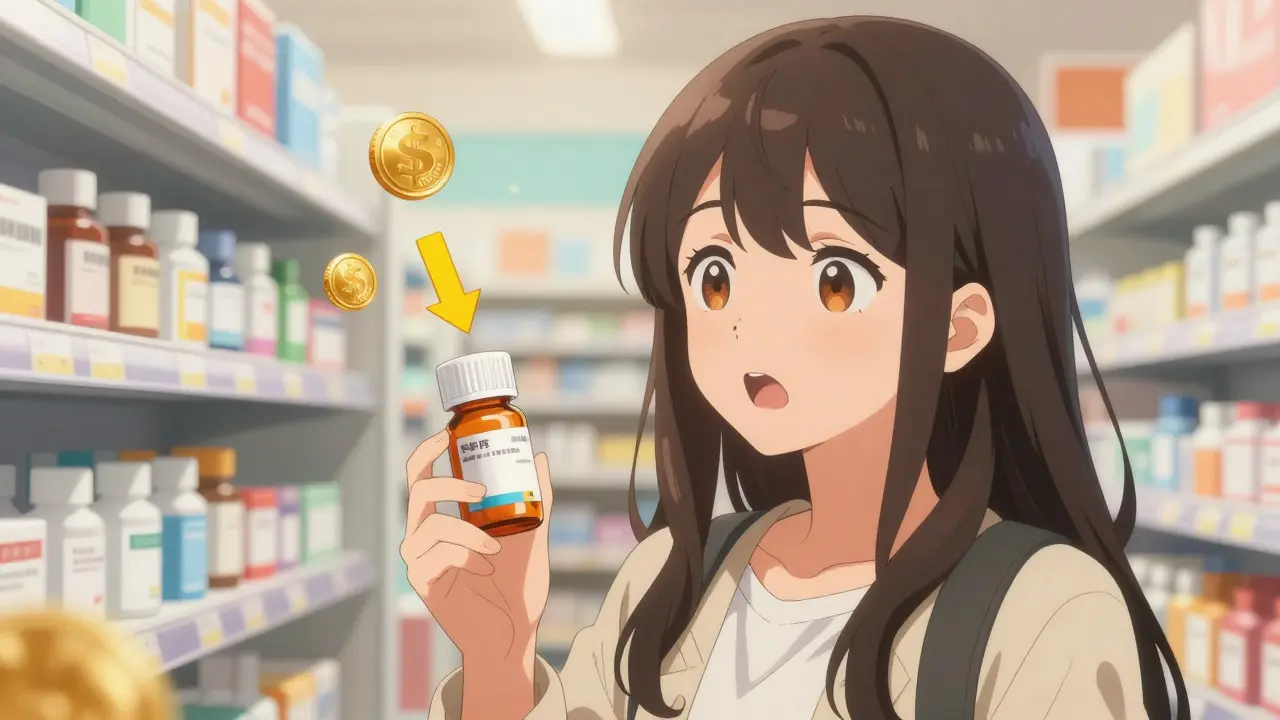
You pick up your prescription and see a price that makes you wince. It happens to millions of Americans every month. But here is the good news: you likely do not have to pay that full amount. Switching from brand-name drugs to generic medications is one of the most effective ways to cut healthcare costs without sacrificing health outcomes. In fact, these alternatives are not just cheaper; they are required by law to work exactly the same way in your body as their expensive counterparts.
If you have been hesitant to make the switch because you worry about effectiveness or quality, you are not alone. Many patients still cling to brand names out of habit or fear. However, the data tells a different story. Generic drugs account for roughly 90% of all prescriptions dispensed in the United States today. That is a massive shift from just a decade ago. This guide will break down why generics are safe, how much money you can actually save, and the specific steps you can take right now to lower your monthly medical bills.
What Are Generic Medications and Why Do They Cost Less?
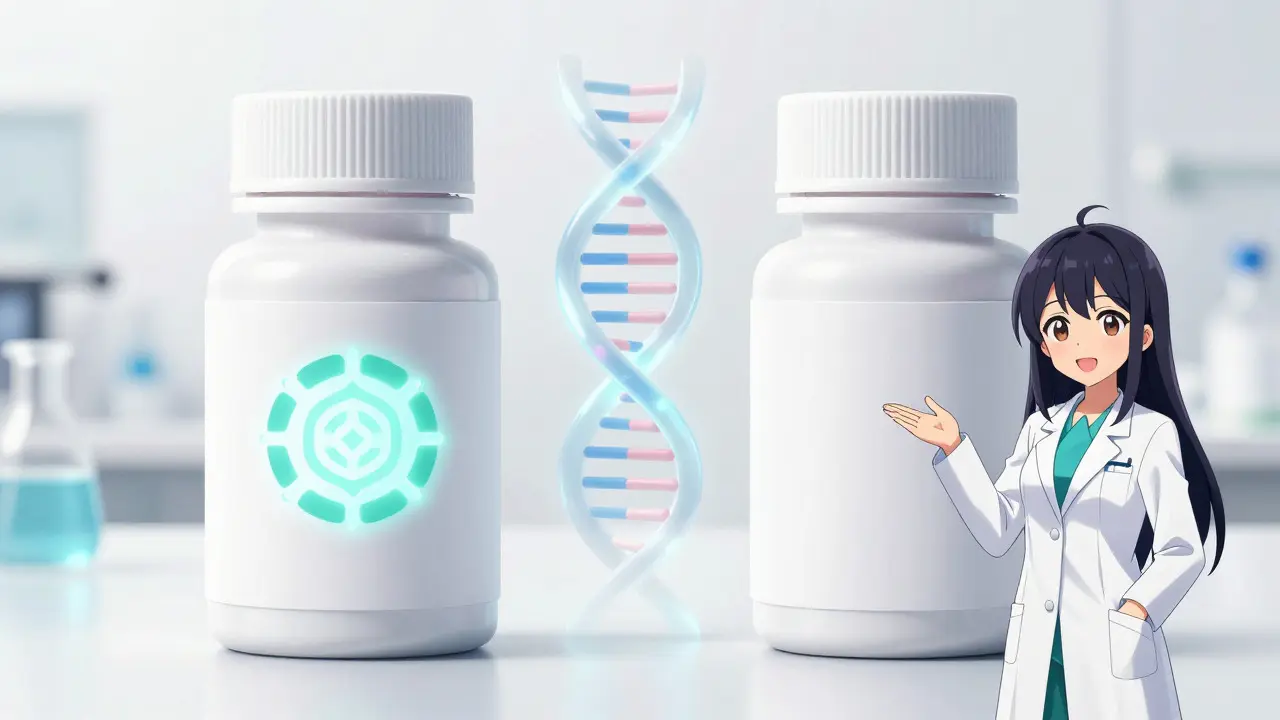
To understand the savings, you first need to understand what you are buying. A generic medication is a pharmaceutical product containing the same active ingredient as its brand-name counterpart but sold under a different name at a significantly lower price. The key word here is "active." If a brand-name drug contains 500 milligrams of acetaminophen to reduce pain, the generic version also contains 500 milligrams of acetaminophen. The molecule is identical.
So why is the brand-name pill $150 while the generic is $4? It comes down to research and development costs. When a company creates a new drug, they spend billions of dollars on clinical trials to prove it is safe and effective. They hold a patent that gives them exclusive rights to sell that drug for a certain period, allowing them to charge high prices to recoup those investments. Once that patent expires, other manufacturers can step in. Thanks to the Hatch-Waxman Act passed in 1984, these new entrants do not need to repeat those expensive clinical trials. They only need to prove their version works the same way. This competition drives the price down dramatically.
Think of it like this: the brand-name company built the house (the drug). The generic companies are renting the blueprint. Because they didn't pay for the original construction, they can offer the same shelter for a fraction of the rent.
The FDA Guarantee: Bioequivalence and Safety
Your biggest concern is probably safety. Will the generic work? The U.S. Food and Drug Administration (FDA) requires strict proof before any generic hits the shelf. This proof is called bioequivalence. For a generic to be approved, it must deliver the same amount of active ingredient into your bloodstream in the same amount of time as the brand-name drug.
The FDA allows a small statistical range-typically between 80% and 125% of the brand-name drug's absorption rate-but this range is so narrow that it has no clinical impact on how the drug works for you. Whether you take the brand or the generic, your body processes the medicine identically. The manufacturing facilities for generics undergo the exact same rigorous inspections as those producing brand-name drugs. The standards for quality, strength, purity, and stability are non-negotiable.
You might notice that the pills look different. They may be a different color, shape, or size. You might even taste a difference if you split them. This is due to inactive ingredients-the fillers, binders, and dyes used to hold the pill together. These do not affect the therapeutic effect. Unless you have a rare allergy to a specific dye, these differences are purely cosmetic.
Real-World Savings: How Much Can You Actually Cut?
Let’s talk numbers, because that is why we are here. On average, generic medications cost 85% less than their brand-name equivalents. Over the last decade, this pricing structure has saved American patients more than $2.2 trillion. Those are staggering figures, but they translate directly to your wallet.
Consider some real examples from recent FDA data. One common medication saw its price drop from approximately $47 per dose to less than $2. For a patient needing a 30-day supply, the cost fell from around $1,400 to under $60. Another example showed a liquid medication dropping from $88 per milliliter to less than $10 per milliliter, bringing a 30-day prescription cost down from nearly $3,800 to about $500. That is an average savings of over $3,300 per prescription for some users.
| Feature | Brand-Name Drug | Generic Medication |
|---|---|---|
| Average Price Reduction | Baseline | 80-85% lower |
| Active Ingredient | Proprietary formula | Identical chemical compound |
| Clinical Trials Required | Full-scale (Billions spent) | Bioequivalence study only |
| FDA Approval Standard | Safety and Efficacy | Bioequivalence to Brand |
| Typical Copay Impact | High (Tier 2 or 3) | Low (Tier 1) |
Even for smaller purchases, the savings add up. A study published in JAMA Health Forum analyzed hundreds of thousands of prescriptions and found that uninsured patients saved a median of $6.08 per prescription when using alternative low-cost channels for generics. While that might sound small, multiply that by three or four prescriptions a month, and you are saving over $200 a year with zero effort.
Strategies to Maximize Your Savings
Knowing that generics are cheaper is step one. Making sure you actually get the lowest price is step two. Here is how to navigate the system effectively.
1. Always Ask for the Generic
In many states, pharmacists are allowed to automatically substitute a generic for a brand-name drug if your doctor did not explicitly write "Dispense As Written" on the prescription. However, sometimes doctors default to writing the brand name out of habit. Never assume. Call your pharmacist or ask your doctor specifically: "Is there a generic available for this?" Most insurance plans have tiered formularies where generics sit on the cheapest tier, meaning your copay could drop from $40 to $5.
2. Use Discount Programs and Direct-to-Consumer Pharmacies
Insurance isn't always the cheapest option, especially if you are paying cash or have a high deductible. Services like the Mark Cuban Cost Plus Drug Company have disrupted the market by offering transparent, direct-to-consumer pricing. Launched in 2022, this model bypasses traditional pharmacy benefit managers (PBMs) to offer generics at cost plus a small markup. For many common medications, the cash price here is lower than the insurance copay.
Additionally, large warehouse clubs like Costco offer robust generic discount programs. Research shows that for Medicare beneficiaries, 90% of the most commonly prescribed generic drugs can be purchased at Costco for less than $20 for a 30-day supply, even without membership in some cases. Check local policies, but this is often a hidden gem for lowering costs.
3. Understand Your Insurance Formulary
Your insurance plan has a list of covered drugs called a formulary. Generics are almost always on the preferred tier. If you are stuck on a brand-name drug due to a prior authorization requirement, ask your doctor if a therapeutic equivalent generic exists. Sometimes switching classes entirely (e.g., from one type of blood pressure med to another) opens up access to cheaper generic options.
Addressing Common Concerns and Limitations
Are there any downsides? Generally, no. But it is important to be realistic about specific scenarios.
Narrow Therapeutic Index Drugs: Some medications, like levothyroxine for thyroid issues or warfarin for blood thinning, have a "narrow therapeutic index." This means the difference between a helpful dose and a harmful one is very small. While generics are still safe and effective, some patients prefer to stay on one specific manufacturer to avoid minor variations in inactive ingredients that might theoretically affect absorption slightly. If you are on one of these drugs, talk to your doctor about consistency rather than avoiding generics altogether.
Biologics and Biosimilars: Not all drugs can be easily copied. Complex biological drugs (made from living cells) cannot be perfectly duplicated. Instead, they have "biosimilars," which are highly similar but not identical copies. The pathway for biosimilars is stricter and more complex than for traditional small-molecule generics. However, as patents expire on major biologics, biosimilars are becoming a huge area for future savings.
The Placebo Effect: Some patients report feeling like the generic "doesn't work as well." Studies consistently show this is usually a placebo effect or a reaction to the different shape/color of the pill, not the active ingredient. If you feel a difference, try taking the generic for a full month without comparing it side-by-side. Often, the perceived difference fades.
Conclusion: Taking Control of Your Healthcare Costs
Switching to generic medications is not a compromise; it is a smart financial decision backed by science. With the FDA ensuring bioequivalence and the market driving prices down through competition, you have no reason to pay premium prices for brand-name labels unless medically necessary. By asking questions, checking discount programs, and understanding your insurance tiers, you can keep your health stable and your bank account healthy. Start with your next prescription refill. Ask for the generic. The savings are waiting.
Are generic medications exactly the same as brand-name drugs?
They contain the exact same active ingredient in the same dosage and strength. They must meet the same FDA standards for quality, purity, and stability. The main differences are in inactive ingredients (fillers/dyes), appearance (color/shape), and price. Therapeutically, they work the same way in the body.
Why are generic drugs so much cheaper than brand-name ones?
Brand-name companies spend billions on research, development, and clinical trials to create a new drug, which they recoup through high prices during the patent period. Generic manufacturers enter the market after the patent expires. They do not need to repeat costly clinical trials; they only need to prove bioequivalence. This lack of R&D costs and increased market competition drives prices down by 80-85%.
Can my pharmacist automatically switch my prescription to a generic?
In most U.S. states, yes. Pharmacists are legally permitted to substitute a generic for a brand-name drug unless the prescribing doctor explicitly writes "Dispense As Written" or "Brand Medically Necessary" on the prescription. Always check with your pharmacist to ensure the substitution has occurred.
Are there any risks associated with taking generic medications?
For the vast majority of patients, there are no significant risks. The FDA ensures bioequivalence. However, patients taking narrow therapeutic index drugs (like certain thyroid or seizure medications) should consult their doctor to ensure consistency in the manufacturer. Rare allergies to specific inactive ingredients (dyes or fillers) in a generic formulation are possible but uncommon.
How can I find the lowest price for generic medications?
Compare your insurance copay against cash prices. Use discount cards or direct-to-consumer pharmacies like Mark Cuban Cost Plus Drug Company. Check warehouse clubs like Costco, which often offer 30-day supplies of common generics for under $20. Always ask your pharmacist if a cheaper generic alternative or therapeutic equivalent is available on your insurance formulary.